)
World Generation: making spatial intelligence operational
As AI moves from understanding environments to creating them, world generation is emerging as a practical layer for simulation, digital twins, robotics, and Physical AI.
From world models to world generation
In our previous article, we explored how world models help AI systems reason about space, motion, and physical interaction. That conversation focused on how machines begin to understand environments rather than simply classify isolated data points. The next step is more operational: how organisations turn that capability into explorable, testable, and reusable environments for simulation, design, robotics, and digital twins.
This is where world generation becomes strategically important. A growing class of systems can now synthesize environments from text, images, panoramas, video, or coarse spatial inputs. In practical terms, that means world creation is starting to shift from a specialist activity to a programmable capability that can be connected to software pipelines and AI workflows. The value is no longer limited to impressive demos. Increasingly, it lies in how generated worlds can be used to support planning, experimentation, training, and iteration.
More than one kind of world
One of the clearest signs that the field is maturing is that “world generation” no longer describes a single type of model. Different approaches are emerging with very different outputs, strengths, and workflow implications.
These approaches can be broadly understood as:
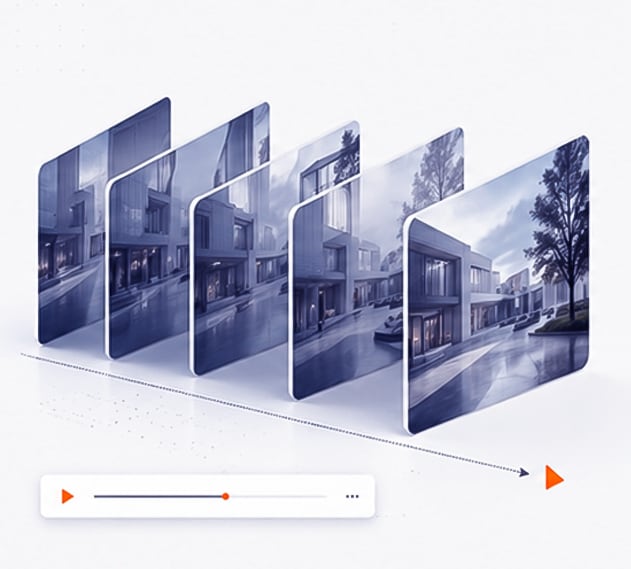
Neural video simulators
Their strength is temporal continuity; they generate controllable, navigable streams that behave like interactive environments.
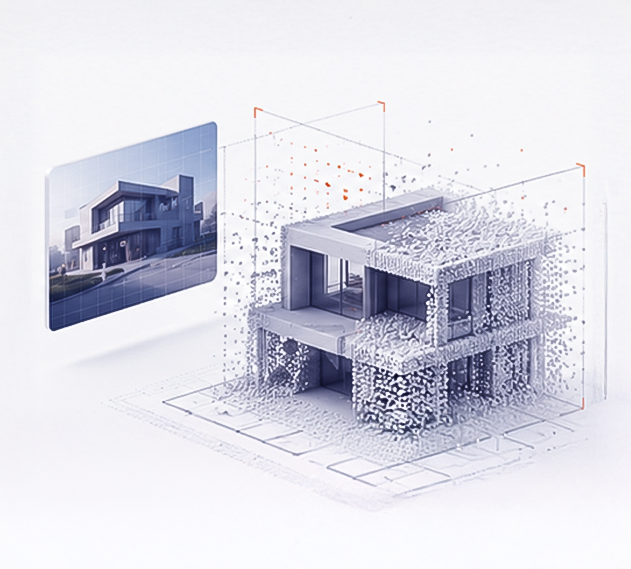
3D scene reconstruction systems
They transform visual input into explicit spatial representations that can be rendered, inspected, and reused downstream.
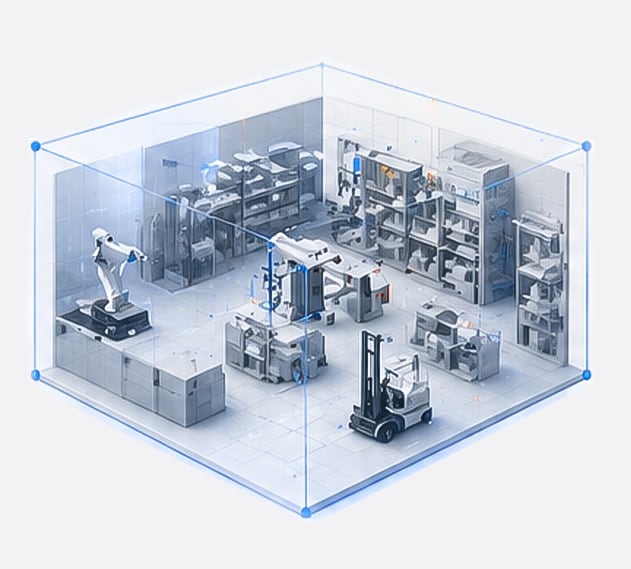
Authoring-oriented systems
They generate scene structures and assets that are more suitable for editing, navigation, and integration into established 3D toolchains.
This distinction matters because enterprises are not choosing between equivalent tools. They are choosing between different representations of a world, each with its own operational consequences. A video-first approach may be valuable for interactive prototyping or synthetic visual data. A 3D-first approach may be far more useful when geometry, editability, and interoperability are essential.
Why output matters more than hype
Public discussion around this space often focuses on realism. But in enterprise settings, visual quality is only one part of the equation. The more relevant question is what kind of world an organisation actually needs, and what it intends to do with that world once it has been generated.
If the goal is rapid exploration of scenarios, a dynamic simulation may be enough. If the output must be modified, exported, connected to a digital twin, or reused across a simulation pipeline, then explicit structure becomes much more important. In those cases, factors such as controllability, navigability, geometric consistency, and integration into existing tools often matter more than whether the first result looks cinematic.
This is why the market should not be read as a race toward one universal winner. The current landscape is defined by trade-offs: dynamics versus structure, speed versus fidelity, and ease of experimentation versus production-grade control. For enterprise teams, success depends less on following the most visible demo and more on selecting the right architectural path for the intended workflow.
A new foundation for embodied AI
This shift also strengthens the connection between world generation and embodied AI. Predictive world models remain critical because they help machines anticipate how scenes evolve over time. World generation complements this by creating the environments in which those capabilities can be trained, evaluated, and refined at scale.
That combination is especially relevant for robotics and Physical AI. Generated environments can support synthetic data creation, scenario expansion, policy testing, and simulation before deployment in the real world. They also extend beyond robotics into adjacent domains such as industrial training, immersive design, architecture, and digital twins, where spatial understanding must be paired with environments that can be explored and reused.
From demo to deployment
The broader significance of world generation is not simply that AI can now produce worlds. It is that these worlds are becoming operational assets. They can increasingly sit upstream of enterprise workflows, feeding simulation, synthetic data pipelines, design systems, and physical AI experimentation.
As this space evolves, the decisive question will not be which model produces the most eye-catching result in isolation. It will be which approach makes spatial intelligence usable inside real production environments. That is where the next wave of value will be created: not from world generation as spectacle, but from world generation as infrastructure.
For organisations exploring this space, the challenge is no longer only to understand why world models matter. It is to determine where world generation fits within the broader architecture of their business, their products, and their AI strategy.
For a deeper assessment of the world generation landscape, including architectural patterns, enterprise integration considerations, and key trade-offs across different approaches, read the full report on ROSE.