
Beyond the limits: Addressing the Challenges of Industrial Vision
A new industrial solution that overcomes the limitations of traditional optical sensors through artificial intelligence, delivering accurate depth maps even in the presence of reflective surfaces, transparent materials and extreme lighting conditions.
Scenario
In the world of industrial automation, the accuracy of 3D vision is at the core of every operation. However, real environments are rarely “perfect”. Companies face daily physical challenges that put standard depth sensors under stress:
Critical materials: Mixed-material surfaces, reflective metals or transparent objects can mislead lasers and stereo cameras, resulting in unstable measurements.
Harsh lighting: Deep shadow areas or, conversely, direct sunlight that “blinds” the sensors.
These limitations often translate into positioning errors, slower production cycles, or the need for costly manual interventions to correct missing or unreliable data.


Project Outcomes
The introduction of a Depth Completion model turns these obstacles into strengths, ensuring:
Solution
Implementing a Depth Completion model creates a new reliability core for the entire 3D vision architecture, enabling highly consistent recognition of volumes, geometries and spatial coordinates, with millimetric accuracy and easy integration into any logistics application.
Through an innovative approach to digital depth reconstruction, the system can rapidly and intuitively extract well-defined geometries and stable profiles from a mass of raw sensor data that would otherwise be fragmented or unusable due to reflections and optical interference.
Automation systems can now rely on a complete three-dimensional information asset, expressed in a single, consistent standard of density and resolution. This makes it possible to manage the entire production chain with unprecedented levels of detail, enabling picking and inspection operations enriched by data stability that neutralises every critical variable of the physical world.

Logistics and Warehouse
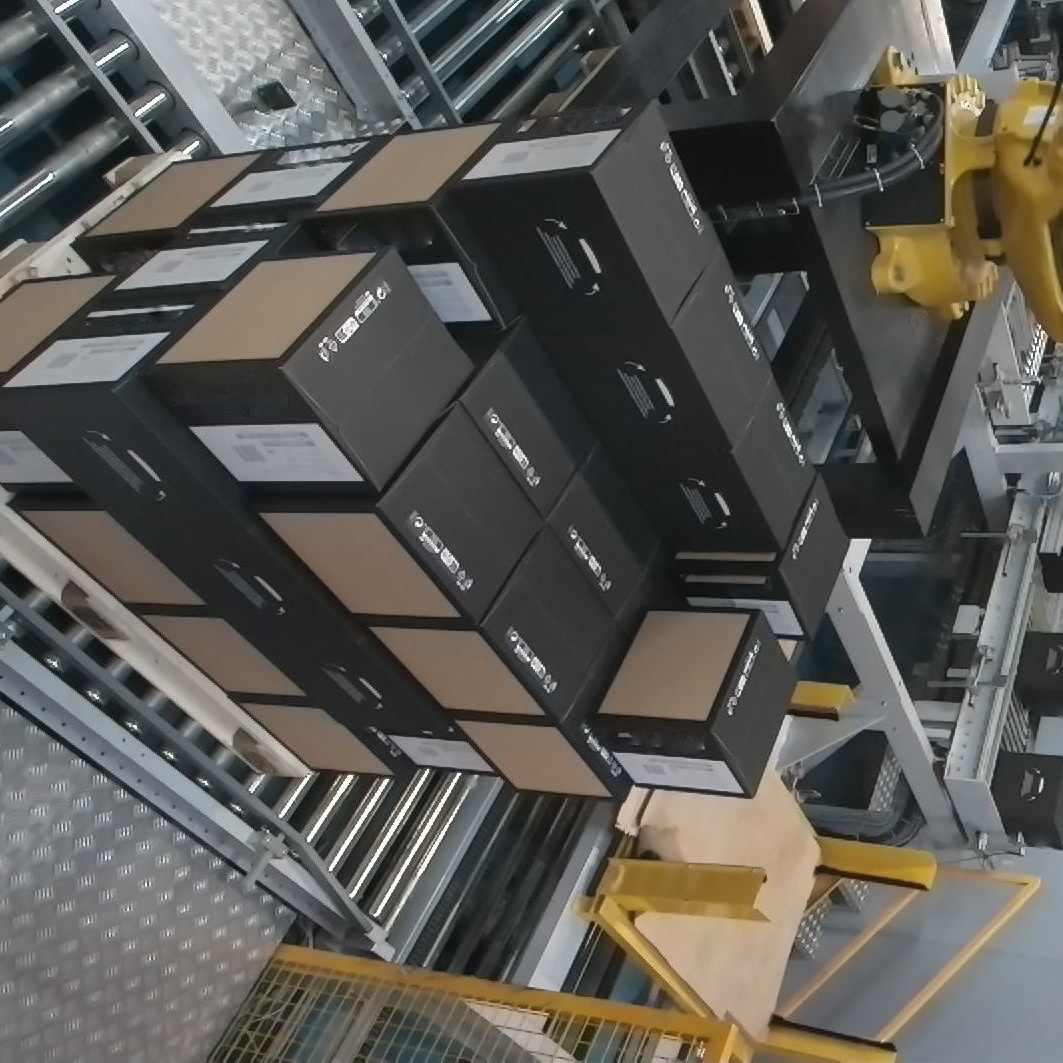
Optimisation of automated storage activities, even in the presence of reflective or transparent packaging.

Production and Assembly
Ensuring continuity of production cycles and millimetric precision in the positioning of components handled by robotic systems.

Quality Control
Automated inspection of critical surfaces that require dense, artefact-free 3D reconstruction.

Research and Development (R&D)
Integration of next-generation vision systems capable of operating in non-controlled environments.