From Coding to Customer Conversations: A Developer's Visit to IMVO
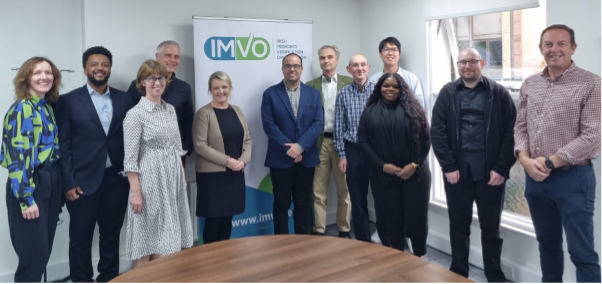
I’ve been working as a developer at Solidsoft Reply for 4 years primarily on the National Blueprint System (NBS). During this time, I often wrote code without fully appreciating its real-world impact. That all changed on the 29th September 2025, when our team visited the Irish Medicines Verification Organisation (IMVO) in Dublin and got a closer look at how our customer operates whilst seeing one of their largest wholesalers in action.
We were greeted with warm welcomes from the IMVO team with tea and biscuits. It was great to put names to faces when everyone introduced themselves, as up until that point, we had only communicated through the deployment emails. Interestingly, many of us, like myself, don’t have a background in pharmaceuticals which goes to show that with the right mindset, anyone can contribute meaningfully to the success of this massive project.

Understanding IMVO
The first day was packed with insight. IMVO shared details about many intriguing topics, including:
IMVO’s goals, team structure and each person’s roles and responsibilities
The importance of a robust Quality Management System
Onboarding and offboarding processes for their end-users (community pharmacies, hospitals, wholesalers and other healthcare institutions - there are over 2,100 across Ireland)
During the discussion, what stood out to me the most was seeing how the NBS system features were used. The location pending feature, for example, had significantly reduced duplicates and the ITE Developer portal was also noted as a key resource with the latest changes and operation code pages.
As a developer who’s mainly interacted with IT Supplier qualification test books and deployment emails, I really valued the opportunity to learn about them and discuss our work directly with our end-users. Sharing ideas, hearing suggestions and insightful discussions with the actual users of the National Medicine Verification System (NMVS), expanded my perspective beyond just writing code. I could see the real-world effects of what I build.
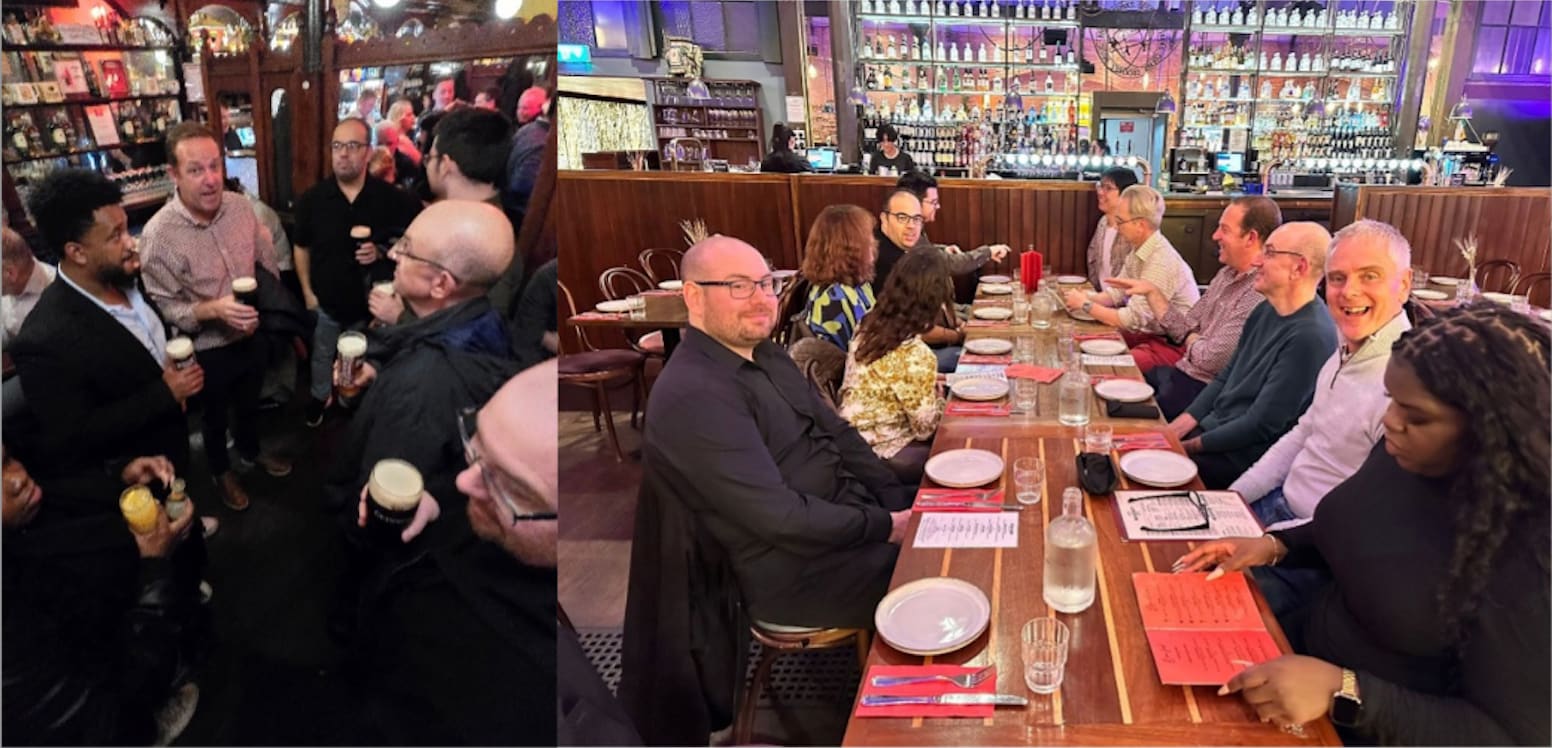
After the day’s session, we explored the city of Dublin, capturing the city’s charm and enjoyed a lively evening at a busy pub and tapas restaurant – complete with food, laughter and even some AI debates.
A Wholesaler in Action
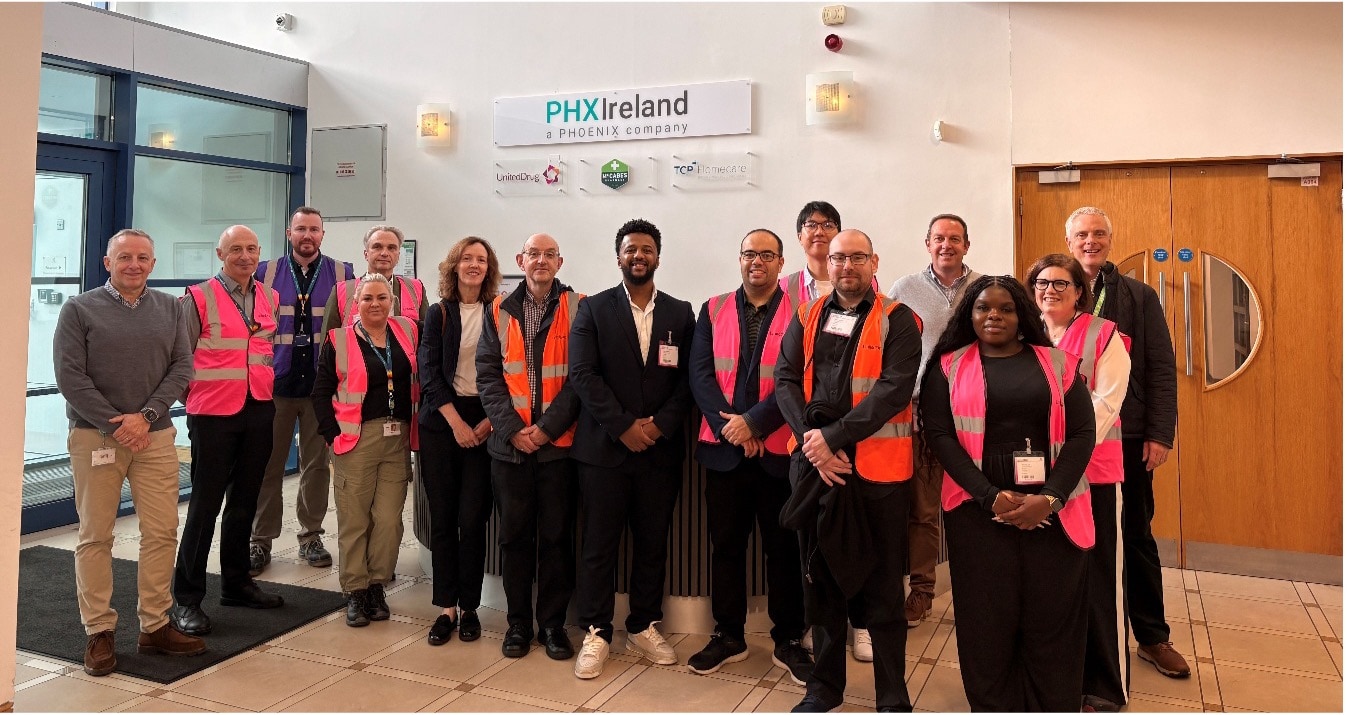
On the second day, we headed to one of Ireland’s leading pharmaceutical wholesalers, United Drug. Everyone geared up with a hi-vis vest and safety boots and headed into the facility. We toured a massive facility where vaccines and medicines are received, sorted and packed for local pharmacies. The scale of the operation of a wholesaler involves a whole lot.
The most fascinating area was the Falsified Medicine Directive (FMD) scanning section. A team member demonstrated scanning batches with linear and 2D data matrix barcode scanners to verify and decommission the packs at the station. This highlighted how easily errors could occur amid thousands of packs. In the vaccine room, temperature-controlled fridges and storage ensures everything stays safe, with alerts sent to the quality team if issues arise - alerts that the operator on the floor may not even see. Observing this made me realise how our code supports critical, real-world processes in ways I had never fully appreciated.
Alert Management and Real-World Challenges
Returning to IMVO, we learned about their Alert Management System, which has seen daily alerts rise almost tenfold since Brexit and the implementation of the Windsor Framework on 1st January 2025 due to Exempt Medicinal Products/Unlicensed Medicines (EMPs/ULMs) from the UK, being scanned by pharmacies. The team explained how similar-looking packs and scanning procedures lead to alerts. IMVO have had campaigns to inform the pharmacies using posters, leaflets, emails, phone calls etc., however the problem remains. The team must analyse the alerts every day and assess if the root cause was because an EMP/ULM has been scanned.
When an alert does occur, it often means a patient is waiting in a pharmacy for it to be resolved. Hopefully, there might be another pack in stock which can be authenticated and if not, then the wait continues.
This was a real eye-opener. As a developer, I had always assumed alerts were “bad” and needed to be prevented. But in reality, patient safety takes priority, and our system must balance finding falsified medicines with practical pharmacy operations. Understanding this has fundamentally changed how I view audit events and alerts. These aren’t just data points - they’re tools that help solve real-world problems.
Final Thoughts
This trip was invaluable, and I am grateful to have participated. Beyond meeting the IMVO team, I gained a deeper understanding of how the NBS impacts real people. A new property on an audit event is no longer just a value; it’s part of a solution that can directly influence patient care.
A special thank you to Leonie, Colin, Ita, Lorraine, Sarah, Bernadine, Paul and Nichola for being such wonderful hosts! And I look forward to future NMVO visits and learning more about how our code shapes the healthcare landscape.
Solidsoft Reply is a leading technology company creating award-winning solutions utilising the Microsoft Azure cloud platform. As a globally acclaimed Microsoft AI Cloud Solutions Partner, we specialise in GS1 traceability systems worldwide, crucially ensuring the authenticity, legality, and safety of our customers’ products and services. Serving non-profits, NGOs, healthcare, and the pharmaceutical industries, we deliver technology for positive social impact. Your products, safe in our hands.
)
Author’s bio: Tak Li is a former Aerospace Engineering student turned full-stack developer, he has worked on Solidsoft Reply’s NMVS project for over four years. When he’s not shipping features, you’ll find him at the gym, gaming, or 3D-printing household helpers. Fun fact: He can solve a Rubik’s cube in under 30 seconds.