 Back
Back


report on operations
Main risks and uncertainties to which Reply S.p.A. and the group are exposed
The Reply Group adopts specific procedures in managing risk factors that can have an influence on company results. Such procedures are a result of an enterprise management that has always aimed at maximizing value for its stakeholders putting into place all necessary measures to prevent risks related to the Group activities. Reply S.p.A., as Parent Company, is exposed to the same risks and uncertainties as those to which the Group is exposed, and which are listed below. The risk factors described in the paragraphs below must be jointly read with the other information disclosed in the Annual Report.
External risks
RISKS ASSOCIATED WITH GENERAL ECONOMIC CONDITIONS
The IT consulting market is linked to the economic performance of industrialized countries, where demand for high value-added technological products is higher. Unfavourable economic conditions at both local and international levels, or a high level of inflation, could reduce demand growth, with consequent impacts on the Group’s operations and on its economic, equity and financial position.
The international macroeconomic environment continues to be characterized by geopolitical tensions and a climate of uncertainty related to regional conflicts, trade dynamics between major economic areas, political instability in certain regions of the world, and volatility in energy and financial markets.
Reply does not operate directly in areas currently affected by armed conflicts or significant geopolitical instability and does not hold production assets or operational facilities in countries subject to significant international sanctions. Therefore, no significant direct impacts on business continuity or the ability to generate revenues have been identified.
However, the Group maintains a corporate presence in the United States, a market representing a strategic area for development. In this context, any changes in trade, fiscal or regulatory policies, as well as potential geopolitical tensions between the United States and other economic areas, could have indirect effects on the macroeconomic environment, exchange rates, and customers’ investment decisions. The Group continuously monitors these dynamics, adopting a prudent approach in financial planning and in the management of exchange rate risk. In general, the main indirect risks related to the geopolitical environment concern potential slowdowns in demand, inflationary pressures, volatility in financial markets, and disruptions in technological supply chains. As of the date of preparation of these financial statements, no effects have been identified that would significantly impact the Group’s economic, equity and financial position. Management continues to closely monitor the evolution of the international environment, maintaining adequate organizational and financial safeguards aimed at ensuring operational flexibility and financial strength.
RISKS RELATED TO THE EVOLUTION OF ICT-RELATED SERVICES
The ICT consulting services sector in which the Group operates is characterised by rapid and profound technological changes and by a constant evolution of the mix of professional skills and expertise to be pooled in the provision of the services themselves, with the need for continuous development and updating of new products and services, and a prompt go to market. Therefore, with a strong and growing focus on ethical aspects, the future development of the Group’s activities will also depend on its ability to foresee technological developments and the content of its services, also through significant investments in research and development activities, or through effective and efficient extraordinary operations.
RISKS ASSOCIATED WITH COMPETITION
The ICT market is highly competitive. Competitors could expand their market share squeezing out and consequently reduce the Group’s market share. Moreover the intensification of the level of competition is also linked with possible entry of new entities endowed with human resources and financial and technological capacities in the Group’s reference sectors, offering largely competitive prices which could condition the Group’s activities and the possibility of consolidating or amplifying its own competitive position in the reference sectors, with consequent repercussions on business and on the Group’s economic, earnings and financial situation.
RISKS ASSOCIATED WITH CHANGES IN CLIENT NEEDS
The Group’s solutions are subject to rapid technological changes which, together with the growing or changing needs of customers and their own need for digitalisation, could translate into requests for the development of increasingly complex activities that sometimes require excessive commitments that are not economically proportionate, or could result in the cancellation, modification or postponement of existing contracts. This could, in some cases, have repercussions on the Group’s business and on its economic and financial situation.
RISKS ASSOCIATED WITH SEGMENT REGULATIONS
The Group is subject to the laws and regulations applicable in the countries in which it operates, including, among the main ones, those governing health and safety in the workplace, environmental protection, the protection of intellectual property rights, tax regulations, data privacy and data protection, administrative liability of entities pursuant to Legislative Decree 231/01, and liability under Law 262/05. In addition, the regulatory and legal framework concerning Artificial Intelligence is continuously evolving and entails increasing compliance obligations. The risk of failing, or not promptly, to comply with applicable regulatory requirements, including those relating to the development, use, and commercialization of AI systems, could expose the Group to civil, tax, administrative, and criminal penalties, restrictions on market access, business interruptions, and significant reputational impacts, particularly in the case of AI solutions provided to clients. Furthermore, the costs and liabilities associated with the necessary remediation activities could adversely affect the Group’s operations and results. The Group operates in compliance with applicable laws and has established processes and controls to ensure awareness of local regulatory requirements in the jurisdictions in which it operates, as well as of ongoing regulatory changes.
SUSTAINABILITY RISKS
The size and characteristics of Reply may make the collection, management, and availability of ESG information not always straightforward, also considering the complexity of the continuously evolving regulatory framework. All environmental, social, and governance topics and aspects relevant to Reply are described in the specific section “Consolidated Sustainability Statement” of the Annual Rep
Internal risks
RISKS ASSOCIATED WITH KEY MANAGEMENT AND LOSS OF KNOW-HOW
The Group’s success is largely due to certain key figures who have contributed in a decisive way to its development, such as the Chairman, the Chief Executive Officer and the executive directors of the Parent Company Reply S.p.A. Reply also has a management team with many years of experience in the sector, which plays a decisive role in the management of the Group’s activities. The loss of the services of one of the aforementioned key figures without adequate replacement, as well as the inability to attract and retain new and qualified personnel, could have a negative impact on the Group’s prospects, maintenance of critical know-how, activities and economic and financial results. The Management believes, in any event, that the Company has an operational and managerial structure capable of ensuring continuity in the management of corporate affairs.
RISKS ASSOCIATED WITH RELATIONSHIP WITH CLIENT
The Group offers consulting services mainly to medium and large size companies operating in different market segments (Telco, Manufacturing, Finance, etc.). A significant part of the Group’s revenues, although in a decreasing fashion in the past years, is concentrated on a relatively limited number of clients. If such clients were lost this could have an adverse effect on the Group’s activities and on the Group’s economic, financial and earnings position.
RISKS ASSOCIATED WITH INTERNATIONALIZATION
The Group, with an internationalization strategy, could be exposed to typical risks deriving from the execution of its activities on an international level, such as changes in the political, macro-economic, fiscal and/or normative field, along with fluctuations in exchange rates. These could negatively influence the Group’s growth expectations abroad.
RISKS RELATED TO GROUP DEVELOPMENT
The constant growth in the size of the Group presents new management and organisational challenges. The Group continuously focuses its efforts on raising awareness and training employees, as well as maintaining the most effective internal controls to prevent any unlawful and/or unethical conduct (such as, for example, the improper use or unauthorized or uncontrolled use of IT systems, including Generative AI and Large Language Models (LLMs), non-compliance with laws or regulations concerning the protection of sensitive or confidential information, and/or the inappropriate use of social networking sites, which could result in breaches of confidentiality, unauthorized disclosure of confidential company information, or reputational damage). If the Group does not continue to make the appropriate changes to its operating model as needs and size change, if it does not successfully implement the changes, and if it does not continue to develop and implement the right processes and tools to manage the business and instil its culture and core values in its employees, the ability to compete successfully and achieve its business goals could be compromised.
RISKS RELATED TO ACQUISITIONS AND OTHER EXTRAORDINARY OPERATIONS
The Group plans to continue to pursue strategic acquisitions and investments to improve and add new expertise, service offerings and solutions, and to enable expansion into certain geographic areas and other markets. Any investment made as part of strategic acquisitions and any other future investment in Italian or international companies may involve an increase in complexity in the Group’s operations and there is no guarantee that such investments will generate the expected return on the acquisition or investment decision and that they will be properly integrated in terms of quality standards, policies and procedures in a manner consistent with the rest of the Group’s operations. The integration process may require additional costs and investments. Inadequate management or supervision of the investment made may adversely affect the business, operating results and financial matters.
RISKS RELATED TO NON-FULFILMENT OF CONTRACTUAL COMMITMENTS
The Group develops high-tech, high-value solutions; the underlying contracts, which may involve both internal staff and external contractors, may provide for the application of penalties for failure to meet agreed deadlines and quality standards. The application of such penalties could have negative effects on the Group’s economic and financial results and reputation. However, the Group has taken out insurance policies to protect itself against risks arising from professional liability for an aggregate annual maximum amount deemed adequate in relation to the underlying risk. However, if the insurance coverage is inadequate and the Group is required to pay damages in excess of the maximum amount provided, the Group’s financial position, results of operations and cash flows could be materially adversely affected.
RISKS RELATED TO KEY PARTNERSHIPS
In order to offer the most innovative and suitable solutions to differing customer needs, the Group has established important partnerships with leading global vendors. The business that the Group conducts through these partnerships may decline or not grow for a number of reasons, as the priorities and objectives of technology partners may differ from those of the Group and they are not prohibited from competing with the Group or entering into closer agreements with its competitors. Decisions the Group makes with respect to a technology partner may affect the ongoing relationship. In addition, technology partners may experience reduced demand for their technology or software, which could decrease the related demand for the Group’s services and solutions. The risk of failing to adequately manage and successfully develop relationships with key partners, or of failing to foresee and establish effective alliances in relation to new technologies, could adversely affect the ability to differentiate services, offer cutting-edge solutions to customers or compete effectively in the market, with possible consequent repercussions on the business and on the economic and financial situation.
RISKS RELATED TO THE PROTECTION OF INTELLECTUAL PROPERTY RIGHTS
The Group’s success depends, in part, on its ability to obtain intellectual property protection for its proprietary platforms, methodologies, processes, software and other solutions.
The Group relies on a combination of confidentiality, non-disclosure and other contractual agreements, and patent, trade secret, copyright and trademark laws and procedures to protect its intellectual property rights. Even where we obtain intellectual property protection, the Group’s intellectual property rights cannot prevent or discourage competitors, former employees or other third parties from reverse engineering their own solutions or proprietary methodologies and processes or independently developing similar or duplicate services or solutions.
In addition, the Group may unwittingly infringe the rights of others and be liable for damages as a result. Any claims or litigation in this area could cost time and money and lead to damage the Group’s reputation and/or require it to incur additional costs to obtain the right to continue offering a service or solution to its customers.
The occurrence of such risks could adversely affect the Group’s competitive advantage and market positioning, its economic, financial and capital position, as well as its reputation and prospects for future business development.
CYBER SECURITY, DATA MANAGEMENT AND DISSEMINATION RISKS
The Group’s business relies on IT networks and systems to process, transmit and store electronic information securely and to communicate with its employees, customers, technology partners and suppliers. As the scale and complexity of this infrastructure continues to grow, not least due to the increasing reliance on and use of mobile technologies, social media, cloud-based services, the risk of security incidents and cyber-attacks increases. Moreover, the adoption of advanced technologies based on Artificial Intelligence entails an increase in the complexity of information systems and technological infrastructures. Such complexity may create new vulnerabilities in terms of data integrity, availability, and confidentiality, as well as increase exposure to cyber risks or give rise to legal actions. Cyberattacks, including those carried out through the unethical or malicious use of AI, could result in operational disruptions to the Group’s systems and those of its clients, technology partners, and suppliers, as well as delays in service delivery, compromises of information systems, or loss of sensitive data. These risks are compounded by those related to potential fraud carried out by third parties, including clients, suppliers, or partners involved in AI processes or systems. In the event of such actions, so the Group could be exposed to potential liability, litigation and regulatory or other actions, as well as loss of existing or potential customers, damage to brand and reputation, and other financial losses. In addition, the costs and operational consequences of responding to violations and implementing corrective measures could be significant. To date, there hasn’t been a cybersecurity attack that has had a material effect on the Group, although there is no guarantee that there won’t be a material impact in the future. Aware that the business and cyber security landscape evolves, the Group is continuing on a path of unceasing strengthening of risk controls, reserving the right, if deemed necessary, to make significant additional investments to protect data and infrastructure. However, if the insurance coverage, which includes IT insurance, is inadequate and the Group is required to pay damages in excess of the maximum amount provided, the Group’s financial position, results of operations and cash flows could be materially adversely affected.
OPERATIONAL RISKS RELATED TO AI SOLUTIONS
The increasing application and integration of Artificial Intelligence–based technologies into our internal processes and services, as well as into the solutions proposed and developed for our clients, has introduced new operational risk dynamics that the Group manages with the utmost attention. Efficiency gains or improvements in operational performance attributed to AI that do not materialize within the expected timeframe or in the expected manner, also due to exogenous factors such as market evolution, the maturity of available technologies, the level of uncertainty, or the degree of acceptance by clients and stakeholders, expose the Group to strategic and operational risks. Furthermore, any misalignment between growing internal capabilities, understanding of the business context, and the specific needs and expectations of clients may lead to operational inefficiencies or the adoption of solutions that are not fully aligned with the intended objectives. Inadequate assessment or timing of outputs, or insufficient monitoring of the performance of the proposed and adopted models, could result in incorrect decisions, misleading information, legal or regulatory actions, or potentially adverse effects for clients and for the Group’s reputation.
RISKS IN TERMS OF SOCIAL AND ENVIRONMENTAL RESPONSIBILITY AND BUSINESS ETHICs
Within the framework of social, environmental, and business ethics responsibility, the Group describes its material impacts, risks, and opportunities identified through the double materiality analysis in chapter [SBM-3] “Material impacts, risks and opportunities and their interaction with the strategy and business model” of the consolidated sustainability statement.
Financial risks
CREDIT RISK
For business purposes, specific policies are adopted to assure its clients’ solvency. With regards to financial counterparty risk, the Group does not present significant risk in credit-worthiness or solvency.
The Group’s exposure to credit risk is the potential losses that could result from non-fulfilment of the obligations assumed by both commercial and financial counterparties. In order to measure this risk over time, as part of the impairment of its financial assets (including trade receivables), the Group has applied a model based on expected credit losses pursuant to IFRS 9. This exposure is mainly due to general economic and financial items, the possibility of specific insolvency situations of some debtor counterparties and more strictly technical-commercial or administrative elements. The maximum theoretical exposure to credit risk for the Group is the book value of financial assets and trade receivables. The risk related to trade receivables is managed through the application of specific policies aimed to ensure the solvency of customers. Provisions to the allowance for doubtful accounts are made specifically on creditor positions with specific risk elements. On creditor positions which do not have such characteristics, provisions are made on the basis of the average default estimated on the basis of statistical indicators.
LIQUIDITY RISK
The group is exposed to funding risk if there is difficulty in obtaining finance for operations at any given point in time. The cash flows, funding requirements and liquidity of the Group’s companies are monitored or centrally managed under the control of the Group Treasury, with the objective of guaranteeing effective and efficient management of capital resources (maintaining an adequate level of liquid assets and funds obtainable via an appropriate committed credit line amount). The difficult economic and financial context of the markets requires specific attention as regards the management of liquidity risk and in such a way that particular attention is given to shares tending to generate financial resources with operational management and to maintaining an adequate level of liquid assets. The Group therefore plans to meet its requirements to settle financial liabilities as they fall due and to cover expected capital expenditures by using cash flows from operations and available liquidity, renewing or refinancing bank loans.
EXCHANGE RATE AND INTEREST RATE RISK
The Group entered into most of its financial instruments in Euros, which is its functional and presentation currency. Although it operates in an international environment, it has a limited exposure to fluctuations in the exchange rates. The exposure to interest rate risk arises from the need to fund operating activities and M&A investments, as well as the necessity to deploy available liquidity. Changes in market interest rates may have the effect of either increasing or decreasing the Group’s net profit/(loss), thereby indirectly affecting the costs and returns of financing and investing transactions. The interest rate risk to which the Group is exposed mainly derives from bank loans; to mitigate such risks, the Group, when necessary, has used derivative financial instruments designated as “cash flow hedges”. The use of such instruments is disciplined by written procedures in line with the Group’s risk management strategies that do not contemplate derivative financial instruments for trading purposes.
TAX RISK
The risk of any changes in tax law and its application or interpretation could have a negative or positive impact on the Group’s results of operations, affecting the effective tax rate. The Company adheres to the National Tax Consolidation scheme pursuant to articles 117/129 of the Consolidated Income Tax Act (TUIR). Reply S.p.A., the Parent Company, acts as consolidating company and determines a single taxable income for the Group of companies participating in the Tax Consolidation, benefiting from the possibility of offsetting taxable income with tax losses in a single declaration. The tax risk limitation measures put in place by Management, in terms of verifying the adequacy and correctness of tax compliance, obviously cannot completely exclude the risk of tax audits.
Review of the Group’s economic and financial position
Foreword
The financial statements commented on and illustrated in the following pages have been prepared on the basis of the Consolidated financial statements as at 31 December 2025 to which reference should be made, prepared in compliance with the International Financial Reporting Standards (“IFRS”) issued by the International Accounting Standards Board (“IASB”) and adopted by the European Union, as well as with the provisions implementing Article 9 of Legislative Decree No. 38/2005.
Trend of the period
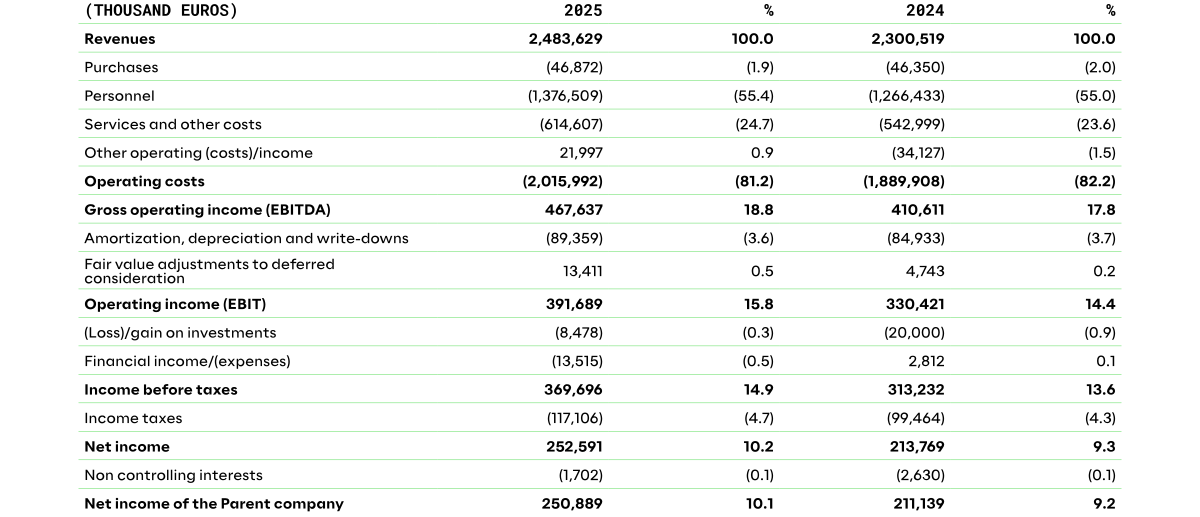
The Reply Group closed 2025 with a consolidated turnover of €2,483.6 million, an increase of 8.0% compared to €2,300.5 million in 2024.
All indicators are positive for the period. Consolidated EBITDA was €467.6 million, an increase of 13.9% compared to €410.6 million at December 2024.
EBIT, from January to December, was at €391.7 million, which is an increase of 18.5% compared to €330.4 million at December 2024.
The Group net profit was at €250.9 million. In 2024, the corresponding value was €211.1 million.
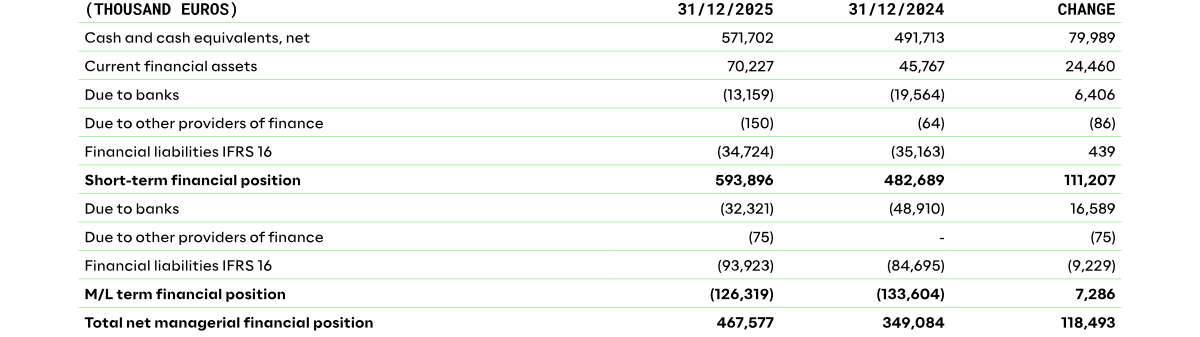
As at 31 December 2025, the Group’s net financial position has been positive at €467.6 million (349.1 million at 31 December 2024). As at 30 September 2025, the net financial position was positive at €423.1 million.
2025 ended on a very positive note for Reply. Despite an increasingly selective market and a macroeconomic context of general uncertainty, the Group grew, supported by the solidity of its model – based on a network of highly specialised companies – combined with the ability to turn technological innovation into tangible value for companies.
Together with its customers Reply has worked to industrialise and scale the application of artificial intelligence, introducing it into existing processes or helping them to invent new market segments and offerings around it. Today, artificial intelligence is no longer an additional “layer” but is definitively the structural component around which corporate architectures are designed: data platforms, cloud or edge-based applications, automation systems and cybersecurity infrastructures are now being rethought within an AI-centric design, and in some cases are even developed with native agent-based architectures.
In recent months Reply has laid solid foundations to face market conditions that remain extremely competitive. The recent partnerships signed with the leading LLM producers, combined with the well-established relationships with the world’s major technology players, not only reaffirm the ongoing commitment to being at the forefront of innovation, but also enable the Group companies to bring to market one of the most comprehensive offerings available today in the field of artificial intelligence applied to vertical business contexts.
Reclassified consolidated income statement
Starting from the third quarter of 2025, for management analysis purposes only, the Group has reclassified, under operating revenues, public grants related to funded projects amounting to 33,638 thousand Euros as of December 31, 2025 and amounting to 4,581 as of December 31, 2024. Public grants had previously been recorded as a reduction in labour costs. This reclassification has no impact on EBITDA and allows for a more consistent representation of the overall volume of industrial and research activities carried out internally, highlighting the contribution of funded projects to the Group’s operating performance.
Reply’s performance is shown in the following reclassified consolidated statement of income and is compared to corresponding figures of the previous year:
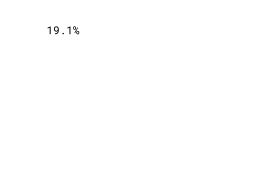
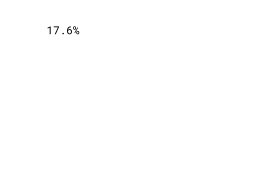
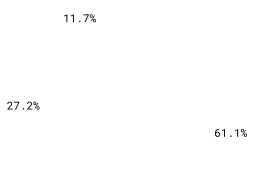
REVENUES BY REGION (*)
2025






Region 1
Region 2
Region 3
2024





Region 1
Region 2
Region 3

(*)
Region 1: ITA, USA, BRA, POL, ROU, CHN (Nanjing)
Region 2: DEU, CHE, CHN (Beijing), HRV, POL
Region 3: GBR, LUX, BEL, NLD, FRA
REVENUES BY BUSINESS LINES
2025




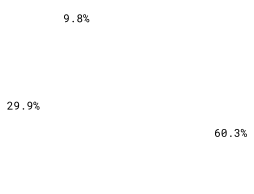
2024




TREND IN KEY ECONOMIC INDICATORS
















Analysis of the financial structure
The Group’s financial structure is set forth below as at 31 December 2025, compared to 31 December 2024:
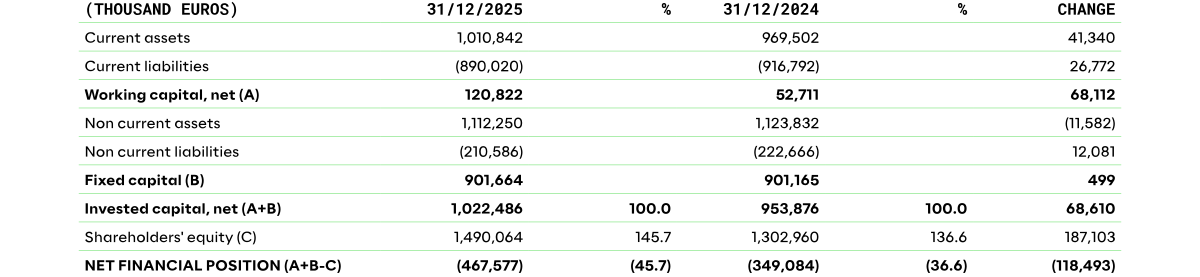
Net invested capital on 31 December 2025, amounting to 1,022,486 thousand Euros, was funded by Shareholders’ equity for 1,490,064 thousand Euros and by available overall funds of 467,577 thousand Euros. It is to be noted that net invested capital includes Due to minority shareholders and Earn-out for a total of 45,250 thousand Euros (109,600 thousand Euros at 31 December 2024); this item is not included in the net financial managerial position included instead in the ESMA net financial indebtedness, disclosed in note 31.
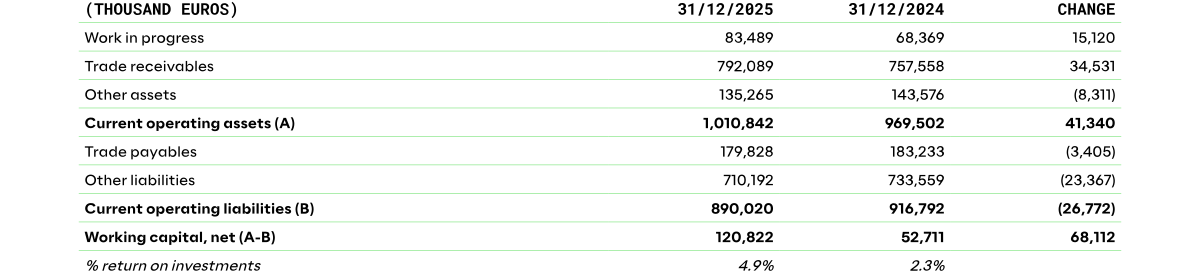
The following table provides a breakdown of net working capital:
Net managerial financial position and cash flows statement
Change in the item cash and cash equivalents during 2025 is summarized in the table below:
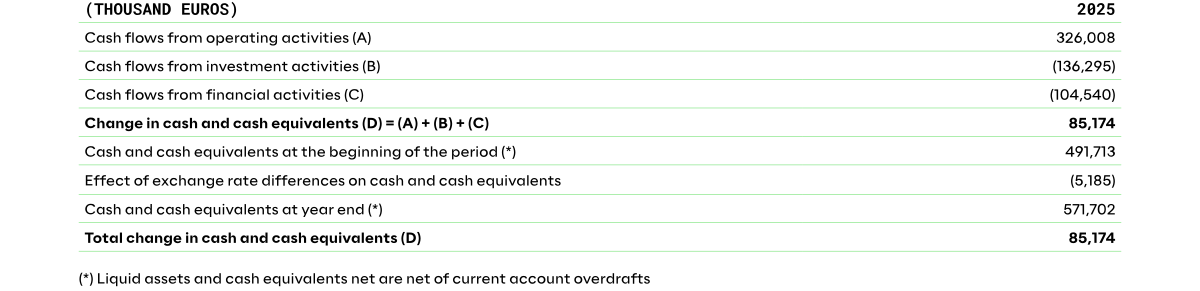
The complete consolidated cash flow statement and the details of cash and other cash equivalents net are set forth below in the financial statements.
Alternative performance indicators
In addition to conventional financial indicators required by IFRS, presented herein are some alternative performance measures, in order to allow a better understanding of the trend of economic and financial management. These indicators, that are also presented in the periodical Interim management reports must not, however, be considered as replacements to the conventional indicators required by IFRS.
Set forth below are the alternative performance indicators used by the Group with relevant definition and basis of calculation:
EBIT: corresponds to the “Operating margin”
EBITDA: Earnings before interest, taxes, depreciation and amortization and is calculated by adding to the Operating margin the following captions:
Amortization and depreciation
Write-downs
Other operating cost/(income)
EBT: corresponds to the Income before taxes
Net financial managerial position: represents the financial structure indicator and is calculated by adding the following balance sheet captions:
Cash and cash equivalents
Financial assets (short-term)
Financial liabilities (long-term) including those referable to the adoption of IFRS 16
Financial liabilities (short-term) including those referable to the adoption of IFRS 16
Other operating (costs)/revenues are related to events and transactions that due to their nature do not occur continuously in normal operations.
Significant operations in 2025
Acquisition of Red Scientific Limited
In August, Reply, through its subsidiary Reply Ltd., completed the acquisition of 100% of Red Scientific Limited, a UK-based company operating in the Defence and Public Sector, providing engineering consulting services in technical and scientific fields.
Acquisition of Root16 LLC
In August, Reply, through its subsidiary Reply Inc., completed the acquisition of 100% of Root16 LLC, a U.S.-based company specialized in technology consulting for professional services using Microsoft Dynamics, with a focus on the mid-market segment.
Reply on the stock market
Reply share performance
After the surprisingly constructive setup in 2024, capital markets in 2025 again had to digest an “unfriendly” headline environment — but equities proved resilient overall. Episodes of volatility were triggered by geopolitical developments and renewed trade-policy uncertainty, yet the broader trend remained supported by easing inflation and a gradually more accommodative monetary backdrop. In Europe in particular, expectations of lower policy rates and improving liquidity conditions helped underpin risk appetite, even as growth dynamics stayed uneven across regions and sectors.
A key driver remained the prospect (and, in several regions, the implementation) of further rate cuts. Falling inflation and declining yields typically improve equity valuations and refinancing conditions — an important tailwind for investment activity and corporate profitability. At the same time, equity performance was increasingly shaped by differentiation: investors rewarded visible earnings delivery and balance-sheet strength, while more cyclical or valuation-stretched segments faced sharper pullbacks when macro or policy surprises emerged. Within technology, artificial intelligence remained the dominant theme in 2025 — but the narrative became more ambivalent. Alongside the continued investment cycle in data centres, platforms and AI-enabled applications, a growing group of investors started to frame AI not only as a demand catalyst, but also as a potential structural risk for parts of the IT value chain. If AI tools materially lift developer productivity and enable more “do-it-yourself” implementation by clients, the same transformation outcomes could be achieved with fewer external service hours, implying tighter long-term growth ceilings for traditional and lower-value-focussed delivery models. This frames the growing concerns of the capital market participants. As a result, market sentiment became more selective, rewarding business models with clear differentiation (industry depth, proprietary assets, platform/IP leverage and end-to-end accountability) while applying greater scrutiny to those perceived as predominantly capacity-based.
Reply is seeing AI as a big opportunity allowing to implement new solutions that were unthinkable before. Efficiency gains leading to smaller project sizes will be more than covered by additional demand as this frees budget capacities on the customer side. This demand pattern was perceived in every essential innovation step in the history of the IT markets. Replys high portion of outcome-based contractual relationships with customers and the avoidance of commodity works provides a high resilience against the risk of being replaced by AI. Its special organization as a series of small, agile and highly specialized competence centers for the market niches Reply is working on represents an ideal base to handle disruption coming from emerging technologies. To a large extent this explains the operational performance of Reply since its inception in 1996. Against this backdrop, Reply delivered another year of solid operational execution. Throughout 2025, the Group continued to outperform many competitors in growth and profitability, with positive momentum across key digital transformation areas, including data, cloud and AI-related demand. A decent organic growth of Reply - mainly due to the acquisition integration works in France and the group exposure to the automotive and manufacturing industry suffering from tariffs-induced uncertainties - was compensated by a very strong margin development leading to an excellent liquidity position of the group. Accordingly, the year 2025 started stable for the Reply share preserving its value of the start of the year and moving in line with with the STAR and the Euro STOXX technology indexes. Since May 2025 the Reply share experienced higher volatility and entered a downward trend ending in a share price reduction of 25%, decoupling from the continuous strong operational performance.
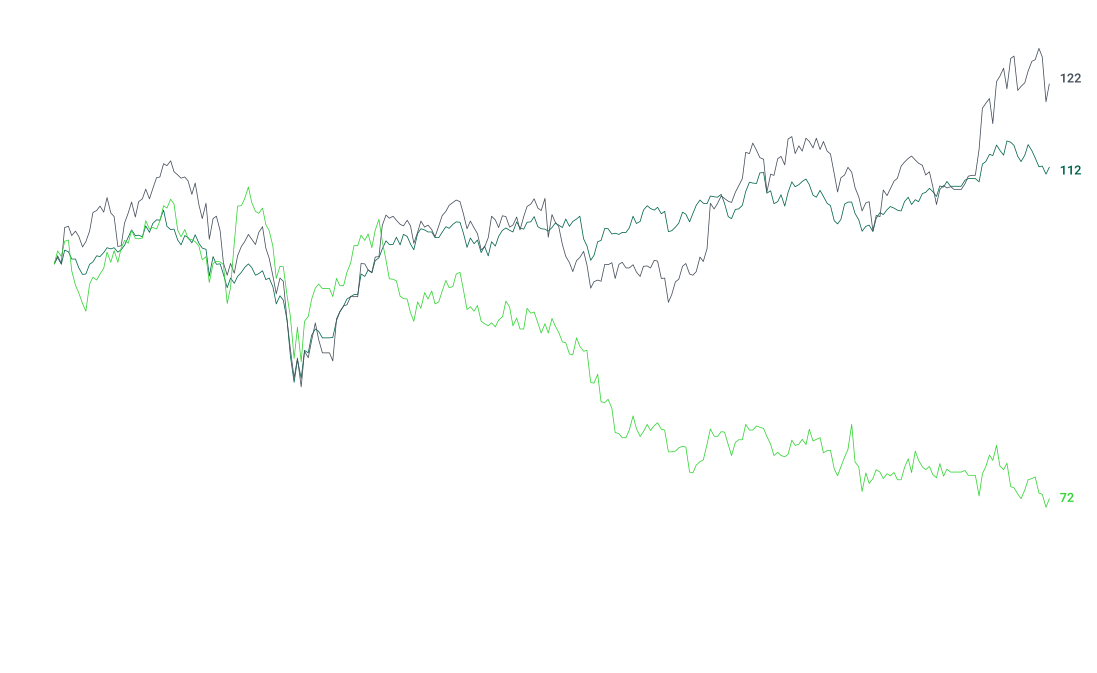


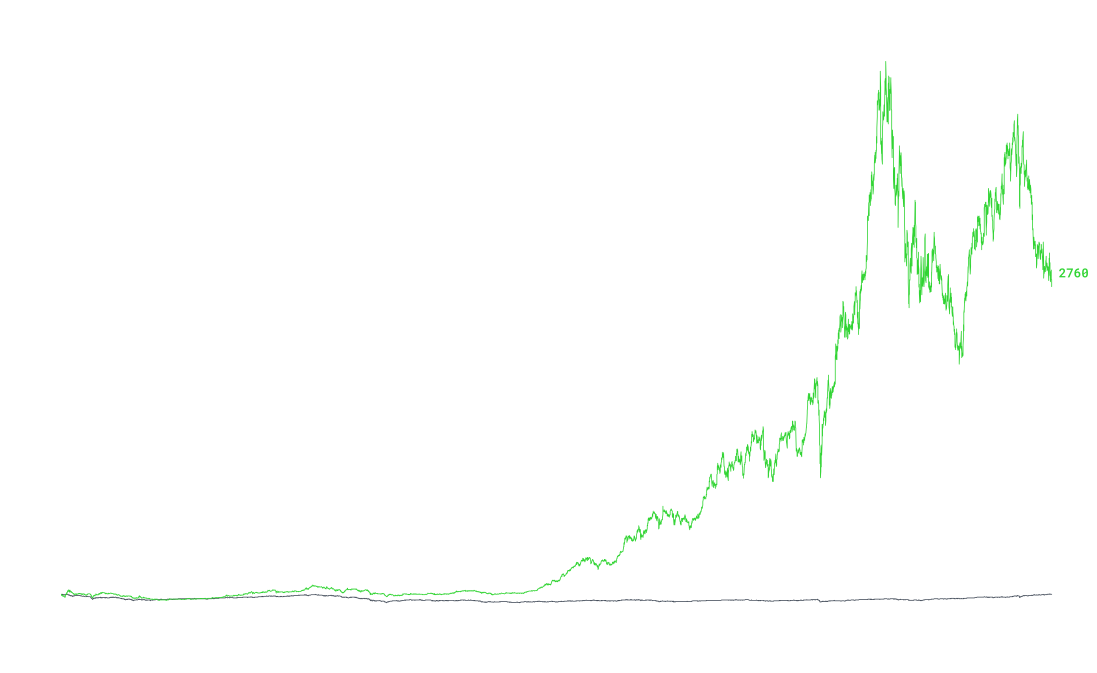
Taking December 6, 2000, the date of the Reply IPO, as a reference, the Italian main index MIB gained 31.5% in 2025 and with 98.3% nearly came back to its starting value in 2000. Since the IPO Reply increased its value by 2,768%. Due to the sector rotation and the upcoming AI concerns the outperformance of the Reply share versus the MIB reduced in 2025.

Share liquidity
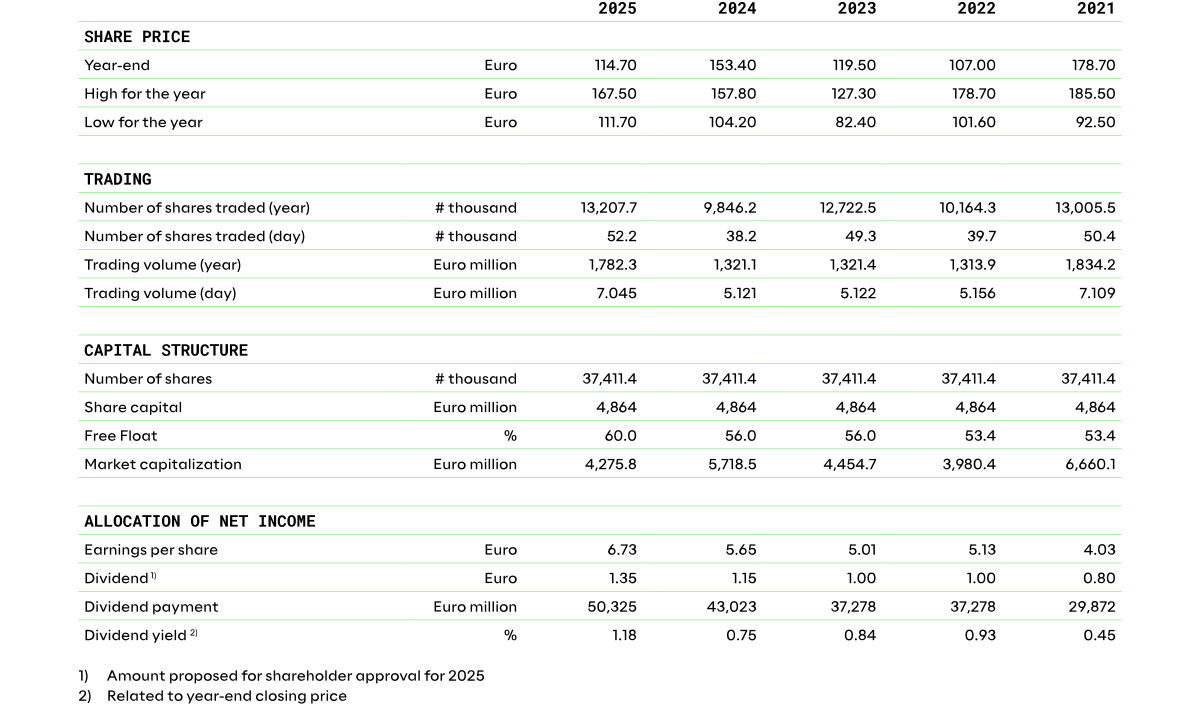
From a capital-markets perspective, 2025 illustrated that share-price performance can temporarily decouple from fundamentals when valuation levels, sector rotations and risk sentiment dominate. The raising AI concerns and volatility led to a significant increase of the trading activities in the Reply share. The number of traded shares increased by 35% to 13.2 million shares (9.5 million shares in 2024). Especially since August each month showed a million or more traded shares. The trading volume moved accordingly to EUR 1.78 billion following EUR 1.32 billion in 2024. The meaningful correction of the Reply share price impacted the valuation multiples as well seen in Reply. But to a lesser extent as most of the Reply peers – defined as a group of digital native companies, diversified IT Service companies and agencies – declined in valuations too. Unchanged Reply is valued above market in terms of the valuation on the base of revenues. As the market is currently totally ignoring the profitability improvements, Reply is now trading below market average regarding the multiples based on EBITDA and EBIT. Price/Earnings Ratio as well as the Free Cash Flow-multiples remain approximately 15% above the peer valuations.
Dividend
Performance-related remuneration is an essential pillar of Reply’s partnership-based business model. Like employees, Reply’s shareholders should participate in the Group’s sustainable operational performance in the form of dividends. Every year this principle is balanced with the need for internal financing for Reply’s investments in new start-up companies, new technologies and potential acquisitions to further elaborate Reply’s offering portfolio in Germany, UK, US, and France as Reply’s strategic regions. In 2025 Reply achieved earnings per share of EUR 6.7, an increase of 19.2% compared to 2024. For the financial year 2025 the corporate bodies of Reply propose to the shareholders’ meeting to approve the payment of a dividend of EUR 1.35 (dividend 2024: EUR 1.15). Referred to the share price of Reply at the end of 2025 this corresponds to a dividend yield of 1.18%. Assuming the approval of the shareholders’ meeting, Reply will pay to its shareholders a dividend amount of EUR 50.3 million. For financial year 2024 EUR 43.0 million were distributed. In total this equates to a pay-out ratio of 20% of the net profit of the financial year 2025.
The subsequent table gives an overview on the main parameters of the Reply share and their substantial developments during the last 5 years.
The shareholders base
At the end of 2025, 40.0% of Reply’s shares were owned by Reply’s founders. Institutional shareholders owned 54.5% of the shares, while retail shareholders owned 5.5% of the shares. Reply’s institutional shareholder base has undergone some significant changes. US investors, the main investor country in Reply, showed a quite stable ownership in Reply, their share amounted to 25% of the institutional shareholding compared to 27% in the previous year. Italian investors continued to increase their positions and are now the second largest investors, holding approximately 20% (2024: 24%). UK investors held positions of 19% of institutional holdings. Scandinavian investors owned 9% of the shares. According to the Shareholders’ Ledger, on the date of this report the shareholders that directly or indirectly, also through an intermediary person, trust companies and subsidiaries, hold stakes greater than 3% of the share capital having the right to vote are the following:

As of December 31, 2025, Mr. Mario Rizzante controls 100% of Iceberg Srl, a limited liability company with registered office at Corso Francia 110, Turin. Iceberg Srl controls 51% of Alika S.r.l., which in turn directly holds, as of today’s date, 13,872,740 shares of Reply S.p.A. (with enhanced double voting rights effective from September 30, 2025), representing 37.082% of the Company’s share capital.
Analysts
In 2025, the number of analysts regularly covering the Reply share rose to 13. Reply welcomed the first German analyst among its group of analysts. The strong re-rating of the Reply share improved the analyst mood further. In 2025 10 ratings out of 13 ratings were positive. In the year before 4 analysts of out 10 had this vote. 3 out of 13 ratings took a “neutral” stance on the share in 2025 (6 out of 10 in 2024). The average price target for Reply shares given by analysts in December 2025 was EUR 164.8.
Dialog with the capital markets
An active and open communication policy, which ensures the timely and continuous dissemination of information, is an essential part of Reply’s IR strategy. In 2025 Reply introduced periodical earnings calls with the capital market community to its communication framework. This new channel induced some changes for the communication needs of investment managers. While the number of investor contacts involving the top management of Reply remained stable, there was less need for traditional communication channels. While the number of conferences, where Reply participated, remained stable at 18 conferences the number of road shows where Reply actively explained its equity story fell to 3. More and more investors preferred having in-person meetings. Accordingly, the number of virtual meetings with investors fell by 57%. Reply only slightly reduced the number of physical investor meetings by 12%.
The majority of communication contacts were with French, Italian and UK investors. While contacts with UK and Italian investors only saw a slight reduction, the contacts with French and US investors in 2025 fell by 15% and approximately 60% respectively. Increases were seen in the contacts with Swiss and German investors. The number of brokers involved in Reply’s IR activities remained stable at 12.
The parent company Reply S.p.A.
Introduction
The tables presented and disclosed below were prepared on the basis of the financial statements as at 31 December 2025 to which reference should be made, prepared in accordance with the International Financial Reporting Standards (“IFRS”) issued by the International Accounting Standards Board (“IASB”) and endorsed by the European Union, as well as with the regulations implementing Article 9 of Legislative Decree No. 38/2005.
Reclassified income statement
The Parent Company Reply S.p.A. mainly carries out the operational co-ordination and the technical and quality management services for the Group companies as well as the administration, finance and marketing activities. As at 31 December 2025 the Parent Company had 288 employees (264 employees in 2024). Reply S.p.A. also carries out commercial fronting activities (pass-through revenues) for some major customers, whereas delivery is carried out by the operational companies. The economic results achieved by the Company are therefore not representative of the Group’s overall economic trend and the performances of the markets in which it operates. Such activity is instead reflected in the item Pass-through revenues of the Income Statement set forth below. The Parent Company’s income statement is summarized as follows:
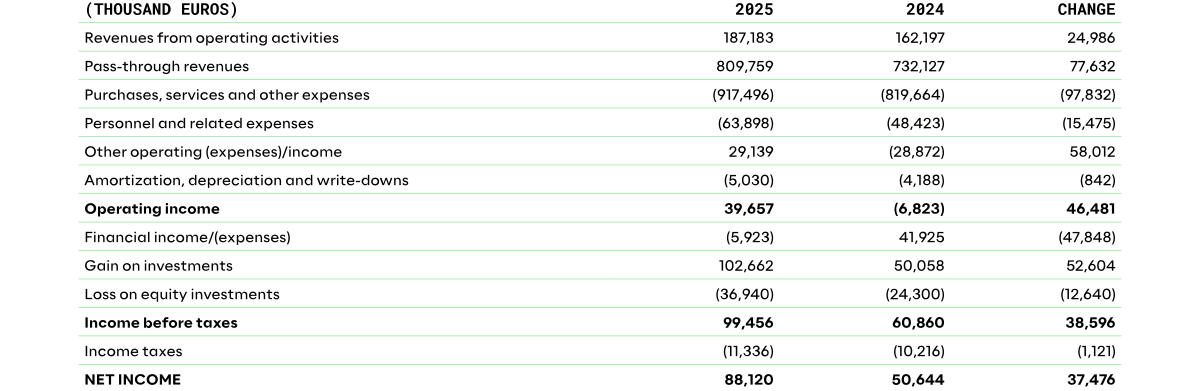
Revenues from operating activities mainly refer to:
royalties on the Reply trademark for 66,666 thousand Euros (62,394 thousand Euros in the financial year 2024);
shared service activities in favor of its subsidiaries for 70,481 thousand Euros (63,590 thousand Euros in the financial year 2024);
management services for 46,715 thousand Euros (31,907 thousand Euros in the financial year 2024).
Operating income 2025 marked a positive result of 39,657 thousand Euros after having deducted amortization expenses of 5,030 thousand Euros (of which 767 thousand Euros referred to tangible assets, 2,137 thousand Euros to intangible assets and 2,125 thousand Euros related to RoU assets). Financial loss amounted to 5,923 thousand Euros and included interest income on bank accounts for 32,948 thousand Euros, interest expenses for 12,305 thousand Euros mainly relating to financing for the M&A operations and interest expenses on bank accounts. Such result also includes net negative exchange rate differences amounting to 27,827 thousand Euros. Income from equity investments which amounted to 102,662 thousand Euros refers to dividends received from subsidiary companies in 2025. Losses on equity investments referred to write-downs and losses reported in the year by some subsidiary companies that were considered to be unrecoverable. Net income for the year ended 2025 amounted to 88,120 thousand Euros after income taxes of 11,336 thousand Euros.
Financial structure
Reply S.p.A.’s financial structure as at 31 December 2025, compared to that as at 31 December 2024, is provided below:
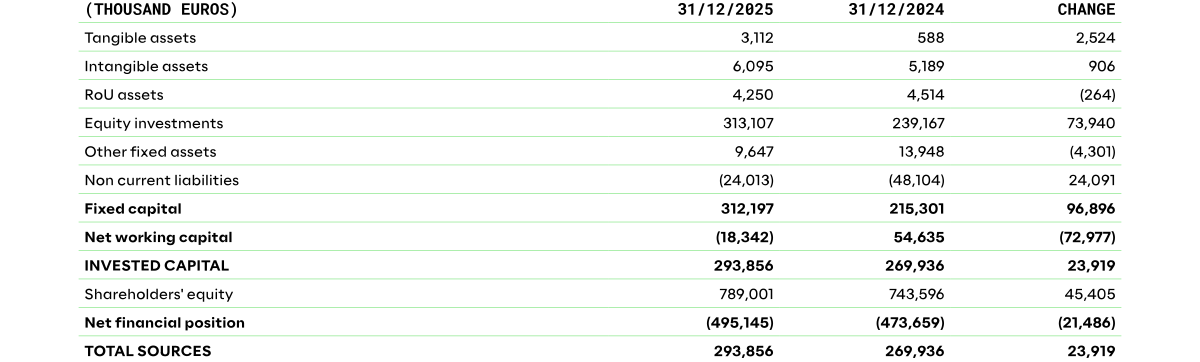
The net invested capital on 31 December 2025, amounting to 293,856 thousand Euros, was funded by Shareholders’ equity in the amount of 789,001 thousand Euros and by available overall funds of 495,145 thousand Euros. Changes in balance sheet items are fully analysed and detailed in the explanatory notes to the financial statements.
Net financial managerial position
The Parent Company’s net financial managerial position as at 31 December 2025, compared to 31 December 2024, is detailed as follows:
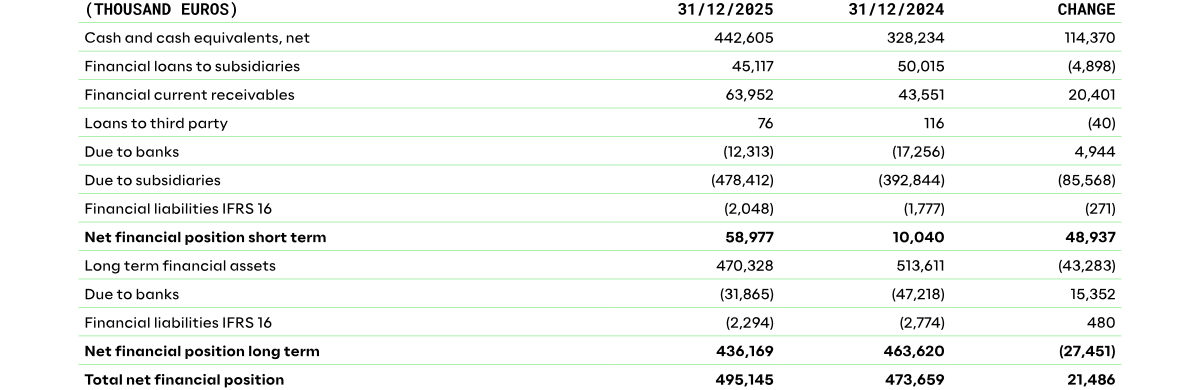
Change in the net financial managerial position is analysed and illustrated in the explanatory notes to the financial position.
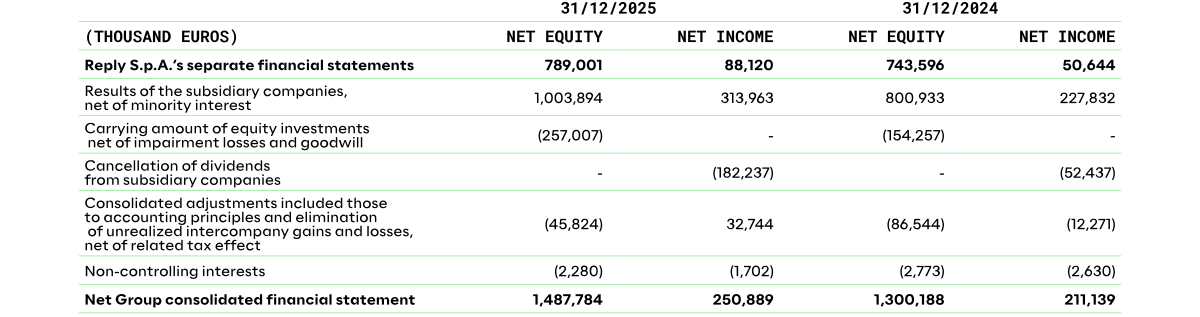
Reconciliation of equity and profit for the year of the parent company
In accordance with Consob Communication no. DEM/6064293 dated 28 July 2006, Shareholders’ equity and the Parent Company’s result are reconciled below with the related consolidated amounts.
Corporate Governance
The Corporate Governance system adopted by Reply – issuer listed at Euronext Star Milan - adheres to the Corporate Governance Code for Italian Listed Companies issued by Borsa Italiana S.p.A..
In compliance with regulatory obligations the annually drafted “Report on Corporate Governance and Ownership Structures” contains a general description of the corporate governance system adopted by the Group, reporting information on ownership structures and compliance with the Code, including the main governance practices applied and the characteristics of the risk management and internal control system also with respect to the financial reporting process. The aforementioned Report, related to 2025, is available on the website www.reply.com. The Corporate Governance Code is available on the website of Borsa Italiana S.p.A. https://www.borsaitaliana.it/comitato-corporate-governance/codice/2020.pdf.
Other information
Research and development activities
Reply offers high technology services and solutions in a market where innovation is of primary importance.
Reply considers research and continuous innovation a fundamental asset in supporting clients with the adoption of new technology. Reply dedicates resources to Research and Development activities in order to project and define highly innovative products and services as well as possible applications of evolving technologies. In this context, Reply has developed of its own platforms. Reply has important partnerships with major global vendors so as to offer the most suitable solutions to different company needs. Specifically, Reply boasts the highest level of certification amongst the technology leaders in the Enterprise sector.
Human resources
Human resources constitute a primary asset for Reply which bases its strategy on the quality of products and services and places continuous attention on the growth of personnel and in-depth examination of professional necessities with consequent definitions of needs and training courses. The Reply Group is comprised of professionals originating from the best universities and polytechnics. The Group intends to continue investing in human resources by bonding special relations and collaboration with major universities with the scope of attracting highly qualified personnel.
The people who work at Reply are characterized by enthusiasm, expertise, methodology, team spirit, initiative, the capability of understanding the context they work in and of clearly communicating the solutions proposed. The capability of imagining, experimenting and studying new solutions enables more rapid and efficient innovation. The group intends to maintain these distinctive features by increasing investments in training and collaboration with universities. At the end of 2025 the Group had 16,624 employees compared to 15,667 in 2024.
General Data Protection Regulation (GDPR)
The governance model of the Group privacy policy reflects what is required by the existing code for the protection of personal data and the European Regulation 679/16 (GDPR). Privacy fulfilments are managed uniformly at the Reply Group level in order to maintain adequate levels of internal coherence and to facilitate external relations, in particular with authorities, customers and suppliers. To ensure compliance the Group has adopted a GDPR program which provides several activities including:
updating the Group privacy organizational model;
designation for each Region of a Data Protection Officer;
reorganization of the central Privacy & Security Team;
preparation of contact link with the DPO and the Privacy & Security Team through a central ticketing system for support on: privacy and security service assessments, analysis of privacy and security contractual addenda, audits, breaches and incidents, and general requests; support is provided to both the Central Functions and the Group's Companies;
updating of e-learning and induction material related to data protection content and safeguard of information;
mandatory GDPR and ICT Security training at all business levels;
periodical updating of Records of the treatment activities;
development and dissemination of new fundamental processes for GDPR (privacy by design, data protection impact assessment, privacy requests and data breach management and notification), updating of existing data protection policies, development and dissemination of guidelines and contractual templates for GDPR;
periodic internal audits on the Companies for the correct application of the GDPR requirements in the work for Customers (e.g. application of a DPA) and in the engagements of Suppliers.
Transactions with related parties and group companies
During the period, there were no transactions with related parties, including intergroup transactions, which qualified as unusual or atypical. Any related party transactions formed part of the normal business activities of companies in the Group. Such transactions are concluded at standard market terms for the nature of goods and/or services offered, these transactions took place in accordance with the internal procedures containing the rules aimed at ensuring transparency and fairness, under Consob Regulation 17221/2010. The company in the notes to the financial statements and consolidated financial statements provides the information required pursuant to Art. 154-ter of the TUF [Consolidated Financial Act] as indicated by Consob Reg. no. 17221 of 12 March 2010 and subsequent Consob Resolution no. 17389 of June 23, 2010, indicating that there were no significant transactions concluded during the period as defined by Art. 4, paragraph 1, let a) of the aforementioned regulation that have significantly affected the Group’s financial or economic position. The information pursuant to Consob communication of 28 July 2006 are presented in the annexed tables herein.
Treasury shares
At the balance sheet date, the Parent Company holds 133,192 treasury shares amounting to 17,122,489 Euros, nominal value equal to 17,315 Euros; at the balance sheet item net equity, the company has posted an unavailable reserve for the same amount. At the balance sheet date, the Company does not hold shares of other holding companies.
Financial instruments
In relation to the use of financial instruments, the company has adopted a policy for risk management through the use of financial derivatives, with the scope of reducing the exposure to interest rate risks on financial loans. Such financial instruments are considered as hedging instruments as they can be traced to the object being hedged (in terms of amount and expiry date).
In the notes to the financial statements more detail is provided to the above operations.
Secondary Offices
The Group operates in 16 countries through a total of 52 offices, ensuring a strategic presence in the main reference markets. The geographical distribution of the locations reflects the Group’s commitment to offering efficient services tailored to local needs.
Pillar 2
Following the publication by the Organisation for Economic Co-operation and Development (OECD) and the Inclusive Framework of the document “Tax Challenges Arising from the Digitalisation of the Economy – Administrative Guidance on the Global Anti-Base Erosion Model Rules (Pillar Two)”, the European Commission adopted EU Directive No. 2022/2523 on global minimum taxation for multinational enterprise groups. In implementation of this Directive, Italy enacted Legislative Decree No. 209/2023, followed by subsequent implementing measures. The national provisions apply to tax periods beginning on or after 31 December 2023 and, therefore, for the Group from the 2024 financial year.
The Pillar Two rules are intended to ensure that multinational groups are subject to a minimum effective tax rate of at least 15% in each jurisdiction in which they operate.
The Group falls within the scope of the Pillar Two regulations and applies the mandatory temporary exception introduced by the amendments to IAS 12, which allows entities not to recognise deferred taxes related to the implementation of the Pillar Two rules.
In this context, analyses have been carried out to assess the likelihood that, in the jurisdictions in which the Group operates, the requirements for the application of the transitional simplified regime (so-called “Safe Harbour”) are met. In addition, analyses have been performed to assess whether, for jurisdictions where such requirements are not met, a top-up tax may be payable in relation to the results for the year ended 31 December 2025.
Based on the analyses performed, no material impacts on the financial statements are expected from the application of the above-mentioned regulations for the year 2025.
Consolidated sustainability statement
General information
ESRS 2 General disclosures
BP-1: General basis for preparation of sustainability statements
The Reply Group’s 2025 Consolidated Sustainability Statement marks the second year of reporting on a consolidated basis, in accordance with the requirements of the Corporate Sustainability Reporting Directive (CSRD) and the European Sustainability Reporting Standards (ESRS). The scope of consolidation is aligned with that of Reply Group’s consolidated financial statements. The consolidated sustainability statement is based on the results of the Group’s double materiality assessment, considering relevant impacts, risks, and opportunities. The assessment encompasses all stages of the Reply Group’s value chain, both upstream and downstream. Specifically, Reply’s value chain includes not only the activities and services directly provided by the Group, but also the upstream stages related to sourcing, and the downstream stages concerning the use of the Group’s services and solutions by clients and end users. A detailed description of the Group’s value chain and the outcomes of the double materiality assessment can be found in the following sections [SBM-1] STRATEGY, BUSINESS MODEL AND VALUE CHAIN and [SBM-3] MATERIAL IMPACTS, RISKS AND OPPORTUNITIES AND THEIR INTERACTION WITH STRATEGY AND BUSINESS MODEL. For the purpose of sustainability indicators, the reporting aggregates operating locations by region, based on the countries where the Group operates, as follows:
Region 1: Brazil, India, Italy, Poland, Romania, USA, China (Nanjing);
Region 2: Austria, Croatia, Germany, Poland, China (Beijing);
Region 3: Belgium, France, Luxembourg, Morocco, Netherlands, United Kingdom.
In 2025, Reply did not make use of the option to omit specific information related to intellectual property, know-how or innovation outcomes, nor did it apply the exemption for disclosing information on upcoming developments or matters under negotiation. Unless otherwise stated, no metric included in this document has been verified by an external party other than the statutory auditor.
1 With reference to Nexi Digital Polsa Sp.z.o.o.
BP-2: Disclosures in relation to specific circumstances
In preparing the consolidated sustainability statement and in analysing information related to material sustainability impacts, risks and opportunities, Reply has adopted time horizons in line with the provisions of ESRS 1:
the short-term horizon is defined as a period of one year from the current reporting date;
the medium-term horizon covers a period from one to five years from the current reporting period;
the long-term horizon is defined as beginning five years after the current reporting period.
The use of estimates, the level of accuracy achieved, and, where applicable, any actions planned to improve accuracy in the future are detailed within the report. For each quantitative amount, whether metric or monetary, the report provides information on the sources of measurement uncertainty, as well as the assumptions, estimates, approximations and judgements applied. For the purpose of reporting forward-looking information in accordance with the ESRS, the Directors are required to prepare such information based on assumptions—outlined in the consolidated sustainability statement—regarding events that may occur in the future and possible future actions by the Group. Due to the uncertainty inherent in the occurrence of any future event, both in terms of whether it will actually happen and the extent and timing of its manifestation, actual results may differ significantly from the forward-looking information. As 2025 represents the second year of reporting by the Reply Group in accordance with the requirements of the Corporate Sustainability Reporting Directive (CSRD) and the European Sustainability Reporting Standards (ESRS), a comparison with the previous reporting period is possible in the presentation of sustainability information. No material changes have been identified in the report preparation criteria or in the metrics subject to assurance compared to the previous year. For further details regarding the changes identified as a result of the double materiality assessment, please refer to the chapters [SBM-3] MATERIAL IMPACTS, RISKS AND OPPORTUNITIES AND THEIR INTERACTION WITH STRATEGY AND BUSINESS MODEL and [IRO-1] DESCRIPTION OF THE PROCESSES TO IDENTIFY AND ASSESS MATERIAL IMPACTS, RISKS AND OPPORTUNITIES. Lastly, no material variances have been identified in comparative indicators, nor have any significant changes been made to the calculation methodologies applied compared to the previous reporting; furthermore, no material reporting errors have been identified in previous reporting periods. This consolidated sustainability statement reporting includes information related to environmentally sustainable investments pursuant to Regulation (EU) 2020/852 as outlined in the section DISCLOSURES PURSUANT TO ARTICLE 8 OF REGULATION (EU) 2020/852 (TAXONOMY REGULATION) of the chapter ENVIRONMENTAL INFORMATION. In addition, the Group has chosen to include certain disclosure requirements by reference, which are explicitly indicated in the relevant chapters of this document.
Governance
This chapter provides an overview of the processes, controls and governance procedures established to monitor, manage and oversee the material impacts, risks and opportunities relevant to the Group.
[GOV-1] The role of the administrative, management and supervisory bodies
The administrative, management and supervisory bodies follow a clear hierarchical structure, led by the Board of Directors. This structure includes operational oversight bodies such as the Board of Statutory Auditors and several operational committees, including the Sustainability (ESG) Committee and the Control and Risks Committee. The Board of Directors is the collective management body, vested with all powers related to both ordinary and extraordinary administration. It performs a guiding and supervisory role over the Group’s overall activities, aiming to achieve sustainable success and create medium- to long-term value for shareholders. The Board of Directors assesses management performance by comparing actual results with planned targets, and evaluates risks in line with strategic objectives, considering factors that may affect the Company’s sustainable success. The Board also reviews and evaluates, on a regular basis and in conjunction with the approval of the annual and semi-annual financial reports, the adequacy of the Group’s organizational, administrative and accounting structure, with specific reference to the internal control and risk management system. This evaluation is also based on the preliminary work conducted by the Control and Risks Committee, which relies in turn on audits carried out by the Internal Audit function. The Board of Directors of Reply S.p.A. consists of a variable number of members, in accordance with Article 15 of the Articles of Association (“Administration”), ranging from 3 to a maximum of 11, as determined by the Shareholders’ Meeting. The number, expertise, authority, and time availability of the non-executive directors ensure that their judgement carries significant weight in board decision-making, and that effective oversight of management is maintained. Currently, the Company’s Board of Directors is composed of 10 members, of which: 5 are executive directors (2 women and 3 men), 1 is a non-executive director (male), and 4 are non-executive and independent directors (2 women and 2 men). For further details, please refer to the chapter GOVERNANCE INFORMATION in section [ESRS 2 GOV-1] THE ROLE OF THE ADMNISTRATIVE, SUPERVISORY AND MANAGEMENT BODIES. There are no employee representatives or trade union delegates present within the Board of Directors or, more generally, within the organizational structure of Reply. The Company’s Board of Directors is composed of 2 women and 4 men aged between 55 and 80, and 2 women and 2 men aged between 45 and 55; 1 woman holds the position of CEO. The current gender composition of the Board of Directors is 60% male and 40% female. With regard to diversity policies in the composition of the Board of Directors and the Board of Statutory Auditors, the Board has not deemed it necessary to formalize a dedicated diversity policy, as such principles are already applied within the company’s organizational framework. Moreover, national regulations provide adequate provisions to ensure gender balance, which the Company has complied with during the most recent appointments of the administrative and supervisory bodies. The Company applies diversity criteria, including gender diversity, in the composition of both the Board of Directors and the Board of Statutory Auditors, in line with the primary objective of ensuring the appropriate competence and professionalism of their members. The composition of the Board of Directors and the control body is also adequately diversified in terms of age, educational background, and professional experience of the members in office. The Board of Directors of Reply S.p.A. includes 4 Independent Directors out of a total of 10, representing 40% of the entire board, in accordance with the independence criteria established by applicable regulations. The appointment of directors is governed by the Company’s Articles of Association, specifically Article 16 “Appointment of Directors,” which takes into account gender balance requirements under national legislation. For further information on the experience of the Board of Directors, please refer to the section [ESRS 2 GOV-1] THE ROLE OF THE ADMNISTRATIVE, SUPERVISORY AND MANAGEMENT BODIES. Among the supervisory and control bodies, the Board of Statutory Auditors monitors compliance with the law and the Articles of Association, oversees corporate management, the adequacy of the organizational structure, and the implementation of the Corporate Governance Code. It also performs internal control and audit functions, monitoring financial reporting, the effectiveness of the internal control and risk management systems, the statutory audit of the accounts, and the independence of the external auditor. The statutory audit is not carried out by the Board itself but is entrusted to an audit firm appointed by the Shareholders’ Meeting. As part of the oversight activities carried out during the year, the Board of Statutory Auditors coordinates with the Internal Audit function, the Control and Risks Committee, and the Supervisory Body through periodic information exchanges during the quarterly meetings of the Board, as well as through the participation of its Chairperson, and occasionally the Standing Auditors, in meetings of the Control and Risks Committee. The Board of Statutory Auditors is composed of three Standing Auditors and two Alternate Auditors, specifically: Dr. Ciro Di Carluccio (Chair), Prof. Donatella Busso (Standing Auditor), Prof. Piergiorgio Re (Standing Auditor), Dr. Gabriella Chersicla (Alternate Auditor), and Dr. Stefano Barletta (Alternate Auditor). In 2021, the Board of Directors established the Sustainability (ESG) Committee, supported operationally by the ESG team. The Committee is composed of CEO Eng. Tatiana Rizzante and Independent Directors Prof. Domenico Giovanni Siniscalco and Eng. Secondina Ravera. They are responsible for defining the overall strategic approach to sustainability, with a particular focus on the material impacts, risks, and opportunities relevant to the Group. The Committee defines objectives and monitoring methods, aiming to clearly communicate Reply’s commitment to sustainability issues to all stakeholders. The CEO, Eng. Tatiana Rizzante, periodically reports to the full Board of Directors on the topics addressed by the Committee and the related proposals. The Board of Directors has established the Control and Risks Committee, currently composed of Non-Executive and Independent Director Prof. Federico Ferro-Luzzi, Non-Executive Director Daniele Angelucci, and chaired by Lawyer Patrizia Polliotto (Lead Independent Director). The members possess adequate knowledge and experience in risk management, based on their professional backgrounds and expertise in the industry in which the Company operates. For further details on the experience and expertise of the members of the aforementioned administrative, management and supervisory bodies, please refer to the chapter [ESRS 2 GOV-1] THE ROLE OF THE ADMNISTRATIVE, SUPERVISORY AND MANAGEMENT BODIES. The Control and Risks Committee meetings are attended, upon invitation by the Committee Chair, by the CFO—responsible for the internal control and risk management system—the Head of the Internal Audit function, the Chair of the Board of Statutory Auditors, and, on occasion, the Standing Auditors. At the end of each meeting, a specific report is drawn up, summarizing the Committee’s proposals. The Corporate Governance Code provides that the Chief Executive Officer is responsible for establishing and maintaining the internal control and risk management system. In addition, the CEO must ensure that the Head of Internal Audit is granted the necessary conditions to carry out their activities in compliance with applicable regulations. However, at its meeting on 23 April 2024, the Board of Directors appointed Eng. Marco Cusinato as the director in charge of the internal control and risk management system, assigning him the task of ensuring its effectiveness and compliance with the provisions of the Corporate Governance Code. This appointment is justified by the comprehensive understanding of the Company’s and the Group’s organizational structure that his role enables him to have, as well as by the experience he has gained within the Reply Group, where he has worked for over 25 years. In the meeting held on 14 November 2024, the Board of Directors confirmed Mr. Edoardo Dezani as Head of the Internal Audit function, based on the proposal of the Director in charge of the internal control system, following the favourable opinion of the Control and Risks Committee and after consulting the Board of Statutory Auditors. He is responsible for verifying the functioning and adequacy of the internal control and risk management system. The Head of Internal Audit reports hierarchically to the Lead Independent Director and operates based on the mandate and audit plan approved by the Board of Directors. He prepares periodic reports assessing the adequacy of the internal control and risk management system and the reliability of the information systems, including accounting systems, and reports on his work to the members of the Board of Directors, Senior Management, the Control and Risks Committee, and the Board of Statutory Auditors. The methodological approach adopted for the assessment of the internal control and risk management system, including sustainability-related risks, is based on the principles of the CoSO Framework, one of the main internationally recognized standards. For further details, please refer to paragraph [GOV–5] RISK MANAGEMENT AND INTERNAL CONTROLS OVER SUSTAINABILITY REPORTING. The administrative, management and supervisory bodies possess expertise in sustainability, developed through regular consultations with the Sustainability Committee and the ESG Team. These updates complement the existing governance expertise, ensuring continuous alignment with regulatory and market developments and effective monitoring of ESG-related impacts, risks and opportunities The effectiveness of the Board of Directors and its Committees—as well as their size and composition—is evaluated periodically in accordance with the Corporate Governance Code. The most recent evaluation was conducted on 12 March 2025, during which the Board concluded that the current structure of the Board and its Committees complies with the provisions of the Code.
[GOV-2] Information provided to and sustainability matters addressed by the undertaking’s administrative, management and supervisory bodies
The Sustainability (ESG) Committee is responsible for monitoring the implementation and effectiveness of the Group’s sustainability policies, actions, metrics, and targets. The Committee meets at least twice a year to discuss and make decisions on sustainability matters and performs preparatory, advisory, and support functions for the Board of Directors in relation to sustainable development. The Committee also supports the Board of Directors in the preparation of the consolidated sustainability statement. In this context, an operational ESG team is in place. This team, working in close coordination with the Sustainability Committee, manages and addresses sustainability matters in collaboration with all key internal functions. In particular, it is responsible for preparing and drafting the Group’s consolidated sustainability statement on a regular basis. The ESG team reports directly to the CEO, confirming that sustainability is a core component of Reply’s strategy. The CEO informs the Board of Directors of the matters discussed and approved by the Sustainability Committee. The ESG-related topics and sub-topics identified through the double materiality assessment, as defined by the Sustainability Committee, were shared with and submitted for validation by the Board of Directors. The Sustainability Committee and the ESG Team therefore play a crucial role in overseeing the company’s strategy, in decisions related to significant operations, and in the risk management process. The approved relevant sustainability topics and sub-topics, along with the associated impacts, risks, and opportunities, are presented in paragraph [SBM-3] MATERIAL IMPACTS, RISKS AND OPPORTUNITIES AND THEIR INTERACTION WITH STRATEGY AND BUSINESS MODEL.
[GOV-3] Integration of sustainability-related performance in incentive schemes
The Board of Directors, based on the proposal of the Remuneration Committee, adopts resolutions regarding the fixed remuneration of Executive Directors and defines the procedures for determining the variable component of their remuneration. The variable component is structured through the allocation of a profit-sharing scheme pursuant to Article 22 of the Company’s Articles of Association, with annual resolutions for the short-term component and resolutions at the beginning of the reference period for the medium- to long-term component. The Shareholders’ Meeting approves, through a binding vote, the first section of the Remuneration Report, which contains the Remuneration Policy, with the frequency required by the duration of the policy as defined, and in any case at least every three years or whenever the policy is amended. The incentive plan currently in force was approved by the Shareholders’ Meeting on April 23, 2024, and covers the period 2023–2026.
The Remuneration Committee assesses performance as follows:
-
annually, with respect to the short-term variable component;
-
at the end of the reference period, for the medium- to long-term variable component.
Based on information and analyses provided by internal departments, the Committee formulates and shares with the Board of Directors the proposal for profit-sharing allocations to be submitted to the Shareholders’ Meeting, along with the related distribution. The Shareholders’ Meeting is then called upon to approve the proposed allocation of the variable remuneration component. With specific regard to incentive systems linked to sustainability matters, for the medium- and long-term variable component (valid through 31 December 2026), performance targets are set over a four-year period and are tied to the following indicators: EBIT (Earnings Before Interest and Taxes), TSR (Total Shareholder Return), CFO (Operating Cash Flow), and ESG. For the ESG indicator, the only defined target is the achievement of Carbon Neutrality by 2025. Performance indicators are weighted based on their alignment with the corporate strategy and the level of operational responsibility of Executive Directors and Executives with strategic responsibilities, as follows: 58% EBIT, 26% TSR, 8% CFO, and 8% ESG target of Carbon Neutrality As set out in the paragraph [E1-4] TARGETS RELATED TO CLIMATE CHANGE MITIGATION AND ADAPTATION the carbon neutrality objective was achieved in the course of the 2025 financial year. However, the incentive linked to the achievement of the Carbon Neutrality target will be granted, in line with the Remuneration Policy.
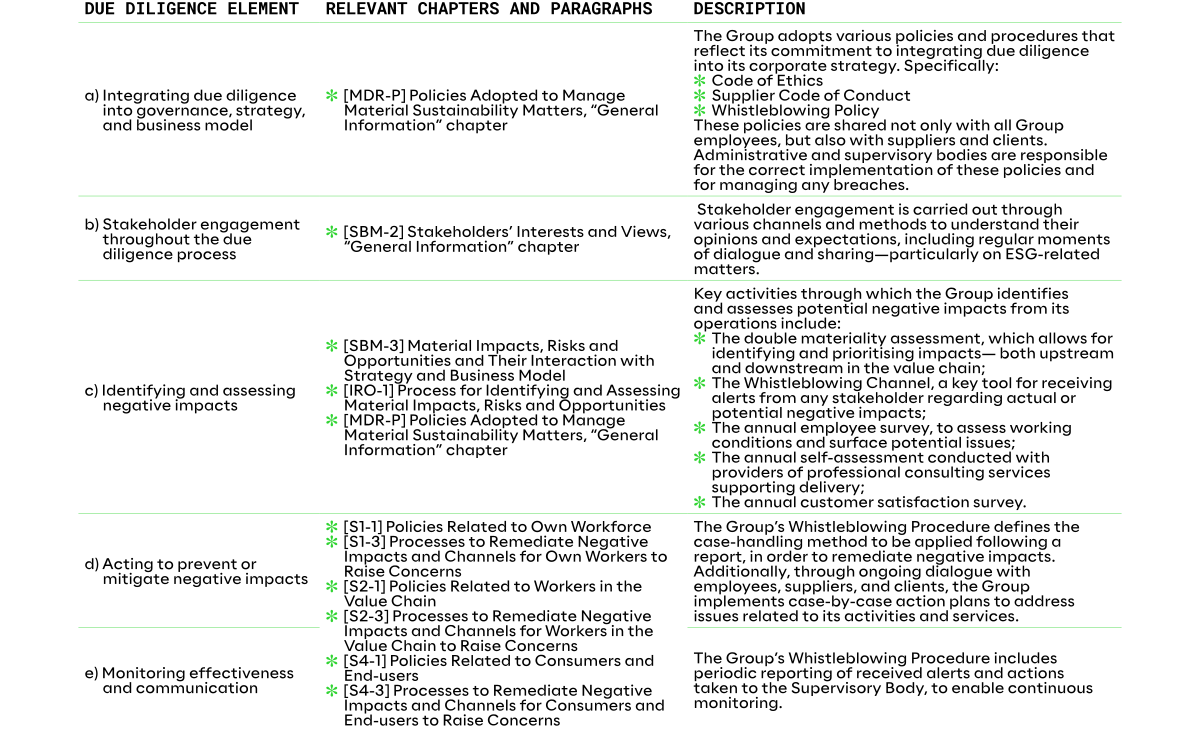
[GOV-4] Statement on due diligence
Currently, the Reply Group has not yet defined a formalized procedure for the sustainability due diligence process. However, key elements of due diligence are in place and are presented in the following table, with references to the specific chapters and sections where they are addressed in detail.
[GOV–5] Risk management and internal controls over sustainability reporting
The Board of Directors has established the Control and Risks Committee within its structure, with preparatory, advisory, and consultative functions, for the operational management of the internal control and risk management system. This Committee evaluates the effectiveness of the internal control system on a semi-annual basis and ensures that the information disclosed in this annual report is accurate and transparent. However, ultimate responsibility for the system lies with the Board of Directors, which defines its strategic guidelines and work plan, based on the Committee’s assessment, and monitors its adequacy. The methodological approach adopted for evaluating the internal control and risk management system—including sustainability-related risks—is based on the principles of the CoSO Framework, one of the internationally recognised standards. Using this model, the Group has mapped and carried out a qualitative assessment of the most significant risks (including those relevant to sustainability), both in terms of potential risk and associated first- and second-level controls, resulting in a measurement of residual risk. The Internal Audit function is responsible for monitoring the sustainability reporting process through control testing activities and identifying any weaknesses in the internal control system. Internal Audit reports the outcomes of these control activities semi-annually to the Board of Directors and the Control and Risks Committee. Based on the findings reported, action plans are subsequently defined and integrated into operational processes through a systematic and structured approach. The ESG team is responsible for drafting detailed procedures that define roles and responsibilities, ensuring full traceability of the entire reporting process. Furthermore, the ESG team ensures continuous training for staff involved in sustainability reporting, making sure they are always up to date on applicable regulations. Data collection is managed through an annual work plan, with periodic checks in place to ensure the accuracy and completeness of the information.
Strategy
The following sections analyse the elements of Reply’s strategy related to sustainability, its business model and value chain, highlighting how the Group integrates stakeholder interests and how the impacts, risks and opportunities identified through the double materiality assessment influence its overall strategy.
[SBM-1] Strategy, business model and value chain
The Reply Group offers a wide range of services, as detailed in the “Reply” section of the Financial Report. These include strategic consulting, communication, design, processes and technology, as well as system integration services that combine business consulting with innovative, high value-added technological solutions. In addition, Reply provides cutting edge digital services by leveraging new communication channels and emerging digital trends. The main markets in which Reply operates are also described in the “Reply” section of the Financial Report. The Group’s services extend across several geographic areas, divided into regions, as described in paragraph BP-2: DISCLOSURES IN RELATION TO SPECIFIC CIRCUMSTANCES. The number of employees active in each region is presented in the following paragraph ESRS S1 OWN WORKFORCE. In 2025, there were no significant changes in the services offered or in the markets where the Group operates. It should be noted that Reply does not provide prohibited services in restricted markets and is not active in the fossil fuel sector, chemical manufacturing, controversial weapons, or the cultivation and production of tobacco. Through its first double materiality assessment, Reply identified the material impacts, risks and opportunities relevant to the Group, which guide the strategy and the business model with the goal of mitigating negative impacts and financial risks, while capturing opportunities and maximising positive impacts on key material topics. In general, the strategy is built around key pillars aimed at ensuring well-being and fairness for the workforce throughout the value chain, promoting energy efficiency and reducing greenhouse gas emissions through the implementation of low-consumption technologies and responsible energy management practices. Lastly, the Group aims to expand its offering of sustainability-oriented solutions for its clients by developing consulting services that support companies in their transition toward more sustainable operating models. These strategic elements not only reinforce Reply’s commitment to sustainability but also help generate positive impacts on communities and the environment, creating value and building stakeholder trust. For further details, please refer to paragraph [SBM-2] INTERESTS AND VIEWS OF STAKEHOLDERS. Currently, Reply has not set specific sustainability-related targets in terms of significant product and service groups, customer categories, geographic areas, or stakeholder relationships. However, the Group has committed to achieving Net Zero by 2030, as part of its transition towards a more sustainable and environmentally responsible business model. For further details, please refer to paragraph [E1-4] TARGETS RELATED TO CLIMATE CHANGE MITIGATION AND ADAPTATION. Reply has not made use of the exemption from disclosure provided under Article 18(1)(a) of Directive 2013/34/EU. For a description of Reply’s business model, main activities, and principal customer segments, please refer to the paragraph “Reply” in this “Annual Financial Report.” For information on the cost and revenue structure, in accordance with the disclosure requirements under IFRS 8, please refer to NOTE 37 – Segment Reporting in the Financial Report. The main resources used by the Group to carry out its business operations are:
Human capital, which is crucial to delivering and ensuring the quality of the services offered by the Group. In this regard, Reply invests in the training and professional development of its employees, ensuring they have the necessary skills to perform their duties, and in welfare systems to attract and retain top talent. For more information, please refer to the chapter ESRS S1 OWN WORKFORCE.
IT and technological systems: Reply invests in advanced technologies and adopts an innovative approach to develop and implement technological solutions that support its business activities.
Reply’s value chain
Reply operates through a network structure composed of specialised companies focused on processes, applications, and technologies, which act as centres of excellence in their respective areas:
Processes – For Reply, understanding and applying technology means introducing an enabling factor for business processes, thanks to in-depth knowledge of the market and specific industrial contexts;
Applications – Reply designs and develops application solutions tailored to the core business needs of clients across various industry sectors;
Technologies – Reply optimises the use of innovative technologies, delivering solutions that ensure maximum efficiency and operational flexibility for its clients.
Reply's services include:
Consulting – strategic, communication, design, process and technology consulting;
System Integration - to best utilise the potential of technology, combining business consulting with innovative, high-value-added technological solutions;
Digital Services - innovative services based on new communication channels and emerging digital trends.
Reply’s value chain includes not only the above-mentioned services delivered directly by the Group, but also upstream phases relating to direct and indirect procurement, as well as downstream phases concerning the use of the Group’s solutions by its clients, as illustrated in the table below.

[SBM-2] Interests and views of stakeholders
Stakeholder engagement activities aim to integrate stakeholder expectations and views into the Group’s strategy and business model. These activities foster continuous and transparent dialogue throughout the entire value chain, with the goal of building long-lasting trust-based relationships. Below are the main categories of stakeholders identified by Reply.


















Figure 1: Stakeholder categories identified as relevant for the Reply Group.
Reply Group adopts a continuous dialogue and engagement approach with its stakeholders through targeted initiatives, structured moments of interaction, and the regular sharing of information. The table below outlines the main stakeholder categories identified by the Group, along with the commonly used engagement channels. In particular, it is noted that stakeholders, including external parties, are engaged with the various corporate functions according to their respective areas of responsibility, and that such interactions occur at defined intervals and within structured contexts, thereby facilitating the exchange of information pertinent to specific topics. An illustrative example is provided by periodic meetings with suppliers, during which matters relating to their qualification process are addressed, such process being assessed on the basis of a range of criteria, including ESG considerations. The Group has engaged internal stakeholders responsible for its key areas in the process of identifying impacts, risks and opportunities through formal meetings and structured interviews. This engagement has enabled continuous and systematic alignment among the key functions that maintain the most significant relationships with the identified external stakeholders, including customers, competitors, public administrations and suppliers, thereby indirectly reflecting their expectations and interests and contributing added value to the double materiality assessment process. Where deemed appropriate, the process has also entailed the involvement of top management and/or the Board of Directors (representing the shareholders), in order to ensure adequate oversight of the most material matters. This approach ensures that stakeholders’ expectations and concerns are thoroughly analysed and duly incorporated into the definition of the Reply Group’s sustainability strategy. Moreover, the administrative, management, and supervisory bodies of Reply receive regular updates on stakeholder views and interests, including the outcomes of the double materiality assessment. These activities have enabled the collection of information instrumental to the performance of the double materiality assessment and to the determination of its outcomes. No additional stakeholder engagement measures are currently planned beyond those conducted on an annual basis.
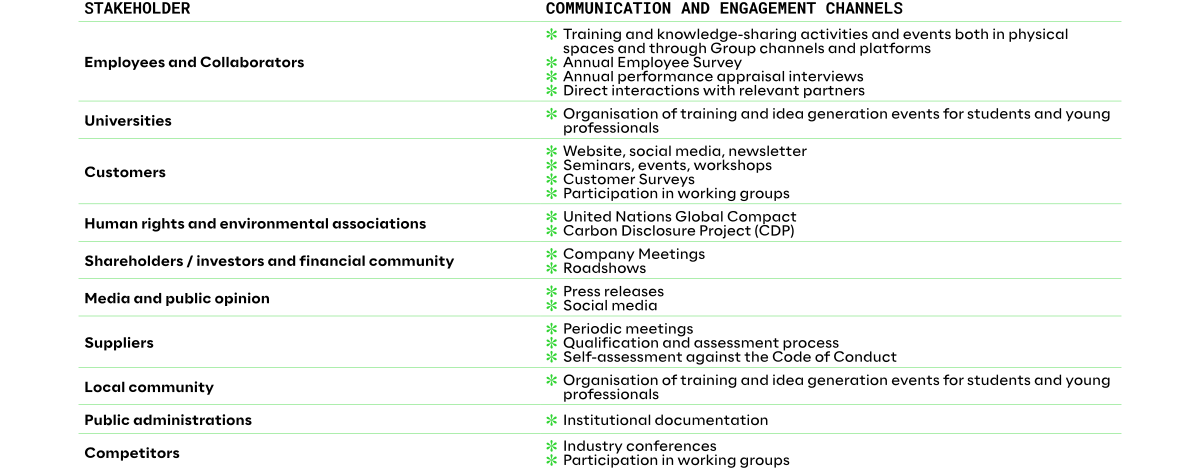
[SBM-3] Material impacts, risks and opportunities and their interaction with strategy and business model
In 2025, in addition to representing the second year of reporting in compliance with the CSRD, the Group updated its double materiality assessment with the aim of comprehensively reassessing impacts, risks, and opportunities in light of the internal and external context in which Reply Group operates, while capturing any potential developments. This section outlines the material impacts, risks, and opportunities identified by the Group through the double materiality assessment, which guides the preparation of this consolidated sustainability statement. It highlights how these elements interact with the Group’s strategy and business model. The update of the double materiality assessment did not result in any changes to the relevant sustainability topics compared to 2024. The main development concerns the alignment of the risk and opportunity assessment methodology with the Group’s Enterprise Risk Management (ERM) Framework, ensuring a consistent and integrated approach, fully aligned with the ERM both in terms of content and methodology adopted. Specifically, the changes compared to the results of the previous year mainly emerge at the level of sub-topics and sub-sub-topics, particularly within the social domain. In this context, the sub-sub-topic “Work–life balance along the value chain” (S2 – Workers in the value chain) and the sub-topic “Social inclusion of consumers and/or end-users” (S4 – Consumers and end-users) are no longer considered material, as in 2025 they were not associated with significant impacts, risks, or opportunities for the Group. For further details on the process adopted to identify impacts, risks, and opportunities relevant to Reply Group, please refer to paragraph [IRO-1] DESCRIPTION OF THE PROCESSES TO IDENTIFY AND ASSESS MATERIAL IMPACTS, RISKS AND OPPORTUNITIES. The table below provides a summary of the actual and potential impacts—both negative and positive—as well as the material risks and opportunities for the Group. It includes a description of where these impacts risks and opportunities arise and are concentrated across the Group’s operations and value chain, both upstream and downstream. With regard to the Group’s material impacts, the description explains how these impacts affect people and the environment along the value chain, particularly in the context of business relationships. The current and expected effects of the relevant impacts, risks, and opportunities on the business model, value chain, strategy, and decision-making process are detailed in the table below and in the corresponding thematic sections of the document. Furthermore, the document outlines how the Group responds or intends to respond to these effects, ensuring a proactive and strategic management of emerging challenges and opportunities. Finally, material impact, risk and opportunity, the reasonably expected time horizons are indicated, as defined in paragraph BP-2: DISCLOSURES IN RELATION TO SPECIFIC CIRCUMSTANCES. It should be noted that no impact, risk or opportunity is reported through additional, Group specific disclosures. Finally, as of 31 December 2025, Reply did not identify any risks or opportunities that have resulted in financial impacts. The risks and opportunities presented in the table below, although classified as short-term, are of a potential nature and did not give rise to any financial effects during the reporting period. Furthermore, the Group considers that none of these give rise to a significant risk of material adjustments to assets and liabilities in the forthcoming financial year. To ensure the ability to address material impacts and risks and to seize relevant opportunities in the area of sustainability, Reply has developed its own corporate strategy, as described in paragraph [SBM-1] STRATEGY, BUSINESS MODEL AND VALUE CHAIN.
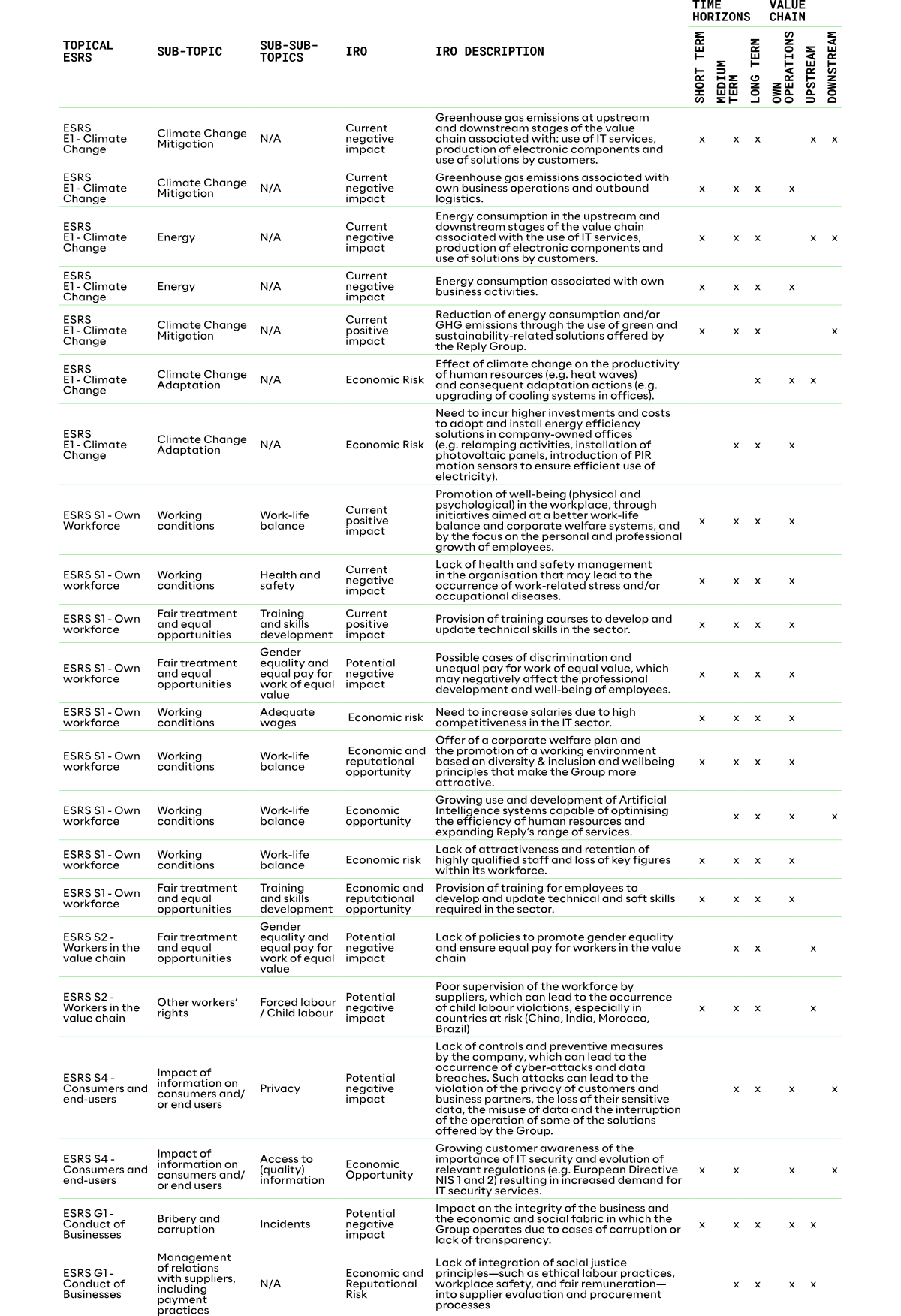
Gestione degli impatti, dei rischi e delle opportunità
This section aims to illustrate the process of identifying impacts, risks and opportunities, as well as the information that, following the double materiality assessment, Reply has included in this consolidated sustainability statement.
[IRO-1] Description of the processes to identify and assess material impacts, risks and opportunities
As described in paragraph [SBM-3] MATERIAL IMPACTS, RISKS AND OPPORTUNITIES AND THEIR INTERACTION WITH STRATEGY AND BUSINESS MODEL, in 2025 the Group carried out its second double materiality assessment with the aim of refining the financial materiality methodology by aligning it with the ERM and reassessing the materiality of impacts, risks and opportunities (IROs), and consequently the sustainability topics subject to disclosure. In particular, a sustainability topic may be considered material if it is associated with an impact, risk and/or opportunity deemed relevant through one or both of the following analyses:
Impact materiality: A sustainability topic is considered material from an impact perspective if it results in actual or potential, positive or negative, significant impacts for the Group—either under the company’s direct control or across its value chain, both upstream and downstream. This includes the effects of its products and services and business relationships on people and the environment over the short, medium and long term.
Financial materiality: A sustainability topic is considered material from a financial perspective if it generates or may generate significant financial effects for the Group, either negative (risks) or positive (opportunities). These effects have, or are reasonably expected to have, a material influence on the company’s development, financial position, performance, cash flows, access to capital or cost of capital in the short, medium or long term. Such risks and opportunities may arise from activities carried out under the direct control of the company or across its value chain, both upstream and downstream.
In line with the previous year’s exercise, the Group involved its business functions in the IRO assessment process, ensuring a comprehensive and up-to-date analysis of ESG topics relevant to the Group. Specifically, the double materiality process was structured into the following main phases:
1. Context analysis, definition of the value chain, and identification of material impacts, risks and opportunities
Starting from a benchmark analysis conducted on its main competitors, the Group subsequently carried out—consistent with the previous year’s exercise—direct engagement with the heads of key business functions, both to review the Group’s value chain and to update the list of impacts, risks and opportunities to be submitted to the materiality assessment. The functions involved in the process are as follows:
ESG;
Finance;
HR;
ICT;
Internal Audit;
Investor relations;
Operations;
Purchasing;
Risk Management;
Sourcing.
The benchmark analysis and the engagement of business functions made it possible to confirm the Group’s value chain and, consequently, the main actors, suppliers and customers across the different stages of the value chain already identified during the previous year, as described in paragraph [SBM-1] STRATEGY, BUSINESS MODEL AND VALUE CHAIN. At the same time, this process enabled the Group to update the list of impacts, risks and opportunities across the entire value chain, taking into account the activities, geographies and sectors in which the Group operates.
2. Assessment of impacts, risks and opportunities
Finally, a thorough assessment was carried out on the impacts, risks and opportunities identified in the previous phase. This evaluation also included a review of internal documents, applicable regulations, and validation by the functions involved in the process. The following section provides a detailed explanation of how the assessment process for impacts, risks and opportunities (IRO) was conducted.
Impact Materiality
In defining the Group’s material impacts on people and the environment, the following elements were considered:
all the Group’s activities and most significant business relationships;
all the geographies in which Reply operates;
as described in paragraph [SBM-1] STRATEGY, BUSINESS MODEL AND VALUE CHAIN. Negative impacts were assessed based on their likelihood of occur. Specifically:
Scale refers to how serious an impact is;
Scope refers to the extent of the impact in terms of the stages and geographies of the value chain where it occurs;
Irremediability refers to how difficult it is to remediate the negative impact.
Positive impacts were assessed based on their likelihood of occurrence, as well as their scale and the scope in which they occur. Both negative and positive, potential and actual impacts were also evaluated with respect to the time horizon in which they may occur (short, medium, or long term). The process for prioritising impacts was carried out using predefined materiality quantitative thresholds. The monitoring of potential and actual impacts on the environment and people is carried out through continuous analysis of the effects of the actions implemented. These actions aim to mitigate negative impacts and promote positive ones. For further details, please refer to the corresponding thematic sections of the consolidated sustainability statement.
Financial Materiality
Reply has identified and assessed the sustainability-related risks and opportunities that generate—or may generate—financial effects in the short, medium, and long term, based on the impacts identified as material through the impact materiality assessment. The monitoring of risks and opportunities is carried out through continuous analysis of the effects of the external context on the Group’s business, with the aim of promptly identifying potential threats and emerging opportunities.
This evaluation also considers dependencies, i.e., external factors the Group relies on to carry out its activities, such as strategic suppliers, skilled personnel, clients, and energy sources. In addition, it takes into account the actions implemented by the Group—such as investments in energy efficiency—to mitigate negative impacts and/or maximise positive impacts on sustainability.
The relevance of risks and opportunities was assessed based on their likelihood of occurrence and the magnitude of their financial effects and then prioritised using predefined materiality quantitative thresholds.
As outlined in the preceding paragraphs, the double materiality assessment was conducted in coordination with the Risk Management function. The adoption of the ERM evaluation methodology enabled a consistent and comparable determination of the significance of risks and opportunities, strengthening the alignment between consolidated sustainability statement and strategic risk management. The double materiality assessment is therefore presented to and validated by the Sustainability Committee and approved by the Board of Directors as part of the Consolidated Sustainability Report. Furthermore, as described in paragraph [GOV–5] RISK MANAGEMENT AND INTERNAL CONTROLS OVER SUSTAINABILITY REPORTING the Group has begun to define the internal control measures performed by the Internal Audit function in relation to the reporting process and key ESG topics.
To ensure the robustness of the results, validation meetings were held with the Group’s top management. These meetings were attended by the heads of the functions involved in the process. The results were validated by the Sustainability Committee and, at a later stage, shared with the Board of Directors. This involvement ensured direct discussion of the outcomes and full alignment, strengthening governance and the transparency of the process undertaken.
Moreover, no predefined assumptions were applied as a basis for this process.
The double materiality process and the results obtained will be reviewed, upon corporate decision, in the event of changes to the company’s scope or in response to regulatory developments.
[IRO-2] Disclosure requirements in esrs covered by the undertaking’s sustainability statement
This section outlines the disclosure requirements included in this consolidated sustainability statement, along with the topics that have been omitted as they were deemed “not material” based on the results of the double materiality assessment. Below is the list of disclosure requirements that Reply has addressed in this consolidated sustainability statement, based on the outcomes of the double materiality assessment.
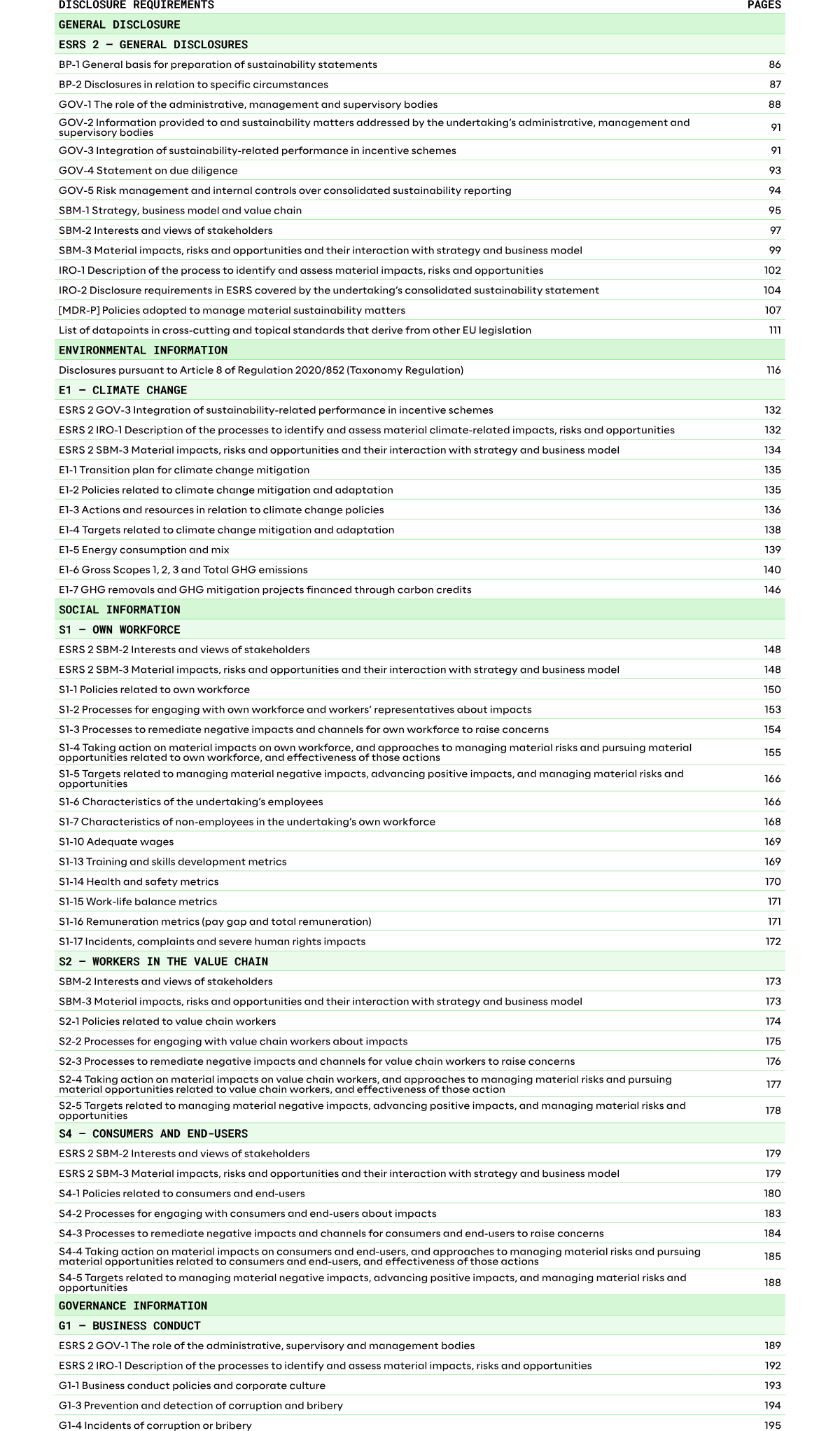
The information requirements stemming from other EU legislative acts have been assessed as not material. Based on the results of the double materiality assessment, and in line with the previous reporting period, Reply concluded that the following topical ESRS are not material for the Group: Pollution (ESRS E2), Water and Marine Resources (ESRS E3), Biodiversity and Ecosystems (ESRS E4), Resource Use and Circular Economy (ESRS E5), and Affected Communities (ESRS S3). Specifically, environmental topics related to pollution, water and marine resources, biodiversity and ecosystems, and resource use and circular economy will not be reported by the Group, as they are not considered material to the business, the value chain, or the Group’s commercial relationships. This assessment is consistent with the nature of Reply’s activities, which operate in the IT services and technology consulting sector—an area generally characterised by limited and non-significant indirect environmental impacts. In particular, the impacts associated with the aforementioned topics mainly occur along the value chain, during the extraction of raw materials and the manufacturing of hardware and IT equipment used in the Group’s operations. These impacts could potentially affect pollution, water consumption, biodiversity, resource use, and waste management. However, they have been deemed not material, given the low volumes of purchased equipment, the limited involvement of the supply chain, and the low likelihood of occurrence. Similarly, due to the nature of the Group’s business, no material impacts have been identified with respect to affected communities, intended as impacts on economic, social, and cultural rights, political and civil rights, or specific rights of Indigenous Peoples.
Reply adopts a structured approach to identify the relevant information to be disclosed regarding the impacts, risks and opportunities assessed as material. This approach is based on the principles outlined in ESRS 1, section 3.2, and involves the categorization of its impacts, risks and opportunities through the application of materiality thresholds, as described in paragraph [IRO-1] DESCRIPTION OF THE PROCESSES TO IDENTIFY AND ASSESS MATERIAL IMPACTS, RISKS AND OPPORTUNITIES.
[MDR-P] Policies adopted to manage material sustainability matters
The Reply Group has developed policies for each material topic, with the aim of managing the relevant impacts, risks, and opportunities. The primary responsibility for the implementation of these policies is assigned, from time to time, to the relevant senior-level figure within the Group, who periodically monitors their effectiveness. The specific policies related to the various aspects of sustainability are described in detail in the following sections, providing a clear and comprehensive overview of Reply Group’s commitment to sustainability.
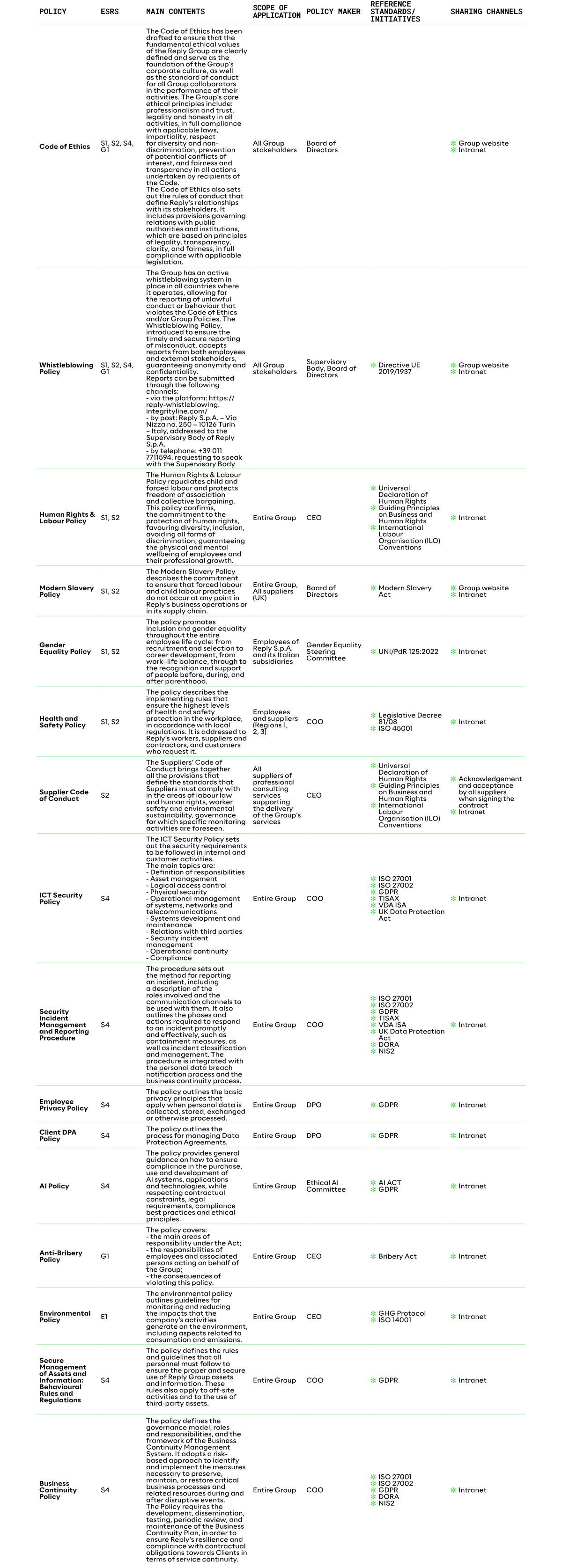
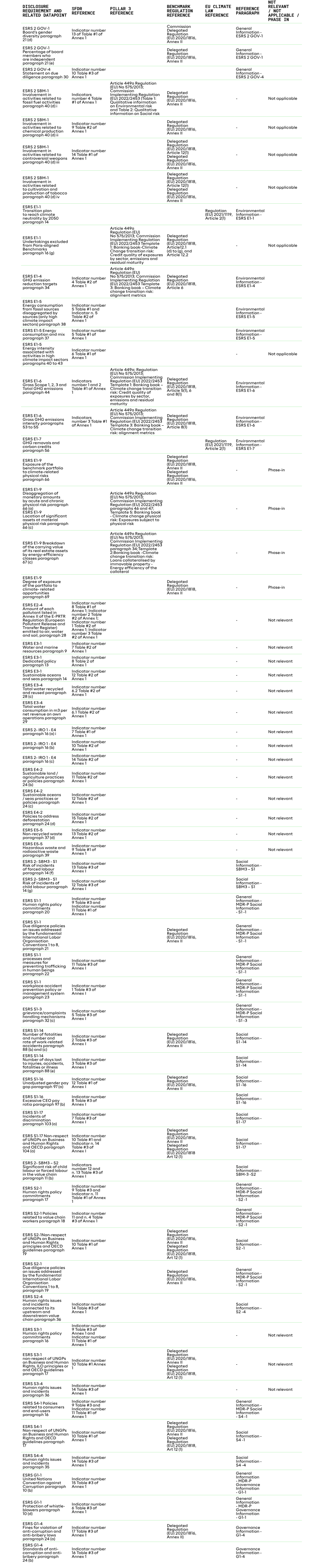
Environmental information
Disclosures pursuant to article 8 of regulation (EU) 2020/852 (taxonomy regulation)
The 2025 Sustainability Report includes, for the fifth consecutive year, the application of the provisions introduced by the EU Taxonomy, established by Regulation (EU) 2020/8522 (hereinafter also referred to as the “Regulation”), which forms an integral part of the Sustainable Finance Action Plan launched by the European Commission in 2018. The Regulation aims to define the “degree of environmental sustainability” of investments, enhancing market transparency for the benefit of investors and consumers.
The Regulation introduces a unified classification system at EU level for identifying environmentally sustainable economic activities. An activity is considered eligible if it contributes to the achievement of at least one of the following six environmental objectives:
Climate Change Mitigation (CCM);
Climate Change Adaptation (CCA);
Sustainable Use and Protection of Water and Marine Resources (WTR);
Transition to a Circular Economy, including waste reduction and recycling (CE);
Pollution Prevention and Control (PPC);
Protection and Restoration of Biodiversity and Ecosystems (BIO).
An eligible activity may be considered aligned if it meets the following requirements:
Substantial contribution criteria5: verification of compliance with the technical screening criteria defined for each activity, to determine its substantial contribution to one or more environmental objectives;
Do No Significant Harm (DNSH) criteria6 verification that, while contributing to at least one environmental objective, the activity does not cause significant harm to the other objectives set out in the Regulation;
Minimum safeguards7: verification that the activity is carried out in compliance with the minimum social safeguards referred to in the Regulation, relating to human and labour rights, in line with international principles and conventions.
In 2021, the European Commission adopted the Climate Delegated Act8, which covers the first two climate objectives (mitigation and adaptation), defining the technical screening criteria for economic activities that substantially contribute to their achievement without causing significant harm to the remaining environmental objectives.
In 2023, the European Commission published two important updates:
Delegated Regulation (EU) 2023/2485 (June 2023), which amends the Climate Delegated Act by introducing new activities and additional technical screening criteria for the climate change mitigation and adaptation objectives;
the Environmental Delegated Act9 (November 2023), which defines eligible activities for the four non-climate objectives and updates Commission Delegated Regulation (EU) 2021/2178 (the “Disclosure Delegated Act”), introducing changes to the templates to be used.
As part of the first “Omnibus” simplification package, on 4 July 2025 the European Commission adopted a new Delegated Regulation aimed at simplifying the application of the Taxonomy.
The measure updates the Disclosure Delegated Act and amends both the Climate Delegated Act and the Environmental Delegated Act, introducing, among other changes, a materiality option applicable to each KPI (Turnover, CapEx, OpEx). Under this option, activities that cumulatively account for less than 10% of the denominator of the respective KPI may be excluded from the alignment assessment.
The new Delegated Regulation applies from 1 January 2026, with reference to reporting for the 2025 financial year. However, for the 2025 financial year, companies may still choose to continue applying the existing provisions. In this context, the Reply Group has decided to maintain methodological continuity with the reporting approach adopted in the previous year. Pursuant to Article 8 of the Regulation, non-financial undertakings are required to disclose the share of Turnover, capital expenditure (CapEx) and operating expenditure (OpEx) associated with Taxonomy-eligible and Taxonomy-aligned economic activities.
With reference to operating expenditure (OpEx), in accordance with point 1.1.3.2 of the Disclosure Delegated Act, the Group does not report the numerator related to eligible activities, as the denominator of the KPI is not material compared to the Group’s operating costs, also considering the nature of its business. However, the denominator has been calculated as described in the paragraph KPI CALCULATION METHODOLOGY.
Finally, Delegated Regulation (EU) 2022/1214 extended the scope of eligible activities to include those related to nuclear energy and gas in the energy sector. However, the Group has not classified any activities within this sector as eligible, as shown in the table below.
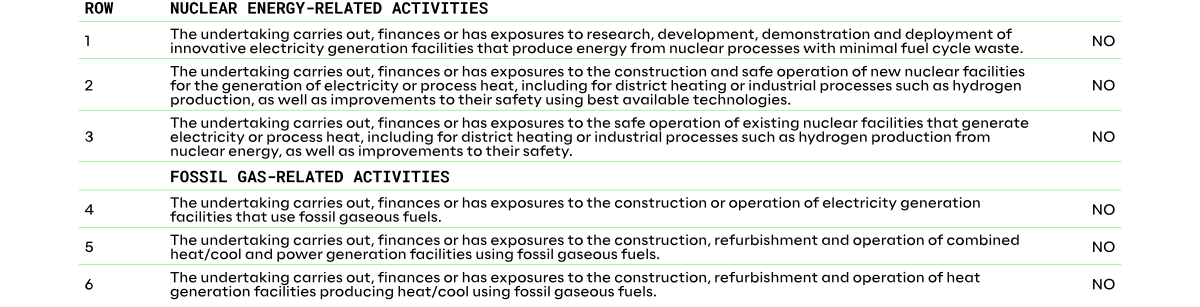
Eligibility analysis
For the 2025 financial year, Reply updated its eligibility analysis aimed at identifying the Group’s activities that correspond to those listed and described in the annexes to the Climate Delegated Act (Annexes I and II), the Environmental Delegated Act and Delegated Act (EU) 2023/2485. This analysis led to the identification of the following eligible activities attributable to the Group’s revenue streams:
8.1 Data processing, hosting and related activities (CCM): with reference to activities carried out directly by certain Group companies, including the storage, manipulation, management, movement, control, display, switching, interchange, transmission or processing of data through data centres, including edge computing.
8.2 Data-driven solutions for greenhouse gas emissions reduction (CCM): development or use of solutions for the collection, transmission, storage and modelling of data, and their use with the primary objective of providing insights and analysis to reduce greenhouse gas emissions. These solutions may include the use of decentralised technologies, IoT solutions, 5G and artificial intelligence.
4.1 Provision of IT/OT (Information Technology/Operational Technology) data-driven solutions (CE): with reference to activities carried out by certain Group companies, including the design, development, installation, deployment and maintenance, repair or provision of professional services, including technical consulting for the design or monitoring of software and information technology (IT) or operational technology (OT) systems, including artificial intelligence (AI)-based solutions, as well as IT/OT software and systems developed for the identification, tracking and traceability of materials, products and assets, life-cycle assessment software, etc.
4.1 Provision of IT/OT (Information Technology/Operational Technology) data-driven solutions for loss reduction (WTR): with reference to activities carried out by certain Group companies, including the design, development, installation and deployment of data-driven technological solutions based on information technology (IT) or operational technology (OT), or the provision of related maintenance, repair and professional services, including technical consulting for design or monitoring, aimed at controlling, managing, reducing and mitigating losses in water supply systems.
In addition, the Group also analysed potential eligible activities with reference to CapEx related to the acquisition of products deriving from Taxonomy-eligible and aligned economic activities, as well as individual measures enabling activities to reduce their emission profile (Annex I to Delegated Regulation (EU) 2021/2178, para. 1.1.2.2, point (c)).
This analysis led to the identification of the following eligible activities:
6.5 Transport by motorbikes, passenger cars and light commercial vehicles (CCM): leasing of vehicles belonging to category M1, i.e. company cars.
7.2 Renovation of existing buildings (CCM): interventions aimed at refurbishing and restoring owned buildings.
7.3 Installation, maintenance and repair of energy efficiency equipment (CCM): installation works such as relamping and the installation of lighting systems for offices and common areas.
7.4 Installation, maintenance and repair of electric vehicle charging stations in buildings (CCM): installation of electric vehicle charging points.
1.2 Manufacture of electrical and electronic equipment (CE): purchase of electrical and electronic equipment (e.g. PCs, phones, etc.) used for carrying out activities, performed directly by certain Group companies, related to IT consulting, planning and design of IT systems integrating hardware, software and communication technologies, on-site management of clients' IT systems or data processing facilities, and other computer-related technical and professional activities.
Alignment analysis
Substantial contribution criteria
For the purposes of the alignment analysis, for each of the economic activities identified as eligible, compliance with the substantial contribution criteria—as defined in Annex I of the Climate Delegated Act and in Annexes I, II, III and IV of the Environmental Delegated Act—was verified, in order to determine the extent to which each activity substantially contributes to the achievement of the environmental objectives.
Activity 8.1 Data processing, hosting and related activities (CCM)
Adopting a conservative and prudent approach, the Group considers this activity not to be aligned with the substantial contribution criteria, as the data centres used are the responsibility of third parties (e.g. clients, providers) and are therefore not directly operated by the Group.
Activity 8.2 Data-driven solutions for greenhouse gas emissions reduction (CCM)
The solutions offered by the Group comply with one of the two criteria, as they are primarily used to provide data and analysis aimed at reducing greenhouse gas emissions. However, as these solutions are part of broader projects and contexts related to the Clients that have implemented them, no analyses are available to verify whether they demonstrate a significant reduction in lifecycle greenhouse gas emissions compared to the best available alternative solutions or technologies on the market. Such comparisons should be carried out using Commission Recommendation 2013/179/EU or, alternatively, ETSI ES 203 199, ISO 14067:2018 or ISO 14064-2:2019. Therefore, the Group considers the activity not aligned with the substantial contribution criteria.
Activity 4.1 Provision of IT/OT (Information Technology/Operational Technology) data-driven solutions (CE)
The Group considers that the substantial contribution criteria are not met, as for the solutions currently offered to clients within this activity—being part of broader projects and contexts—the analyses required by the Regulation for software are not available. Consequently, the activity is not aligned with the substantial contribution criteria.
Activity 4.1 Provision of IT/OT (Information Technology/Operational Technology) data-driven solutions for loss reduction (WTR)
The solutions offered by the Group comply with one of the two established criteria, as they provide IT/OT solutions that enable the control, management and mitigation of water losses. However, the Group does not have sufficient evidence to verify that, in their implementation at client level, risks related to environmental degradation—linked to the preservation of water quantities and the prevention of water stress—have been identified and addressed, in order to achieve good water status and good ecological potential, as defined in Regulation (EU) 2020/852, in accordance with Directive 2000/60/EC and in line with a water use and protection management plan. Therefore, the Group considers the activity not aligned with the substantial contribution criteria.
Activity 6.5 Transport by motorbikes, passenger cars and light commercial vehicles (CCM)
The substantial contribution criteria require that vehicles in categories M1 and N1 fall within a specific emission class. With reference to M1 category vehicles, the Group’s fleet in Regions R1, R2 and R3 includes electric vehicles that meet the criterion of having specific CO2 emissions below 50 g CO2/km. Therefore, the share of CapEx associated with the leasing of such electric vehicles, amounting to €5,900 thousand, is considered aligned.
Activity 7.2 Renovation of existing buildings (CCM)
The substantial contribution criteria require that building renovations comply with the applicable requirements for major renovations10or alternatively result in a reduction in primary energy demand of at least 30%. In the absence of sufficient evidence to allow a full assessment of compliance with the criterion, and adopting a conservative and prudent approach, the Group considers the activity not aligned with the substantial contribution criteria.
Activity 7.3 Installation, maintenance and repair of energy efficiency equipment (CCM)
The substantial contribution criteria require that the activity consists of an individual measure aimed at improving the energy performance of buildings, in accordance with Directive 2010/31/EU. Such measures include the installation, replacement, maintenance and repair of energy-efficient lighting sources. These measures must comply with the minimum requirements and energy performance classes set out in the relevant national and European regulations. However, the Group considers the activity not aligned with the criteria, as it does not have the supplier information required under the regulations referenced in the Taxonomy for the relamping measures carried out during the year.
Activity 7.4 Installation, maintenance and repair of electric vehicle charging stations in buildings (CCM)
As the Group has installed electric vehicle charging stations at the offices of Reply Services S.r.l. and Santer Reply S.r.l. (R1), it complies with the substantial contribution criteria and the activity is therefore considered aligned.
Activity 7.7 Acquisition and ownership of buildings (CCM)
The substantial contribution criteria require that buildings constructed before 31 December 2020 have at least an Energy Performance Certificate (EPC) rating of class A, or alternatively that the building falls within the top 15% of the national or regional building stock in terms of operational primary energy demand (PED), as demonstrated by adequate evidence comparing its performance with that of the national or regional building stock constructed before 31 December 2020, at least distinguishing between residential and non-residential buildings. For large non-residential buildings, i.e. those with an effective rated output for heating systems, combined space heating and ventilation systems, air-conditioning systems, or combined air-conditioning and ventilation systems exceeding 290 kW, the substantial contribution criteria also require that they are efficiently operated through the monitoring and assessment of energy performance. As the Group does not have access to such information, given that these are leased offices, it is not able to carry out a full assessment of compliance with the criteria. Therefore, the activity is considered not aligned with the substantial contribution criteria./p>
Activity 3.2 Renovation of existing buildings (CE)
The substantial contribution criteria establish specific requirements related to circular economy principles concerning the materials used and the waste generated. In the absence of sufficient evidence to allow a full assessment of compliance with the criteria, and adopting a conservative and prudent approach, the Group considers the activity not aligned with the substantial contribution criteria.
Activity 1.2 Manufacture of electrical and electronic equipment (CE)
The Group adopts a prudent approach and considers the criteria not to be met for the purchase of electrical and electronic equipment, given the complexity of the requirements to be verified for each investment. Such purchases must comply with a set of criteria defined by the Regulation, relating to durability, design, product safety, consumer information and producer responsibility. However, verification of these criteria requires access to specific supplier documentation, which the Group does not currently have available.
Do No Significant Harm criteria (DNSH)
The Do No Significant Harm (DNSH) criteria define the conditions under which activities are carried out without causing harm to the other environmental objectives. The Group has verified, for each eligible activity, its compliance with these criteria.
In this context, it should be noted that the Group has conducted a Climate Risk Assessment in line with the general criteria set out in Appendix A of the Climate Delegated Act, as described in the chapter [IRO-1] DESCRIPTION OF THE PROCESSES TO IDENTIFY AND ASSESS MATERIAL IMPACTS, RISKS AND OPPORTUNITIES, to which reference is made for further methodological details and results. The Climate Risk and Vulnerability Assessment shows that although some operating sites are located in areas exposed to significant physical climate risks, such risks are not considered material for the Group.
However, the assets through which the eligible economic activities are carried out are not owned by the Group but relate to suppliers’ or clients’ assets. Therefore, the DNSH criterion related to the objective of climate change adaptation—which requires compliance with the requirements of Appendix A—is not considered aligned with Taxonomy due to the lack of information from suppliers and clients.
Activity 8.1 Data processing, hosting and related activities (CCM)
Annex I of the Climate Delegated Act sets out DNSH criteria with respect to three other objectives: climate change adaptation, the sustainable use and protection of water and marine resources, and the transition to a circular economy. With reference to data processing activities, as they are carried out through data centres owned by third parties, and in the absence of sufficient information from clients and providers to enable a full assessment of compliance with the criteria, the Group—adopting a conservative and prudent approach—considers the activity not aligned with these criteria.
Activity 8.2 Data-driven solutions for greenhouse gas emissions reduction (CCM)
Annex I of the Climate Delegated Act establishes DNSH criteria with respect to two other objectives: climate change adaptation and the transition to a circular economy. With reference to the solutions offered by the Group for the collection, transmission, storage and modelling of data, and their use aimed at reducing greenhouse gas emissions, in the absence of sufficient information from clients and service users to enable a full assessment of compliance with the criteria, the Group—adopting a conservative and prudent approach—considers the activity not aligned.
Activity 4.1 Provision of IT/OT (Information Technology/Operational Technology) data-driven solutions (CE)
Annex II of the Environmental Delegated Act sets out DNSH criteria with respect to three other environmental objectives: climate change adaptation, the sustainable use and protection of water and marine resources, and pollution prevention and control. With reference to the solutions offered by the Group to clients within this activity, in the absence of sufficient information from service users to enable a full assessment of compliance with the criteria, the Group—adopting a conservative and prudent approach—considers the activity not aligned.
Activity 4.1 Provision of IT/OT (Information Technology/Operational Technology) data-driven solutions for loss reduction (WTR)
Annex I of the Environmental Delegated Act establishes DNSH criteria with respect to three other environmental objectives: climate change adaptation, the transition to a circular economy, and pollution prevention and control. With reference to the solutions offered by the Group that enable the control, management and mitigation of water losses, in the absence of sufficient information from service users to enable a full assessment of compliance with the criteria, the Group—adopting a conservative and prudent approach—considers the activity not aligned.
Activity 6.5 Transport by motorbikes, passenger cars and light commercial vehicles (CCM)
With reference to capital expenditure related to Activity 6.5, Annex I of the Climate Delegated Act sets out DNSH criteria with respect to three objectives: climate change adaptation, the transition to a circular economy, and pollution prevention and control. Regarding investments made during the year in electric vehicles, in the absence of sufficient information from vehicle manufacturers to enable a full assessment of compliance with the criteria, the Group—adopting a conservative and prudent approach—considers the activity not aligned.
Activity 7.2 Renovation of existing buildings (CCM)
For Activity 7.2, Annex I of the Climate Delegated Act establishes DNSH criteria with respect to the objectives of climate change adaptation, the sustainable use and protection of water and marine resources, the transition to a circular economy, and pollution prevention and control. With reference to the interventions carried out during 2025 on owned or leased buildings, in the absence of sufficient information from suppliers to enable a full assessment of compliance with the criteria, the Group—adopting a conservative and prudent approach—considers the activity not aligned.
Activity 7.3 Installation, maintenance and repair of energy efficiency equipment (CCM)
With reference to capital expenditure related to Activity 7.3, Annex I of the Climate Delegated Act establishes DNSH criteria with respect to the objectives of climate change adaptation and pollution prevention and control. Regarding the investments made during the year in the installation of lighting sources, in the absence of sufficient information from suppliers to enable a full assessment of compliance with the criteria, the Group—adopting a conservative and prudent approach—considers the activity not aligned.
Activity 7.4 Installation, maintenance and repair of electric vehicle charging stations in buildings (CCM)
With reference to capital expenditure related to Activity 7.4, Annex I of the Climate Delegated Act establishes a single DNSH criterion with respect to the objective of climate change adaptation. Regarding the installation of electric vehicle charging stations, in the absence of sufficient information from suppliers to enable a full assessment of compliance with the criteria, the Group—adopting a conservative and prudent approach—considers the activity not aligned.
Activity 7.7 Acquisition and ownership of buildings (CCM)
With reference to capital expenditure related to Activity 7.7, Annex I of the Climate Delegated Act establishes a single DNSH criterion with respect to the objective of climate change adaptation. Regarding long-term leases of the Group’s office buildings, in the absence of sufficient information from suppliers to enable a full assessment of compliance with the criteria, the Group—adopting a conservative and prudent approach—considers the activity not aligned.
Activity 3.2 Renovation of existing buildings (CE)
With reference to capital expenditure related to Activity 3.2, Annex II of the Environmental Delegated Act establishes DNSH criteria with respect to the objectives of climate change mitigation and adaptation, the sustainable use and protection of water and marine resources, and pollution prevention and control. Regarding investments carried out during 2025 on owned or leased buildings, in the absence of sufficient information from suppliers to enable a full assessment of compliance with the criteria, the Group—adopting a conservative and prudent approach—considers the activity not aligned.
Activity 1.2 Manufacture of electrical and electronic equipment (CE)
PWith reference to capital expenditure related to Activity 1.2, Annex II of the Environmental Delegated Act establishes DNSH criteria with respect to the objectives of climate change mitigation and adaptation, the sustainable use and protection of water and marine resources, pollution prevention and control, and the protection and restoration of biodiversity and ecosystems. Regarding investments in electrical and electronic equipment, in the absence of sufficient information from suppliers to enable a full assessment of compliance with the criteria, the Group—adopting a conservative and prudent approach—considers the activity not aligned.
Minimum safeguards
The Group analysed its level of compliance with the principles set out in Article 18 of the Regulation, which defines the minimum safeguards aimed at ensuring that economic activities are carried out in respect of human and labour rights, in line with the OECD Guidelines for Multinational Enterprises, the UN Guiding Principles on Business and Human Rights (UNGPs), the eight fundamental Conventions of the International Labour Organization (ILO), and the International Bill of Human Rights./p>
The Group therefore conducted an analysis of the elements outlined in the documents referred to in Article 18, considering the guidance provided by the Platform on Sustainable Finance11 and the clarifications issued by the European Commission (Communication 2023/C 211/01). In this context, controls in place relating to human rights, consumer interests, anti-corruption, fair competition and taxation were assessed.
Italian legislation on human and labour rights governs several aspects referred to in Article 18, such as privacy protection, health and safety, anti-corruption, fair competition and taxation. In addition to operating in compliance with the applicable national regulations in the countries where it operates, the Reply Group conducts its activities with a view to pursuing sustainable and inclusive growth, in line with the Universal Declaration of Human Rights, ILO Conventions and the principles of the United Nations Global Compact, to which it adheres.
Among the tools adopted to promote compliance with the minimum safeguards, both within and outside the organisation, is the entire regulatory framework described in the chapter [MDR-P] POLICIES ADOPTED TO MANAGE MATERIAL SUSTAINABILITY MATTERS. In addition, the Group demonstrates compliance with the “do no significant harm” principle as defined by the SFDR, Article 2(17)13, by addressing the gender pay gap and gender diversity within governance bodies, and by reporting the relevant indicators respectively in the chapter [S1-16] REMUNERATION METRICS (PAY GAP AND TOTAL REMUNERATION).
For the 2025 reporting year, no cases of non-compliance were identified with regard to human rights, consumer interests, corruption, competition and taxation.
In light of the European Commission’s clarifications14, according to which “minimum safeguards” require “due diligence and remediation procedures implemented by an undertaking carrying out an economic activity”, and considering the current developments regarding the Corporate Sustainability Due Diligence Directive15, the Group—having identified areas for improvement and further formalisation to be applied consistently across its entire scope—adopts a conservative and prudent approach and considers its activities not aligned with the minimum safeguards.
Similarly, Reply does not currently consider the existing practices along its supply chain to be sufficient to deem as aligned those activities related to the acquisition of products deriving from Taxonomy-eligible and aligned economic activities, as well as individual measures that contribute to one or more of the six Taxonomy objectives (6.5, 7.2, 7.3, 7.4, 7.7 and 1.2).
KPI calculation methodology
The annexes to the Disclosure Delegated Act require the determination of the percentage of Turnover, CapEx and OpEx associated with Taxonomy-eligible and Taxonomy-aligned economic activities. In order to comply with this regulatory requirement, as described in the previous paragraphs, the Group identified its eligible activities and, after assessing which of these were aligned with the relevant criteria, calculated the three KPIs provided by the Regulation.
Turnover
In accordance with the Disclosure Delegated Act, for the calculation of the Turnover KPI, the Group considered:
denominator: net revenue from the provision of services, net of discounts and value-added tax, with intra-group transactions eliminated to avoid double counting. The denominator, amounting to €2,449,991 thousand, corresponds to the item “Revenues” reported in Note 5 – Revenues of the Group’s consolidated financial statements and is in line with the provisions of IAS 1, para. 82(a);
numerator: the share of net revenue associated with the identified eligible activities, in particular:
8.1 Data processing, hosting and related activities;
8.2 Data-driven solutions for greenhouse gas emissions reduction;
4.1 IT/OT data-driven solutions;
4.1 IT/OT solutions for water loss reduction.
numerator of aligned activities: the share of net revenue associated with aligned activities amounts to €0, as the Group (or its suppliers or clients, where applicable) does not meet the technical screening criteria and minimum safeguards required by the Regulation.
For the determination of the numerator, the legal entities included in the consolidation scope that generate revenues attributable to these activities were considered. The corresponding eligibility shares are reported in the table below.
CapEx
In line with the Disclosure Delegated Act, for the calculation of the CapEx KPI, the Group considered:
denominator: additions recognised during the period relating to:
tangible assets (development and refurbishment of business assets), accounted for in accordance with IAS 16 (Note 17);
intangible assets (patents, software and capitalised R&D costs, excluding goodwill), accounted for in accordance with IAS 38 (Note 19);
right-of-use assets (long-term leases), accounted for in accordance with IFRS 16 (Note 20).
The analysis resulted in a total amount of €102,767 thousand for the 2025 financial year.
numerator of eligible activities: for the purpose of determining the numerator, CapEx related to the following were considered:
eligible economic activities identified (CapEx A):
8.1 Data processing, hosting and related activities (€4,088 thousand);
8.2 Data-driven solutions for emissions reduction (€158 thousand);
4.1 IT/OT data-driven solutions (€54 thousand);
4.1 IT/OT solutions for water loss reduction (€20 thousand).
investments in the acquisition of outputs from eligible economic activities (CapEx C), as provided for in Annex I to Delegated Regulation (EU) 2021/2178, para. 1.1.2.2(c):
6.5 Transport by passenger cars and light commercial vehicles (€13,290 thousand, of which €5,900 thousand for electric vehicles);
7.2 Renovation of buildings (€20,489 thousand);
7.3 Installation of energy efficiency equipment (€816 thousand);
7.4 Installation of charging stations (€98 thousand);
7.7 Acquisition and ownership of buildings (€34,771 thousand);
1.2 Manufacture of electrical and electronic equipment (€4,720 thousand).
numerator of aligned activities: the share of CapEx associated with aligned activities amounts to €0, as the Group (or its suppliers or clients, where applicable) does not meet the technical screening criteria for the activities considered.
Data extraction was carried out directly from the accounting systems of the legal entities included in the consolidation scope. Where a direct allocation was not available, CapEx related to activities 8.1, 8.2 and 4.1 (CE and WTR) were estimated using an allocation driver based on the percentage share of revenues attributable to these activities over the total revenues of each entity.
OPEX
In accordance with the Disclosure Delegated Act, for the calculation of the OpEx KPI, the Group carried out a detailed analysis of its chart of accounts and management accounting projects, identifying the following cost categories provided for by the Delegated Act:
non-capitalised R&D costs (excluding the project management component)16;
short-term leases (contracts with a duration of less than 12 months);
maintenance and repair costs for buildings and IT equipment outsourced to third parties;
costs related to the “day-to-day servicing of assets”17, considered with reference to facility cleaning costs.
The analysis resulted in a denominator of €25,991 thousand, corresponding to approximately 1.3% of the Group’s total operating expenses. This low incidence reflects the limited relevance of Taxonomy-related cost categories (typically associated with asset-intensive business models) compared to Reply’s operating model, which is predominantly characterised by personnel-related costs. Therefore, as provided for by the Disclosure Delegated Act, the OpEx KPI is considered not material and is therefore not disclosed.
Official Journal of the European Union, Regulation (EU) 2020/852 of the European Parliament and of the Council on the establishment of a framework to facilitate sustainable investment and amending Regulation (EU) 2019/2088. The Regulation is implemented through the progressive adoption of Delegated Acts.
See the Action Plan on Financing Sustainable Growth, European Commission, COM (2018) 97 final, and subsequently the Strategy for Financing the Transition to a Sustainable Economy, European Commission, COM (2021) 390 final.
See Article 1 of Regulation (EU) 2020/852 and Assonime Circular No. 1 of 19 January 2022, The European Regulation on the Taxonomy of Environmentally Sustainable Activities: Disclosure Obligations for Companies.
Articles 10, 11, 12, 13, 14, 15, 16, and 19 of Regulation (EU) 2020/852.
Article 17 of Regulation (EU) 2020/852.
Article 18(1) of Regulation (EU) 2020/852, in particular the OECD Guidelines for Multinational Enterprises and the UN Guiding Principles on Business and Human Rights, including the principles and rights set out in the eight fundamental conventions identified in the International Labor Organization’s Declaration on Fundamental Principles and Rights at Work, as well as the International Bill of Human Rights.
Commission Delegated Regulation (EU) 2021/2139.
Commission Delegated Regulation (EU) 2023/2486, structured into Annexes I, II, III, IV and V.
As established in the national and regional regulations applicable to “major renovations” implementing Directive 2010/31/EU.
Final Report on Minimum Safeguards, October 2022.
Commission Communication on the interpretation and implementation of certain legal provisions of the EU Taxonomy Regulation and on the links with the Sustainable Finance Disclosure Regulation (2023/C 211/01), June 2023.
Communication 2023/C 211/01, FAQ 2.
Communication 2023/C 211/01
Directive of the European Parliament and of the Council on corporate sustainability due diligence and amending Directive (EU) 2019/1937
Clarification provided in the answer to question 12 of the FAQs published by the European Commission on 2 February 2022.
Clarification provided in the answer to question 12 of the FAQs published by the European Commission on 2 February 2022.
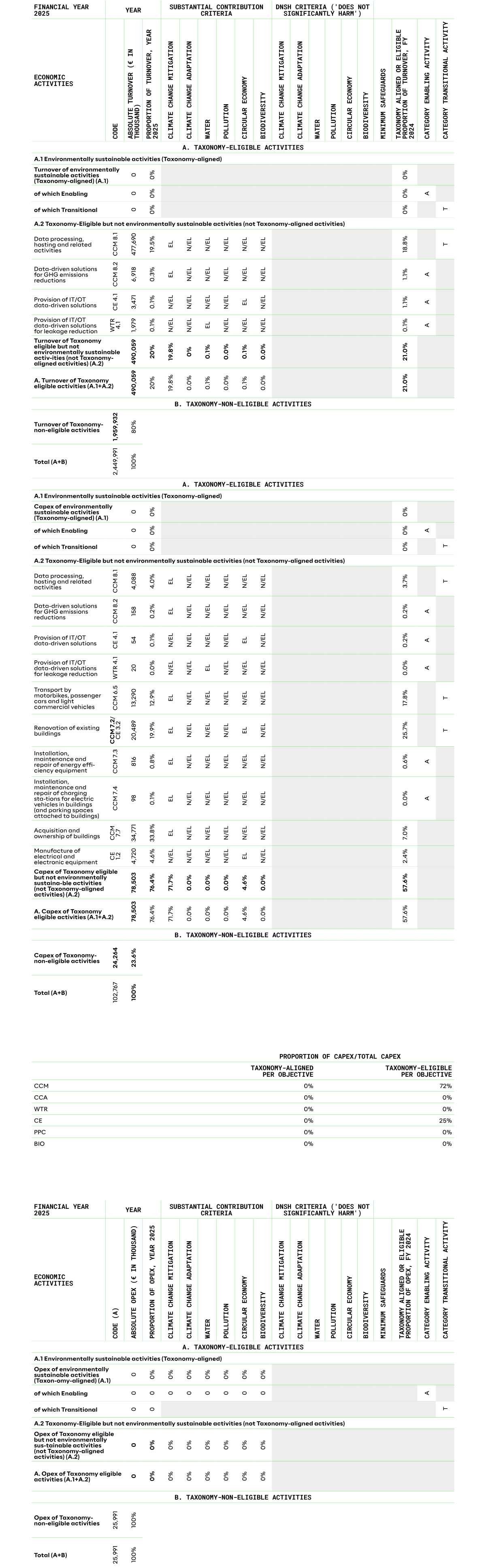
ESRS E1 Climate change
[ESRS 2 GOV-3] Integration of sustainability-related performance in incentive schemes
The requirements related to the integration of sustainability performance in incentive schemes are addressed in chapter [GOV-3] INTEGRATION OF SUSTAINABILITY-RELATED PERFORMANCE IN INCENTIVE SCHEMES.
[ESRS 2 IRO-1] Description of the processes to identify and assess material climate-related impacts, risks and opportunities
The process of identifying and assessing impacts, risks and opportunities related to climate change was carried out by Reply through the double materiality assessment, as described in paragraph [IRO-1] DESCRIPTION OF THE PROCESSES TO IDENTIFY AND ASSESS MATERIAL IMPACTS, RISKS AND OPPORTUNITIES in the section GENERAL INFORMATION. In addition, in order to identify its climate change impacts, the Group annually conducts a GHG emissions inventory to measure and manage the effects that its activities and operations along the value chain may have on climate change. As described in paragraph [E1-6] GROSS SCOPES 1, 2, 3 AND TOTAL GHG EMISSIONS, the Group calculates Scope 1, 2 and 3 emissions, in line with the GHG Protocol Corporate Accounting and Reporting Standard. In particular, the Group’s main greenhouse gas emissions are generated along the value chain. As will be described in more detail in paragraph [E1-6] GROSS SCOPES 1, 2, 3 AND TOTAL GHG EMISSIONS, for Reply the most significant category relates to Scope 3 emissions associated with purchased goods and services. The Group has also identified a potential positive impact on climate change deriving from the sale of green and sustainable solutions that can lead to a reduction in energy consumption and GHG emissions of its clients. These solutions do not currently represent a significant share of the Group’s revenues, as reported in the paragraph DISCLOSURES PURSUANT TO ARTICLE 8 OF REGULATION (EU) 2020/852 (TAXONOMY REGULATION). Within the context of the double materiality assessment, the Group identified physical and transition climate risks that could affect its operations and reputation. With regard to transition climate risks, the Group identified an economic risk related to the higher investments and costs required to implement energy efficiency solutions in owned offices. These measures include activities such as relamping, installation of photovoltaic panels and PIR presence sensors. This risk stems from increasing regulatory pressure and market expectations regarding emissions reduction and improved energy performance, which make structural investments necessary.
Among physical climate risks, the Group identified, as part of the double materiality process, a potential economic risk arising from the impact of heatwaves on the productivity of human resources in the long term, which could require adaptation actions such as the enhancement of office cooling systems. In 2025, the Group carried out a Climate Risk and Vulnerability Assessment, a structured and in-depth analysis aimed at assessing the Group’s exposure to physical risks arising from climate change. Specifically, the analysis was conducted with the objective of identifying and assessing the potential impacts of climate change on the Group’s assets and operations, not considering the value chain, in a long-term time horizon extending to 2050. The assessment was performed using a high-emissions climate scenario (Representative Concentration Pathways, RCP 8.5), representing a “no mitigation” pathway, in order to enable a prudent evaluation of exposure under severe physical risk conditions. The analysis included a screening of the Group’s activities and the identification of relevant climate hazard categories that may affect the performance of economic activities over their expected lifecycle, followed by a site-level assessment based on the geolocation of operational sites. The table below summarises the potential climate-related hazards for the Reply Group on which the risk assessment was carried out.

An analysis of the exposure and vulnerability of the Group’s assets to the identified physical risks was also carried out, using data from climate models to classify the risk level of the different locations based on the considered time horizon. This approach enabled the Group to consistently and accurately identify areas characterised by higher exposure and vulnerability to physical risks. For the analysis of each risk, internationally recognised sources were considered, selected according to the type of climate hazard, including the IPCC Interactive Atlas for temperature-related risks and the WRI Aqueduct Water Risk Atlas for water-related risks. Overall, the outcome of the Climate Risk and Vulnerability Assessment shows that, despite the presence of several operational sites located in areas exposed to significant levels of climate-related physical hazards, the resulting residual risks are not considered material for the Group. The results confirm that, due to the nature of the business, based on digital services, IT consulting and software development, and therefore not dependent on climate-sensitive physical assets, the operational exposure to physical climate risks does not generate impacts deemed material or such as to compromise the Group’s operations, even under severe climate scenarios. However, in continuity with the results of the previous year’s double materiality assessment, the Group has decided to monitor the potential economic risk arising from the long-term impact of heatwaves on the productivity of its workforce.
[ESRS 2 SBM-3] Material impacts, risks and opportunities and their interaction with strategy and business model
As described in paragraph [ESRS 2 IRO-1] DESCRIPTION OF THE PROCESSES TO IDENTIFY AND ASSESS MATERIAL CLIMATE-RELATED IMPACTS, RISKS AND OPPORTUNITIES, the Group carried out an analysis of physical climate risks, assessing the resilience of its assets to the risks of rising temperatures and water stress, considering a worst-case scenario (RCP 8.5). With regard to transition climate risks, the results of the double materiality assessment remain valid. The results of this assessment were incorporated into a broader analysis of the resilience of the Company’s strategy and business model. This analysis examined how material physical risks could affect operations, assets and value chains, and whether the current strategic positioning remains robust even under adverse climate scenarios. The results of the Climate Risk and Vulnerability Assessment described in the previous paragraph [ESRS 2 IRO-1] DESCRIPTION OF THE PROCESSES TO IDENTIFY AND ASSESS MATERIAL CLIMATE-RELATED IMPACTS, RISKS AND OPPORTUNITIES, which highlight the non-materiality of the analysed physical climate risks, reflect the intrinsic characteristics of the business model, which is primarily based on digital services, IT consulting and software development, and is not dependent on climate-sensitive physical assets, industrial processes or resource-intensive activities. The nature of the Reply Group’s activities, predominantly carried out in office settings or through remote working arrangements, significantly limits operational exposure to physical climate hazards and reduces sensitivity to potential climate-related disruptions. As a result, the identified hazards do not translate into significant operational constraints, service delivery disruptions or threats to business continuity, even under severe climate scenarios. Furthermore, existing organisational and operational practices, including flexibility in working arrangements and the absence of critical dependencies on location-specific physical inputs, strengthen the Company’s ability to absorb and adapt to adverse climate conditions. Based on the analysis carried out, physical climate risks are therefore assessed as not material in terms of their impact on the resilience of the Group’s strategy and business model over the considered time horizon.
[E1-1] Transition plan for climate change mitigation
Currently, the Group is working on a transition plan for climate change mitigation aimed at aligning its strategy and business model with the transition to a sustainable economy and with the objective of limiting global warming to 1.5°C, in line with the Paris Agreement. In this context, the Group is committed to the future definition of science-based climate targets. However, reference should be made to paragraph [E1-4] TARGETS RELATED TO CLIMATE CHANGE MITIGATION AND ADAPTATION for further details on the climate targets set by the Group.
[E1-2] Policies related to climate change mitigation and adaptation
The Group has adopted the Environmental Policy to manage the impacts and risks identified as material through the double materiality assessment related to climate change. The adopted policy set out guidelines for monitoring and reducing the environmental impacts generated by the Group’s activities, including aspects related to consumption and emissions. Reply also defines roles, responsibilities, tools and activities to be implemented for impact monitoring, environmental awareness, communication and reporting, while ensuring compliance with all applicable environmental laws and regulations towards local and national communities and contributing to the dissemination and awareness of sustainable development issues. The Environmental Policy, approved by the CEO, addresses climate change mitigation, responsible use of resources and material recycling, energy saving, energy efficiency, the use of renewable energy, transport optimisation and consumption reporting. For each of these topics, behavioural guidelines are defined to guide daily decisions both at an individual and corporate level (e.g. the use of public transport, the purchase of high energy-efficiency devices). Currently, the policy does not cover climate change adaptation or the promotion of renewable energy. Furthermore, the Group’s Environmental Policy is aligned with the environmental regulations and policies established by the European Union, which aim to ensure the sustainable management of resources and to promote the reduction of polluting emissions. Through the adoption of these guidelines, the Group not only commits to complying with applicable laws, but also actively contributes to global efforts to address climate change and environmental sustainability challenges. The principles of the policy are included in the Supplier Code of Conduct, which is shared with suppliers who, by signing it, commit to complying with its provisions. This integrated approach helps ensure that business activities are aligned with the EU’s environmental protection objectives. For further information, please refer to the Policy overview in the GENERAL INFORMATION section under paragraph [MDR-P] POLICIES ADOPTED TO MANAGE MATERIAL SUSTAINABILITY MATTERS.
[E1-3] Actions and resources in relation to climate change policies
The actions implemented by the Group are aimed at managing the impacts and risks identified through the double materiality assessment and, together with the proper implementation of the guidelines set out in the Group Environmental Policy, have contributed to achieving the Carbon Neutrality target by 2025 and support the achievement of the Net Zero target by 2030. The main actions implemented by Reply to reduce emissions and optimise energy consumption include:
Introduction of energy efficiency improvements in certain offices, for example through the installation of LED lighting and, where possible, the upgrading of building heating systems.
Inclusion of hybrid or electric vehicles within the company fleet.
Adoption of the Environmental Policy guidelines to reduce and monitor the environmental impact of the Group’s activities, including in offices not owned by the Group.
Establishment of the Reply Forest at Group level to absorb tonnes of CO2 and support reforestation.
Continuation of offsetting programmes to maintain Carbon Neutrality (for Scope 1 and 2) achieved in 2025 with reference to the emissions of 2024 and to support the Net Zero target by 2030 for CO2 equivalent emissions.
Mobility Management programme to minimise the impact of vehicle traffic for the main Italian offices.
Actions without a defined timeframe are intended to be ongoing, reflecting a continuous commitment to achieving the set objectives. These actions are implemented by the Group, which provides all necessary resources to address identified needs. Currently, the Group does not quantify the amount of emission reductions achieved or expected from the various actions described. In 2025, several advancements were made in the implementation of the Group’s initiatives:
In 2025, almost all (99.8) of the Group’s total electricity consumption was sourced from renewable energy, demonstrating the ongoing commitment to using lower-impact energy sources.
In 2025, the Reply fleet reached 54.7% hybrid/electric vehicles, supported by the availability of dedicated charging stations both publicly accessible near offices and, in some main locations, installed for employee use. This represents a significant increase compared to 2024, when the share was 38%. Confirming the transition towards more sustainable mobility, in the United Kingdom the entire company fleet is already fully electric, while in Germany only full-electric models are offered for new company cars. In Italy, there has also been a continued significant increase in the adoption of electric and plug-in hybrid vehicles.
In 2025, in continuity with 2024, several measures were implemented to improve office energy efficiency, particularly with regard to lighting systems and thermic dispersion. In various locations, relamping activities with LED lighting for both indoor and outdoor spaces continued; in addition, in some offices, heating pumps were replaced, and several components of heating systems were upgraded. In 2023, energy audits were conducted for buildings subject to legal requirements in Italy, leading to planned actions such as the installation of photovoltaic panels and the introduction of PIR presence sensors to improve electricity efficiency.
Within office refurbishment projects, the Group is assessing the opportunity to pursue voluntary certifications related to energy efficiency and environmental footprint (e.g. LEED, BREEAM), which are already in place for some of the offices used by the Group across different regions.
Reply companies collectively own more than 1,800 trees through Treedom.
Furthermore, the process for purchasing carbon credits for voluntary offsetting through certified projects and Energy Attribute Certificates has been consolidated.
As reported in the paragraph DISCLOSURES PURSUANT TO ARTICLE 8 OF REGULATION (EU) 2020/852 (TAXONOMY REGULATION), during the reporting year €816,000 were invested in energy efficiency measures. As the Group has not yet finalised the definition of its new decarbonisation plan, no specific financial resources have currently been allocated for the implementation of future actions aimed at reducing GHG emissions.
[E1-4] Targets related to climate change mitigation and adaptation
Reply has defined the targets set out below to address the transition towards a more environmentally sustainable business model. These targets are closely linked to the Group Environmental Policy, as the policy outlines certain actions supporting the achievement of the defined objectives. Responsibility for the implementation of the Group Environmental Policy is shared across multiple functions, which contribute to the aggregation and analysis of environmental data and define initiatives to be proposed based on the impacts analysed. The Group has set targets of achieving Carbon Neutrality by 2025 and Net Zero by 2030, based on the Group’s GHG emissions inventory, which covers the entire Reply perimeter. These internal targets, voluntary in nature and aligned with the relevant international framework, are based on internal calculation methodologies. Specifically, during the reporting year under consideration, the Group achieved the Carbon Neutrality target, defined as the full offsetting of Scope 1 and Scope 2 emissions (district heating) of the Group as at 31 December 2024. In particular, the target was achieved through the retirement of carbon credits in an equivalent amount. In addition, Guarantees of Origin or Energy Attribute Certificates (EACs) were purchased to cover total Scope 2 electricity consumption (excluding district heating) as at 31 December 2024, amounting to 38,379 MWh, corresponding to 3,141 tCO2eq e. With regard to emissions for 2025, the Group will adopt the same approach during 2026, making use of the same instruments. For further information on the types of carbon credits cancelled, please refer to paragraph [E1-7] GHG REMOVALS AND GHG MITIGATION PROJECTS FINANCED THROUGH CARBON CREDITS. With regard to the Net Zero target for 2030, defined on the basis of 2021 emissions data, the Group is currently in the process of defining a Transition Plan. The outcomes of the ongoing in-depth analyses, together with the evolution of emissions quantification over time, may lead to an update of the target beyond the current target year. The initiation of the process to define the new science-based Transition plan, together with the related decarbonisation levers, demonstrates the Group’s commitment to reducing greenhouse gas emissions across the entire value chain, in line with the objective of limiting global temperature increase to 1.5°C. This commitment is further evidenced by the achievement of the intermediate targets set by the Group as levers for the decarbonisation of its operations. In particular, in 2025 the Group achieved and exceeded its target relating to the sourcing of electricity from renewable sources, through the purchase of Energy Attribute Certificates (EACs), which enabled 100% of the Group’s electricity consumption to be covered by renewable energy, exceeding the initial target of 50%. For further information on the purchase of EACs, please refer to paragraph [E1-5] ENERGY CONSUMPTION AND MIX. At the same time, starting from 2024, the target of having at least 30% plug-in and electric vehicles by 2025 was also achieved and exceeded, confirming the Group’s commitment to the electrification of its company fleet.
[E1-5] Energy consumption and mix
This paragraph aims to illustrate total energy consumption and the related energy mix. The energy consumption of the Reply Group refers to:
Electricity drawn from the grid used to power lighting systems, for charging electric vehicles and for technological and IT equipment.
Natural gas used for the operation of heating systems installed in Reply offices, the consumption of which is closely linked to the scale of activities and office spaces.
Diesel and petrol used to power the company fleet.
Diesel used for heating purposes.
District heating used for space heating and/or domestic hot water production, which allows for a lower environmental impact.
Cooling and heating powered by electricity using fan coils or air conditioning systems, which is often not directly measurable as it is included in the overall electricity consumption of offices.
The table below shows the total energy consumption of the Group’s own operations in MWh.
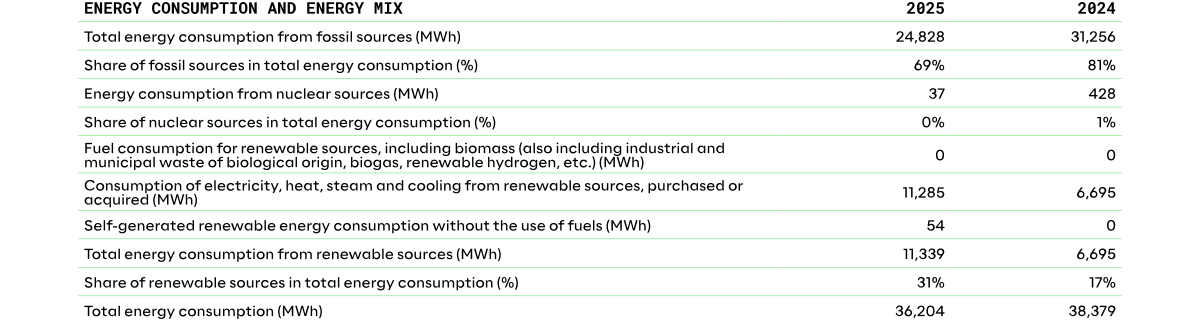
In relation to its activities, Reply does not use fuels derived from renewable sources and does not generate energy for resale.
[E1-6] Gross scopes 1, 2, 3 and total GHG emissions
The Group’s greenhouse gas emissions reflect those of an office-based organisation and are primarily attributable to the use of fossil fuels for heating, business travel and the purchase of electricity generated by third parties. Emissions arising from Reply’s activities are therefore very limited and linked to traditional assets, such as electrical and heating systems. In reporting its emissions, the Reply Group has followed the five principles – relevance, completeness, consistency, transparency and accuracy – set out in the GHG Protocol Corporate Accounting and Reporting Standard, balancing them according to its objectives. The following paragraphs present greenhouse gas emissions relating to:
Scope 1, i.e. direct emissions deriving from the consumption of natural gas, diesel and petrol.
Scope 2, i.e. indirect emissions deriving from electricity consumption and district heating.
Indirect emissions have been calculated according to two different methodologies:
Market-based: reflects emissions associated with electricity and district heating supported by Guarantees of Origin certifying the source of energy.
Location-based: reflects the average emissions intensity of the grids from which energy is supplied.
Scope 3, i.e. indirect emissions related to the purchase of goods and services, business travel and employee commuting, upstream fuel and electricity consumption, water consumption and waste disposal.
Reply does not consider greenhouse gas emissions arising from affiliated companies, joint ventures and other entities that are part of the upstream and downstream value chain, in accordance with the operational control consolidation approach and in line with ESRS 1 requirements, paragraphs 62 to 67. The identification of emission sources has been guided in particular by the Group’s strategy, which aims to identify and understand risks and opportunities associated with emissions across its value chain, in order to define reduction targets, monitor performance and improve disclosure to stakeholders. This approach enhances transparency in reporting. For the calculation of all emissions, the reporting boundary considered corresponds to the entire Group, consistent with the consolidation scope of the Consolidated Financial Statements. Where primary data were not available, estimates were made based on data from previous years or defined allocation criteria (e.g. space, occupancy, etc.). With regard to Scope 3 Categories 1 and 2, namely Purchased Goods and Services and Capital Goods, the 2025 calculation approach included the full scope of purchased goods and services as well as capital goods. In the previous year, only selected emission sources deemed most representative were considered. As a result, the expansion of the reporting boundary led to a significant increase in the 2025 figures compared to 2024. Therefore, 2025 data are not comparable with those of the previous year. In addition, a new Scope 3 category was introduced in the 2025 inventory, Category 11 (Use of Sold Products), which includes emissions related to the use phase of hardware purchased externally by Reply and subsequently resold to third-party clients. Any future significant changes in the definition of what constitutes the Reply Group and its upstream and downstream value chain will be disclosed, together with an explanation of the impacts on the comparability of reported GHG emissions. For the calculation of greenhouse gas emissions (CO2, N2O, CH4), which do not include biogenic CO2 emissions as they are not applicable to Reply’s context, the following emission factors and approaches were used:
Direct emissions (Scope 1):
For emissions deriving from heating of premises using natural gas and from fuel used by company fleet vehicles, emission factors provided by the Department for Energy Security and Net Zero and the Department for Environment, Food & Rural Affairs (DEFRA) for 2025 were used.
For emissions consolidation, the operational control approach was applied. In particular, emissions from fuel consumption of leased vehicles are reported under Scope 1 according to the operational control principle, whereby emissions from assets over which Reply exercises control are accounted for as direct emissions.
Potential emissions from F-gas leakages due to the use of air conditioning and cooling systems are excluded from the calculation of direct emissions as they are considered negligible.
Indirect emissions (Scope 2 – location-based):
For emissions from electricity purchased from the national grid and electricity consumption related to electric vehicles, emission factors provided by ISPRA (2024) for Italy, by the Department for Energy Security and Net Zero and DEFRA (2025) for the United Kingdom, and by Carbon Footprint Ltd (2025) for all other countries were used.
For emissions from district heating, emission factors provided by the Department for Energy Security and Net Zero and DEFRA (2025) were used.
The gas considered for emission calculations is CO2 equivalent for all countries.
The operational control approach was applied for emissions consolidation.
Indirect emissions (Scope 2 – market-based):
For national residual mix emission factors, the following sources were used:
For European countries, AIB (Association of Issuing Bodies, 2024).
For the United States, the U.S. Environmental Protection Agency.
For all other countries, Carbon Footprint Ltd (2025).
Where renewable energy supply contracts are in place, the associated emission factors were applied.
The gas considered for emission calculations is CO2 equivalent, except for countries where AIB factors are used, for which CO2 is considered.
Indirect emissions (Scope 3):
For the calculation of emissions across the different categories, emission factors from the Department for Energy Security and Net Zero and DEFRA (2025) were used for all countries.
Where quantitative data were not available, the economic value in euros associated with the purchase of goods/services was considered.
Emission factors provided by the French Agency for Ecological Transition (ADEME) were used for the calculation of the above categories.
For commuting and homeworking emissions, data on office occupancy and results from a survey administered to a sample of employees on commuting patterns for Italian offices were used.
For emissions from business travel by car or taxi, where mileage data were not available, estimates were made based on total travel expenditure and average cost per kilometre.
Where only expenditure data were available for business travel (air, rail and hotels), emissions were estimated based on comparable travel categories.
For emissions related to the use of sold products, defined hardware for reselling, estimates were made based on average consumption data for comparable product categories.
No Scope 3 emissions are measured using primary data from specific activities along the upstream and downstream value chain. The Scope 3 emission categories identified in accordance with the GHG Protocol are as follows:
Category 1 – Purchased goods and services, including water consumption from the public water supply.
Category 2 – Capital goods: emissions related to all capital goods (e.g. laptops, smartphones) purchased during the year.
Category 3 – Fuel- and energy-related activities not included in Scope 1 or Scope 2: emissions associated with extraction, refining and transport of fuels (gas and diesel for heating, diesel and petrol for company cars) prior to combustion (well-to-tank), and upstream emissions from electricity and district heating consumption.
Category 5 – Waste generated in operations: emissions from wastewater treatment and waste disposal. For the reporting year, countries with significant disposal of devices and other materials are Italy, Germany, Belgium and the United States.
Category 6 – Business travel: emissions from air travel, rail travel, hotel stays, taxis and other business travel, including reimbursements for personal car use and fuel for rental cars.
Category 7 – Employee commuting: emissions related to employee travel between workplace and home, including remote working emissions.
Category 11 – Use of sold products by end users, such as hardware purchased for resale.
The Scope 3 categories excluded from the inventory are:
Category 4 – Upstream transportation and distribution, not explicitly calculated as it is already included in Category 1 and Category 2 due to the emission factors used.
Category 8 – Upstream leased assets, excluded as, under the operational control approach, these emissions are included in Scope 1 and Scope 2.
Category 9 – Downstream transportation and distribution, excluded as not applicable to the Group's business model.
Category 10 – Processing of sold products, excluded as not applicable to the Group's business model.
Category 12 – End-of-life treatment of sold products, excluded as not applicable to the Group's business model.
Category 13 – Downstream leased assets, excluded as not applicable to the Group's business model.
Category 14 – Franchises, excluded as not applicable to the Group's business model.
Category 15 – Investments, excluded as not applicable to the Group's business model.
The table below shows gross emissions by Scope.

CO2eq EMISSIONS - SCOPE 1, 2 (LB), 3





CO2eq EMISSIONS - SCOPE 1, 2 (MB), 3




The value of “Indirect emissions (Scope 2) – market-based”, equal to 1,804 ton CO2eq , was calculated taking into account the related Guarantees of Origin and Energy Attribute Certificates (EACs). For the component dependent on contractual instruments, as of the publication date of this document, the relevant Guarantees of Origin are not yet available; however, they are part of the contractual obligations of energy suppliers and their purchase is included in the cost of energy.
Scope 1
The chart below shows a breakdown of total greenhouse gas emissions for Scope 1 by individual sources.
CO2eq EMISSIONS (Scope 1) BY SOURCE







Scope 2
The chart below shows a breakdown of total greenhouse gas emissions for Scope 1 by individual sources.
CO2eq EMISSIONS (Scope 2) BY SOURCE
SCOPE 2 (LOCATION-BASED)






SCOPE 2 (MARKET-BASED)








Scope 3
The calculation of Scope 3 emissions includes greenhouse gas emissions that are not under the direct control of the Company but are indirectly linked to Reply’s value chain. The disclosure provided with respect to Scope 3 emissions is subject to greater inherent limitations compared to Scope 1 and Scope 2, due to the limited availability and relative accuracy of the information used to determine Scope 3 emissions data, both quantitative and qualitative, relating to the value chain. As described in the previous paragraph, data for Categories 1 and 2 are not comparable with those of the previous year. The significant increase is attributable to the expansion of the reporting boundary in 2025 compared to 2024. Category 11 was calculated for the first time in 2025 and was not included in inventories from previous years.
CO2eq EMISSIONS (Scope 3) BY SOURCE





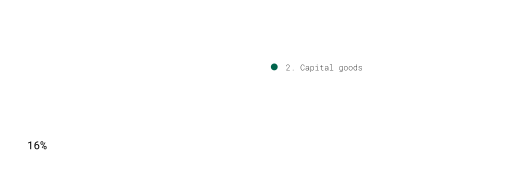

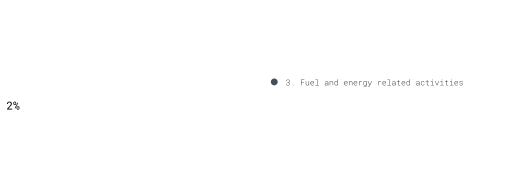

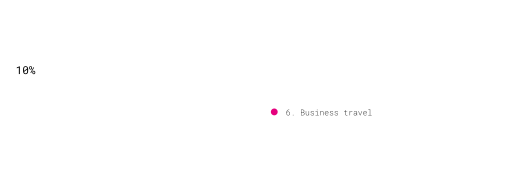



Below is the breakdown of Scope 3 indirect emissions by category.
CO2eq EMISSIONS (Scope 3) BY CATEGORY
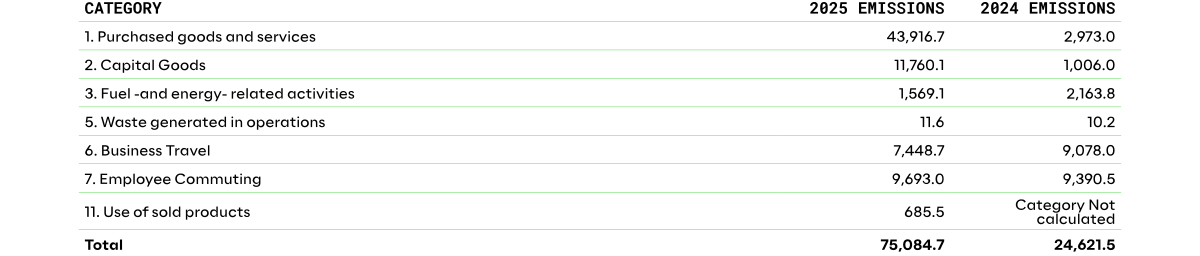
Below are the data on emissions intensity based on net revenues (see Note 5 – Revenues of the Group’s consolidated financial statements).

[E1-7] GHG removals and GHG mitigation projects financed through carbon credits
This paragraph aims to illustrate the quantity and quality of carbon credits that the Company has purchased on the voluntary market and retired to support its claims of GHG emissions neutrality. Reply has not developed projects within its own operations aimed at GHG removals and storage, nor has it contributed to such projects along its upstream or downstream value chain. In 2024, Reply purchased carbon credits, which were retired during the 2025 reporting year to achieve the Carbon Neutrality 2025 target. Specifically, the carbon credits purchased to offset Scope 1 and Scope 2 emissions generated by the Group as of 31 December 2024 were retired, thereby enabling the Group to achieve the Carbon Neutrality target in 2025, the reporting year under consideration, as planned. The following table shows the total amount of carbon credits retired during 2025, used to offset greenhouse gas emissions relating to Scope 1 and Scope 2 (district heating component), expressed in metric tonnes of CO2eqgenerated as of 31 December 2024, including details on project type and certification standard. These credits relate to GHG emission reduction projects developed outside the European Union. The data are based on existing contracts.

Furthermore, during 2025 the Group purchased additional carbon credits aimed at maintaining Carbon Neutrality for its Scope 1 and Scope 2 emissions, as detailed below:

Social information
ESRS S1 Own workforce
[ESRS 2 SBM-2] Interests and views of stakeholders
The Reply Group acknowledges the importance of considering the expectations of its stakeholders across the entire value chain, with the aim of building a long-lasting relationship of trust over time. Accordingly, Reply has established an approach based on continuous dialogue and engagement with its employees and collaborators, through specific initiatives, opportunities for discussion, and the periodic sharing of information. Further details are provided in the chapter GENERAL INFORMATION section [SBM-2] INTERESTS AND VIEWS OF STAKEHOLDERS.
[ESRS 2 SBM-3] Material impacts, risks and opportunities and their interaction with strategy and business model
Reply’s strategy and business model are inherently linked to actual and potential impacts, as well as to risks and opportunities related to the workforce, as identified through the double materiality assessment and outlined in the section [IRO-1] DESCRIPTION OF THE PROCESS TO IDENTIFY AND ASSESS MATERIAL IMPACTS, RISKS AND OPPORTUNITIES.
IMPACTS
Reply’s strategic approach and business model place emphasis on impacts related to the physical and mental well-being of its employees, generating concrete positive impacts on the workforce. Initiatives aimed at fostering a better work-life balance, together with corporate welfare systems, demonstrate a continuous commitment to creating a stimulating, healthy and motivating working environment. A key element of the Company’s human capital development strategy is also the investment in continuous learning. The opportunity for employees to access upskilling and technical skills development courses not only enhances their level of preparedness but also strengthens the Company’s competitiveness within the sector. By virtue of the nature of its business, potential negative impacts may arise in the area of occupational health and safety, due to situations of work-related stress that may increase the risk of occupational illnesses. The Group manages and prevents such potential impacts through the adoption of specific policies and the implementation of dedicated mitigation actions aimed at preventing them. Potential negative impacts deriving from discrimination have also been considered, such as pay disparities linked to gender bias, which are also addressed by the Group through the promotion of equal opportunities for growth and development for all employees, with a view to safeguarding diversity & inclusion. Further information in this regard is included in paragraphs [S1-1] POLICIES RELATED TO OWN WORKFORCE and [S1-4] TAKING ACTION ON MATERIAL IMPACTS ON OWN WORKFORCE, AND APPROACHES TO MANAGING MATERIAL RISKS AND PURSUING MATERIAL OPPORTUNITIES RELATED TO OWN WORKFORCE, AND EFFECTIVENESS OF THOSE ACTIONS.
RISKS AND OPPORTUNITIES
The Group’s strategy and business model are strongly linked to the availability of highly qualified personnel. The continuous contribution to employees’ professional development through training courses aimed at enhancing technical competencies and soft skills represents an economic and reputational opportunity for Reply. Indeed, investing in training not only improves employees’ capabilities, but also strengthens the Group’s competitive position within the sector, creating a virtuous cycle of growth and innovation.
However, the increasing competitiveness in the IT services sector entails an economic risk related to the need to increase salaries in order to attract and retain talent, with potential impacts on workforce stability. In this regard, the ability to offer corporate welfare plans and a working environment based on principles of diversity, inclusion and well-being represents an additional economic and reputational opportunity for the Group in support of its growth. These initiatives not only make the Group more attractive to potential candidates, but also contribute to improving employee satisfaction and productivity, as well as fostering a stronger sense of identification of employees with the Company.
Finally, the technological evolution to which Reply contributes, together with the increasing diffusion of artificial intelligence, represents a significant economic opportunity, supporting the optimisation of human resource efficiency and the expansion of the range of services offered.
All Reply workers, including non-employees, are considered within the scope of the disclosures pursuant to ESRS 2. In particular, the workforce is composed, both in Italy and abroad, of: direct employees, self-employed workers engaged under flexible contracts, personnel provided by temporary employment agencies, and interns recruited from educational institutions. The Group’s workforce is defined as the set of individuals who have an employment relationship with the undertaking (“employees”) and non-employees, who complement project teams by providing specific expertise to the undertaking, as well as students under internship agreements.
In particular, with reference to the type of contractual relationship in place with external collaborators, and in compliance with the specific characteristics of each country in which the Group operates, the following are mapped:
Direct collaboration relationships, such as collaborations with VAT-registered professionals, occasional collaborations and other forms of collaboration agreements (e.g. Zero Hour Contracts);
Indirect collaboration relationships include all other forms of collaboration with third parties, such as temporary employment agencies, recruiting agencies or staffing agencies (NACE Code N78).
The impacts, risks and opportunities described are valid for all Countries in which Reply operates and apply to all categories of workers, with the exception of the risk related to the limited presence of female resources, which specifically concerns women within the Group’s workforce, and the potential negative impact related to work-related stress and occupational illnesses, for which the Group acknowledges that, considering the characteristics of the sector in which it operates, women may be more exposed to specific risk factors. However, such risks do not assume a systemic nature nor are they widespread within the organisation. Available evidence, including the results of audits conducted in accordance with the ISO 45001 standard, shows that any critical issues occur in a limited manner and are attributable to specific situations, such as particular workloads, specific organisational or project conditions, or individual factors. Reply has not identified material impacts on the workforce that may arise from actions undertaken to reduce negative environmental impacts. In addition, Reply has assessed its workforce across the various countries in which it operates and has not identified risks of forced labour or child labour. Reply adopts policies consistent with regulations concerning vulnerable groups in all the countries in which it operates, promoting social and labour inclusion. This includes women, considered a category at risk in the sector in which the Group operates, whose rights are safeguarded by the Code of Ethics and the Human Rights Policy, which govern matters related to equal opportunities.
[S1-1] Policies related to own workforce
The policies implemented are well defined to address material impacts on its workforce and also take into account the related risks and opportunities. Among these policies are:
Code of Ethics
Whistleblowing Policy
Human Rights & Labour Policy
Health and safety at work
Gender Equality Policy
AI Policy
In addition, Reply is committed to respecting and promoting human rights within its workforce. The policies implemented are aligned with the United Nations Guiding Principles on Business and Human Rights, the ILO Declaration on Fundamental Principles and Rights at Work, and the OECD Guidelines for Multinational Enterprises. The effectiveness of whistleblowing systems/channels is assessed directly by the Supervisory Body (OdV) through the analysis of how reports are received and managed, the protection granted to whistleblowers, and the effectiveness of the measures adopted to prevent and detect improper practices, in compliance with applicable regulations.
Reply’s Code of Ethics defines the fundamental principles guiding the Company, representing the cornerstone of its culture and providing a model of conduct for all the Group’s stakeholders. It establishes the rules governing Reply’s relationships with its shareholders, employees, collaborators, suppliers, clients and partners, including interactions with authorities and public institutions, which are entrusted exclusively to specifically authorised personnel. These relationships are based on legality, transparency, clarity and fairness, in full compliance with applicable regulations. Through the acknowledgement and acceptance of the Code of Ethics, Reply ensures the engagement of its workforce with the values and principles it promotes. In 2025, the Code of Ethics, of which the Model 231 constitutes an integral part, was updated in accordance with the provisions of Legislative Decree 231/2001. For further information, please refer to section [G1-1] BUSINESS CONDUCT POLICIES AND CORPORATE CULTURE.
The Whistleblowing Policy is aimed at encouraging stakeholders and employees to promptly report misconduct, ensuring that they can do so without facing repercussions on their work activity. “Misconduct” refers to violations of applicable regulations, the Code of Ethics and/or Group Policies, as well as actions that may cause economic, environmental or occupational health and safety damage to Reply Group companies and their stakeholders. This policy represents a tool through which Reply addresses and mitigates potential negative impacts on human rights. Following an assessment, the Supervisory Body identifies the most appropriate intervention to be implemented based on the type of report, in full compliance with applicable labour law regulations in the various countries. In the most serious cases, termination of the employment contract may be envisaged.
The Human Rights & Labour Policy condemns child labour, forced labour and human trafficking, while safeguarding freedom of association and collective bargaining. This policy, together with the Code of Ethics, directly addresses the commitment to the protection of human rights and labour rights, ensuring equal opportunities and, at the same time, the physical and mental well-being of employees. Furthermore, the policy promotes human rights, diversity and inclusion and prevents and addresses all forms of harassment and inappropriate behaviour, as well as any form of discrimination based on race, skin, ethnic origin, sex, sexual orientation, gender identity, disability, age, religion, political opinions, national extraction or social origin, as well as any other form of discrimination covered by EU legislation and national law. The policy is aligned with the Universal Declaration of Human Rights (UDHR) and the United Nations Guiding Principles on Business and Human Rights (UNGPs), as well as with the conventions of the International Labour Organization (ILO).
Through these policies, Reply ensures that the most vulnerable groups are not discriminated against, while also complying with applicable national regulatory requirements. This ensures not only the prevention and effective management of any discrimination, but also the promotion of an inclusive working environment that respects diversity. For further information, please refer to the Policy overview in the chapter GENERAL INFORMATION [MDR-P] POLICIES ADOPTED TO MANAGE MATERIAL SUSTAINABILITY MATTERS, “GENERAL INFORMATION” chapter. In Italy, Germany and the United Kingdom, the Group has adopted a Health and Safety at Work Policy aimed at preventing workplace accidents, which, in compliance with applicable regulations, sets out the implementing rules designed to ensure the highest levels of protection of occupational health and safety. The policy was updated during 2025. In the remaining countries in which the Group operates, Reply complies with applicable local regulations. In Italy, for example, occupational health and safety is governed by Legislative Decree 81/2008, which establishes the protection and prevention measures necessary to ensure workers’ health and safety. This regulation requires risk assessment, employee training and the adoption of appropriate preventive measures, thereby ensuring a safe and compliant working environment. Furthermore, with regard to the occupational health and safety management system, in Italy Reply S.p.A., in the United Kingdom Reply Ltd, and, during 2025, also in Germany Reply Deutschland SE, are ISO 45001 certified for their occupational health and safety management system, through which such services are provided to the Group’s companies.
The Gender Equality Policy aims to define and structure fair processes covering the entire employee life cycle: from recruitment and selection to career development, from work-life balance to the enhancement of individuals before, during and after parenthood. By encouraging best practices, the policy supports overcoming unconscious bias and, more generally, any condition that may hinder the achievement of genuine gender equality in the workplace. The document is inspired by the KPIs (Key Performance Indicators) defined in accordance with UNI/PdR 125:2022, which represent a key tool for assessing commitment and progress on this topic. The policy applies to all employees of Reply S.p.A. and its subsidiaries.
The Reply Group AI Policy is a comprehensive framework designed to ensure the ethical and compliant use of Artificial Intelligence (AI) within the organisation and in the delivery of services to clients. The document, issued on 6 December 2024 by the AI Ethics Committee, highlights the potential of AI technologies, both generative and non-generative, and emphasises the need to balance innovation with the mitigation of risks related to ethics, compliance and security. The Policy provides recommendations on how to procure, use and develop AI systems in compliance with regulations, establishing practices for the sustainable use of AI, data protection and confidentiality, as well as intellectual property rights. It applies to all Reply Group personnel globally and provides that:
all employees are the primary recipients and are responsible for ensuring the compliance of their external collaborators and suppliers;
the terms and conditions of AI suppliers are verified for alignment with Reply’s Policy;
in client projects, any potential misalignment between client policies and Reply’s Policy is identified and managed.
The Policy is based on seven Ethical Principles: Fairness, Accountability, Transparency, Explainability, Safety, Security and Privacy. Among the key principles, the Policy emphasises transparency, accountability and explainability, requiring that AI-driven decisions are easily explainable and that users understand their limitations. The use of AI must respect human rights and comply with applicable national and international laws, with a focus on bias minimisation and data security. It is essential to adopt privacy protection practices, ensuring that the use of personal data occurs only with appropriate consent. Violations may result in disciplinary or legal sanctions. Furthermore, the document includes guidelines for addressing issues related to the misuse of AI and highlights the importance of staying up to date with regulatory and technological developments. The Policy is periodically reviewed to adapt to emerging needs and to ensure a responsible approach.
[S1-2] Processes for engaging with own workforce and workers’ representatives about impacts
Reply is committed to actively engaging its workforce in order to discuss material impacts, both actual and potential, positive and negative, that may affect their working experience. The views of its own workforce inform the Company’s decisions and activities aimed at managing such impacts. The direct involvement of people fosters an open and transparent dialogue, as described in greater detail in section [SBM-2] INTERESTS AND VIEWS OF STAKEHOLDERS chapter above. This approach facilitates, where possible, the integration of employees’ views and needs, ensuring that they are heard and directly incorporated into business decisions and addressed without a predefined frequency, but whenever necessary, whether at the request of the employee or the relevant partner, thereby promoting a collaborative and inclusive working environment. The Group’s enterprise social networking platform further supports engagement by providing additional internal communication channels (e.g. posts, events, groups) directly among colleagues, with Managers and Executives, and with internal Group functions. Reply manages effective workforce engagement to inform the Company’s approach through surveys and periodic performance evaluations. These activities make it possible to measure the level of participation and the resulting satisfaction of employees with their working experience, as well as to compare results with those of the previous year.
In particular, once a year, the Employee Survey is administered, a questionnaire aimed at assessing employee satisfaction, engagement and overall sentiment, excluding “executive” levels, on topics related to Reply’s values, collaboration with colleagues and personal expectations. All active employees who have not resigned are invited to participate in the Employee Survey. The initiative is launched simultaneously in all Countries in which the Group operates and involves all employees with at least two months of seniority within Reply. Participation is voluntary and anonymous, and respondents have the opportunity to share their views and contribute to improving their working environment by expressing their level of agreement with the proposed statements and by adding general or specific comments on the topics assessed. Since 2023, additional questions have been introduced to assess aspects related to diversity and inclusion. The results achieved by each company are shared with the respective Partners, who are required to analyse them, communicate them to employees and propose an action plan to strengthen areas identified as needing improvement. Comparison with results from previous years enables the assessment of trends over time and reinforces the focus on continuous improvement. It is important to emphasise that this responsibility is shared by Managers and Executives of the Group’s companies, who play a crucial role in interacting with employees in day-to-day activities.
To assess the level of employee engagement and satisfaction, Reply adopts an approach based on two main factors: the response rate and the average scores obtained from the survey, which allow for the identification of differences compared to previous years. This analysis process provides a clear view of trends in organisational climate and employee engagement over time. Furthermore, the Group is committed to ensuring that newly acquired entities are integrated into these engagement initiatives, thereby ensuring continuity in the monitoring and evaluation of the organisational climate. This holistic approach enables Reply to adapt its strategies and initiatives based on the results obtained, fostering an increasingly collaborative and motivating working environment. The initiatives described are addressed to all employees of the Reply Group without any distinction within their composition, including vulnerable workers and those belonging to protected categories, in order to ensure a fair and fulfilling working experience for all.
[S1-3] Processes to remediate negative impacts and channels for own workforce to raise concerns
Reply adopts a structured approach to address and remediate material negative impacts on its workforce, where it has caused or contributed to such impacts. In particular, to manage negative effects related to occupational health and safety, such as work-related stress and occupational illnesses, targeted corrective measures are implemented to reduce work-related stress and prevent occupational diseases. For example, the Group has implemented a psychological support programme, known as the Employee Assistance Program (EAP), active in Italy, the UK and France. In addition, in Italy, an annual assessment of work-related stress is carried out in accordance with national regulations. With regard to equal treatment of human resources, Reply has defined a Career Path that ensures consistent career plans and progression for all employees. The recruitment and selection process is of primary importance for the Group and is carried out in compliance with applicable regulations. Selection is conducted through a standardised process that is formalised and communicated to candidates, ensuring transparency and non-discrimination, and enabling the most accurate assessment of skills, capabilities and professionalism. Once hired, employees are placed on a career path based on a career framework defined by Human Resources and common across the entire Group, which is shared with the employee. In many of the countries in which the Group operates (e.g. Italy), reporting obligations on the gender pay gap are in place, contributing to greater transparency. Furthermore, in Italy, an increasing number of Group companies have obtained gender equality certification, confirming Reply’s concrete commitment to promoting equity. The certification, issued in accordance with UNI/PdR 125:2022 guidelines, attests to the adoption of a system of corporate policies and processes aimed at gender equality and the enhancement of female talent, with particular reference to access to the labour market, opportunities for professional growth, access to leadership roles and work-life balance. This commitment demonstrates that Reply’s focus on inclusion and equal opportunities goes beyond statements of principle and is translated into structured, monitored and verifiable business practices. This approach strengthens the organisation’s transparency, credibility and accountability and contributes systematically to reducing gender disparities, fostering the consolidation of an inclusive and sustainable corporate culture over time. Finally, the Company promotes a culture open to reporting through whistleblowing mechanisms, informing employees of the existence of such channels during the onboarding process and through the corporate intranet. Through specific channels, such as the whistleblowing channel and those made available by relevant national authorities, workers can report concerns or needs, unlawful conduct or behaviour inconsistent with the Code of Ethics and Group Policies directly to the Company in all countries in which the Group operates. These initiatives are monitored to assess their effectiveness and to ensure a fair and safe working environment. As required by law, the reporting party has the possibility to use the channels made available by the Group or to follow the process through the relevant national authorities. The Whistleblowing Policy accepts reports from both employees and external stakeholders, ensuring anonymity and confidentiality through a multilingual platform compliant with EU Directive 2019/1937. The system provides for prompt, independent and objective investigations of each report. Acknowledgements of receipt are sent to the reporting party within 7 days, with detailed feedback provided within 3 months. The Supervisory Body reviews the reports and communicates them to the Board of Directors and the Control Bodies, which may define an intervention plan appropriate to the report. The Whistleblowing Policy describes and ensures the protection of workers against any retaliation in the event that they decide to use such channels. Further details on this policy are provided in the section [G1-1] BUSINESS CONDUCT POLICIES AND CORPORATE CULTURE
[S1-4] Taking action on material impacts on own workforce, and approaches to managing material risks and pursuing material opportunities related to own workforce, and effectiveness of those actions
The Company implements various initiatives to manage material impacts, both positive and negative, optimise opportunities and reduce risks related to its workforce, while continuously assessing their effectiveness. In order to address the most relevant sustainability matters, concrete measures are adopted to prevent, mitigate and remediate potential impacts through the implementation of the above-mentioned policies, as well as targeted actions and initiatives. Below is a detailed overview of the actions implemented by Reply to prevent and mitigate negative impacts on its workforce, enhance positive impacts, and manage the risks and opportunities identified through the double materiality assessment.
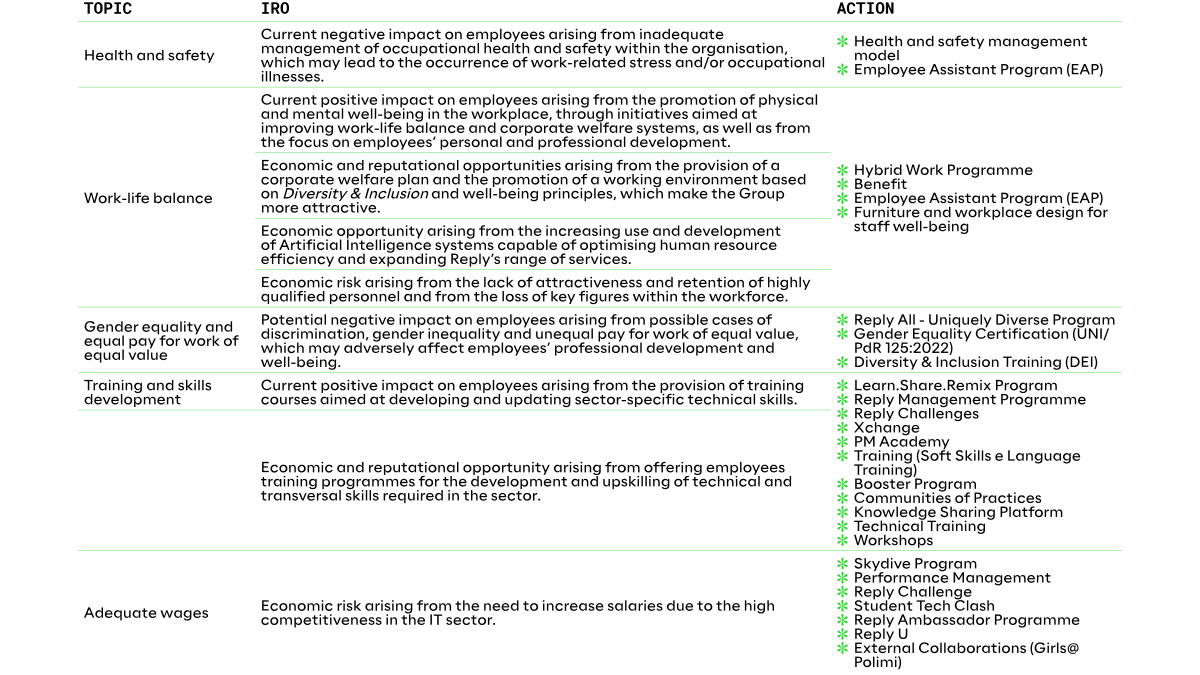
HEALTH AND SAFETY
For all companies operating in Italy, occupational health and safety aspects are ensured through the application of the health and safety management model formalised by the parent company Reply S.p.A., which is ISO 45001 certified. The model is continuously updated and periodically reviewed to incorporate any regulatory or standard changes, in line with certification, recertification and maintenance requirements. Employees in Italy account for approximately 60% of Reply’s total workforce, and the application of the model is managed by the parent company, which provides services to all Group companies, ensuring a comprehensive view of the implementation of the system.
The safety management model identifies applicable laws and related obligations, ensures access to the repository of regulatory documentation, identifies deadlines and plans activities, disseminates the necessary information and documents decisions regarding applicability assessments. A specific health and safety policy is available on the intranet for all employees.
In Italy, risk assessment is documented in the Risk Assessment Document (DVR) and is carried out by the employer, the Workers’ Representative, the Head of the Prevention and Protection Service and the competent physician. Reply workers, primarily video display terminal operators, are subject to health surveillance as they work more than 20 hours per week at video display terminals. None of the identified hazards has resulted in serious injuries. A health surveillance protocol is in place for employees and external collaborators with continuous engagement, which includes pre-employment and periodic medical examinations. Incidents, including near misses, are documented and managed in order to eliminate hazards and reduce associated risks.
To reduce the risk of incidents, training and information activities are provided through the corporate learning management system platform, aimed at preventing and effectively managing occupational risks related to business activities.
With regard to work-related stress, a checklist is adopted at European level to monitor the risk, and the analysis process follows national regulations. To date, the results have not identified any risk levels.
As evidence of its commitment to occupational health and safety, as previously mentioned, during 2025 the holding company Reply Deutschland SE also obtained ISO 45001 certification. Furthermore, in the United Kingdom, 2025 saw significant developments in the health and safety management system: logistical changes related to office reorganisation carried out during the year led to the update of risk assessments, including fire safety and ergonomic risks, as well as health and safety induction requirements. These actions were accompanied by communication and employee engagement initiatives, including the introduction of new internal channels dedicated to reporting issues and consulting on health and safety matters.
Furthermore, in this area, the Group has implemented a psychological support programme, known as the Employee Assistance Program (EAP), active in Italy, the UK and France. This programme aims to promote the psychological well-being of its personnel by preventing and mitigating cases of work-related stress. In addition, in Italy, an annual assessment of work-related stress is carried out in accordance with national regulations. With specific reference to the United Kingdom perimeter, during 2025 measures to promote well-being and manage stress were further strengthened, including through the extension of training for “mental health first aiders”, the reinforcement of communication and awareness-raising activities related to the Employee Assistance Program (EAP), and the update of guidelines on breaks, working hours and hybrid working practices.
WORK-LIFE BALANCE
Reply offers numerous programmes to meet employees’ needs in relation to their well-being, through a range of physical and digital tools and initiatives.
Reply provides employees with the opportunity to work remotely through a Hybrid Work Programme, with the aim of enabling more efficient time management and greater flexibility in the choice of working locations and schedules. This practice, consolidated over several years, is intended to reduce stress related to commuting and to improve work-life balance.
In order to enhance overall well-being, Reply provides its employees with benefits that vary depending on the country, also in accordance with local regulations. For example, for employees in Italy, a range of services related to health, well-being, personal care and mobility are available through the welfare platform and corporate benefits, such as the possibility to book specialist medical visits and purchase gym memberships, to subscribe to mobility services, and to receive reimbursements for education and care-related expenses for family members. No significant differences are identified across the regions in which Reply operates in the allocation of benefits among different types of employment contracts (permanent, fixed-term or part-time). In line with local regulations, in the United Kingdom Reply has further enhanced the management of family leave to support employee well-being and work-life balance. The approach adopted promotes fair treatment among employees, including through the recognition of “primary parent” and “secondary parent” roles, and ensures the absence of discrimination related to pregnancy, childbirth or the use of leave, guaranteeing equal opportunities in employment conditions and career development paths.
Employee and collaborator well-being in Reply offices is also considered in the choice of furnishings and workspace design, through specific renovation initiatives that include, for example, the creation of terraces with plants and flowers or furnished outdoor areas; gyms or multifunctional spaces that can host activities such as yoga classes; kitchens equipped with microwave ovens and refrigerators to facilitate meal consumption and the use of reusable tableware; and dedicated water dispensers to encourage the use of reusable bottles and cups, thereby reducing the use of single-use plastic bottles.
GENDER EQUALITY AND EQUAL PAY FOR WORK OF EQUAL VALUE
The Reply All – Uniquely Diverse programme aims to create a community that gives space and voice to diversity, inclusion and accessibility, leveraging Reply’s intrinsic nature as a network of companies committed to embracing differences. The programme, implemented on a year-by-year basis, seeks to address and discuss topics related to inclusion and diversity in order to foster continuous improvement. Having diverse teams, comprising individuals of different gender, age, ethnicity, culture, background, education, experiences and preferences, represents a valuable asset for the Group. Guided by principles of transparency, fairness and openness to dialogue, new ways of collaborating and learning from one another are promoted, with the awareness that the best solutions and most innovative ideas arise from such diversity. In particular, since 2019, Women in Tech has been one of the key streams of the programme and continues to provide an opportunity to discuss the role of women in the IT & Business sector.
To promote greater engagement, the selection of topics to be discussed takes place through interactions and surveys with the community via the Group’s enterprise social networking platform. Events are organised both in person and via global live streaming on the Group’s video platform, enabling all offices to participate and contribute. Panels enable employees at different levels to share their personal experiences, as well as the perspectives of clients and external partners. In support of the programme, various initiatives have been undertaken in the areas of inclusion and equity. In 2025, through multiple initiatives focused on gender and the LGBTQIA+ community, the programme involved more than 1,000 participants across several countries and over 30 cities.
To assess its impact, the Group annually monitors the number of participants across different locations and the number of events compared to the previous year. This approach enables the Company to analyse how many employees have taken part in the various initiatives and to ensure that they reach a broad and diverse audience.
The Gender Equality Certification system, in accordance with UNI/PdR 125:2022 guidelines, aims to promote the adoption of corporate policies that foster gender equality and women’s empowerment, thereby improving opportunities for women to access the labour market, assume leadership roles and reconcile professional and personal life. During 2024 and 2025 as well, several Italian companies within the Group obtained this certification as evidence of ongoing efforts. This recognition also supports engagements with the national Public Administration.
The Company promotes an organisational culture based on respect, inclusion and shared responsibility. To this end, starting from 2025, participation in a training course on Diversity, Equity & Inclusion and on the prevention of harassment and bullying is mandatory for all Reply employees. The training programme is designed to develop widespread awareness of the principles that guide fair and inclusive behaviours, fostering an understanding of individual differences, bias dynamics, power and privilege dynamics, and the impact that language, actions and day-to-day decisions can have on people and the working environment. In parallel, training on the prevention of harassment and bullying provides a clear framework of inappropriate behaviours, their organisational and individual impact, and the responsibilities of each individual in recognising, preventing and addressing them appropriately and promptly.
In addition to the core training, Managers, Partners and all leadership roles participate in further training modules specifically dedicated to the role of leadership in creating and maintaining safe, fair and inclusive working environments. These programmes strengthen awareness of the impact that leadership style, decision-making processes and communication approaches have on corporate culture, deepening the importance of transparent and fair decision-making, the responsible management of complex conversations and the ability to intervene in a consistent and constructive manner in sensitive situations. Within this framework, leadership is expected to lead by example, actively promote respectful and inclusive behaviours and ensure the application of a zero-tolerance approach towards any form of harassment or bullying, thereby concretely contributing to a working environment based on trust, psychological safety and mutual respect.
TRAINING AND SKILLS DEVELOPMENT
Employees represent Reply’s primary asset and, through their drive to imagine, experiment and explore new solutions, they support business development and fuel the Group’s ability to continuously improve and address new challenges. This statement is even more relevant considering the competitive environment in which the Group operates, characterised by constant evolution. The values of timeliness, innovation, excellence and customer orientation, together with ethical principles, constitute the key pillars for human resources development. For this reason, the Group continuously invests in their growth and enhancement, ensuring professional development paths and creating the conditions for a collaborative and motivating working environment.
The Learn.Share.Remix Program, a training programme based on user-generated content from across the Group, acts as an enabler of internal training through upskilling courses and allows Reply employees to act as trainers and speakers on trending topics of interest for the Company, with 250 interactive sessions and workshops held annually. The delivery of these training sessions is rewarded with credits that can be used for further training activities, such as the purchase of books and participation in industry events and conferences. In this way, employees are encouraged to propose topics and share knowledge on the most innovative technologies. The more they share, the more they can access additional training opportunities, such as online courses, events and conferences outside the Company. Over the years, the Learn.Share.Remix Program has continued to generate training content available to all employees and has enabled a constant focus on the topics of greatest interest to the Company, with particular attention to Artificial Intelligence, providing visibility to speakers and enhancing their public speaking skills. The events vary in format and level of interactivity, with seminars and workshops that share best client projects and research and innovation experiences, offering employees the opportunity to directly experiment with new technologies and test them in practice.
In 2025, Reply continued to build thematic learning paths around key trending topics, such as AI agents, Cybersecurity and AI-based digital experiences, through a rewarding learning experience aimed at further strengthening employees’ competencies. These learning paths are developed in collaboration with experts across the network and aim to consolidate the most up-to-date knowledge on topics of interest. In particular, the topic of Artificial Intelligence is addressed through the introduction of a structured training programme, the “General AI Training”, aimed at all employees, with the objective of disseminating basic competencies and promoting a conscious and responsible use of AI technologies.
The key performance indicator (KPI) used by the Group to monitor the effectiveness of training programmes is the number of actual participants during the year.
With a view to continuous training, specific internal training programmes are organised for new Managers and Executives of the Group (Reply Management Programme), covering team and people management, business development, internal company processes relevant to managerial roles, as well as additional training activities in collaboration with internationally recognised Business Schools. The programme is ongoing, with a series of editions held throughout the year, scaled according to new appointments to these roles.
The Reply Challenges are part of Reply’s broader programme of initiatives aimed at promoting a culture of innovation, with a particular focus on younger generations. Throughout the year, Reply organises the Reply Challenges, each of which brings together groups of experienced employees, students and young professionals from around the world with the aim of enhancing their skills, fostering innovation and ultimately proposing a problem to be solved by participating employees. These challenges form part of Reply’s ongoing commitment to promoting new, fully digital learning approaches among younger generations.
The challenges are created by employees and are open to all those with a passion for technology and digital competitions. They are structured around four main streams: coding, cyber-security, investments, with a focus on sustainability and digital creativity. Each challenge includes learning sections and sandbox environments where participants can familiarise themselves with the topics and train for the competition. Since 2019, a Teen Edition has also been organised, a category open to younger participants, aimed at introducing them to coding.
For all Reply Challenges, employees can leverage their innovative capabilities to reach the top of the rankings and win prizes or participate in internal events by showcasing their work during other corporate initiatives. In this case as well, to assess the impact of the initiative, the Group monitors the number of participants in the programme throughout the year.
Starting from 2024, the Reply Challenges programme has been further enriched with a focus on Artificial Intelligence: the first edition of the Reply AI Film Festival was organised, representing the first competition connecting AI talent with the global film industry, through a unique premiere event held in Venice during the Venice International Film Festival. From 2025, alongside short films, an additional AI-related initiative was launched, the AI Music Contest: the first creative competition open to DJs and visual artists experimenting with the use of Artificial Intelligence in live music performances.
Each year, knowledge sharing reaches its highest expression in the Reply Xchange event. Reply Xchange is a multi-day annual event open to employees and clients, where colleagues and creative thinkers meet to discuss how innovation and technology are transforming the world, and during which the best content and most innovative projects of the year are presented. *Reply Xchange* is designed to provide new insights into technological trends, innovation, digital experience and business applications. The KPI used by the Group to monitor the effectiveness of the initiative consists of feedback collected during and after the event.
The PM Academy offers annual project management courses and provides employees in Italy and Germany with the opportunity to be trained as project managers, including obtaining specific certifications, thereby granting them access to a broad community of professionals. In addition, these courses enable the use of internally developed frameworks for the development and management of activities and projects. Among these, the Matcha Reply methodology is particularly significant, guiding the design and development of software projects to make both the lifecycle and the final product more sustainable by concretely measuring the sustainability targets achieved. One of the key pillars of Matcha is adherence to Green Coding principles, with the aim of reducing emissions resulting from software execution and defining architectures and solutions that support sustainable processes. The main KPI used to monitor the effectiveness of training opportunities and measure employee engagement is the number of participants during the year.
Reply has implemented a Training Programme (Soft Skills and Language Training) to offer courses aimed at skills development and supporting professional career growth. In particular, with regard to optional training activities freely accessible to all personnel, the Group offers:
Language courses and related certifications for employees in Italy;
Soft skills courses, covering topics such as communication, sales, negotiation, people management and other areas useful for enhancing personal capabilities.
Also in this case, the number of participants in the courses represents the main KPI used to monitor the effectiveness of the initiative. The Booster Programme (International network of Employee Resource Groups - ERGs) represents a key initiative to promote interaction and engagement within the Reply community. The programme aims to involve employees in both formal and informal activities, offering digital channels and events. To support growth, strengthen the sense of belonging and foster networking, Reply ensures access to various opportunities for all employees. At each location, a group of volunteers is committed to representing the needs of the local community by organising events throughout the year, ranging from recreational activities to cultural experiences. These events, open to all members of the Reply community, contribute to creating a more cohesive and collaborative working environment. Ideas for events arise organically and are formalised through a proposal form that allows for the assessment of the budget required for each initiative. The variety of activities reflects the needs of each local community, contributing to strengthening the sense of belonging and collaboration among employees. Once approved, activities are promoted on the corporate enterprise social networking platform, where members can register and participate. This approach not only strengthens the sense of community but also enables a flexible and timely response to employees’ needs, making the Booster Program a key element of Reply’s sustainability and inclusion strategy. In 2025, the Boosters organised numerous activities, including cultural excursions, group gatherings, inclusion-focused events and other team-building initiatives. The nature of the programme allows for a wide diversification of initiatives, both to celebrate local occasions and to organise larger-scale events involving multiple Reply locations. This international network of “Boosters” aims to engage the employee community across all Group locations, fostering knowledge sharing and participation in #LifeAtReply events, offering opportunities for interaction regardless of office size. The initiatives of the Booster Club are monitored and supported by the internal communication team, which provides assistance in the organisation of events. To assess the effectiveness of the programme, the number of participants and the number of events organised during the year are monitored. Within Reply, several cross-functional global teams (Communities of Practice) are dedicated to analysing technological trends and identifying the best ways to integrate them into existing products and services. This approach enables the development of highly innovative projects throughout the year, ensuring cutting-edge solutions aligned with market evolution. Through these activities, the Group offers employees the opportunity to develop new knowledge and skills in a highly innovative context characterised by advanced technological services and solutions. In a market where innovation is a key factor, continuous research and development represent a strategic asset that not only supports clients and partners in adopting new technologies but also ensures that all collaborators have the opportunity to grow professionally, actively contributing to the development of cutting-edge solutions in response to emerging sector needs. In pursuing these objectives, Reply allocates resources and funding annually to Research and Development activities; in this context, the evolution of proprietary platforms is also included. To monitor the effectiveness of the initiative, both the number of participants and the results achieved by each Community of Practice based on defined objectives are considered, for example, the number of white papers produced, articles published in industry media and webinars organised. The knowledge sharing platform, designed for the dissemination of video content and the live streaming of events, ensures that all employees have access throughout the year to thousands of contents produced by colleagues who are experts in their respective fields. The platform hosts various types of videos on trending topics related to Reply initiatives, including the Learn.Share.Remix Program, #LifeAtReply activities and contributions from employees, Group companies, Communities of Practice and central functions. It also hosts all Reply live-streaming events, thereby fostering a sense of community and belonging: the videos encourage and celebrate the Reply community, teamwork, group activities and, more generally, the Company’s culture. In the ESG area, Reply has also engaged employees by offering content that enables them to deepen their knowledge of sustainability topics, such as learning sessions related to the UN 2030 SDGs agenda, circular economy and IT waste management within the environmental domain, as well as courses on digital accessibility and inclusive language. To monitor the effectiveness of the initiative, the number of participants in the programme and the number of events organised during the year are also considered. Finally, with regard to technical training in specific business areas (e.g. industry or product certifications), management is not centralised but delegated to individual companies in order to better respond to specific training needs throughout the year, ensuring quality, excellence and alignment with actual requirements. The Group provides, in certain locations, dedicated laboratories for experimentation, offering employees, collaborators and clients the opportunity to transform creative ideas into concrete solutions. Through the use of advanced technologies in the fields of robotics, advanced mobility and virtual reality, employees can expand their skills, experiment with new applications and actively contribute to innovation, developing their professional growth path in a dynamic and cutting-edge environment. The active laboratories include:
Area42 (Turin, Italy)
Cyber Security Lab (Cologne, Germany)
Test Automation Center (Turin, Italy)
IoT Validation Lab (Turin, Italy)
Area Phi (London, United Kingdom)
Area42 is dedicated to the exploration and testing of robotic solutions such as quadrupeds, rovers, drones, and interactive humanoid robots. Reply experts conduct tests and experiments on the algorithms that govern the perception, mobility, and manipulation of robots. They perform tests and experiments on reducing AI models so they can run on edge computing. They implement edge-to-cloud continuum solutions to allow software controlling mobile devices to access the correct network resources when needed. They also generate synthetic data for model fine-tuning. The most innovative technologies are validated with real-world experiments, thanks in part to collaboration with universities and international research centres.
The Cyber Security Lab provides Reply’s client companies with an advanced environment for analysing, evaluating, and simulating security scenarios in areas such as cloud computing, secure software development, application and data protection, and network infrastructure. The Cybersecurity Lab includes demo units dedicated to attack tests and simulations, threat modelling, and security analyses of hardware and software components. Its activities extend to industrial security, IoT, automotive security, and smart building security, allowing client companies to effectively evaluate and strengthen their defence strategies.
The Test Automation Center ensures continuous quality monitoring of strategic products and services for the business, using a structured framework and proprietary validation methodologies. The goal is to support client companies in managing the entire lifecycle of products and services, both during the development phase and after market release, facilitating the early identification of potential critical issues and the timely definition of corrective actions. The integration of AI into quality assurance tools increases the efficiency of key processes, including test selection, data preparation, and maintenance activities, ensuring high levels of reliability even in technologically complex environments.
The IoT Validation Lab is dedicated to the design, integration, validation, and implementation of IoT solutions and connected products, with a significant focus on environmental sustainability and energy efficiency. Thanks to end-to-end expertise and advanced technological instrumentation, Reply experts support client companies throughout the entire lifecycle of IoT solutions, offering consulting services, connectivity testing, and device pre-certification activities. The IoT Validation Lab develops and analyses applications in the automotive, telecommunications, manufacturing, energy, and logistics sectors, enabling the sustainability of IoT infrastructures to be assessed through analysis of material degradation and component lifespan.
Area Phi supports client companies in translating technological innovation into concrete strategies for their sectors. Key activities include: developing empathetic digital humans, integrating conversational AI and generative AI; exploring immersive technologies such as extended reality, gamification, and AI to create engaging experiences, including digital escape rooms, immersive e-learning, and interactive games. In the field of edge computing, the lab develops solutions for manufacturing and renewable energy, improving efficiency through real-time analytics, predictive maintenance, and defect detection with AI.
The internal mobility programme Skydive is active and aims to offer new growth opportunities beyond the boundaries of individual companies. At the same time, it provides companies with the opportunity to recruit personnel who are already trained and integrated within the corporate context. Companies publish job opportunities on the dedicated page of the corporate enterprise social networking platform during three annual sessions, and employees can apply without any restrictions. It is important to highlight that, if an application is not successful or if support is requested, the Skydive team operates throughout the year to guide participants in identifying other opportunities. Reallocation within the Group therefore represents an opportunity available to all at any time during the year, even beyond the standard programme sessions, demonstrating the Company’s commitment to creating a working environment focused on motivation and attractiveness, as well as on respecting the preferences and interests of each individual.
Employees are periodically invited to participate in a performance review. The Performance Management process is carried out at least once a year and aims to ensure that each individual has the opportunity to reflect and receive feedback on performance, contribution and alignment with the Company’s values, as well as to discuss personal development, including aspects related to compensation and performance-based incentives.
The Reply Group continuously evaluates individual contributions to business results by comparing predefined objectives with achieved results, behaviours demonstrated and tasks performed over a given period, while also recognising employees’ knowledge, capabilities and quality. Reply believes in and invests in the comprehensive development of talent and skills. The focus on talent development also extends beyond the boundaries of the organisation, through initiatives aimed at students and professionals, which represent not only an opportunity for guidance and growth but also a concrete way to attract new talent and promote an inclusive and innovation-oriented corporate culture. In this context, Reply has built strong and long-lasting relationships with Italian and European universities and research centres, enabling the identification of high-potential profiles and actively contributing to the development of increasingly broad and accessible competencies.
An integral part of this vision consists of various initiatives designed to stimulate the exchange of ideas and the direct involvement of students in the fields of technology and innovation. Alongside participation in traditional career days and job fairs, Reply promotes initiatives such as the Reply Challenges and Student Tech Clash, which stand out as international idea generation events. In these contexts, teams of students from various European universities engage with cutting-edge technological topics, working on real cases with the support and guidance of Reply professionals and applying their skills and creativity in dynamic and collaborative environments. At the same time, initiatives such as Reply U and the Reply Ambassador Programme further strengthen the link with the academic world, offering students opportunities for training, networking and direct contact with the corporate culture. In line with its commitment to inclusion and equal opportunities, and in coherence with its structured relationship with the academic world, Reply promotes and supports initiatives aimed at fostering more equitable access to education and professional pathways in the technology sector. Since 2022, Reply has participated in the Girls@PoliMI initiative, launched by the Politecnico di Milano, by sponsoring scholarships for female high school students to encourage their engagement in STEM18 pathways and raise awareness of career opportunities in the technology sector. In 2025 as well, Reply renewed its commitment by taking part in the initiative and funding two new scholarships, with the aim of promoting inclusive education, breaking down stereotypes, and reducing the gender gap.
In the same vein, in 2025 Reply participated in the Mentoring Programme with Companies for Inclusivity, carried out in collaboration with the Politecnico di Milano, involving professionals and students in a dialogue aimed at promoting a corporate culture attentive to diversity and supporting students with disabilities in recognising and developing their potential. Through discussion sessions, testimonials and individual mentoring sessions, practical tools for career guidance and entry into the labour market were shared, also thanks to the direct involvement of both HR functions and Group professionals.
In 2025, the Student Clash involved 8 Universities in 5 Countries: Manchester University, HEC Liege, Centrale Supelec, TUM, Politecnico di Torino, Università degli Studi di Milano-Bicocca, Sapienza University of Rome, Imperial College. More than 700 students were involved.
It focused on Agentic AI, proposing 2 challenges:
Tech: AI implementation and problem-solving
Business: AI-driven innovation and business design
28 Reply Companies were involved in the challenge development and followed the students throughout the project development. The Reply Ambassador Programme, launched in 2015, is aimed at university students and enables them to collaborate with Reply during their studies, representing the company within their universities and helping to build a bridge between the academic environment and future career opportunities. The programme offers a range of opportunities that help build a connection between universities and Reply, involving students in both digital and in-person activities. In return for their contribution, students can gain initial experience in real projects. They also have exclusive access to training from the Learn.Share.Remix Program and can therefore participate in webinars and seminars delivered by Reply experts, as well as workshops and events organised specifically for them. ReplyU, where “U” stands for university, is the Group’s employer branding social media initiative aimed at introducing Reply and #LifeAtReply to university students around the world. The programme promotes events and initiatives open to students via all major social platforms, including Instagram and TikTok, and is driven by organic content shared by the Reply community using the #LifeAtReply hashtag. Digital touchpoints also include employer branding platforms, where Reply companies maintain profiles that collect reviews and feedback from current and former employees. Reply participates in external collaborations that can facilitate women’s access to STEM disciplines, with the aim of expanding the available talent pool and strengthening the presence of key roles within the workforce, thereby ensuring continuity and competitiveness in the long term. In the current year, the resources allocated by Reply to the initiatives described above are not significant in relation to the Group’s total operating and capital expenditure. However, Reply adopts a collaborative process to identify the necessary and appropriate actions in response to specific actual or potential negative impacts on its workforce. This process is based on bilateral interactions between local partners and employees, creating an environment in which every idea is valued and every voice is heard. Through regular meetings, surveys and direct feedback, the Company gathers valuable information on the experiences and concerns of employees and collaborators. Initiatives therefore emerge from these interactions, enabling Reply to develop targeted and relevant solutions that address the specific needs of its workforce. This approach not only promotes a sense of belonging and engagement among employees but also ensures that the actions undertaken are truly effective in mitigating the identified negative impacts.
Abbreviation for Science, Technology, Engineering, and Mathematics (as subjects of study)
[S1-5] Targets related to managing material negative impacts, advancing positive impacts, and managing material risks and opportunities
The Company addresses material impacts on its workforce through targeted initiatives and actions, without, however, having defined specific targets. The approach adopted focuses on the ongoing management of risks and opportunities, with periodic monitoring to ensure continuous improvement over time. At present, setting specific targets for its own workforce has not been considered a priority or a strategic focus.
[S1-6] Characteristics of the undertaking’s employees
This section aims to provide information on Reply’s approach to employment, including the scope and nature of impacts arising from its employment practices, and to provide contextual information to facilitate the understanding of the disclosures presented in other sections, as well as to serve as a basis for the calculation of the quantitative metrics reported in the consolidated sustainability statement. As of 31 December 2025, the Reply Group employs a total of 17,07319 employees, compared to 16,007 at the end of 2024. The Group’s workforce includes direct employees, including interns, as well as all individuals engaged under non-guaranteed working hour arrangements, such as occasional workers, zero-hour contract employees and on-call workers. The tables below present the number of employees broken down by gender and by country, for those countries in which the undertaking has 50 or more employees and which represent at least 10% of the total number of employees.
The figure includes the Group’s 16,624 direct employees, as reported in the “Key Group Results” section, as well as interns and employees under non-guaranteed working hour contracts.
NUMBER OF EMPLOYEES BY GENDER

NUMBER OF EMPLOYEES BY COUNTRY
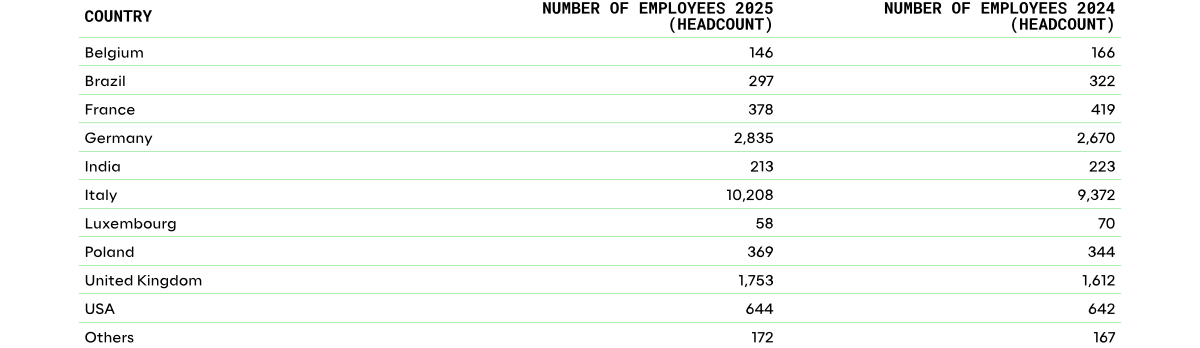
The table below presents the total number of employees on permanent contracts, fixed-term contracts, variable working hours, full-time and part-time arrangements, as well as their breakdown by gender.
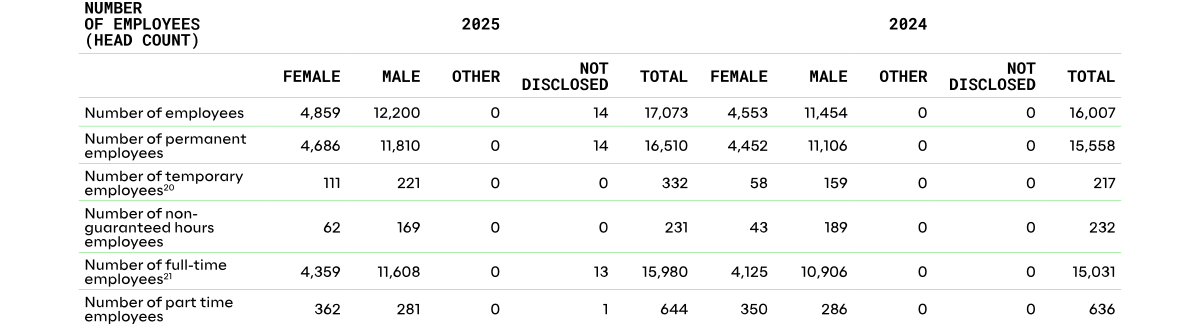
The number of Group employees is also reported in the section “Key Group Results” of the Financial Report. In 2025, a total of 2,166 employees left Reply on a voluntary basis or due to incentives, retirement or death, compared to 2,373 employees who left Reply in 2024. The global turnover rate was 13.4%22 (compared to 15.57% in 2024) and includes all terminations, whether voluntary or involuntary. To determine the percentage of employees who left, the total number of employees who exited the Group during the reporting year is divided by the average number of employees over the same period. The use of part-time employment contracts responds to employees’ needs (e.g. the need to combine work with studies, parenthood, etc.), which are typically temporary. Reply complies with all applicable working time regulations: all overtime is managed fairly, compensated appropriately and in accordance with applicable labour legislation. The following table presents the total number of employees on permanent contracts, fixed-term contracts, variable working hours, full-time and part-time arrangements, broken down by region:
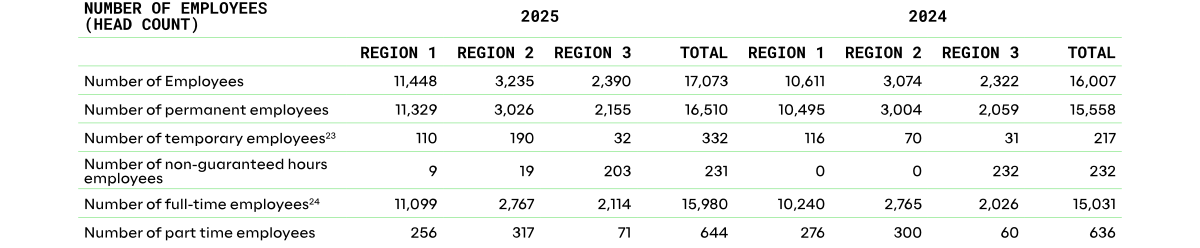
Interns are also included among temporary employees.
Full-time employees exclude interns and employees under non-guaranteed working hour contracts.
Employees of Root16, a new acquisition of Reply Group, are not included in the metric.
Interns are also included among temporary employees.
Full-time employees exclude interns and employees under non-guaranteed working hour contracts.
[S1-7] Characteristics of non-employees in the undertaking’s own workforce
This section aims to describe the main characteristics of non-employee workers within the own workforce and also provides an understanding of the extent to which Reply relies on non-employees as part of its own workforce. The total number of non-employee workers within the own workforce in 2025 was 787, compared to 778 in 2024. It is not yet possible to provide a breakdown of this figure for the Wemanity group and for the following countries: Brazil, China, India, the USA, Croatia, the Netherlands and Morocco. The total number of non-employees is reported as headcount and as an average value over the reporting period. With reference to the type of contractual relationship in place with external collaborators, and in compliance with the specific characteristics of each country, the following are mapped:
individual contractors (“self-employed workers”), such as freelance professionals;
workers provided by undertakings primarily engaged in “employment activities”, such as temporary employment agencies, recruiting agencies or staffing agencies (NACE Code N78).
Collaborators are engaged in consulting activities in the IT sector and provide their professional expertise to the Group, working alongside employees in carrying out business activities in accordance with the agreed terms.
[S1-10] Adequate wages
In line with the previous year, the Group provides all its employees with adequate remuneration, aligned with applicable benchmarks (e.g. national collective bargaining agreements and local minimum wage regulations) and taking into account market competitiveness.
[S1-13] Training and skills development metrics
This section aims to illustrate the training and skills development activities offered to employees, within the context of continuous professional development, in order to enhance their competencies and support ongoing employability. For certain types of training, due to factors such as courses attended anonymously or through tools that do not allow for such detailed tracking, training hours have been allocated to each gender group based on that group’s proportion of the total workforce. For the first year, the details of the training hours completed by employees are presented below:

The percentages of employees who participated in regular performance and career development reviews by gender25 are presented below. These indicators refer to the entire Group, with the exception of China (Region 2), the Netherlands and Morocco, and are calculated as the ratio between the number of employees who underwent a performance review and the number of employees for whom the review was mandatory.

The percentages of employees who participated in regular performance and career development reviews by role are presented below26:

The Group does not provide performance evaluation or training activities for non-employees.
Employees of Root16, a new acquisition of Reply Group, are not included in the metric.
Employees of Root16, a new acquisition of Reply Group, are not included in the metric.
[S1-14] Health and safety metrics
This section aims to illustrate the extent to which the own workforce is covered by the company’s occupational health and safety management system, as well as the number of incidents related to injuries, illnesses and work-related fatalities affecting the own workforce. In 2025, 100%27 of Reply’s workers were covered by the company’s occupational health and safety management system, compliant with legal requirements and/or recognised standards and guidelines, compared to 76.7% recorded in 2024. During 2025, there were no fatalities due to work-related injuries or illnesses among Reply’s workers or other workers operating at company premises. This also applies to other workers present at the Group’s offices, such as value chain workers. The total number of recordable work-related injuries in 2025 was 20, with a recordable injury rate of 0.7428. Furthermore, in both 2025 and 2024 no cases of work-related illnesses were recorded, in compliance with applicable regulations on data collection and reporting. The total number of working days lost due to injuries, work-related accidents, work-related illnesses and fatalities among employees amounted to 306 days.

Interns and employees under non-guaranteed working hour contracts are not included. Employees of Root16, a new acquisition of Reply Group, are also not included in the metric.
The injury rate is calculated as the number of injuries (on-site, while working from home or during commuting with transport organised by Reply) divided by the total hours worked, multiplied by 1,000,000. Interns and employees under non-guaranteed working hour contracts are not included. Employees of Root16, a new acquisition of Reply Group, are also not included in the injury metrics.
[S1-15] Work-life balance metrics
This section aims to illustrate the right and actual practices among employees to take family-related leave on a gender-equitable basis, as this represents one of the dimensions of work-life balance. Reply guarantees all employees the right to family-related leave, in accordance with the Company’s social policy and/or applicable collective agreements; this system was already in place in 2024 and has been confirmed also for 2025. In 2025, the percentage of eligible employees who took family-related leave was 6.2%29, with the following breakdown by gender:

The ratio between the number of employees who took leave and the total number of employees (100%) includes all countries considered, excluding interns and employees under non-guaranteed working hour contracts. Employees of Root16, a new acquisition of Reply Group, are not included in the metri
[S1-16] Remuneration metrics (pay gap and total remuneration)
This section pursues a dual objective: on the one hand, it aims to illustrate the extent of any gender pay gap among the Company’s employees; on the other hand, it provides information on the level of remuneration inequality within the Company and the possible existence of significant pay disparities. In 2025, the gender pay gap in Reply amounted to 11.45%30, compared to 10.87% in 2024, calculated as the difference between the average remuneration levels of female and male employees, expressed as a percentage of the average remuneration of male employees. The main factor contributing to this percentage is the lower availability of female profiles in the labour market, as evidenced by official data on the participation of women in STEM faculties. The management of professional roles within Reply is based solely on meritocratic criteria, as demonstrated by the internal career path framework, which defines the parameters characterising entry levels and career progression. In 2025, the ratio between the annual total remuneration of the highest-paid individual and the median annual total remuneration of all other employees (excluding the highest-paid individual) was 32.2831, compared to 32.95 in 2024. Both metrics consider all employees, including those under non-guaranteed working hour contracts, active as of 31 December of the reference year, excluding interns.
Executive and Senior Partner roles are excluded from the calculation of this metric.
Executive and Senior Partner roles are excluded from the calculation of this metric.
[S1-17] Incidents, complaints and severe human rights impacts
This section aims to illustrate the extent to which work-related incidents and severe human rights impacts affect the own workforce. In continuity with the previous year, during the reporting period Reply did not record any material incidents of work-related discrimination based on gender, race or ethnic origin, nationality, religion or personal beliefs, disability, age, sexual orientation or other relevant forms of discrimination, including harassment. In 2025, 6 reports were submitted through official channels, including internal grievance mechanisms such as the Whistleblowing channel and the OECD National Contact Points, whereas no reports were recorded in 2024. No costs were incurred for fines, penalties or compensation for damages resulting from discrimination incidents both in 2025 and in 2024. During the reporting period, and in continuity with the previous reporting year, no severe human rights incidents were recorded, such as forced labour, human trafficking or child labour, in line with the United Nations Guiding Principles, the ILO Declaration on Fundamental Principles and Rights at Work and the OECD Guidelines for Multinational Enterprises. Consequently, no costs were incurred for fines, penalties or compensation for damages related to severe human rights incidents during the reporting period.
ESRS S2 Workers in the value chain
[ESRS 2 SBM-2] Interests and views of stakeholders
The Reply Group recognises the importance of protecting the interests and rights of workers throughout its entire value chain, being fully aware of the significant impact that business practices can have on them. As such, Reply is committed to ensuring that the views and concerns of workers are heard, through ongoing dialogue with suppliers, supported by regular meetings. This open and constructive engagement enables the Group to better understand and respond to supplier needs, contributing to the continuous improvement of working conditions for workers across the value chain. Further details can be found in the GENERAL INFORMATION chapter, section [SBM-2] INTERESTS AND VIEWS OF STAKEHOLDERS.
[ESRS 2 SBM-3] Material impacts, risks and relevant opportunities and their interaction with strategy and business model
Reply’s strategic approach and business model place particular emphasis on working conditions and the protection of workers’ rights throughout the value chain, as well as on the management of relevant potential impacts and risks (see [SBM-3] Material impacts, risks and opportunities and their interaction with strategy and business model). The Group integrates social responsibility into its commercial practices by building strong relationships with direct suppliers. These elements help guide Reply’s strategy, either as feedback from business relationships or as concerns raised through the whistleblowing system (see section [S2-3] PROCESSES TO REMEDIATE NEGATIVE IMPACTS AND CHANNELS FOR VALUE CHAIN WORKERS TO RAISE CONCERNS). In this context, the suppliers taken into consideration in the analysis of relevant risks and impacts for workers along the value chain are: Small and medium-sized IT service providers and professional consulting firms supporting delivery, i.e. partners involved in the delivery of services; Hardware and IT service providers (Licensees); Labour providers (staffing and personnel provision); Real estate and utility suppliers, and Auxiliary service providers (as outlined in paragraph [SBM-1] STRATEGY, BUSINESS MODEL AND VALUE CHAIN). As part of the double materiality assessment, Reply considered all geographic areas and industry sectors where there is a significant risk of child labour and forced labour in the value chain—particularly among non-strategic and indirect procurement suppliers. This assessment enables Reply to proactively address issues related to workers’ rights and to promote ethical practices throughout its supply chain. In such contexts, insufficient oversight of supplier practices concerning their workforce can result in negative impacts related to child labour and/or forced labour. These may occur as widespread issues or be linked to isolated incidents or specific business relationships in certain countries. To address these risks, Reply implements tools designed to ensure respect for human rights across the entire value chain, including the adoption of a Whistleblowing Policy, the acceptance of the Code of Ethics and the Supplier Code of Conduct by suppliers and the evaluation of the latter based on social criteria, tailored to the specific conditions of the countries in which the Group operates. This supports the Group’s strategic alignment with enhanced social responsibility. Beyond these concerns, another key issue is the ability to ensure gender equality and fair remuneration. Women may be more vulnerable to discrimination and pay gaps, particularly in cultural or sector-specific contexts where gender inequality persists, and where attitudes and practices hinder their full inclusion and professional development. Special attention is given to strategic suppliers in the IT sector, on whom the Group relies and whose wellbeing and expertise are essential to ensuring the quality of services offered in a highly competitive environment.
[S2-1] Policies related to value chain workers
Reply manages impacts on workers in the value chain through its Supplier Code of Conduct, a document that defines the standards that must be respected and encompasses all the topics that Reply considers essential in its relationship with suppliers, thereby ensuring a responsible and respectful working environment. The Code aims to guarantee safe, dignified, and fair working conditions, promote the respect of human rights, ensure health and safety protections, and encourage the adoption of increasingly responsible and sustainable business practices. It also defines core principles for supplier relationships, including integrity and transparency, environmental stewardship, people protection, and improvement of working conditions. Since 2022, all professional consulting service providers are required to review and accept, at the time of contract signing, the Supplier Code of Conduct developed by Reply, which is aligned with the Code of Ethics, also accepted upon contract signing (in Italy together with the Legislative Decree 231/2001 Model).The Code of Ethics specifically promotes best practices and encourages responsible behaviour, ensuring that the Group’s fundamental ethical values form the foundation of its corporate culture and represent the standard of conduct for all collaborators. It also explicitly prohibits unfair competition and active or passive corruption. In addition, the Human Rights & Labour Policy denounces child labour, human trafficking, and forced labour, and upholds the freedom of association and collective bargaining throughout the Group. Together with the Code of Ethics, this policy reaffirms Reply’s commitment to human rights protection, promoting diversity and inclusion, and rejecting any form of discrimination based on ethnicity, gender, sexual orientation, physical or health condition, disability, age, nationality, religion, or personal beliefs—while ensuring employees’ physical and mental wellbeing and professional development. The policy aligns with the Universal Declaration of Human Rights, the UN Guiding Principles on Business and Human Rights, and the International Labour Organization’s (ILO) Conventions. In conclusion, the Modern Slavery Policy outlines the Group’s commitment to ensuring that modern slavery, human trafficking, and child labour do not occur within Reply’s business operations or supply chain. For further details, please refer to section [MDR-P] POLICIES ADOPTED TO MANAGE MATERIAL SUSTAINABILITY MATTERS, which outlines the Group’s policies for managing potential materialimpacts on workers in the value chain. The Supplier Code of Conduct includes periodic monitoring activities to verify compliance with environmental, social, and governance (ESG) principles, and administrative processes ensure rigorous oversight of professional consulting service providers supporting delivery. Please also refer to the following paragraph [S2-2] PROCESSES FOR ENGAGING WITH VALUE CHAIN WORKERS ABOUT IMPACTS. As evidence of this commitment, no cases of non-compliance with the UN Guiding Principles or the ILO Declaration on fundamental rights at work have been reported upstream or downstream in the value chain to date.
[S2-2] Processes for engaging with value chain workers about impacts
Currently, Reply does not implement a single, generalised process to engage all workers in the value chain regarding the potential negative impacts to which they may be exposed. Engagement with professional consulting service providers supporting delivery is carried out through open and direct dialogue between the relevant managers, executives, and the Sourcing function for the service provided. This approach ensures that the views and needs of strategic suppliers are heard and integrated directly into business decisions. Such engagement does not follow a fixed schedule but occurs as needed, supporting a collaborative and inclusive working environment. Concerns and views from workers across the entire value chain may also be expressed via the whistleblowing platform and are taken into consideration in the management of potential impacts and therefore integrated into the Group’s strategy. Reply conducts an annual self-assessment activity to ensure that professional consulting service providers supporting the Group’s services are aligned with Reply’s ESG criteria and with the values set out in Reply’s Code of Ethics. In particular, since 2022, annual self-assessment campaigns have been launched for suppliers with more than 15 employees. These are managed via a self-assessment questionnaire focused on the following areas:
Labour: protection of working conditions;
Protecting People: respect for employee dignity and their physical and moral wellbeing, avoiding all forms of discrimination;
Environment, Safety and Health: attention to environmental and safety issues, and the promotion of employee awareness;
Integrity and Transparency: commitment to ethical integrity and transparency in business practices, in compliance with applicable laws and in the interest of stakeholders.
This process therefore focuses on environmental and health & safety matters, as well as the Group’s commitment to integrity and transparency in corporate practices, serving as a key tool for ensuring compliance with ethical and regulatory standards. It also strengthens the Group’s social responsibility and helps generate shared value across the supply chain. At the beginning of each new business relationship, the Sourcing function or the partners of individual companies organise meetings with suppliers to ask targeted questions aimed at verifying their focus on relevant issues such as training and ESG practices. This process helps assess the supplier’s alignment with Reply’s business model and enables ongoing dialogue, particularly with professional consulting service providers supporting delivery. In Italy, collaborations are primarily with small and medium-sized enterprises, whereas abroad, relationships are often established with freelancers or sole proprietorships. Although Reply does not directly engage supplier employees to gather their opinions on the impacts they may be exposed to, nor does it evaluate the effectiveness of such engagement or maintain global framework agreements with international trade unions to guarantee human rights protections, ongoing contact and dialogue with suppliers is maintained through the measures described above.
[S2-3] Processes to remediate negative impacts and channels for value chain workers to raise concerns
To remediate potential negative impacts on workers in the value chain, where the company has caused or contributed to such impacts, the Group relies on the policies detailed in the previous paragraph [S2-1] POLICIES RELATED TO VALUE CHAIN WORKERS. These include, among others, the requirement to acknowledge the Group’s Code of Ethics and the Supplier Code of Conduct, which outlines specific requirements aimed at preventing labour rights violations within suppliers’ workforces. Reply has also implemented a Whistleblowing Policy to ensure that all stakeholders—including employees and workers in the value chain—can report inappropriate labour practices that are not in line with the Group’s policies in a safe and confidential manner. This system provides an additional reporting channel beyond those required by applicable legislation. Each report is handled through formal measures designed to address the concerns raised. The Code of Ethics, which is shared with suppliers at the time of contract signing, includes a direct link to this policy, thus providing access to an effective communication channel. It also ensures protection against retaliation for the whistleblower, as already described in [S1-3] Processes to Provide for or Cooperate in Remediation and Channels for Own Workers to Raise Concerns, to which reference is made for further details. Specifically, reports—which may also be submitted anonymously thanks to the multilingual platform compliant with EU Directive 2019/1937—are monitored and managed by the Supervisory Body. This body is responsible for verifying the validity of the reports on behalf of the Reply Group companies and for conducting prompt and thorough investigations. The Supervisory Body prepares a summary report of the investigations carried out, which is shared with the Board of Directors, in order to enable the definition of any necessary action plans to address the identified issues and/or criticalities and to undertake actions aimed at protecting the Reply Group, as well as the reported person or the whistleblower.
[S2-4] Taking action on material impacts on value chain workers, and approaches to managing material risks and pursuing material opportunities related to value chain workers, and effectiveness of those action
Reply currently does not implement specific initiatives aimed at managing material negative impacts or addressing risks related to workers in the value chain. As a result, no specific financial or human resources are currently allocated for the management of such potential impacts. At this stage, in fact, setting actions linked to specific targets for workers along the value chain has not been considered a priority or strategic. However, the Group complies with national regulations in its operations by providing a whistleblowing channel designed to ensure a process for addressing reports and impacts in this area. However, it should be noted that in 2025 and in previous years, no human rights incidents have been reported in the upstream segment of the value chain. In general, the respect for and protection of workers’ human rights in the value chain is indirectly monitored through adherence to the Supplier Code of Conduct, which addresses a range of topics including labour rights. The Group conducts annual self-assessment campaigns with the objective of identifying any non-compliance. For further details, refer to the previous paragraph [S2-2] PROCESSES FOR ENGAGING WITH VALUE CHAIN WORKERS ABOUT IMPACTS. The selection of suppliers and the definition of purchasing conditions for goods and services by Group companies are guided by values and criteria such as legality, competition, objectivity, fairness, impartiality, pricing equity, and quality of goods and/or services, while also carefully evaluating service guarantees and the range of available offerings.
[S2-5] Targets related to managing material negative impacts, advancing positive impacts, and managing material risks and opportunities
Reply has not identified specific targets for the management of material negative impacts and risks in the value chain. Currently, the Group adopts targeted policies and initiatives, monitoring their effectiveness without a structured tracking system based on defined targets. Refer to the whistleblowing channel, the policies described in paragraph [S2-1] POLICIES RELATED TO VALUE CHAIN WORKERS, and the engagement processes outlined in paragraph [S2-2] PROCESSES FOR ENGAGING WITH VALUE CHAIN WORKERS ABOUT IMPACTS, in accordance with the ESRS.
ESRS S4 Consumers and end-users
[ESRS 2 SBM-2] Interests and views of stakeholders
The Reply Group serves a wide range of clients, operating in the business-to-business (B2B) sector. Its B2B clients include companies of various sizes and industries—both public and private—who rely on the Group for innovative and customised technology solutions. The end-users of the applications and services developed by the Group do not have a direct relationship with Reply, as they are clients of the Group’s partners. Therefore, responsibility for service delivery and end-user relationship management lies entirely with the clients. In the public sector, the Group also operates through a consortium of companies, which allows it to meet the specific requirements needed to operate in that domain. Cybersecurity is a key priority, as the Group is exposed to potential cyberattacks that could result in data breaches. For this reason, collaborating with clients to protect their infrastructure is essential. Reply also places strong attention on human rights in relation to consumers and end-users, particularly for services that integrate Artificial Intelligence components. The establishment of the Ethical AI User Group by the Ethical AI Committee reflects the Reply Group’s commitment to operationalising Artificial Intelligence. The initiative promotes the creation of an international community of responsible members from companies and universities, fostering the sharing of knowledge, experiences and reflections on best practices. Its objective is to enable participants to mutually benefit in defining appropriate actions, tailored to the specificities of country, sector and use case, thereby ensuring a consistent and robust approach to AI governance. The Reply Group’s strategy is significantly influenced by the interests and feedback of its clients. Maintaining an ongoing dialogue—through Customer Surveys, dedicated events, and social media channels—allows the Group to tailor its solutions to specific needs and anticipate emerging market trends.
[ESRS 2 SBM-3] Material impacts, risks and opportunities and their interaction with strategy and business model
The process of identifying and assessing impacts, risks and opportunities related to consumers and end-users was conducted by Reply through its double materiality assessment, as described in [IRO-1] DESCRIPTION OF THE PROCESSES TO IDENTIFY AND ASSESS MATERIAL IMPACTS, RISKS AND OPPORTUNITIES in the GENERAL INFORMATION chapter. The identified potential negative impact on consumers and end-users stems directly from the Group’s strategy and business model. The corporate strategy, which includes data protection and information security, is designed to ensure that the services provided are reliable, effective, and efficient. This approach is closely linked to the business model, which integrates cybersecurity as a core element in the protection of handled information. This potential impact on consumers and end-users actively influences and shapes the company’s strategy and business model, contributing to their ongoing evolution. The need to ensure confidentiality, integrity, and availability of data drives the company to continuously improve its cybersecurity practices. This commitment is explicitly stated in Reply’s Code of Ethics, which highlights the importance of protecting both data and corporate assets. Reply’s strategy and business model are also designed to leverage emerging opportunities in this area (see the “Reply” chapter in the Financial Report). In particular, the Group captures the opportunity arising from increasing client awareness of cybersecurity and the need to comply with key regulatory frameworks (e.g. NIS 1, NIS 2 and DORA), which is driving growing demand for cybersecurity services, supporting the expansion of its offering and strengthening its market competitiveness. This integrated approach enables Reply to continuously adapt to the needs of consumers and end-users, while ensuring compliance with applicable regulations and adherence to ethical principles. The Group has identified clients and end-users of its services as the parties most exposed to privacy violations and loss of sensitive data, particularly in the event of cyber incidents. More precisely, the end-users of the services implemented by the Group are the clients of Reply’s clients (see the “Reply” chapter in the Financial Report). This negative impact—loss of sensitive data and, more generally, breaches of consumer and end-user privacy—may occur because of both widespread cyberattacks and specific events, such as IT system malfunctions. Client groups that are most exposed to risks related to infrastructure robustness include financial institutions, the manufacturing sector, healthcare, and telecommunications, due to the sensitive nature and value of the data processed, making them particularly vulnerable to data breaches and privacy violations.
[S4-1] Policies related to consumers and end-users
The Reply Group has implemented a set of corporate policies and procedures aimed at ensuring a responsible and transparent approach toward its clients. These measures help mitigate impacts related to privacy violations and the loss of data belonging to clients and business partners, by ensuring preventive measures and appropriate controls are in place to prevent cybersecurity incidents. At the same time, these measures support the mitigation of risks associated with data loss while also enabling the Group to seize business opportunities, such as the growing market demand for IT and cybersecurity solutions. For details on the processes and mechanisms used to monitor compliance with the UN Guiding Principles, please refer to paragraph [S4-3] PROCESSES TO REMEDIATE NEGATIVE IMPACTS AND CHANNELS FOR CONSUMERS AND END-USERS TO RAISE CONCERNS, and to the public whistleblowing system made available to all Group stakeholders. In this regard, it should be noted that in 2025 no cases of non-compliance with the principles of the United Nations Global Compact or the OECD Guidelines for Multinational Enterprises affecting consumers and/or end-users were reported. Policies and procedures are not developed through direct engagement with customers and end-users but are instead designed to ensure that operations are compliant with applicable regulations and aimed at providing secure and high-quality services. Below is an overview of the Group’s policies applicable to all consumers and end-users.
ICT Security Policy
Reply’s ICT Security Policy, applicable in all countries where the Group operates, sets out the security requirements to be followed in both internal activities and client engagements, drawing on international best practices such as ISO/IEC 27001.
The policy outlines the responsibilities of personnel involved in service delivery and defines procedures for asset management, ensuring that resources such as servers and laptops are identified and classified to provide proper visibility and protection.
It includes logical access controls to prevent unauthorised access, ensuring proper access management protocols are in place. Physical protection of information is also addressed, with safeguards to prevent unauthorised entry to company facilities and to protect physical assets.
The operational management of systems, networks, and telecommunications is structured to maintain high levels of logical security for processed information. The policy also defines criteria for the development, maintenance, and acquisition of IT systems, ensuring that applications and operating systems uphold confidentiality, integrity, and availability. Regarding third parties and outsourcing, the policy ensures that corporate assets are protected by monitoring access to information and workspaces. It also includes procedures for security incident management, enabling the detection and handling of anomalies and maintaining appropriate levels of business continuity in case of unexpected events.
Finally, the policy sets out business continuity guidelines, ensuring ICT services remain available during emergencies, and establishes compliance criteria to ensure that business operations and information security are managed in accordance with applicable laws and contractual obligations. These measures are fundamental to ensuring a secure and protected environment for the Group’s information and business assets.
Security Incident Management and Reporting Procedure
The Information Security Incident Management Plan describes the overall process, roles, and responsibilities for the detection and management of security incidents and near-miss events, including the responsibilities of the Incident Committee. The plan starts with the preparation phase and, through the active incident management phases, concludes with the identification of improvement actions derived from lessons learned. The process is structured into clearly defined phases:
Detection and Classification – timely identification of the event and assessment of its nature, severity, and criticality.
Containment – immediate limitation of damage and prevention of further impacts.
Eradication – removal of the root cause of the incident.
Recovery – restoration of normal and secure operations of systems and services.
Lessons Learned – incident analysis, identification of root causes, and definition of improvement measures.
The plan also defines internal and external communication methods with stakeholders, including clients, providers, and competent authorities. It establishes periodic reporting criteria to internal committees and the Board of Directors. The procedure is integrated with the Business Continuity Plan and the personal data breach notification process, ensuring compliance with applicable regulations—such as the GDPR —while minimising operational impact and legal risks. During 2025, the procedure was updated to ensure full compliance with applicable regulations (e.g. NIS2).
Client DPA Policy
This policy applies during the contract negotiation phase with clients and is used to ensure compliance with data protection regulations through the establishment of a Data Processing Agreement (DPA). It also applies during service delivery, providing operational instructions for Group employees, who are required to acknowledge and adhere to the policy to ensure Reply’s compliance and adequate protection of processed data. As described in section [S1-1] POLICIES RELATED TO OWN WORKFORCE, the Reply Group’s AI Policy is designed to ensure the ethical and compliant use of Artificial Intelligence (AI) within the organisation and in the delivery of services to clients. The document includes guidelines to address issues related to the misuse of AI and highlights the importance of staying up to date with regulatory and technological developments. In this regard, during 2025, pragmatic guidelines were issued to facilitate the application of the principles set out in the Policy within internal activities and client engagements.
Secure Management of Assets and Information: Behavioural Rules and Regulations
The “Secure Management of Assets and Information: Behavioural Rules and Regulations” policy defines binding rules for all Reply personnel to ensure the proper, lawful, and secure use of all corporate resources (physical, documentary, and IT) and to protect the information assets of Reply and its clients.
The document sets out operational rules for physical and documentary security, such as the “Clean Desk Policy” and access control measures, as well as for the management of ICT assets, regulating the protection of credentials, devices (e.g., PCs and smartphones), and the use of software. It also governs the use of communication services, such as email and internet browsing, in order to prevent misuse and the disclosure of confidential information.
These rules apply in all working contexts, including remote working and activities carried out at third-party premises. The policy also clarifies that compliance is subject to monitoring and provides for disciplinary measures in the event of violations.
Business Continuity framework
The Business Continuity framework defines the strategic and operational approach to ensuring the resilience and continuity of critical business processes and services delivered to clients in the event of adverse incidents that may cause disruption.
The framework is based on three key pillars:
Business Continuity Policy – establishes governance, strategic objectives, roles, and responsibilities within the programme, defining how the organisation is to be managed during an emergency.
Business Impact Analysis (BIA) – the analytical process used to identify critical business processes, assess the impacts of their disruption over time, and define recovery requirements, such as the Recovery Time Objective (RTO), i.e. the maximum time to restore a process, and the Recovery Point Objective (RPO), which indicates the maximum tolerable data loss.
Business Continuity Plan – translates the outcomes of the BIA into operational action plans. These plans set out the procedures that teams must follow to manage crises and restore operations within defined timeframes, including strategies relating to people, facilities, technology, and critical suppliers.
To ensure its ongoing effectiveness, the framework includes a lifecycle approach involving testing, periodic exercises, and regular plan reviews. This ensures that the business continuity programme remains up to date and aligned with evolving business needs and risk scenarios. The process is closely integrated with the Group’s Disaster Recovery procedure and the Security Incident Management procedure.
[S4-2] Processes for engaging with consumers and end-users about impacts
The Group has established procedures and processes to address potential negative impacts arising from cyberattacks. End-user engagement is not handled directly by Reply, but rather through the clients to whom the Group provides services. Clients, depending on their specific sectors, interact with and involve end-users according to their operational needs. Similarly, end-users contact the client company directly in the event of issues or specific requirements. If necessary, the client will escalate the issue to Reply in order to jointly assess the most appropriate course of action for resolution. A customer satisfaction survey monitoring process is also in place, which involves periodically gathering client feedback. The results of these assessments are shared internally within Reply. Any identified issues are addressed based on the context and level of severity, with ad hoc remediation actions being defined. The most appropriate internal representative (e.g. manager, client partner, top management, etc.) is involved depending on the specific case. In addition to the above-mentioned channels, Reply provides consumers and end-users with direct contact channels indicated in the Privacy Notices published on Reply’s website.
[S4-3] Processes to remediate negative impacts and channels for consumers and end-users to raise concerns
Reply adopts a structured approach to remediating material negative impacts on consumers and end-users, where the company has caused or contributed to such impacts. The top priority is ensuring data security and protection, by implementing both proactive and reactive measures in the event of security incidents. In situations where Reply is affected by an attack compromising a critical asset used for business service delivery, the involved company within the network is responsible for reporting the incident to the Security function, which will take over the management of the incident. All applicable legal guidelines are strictly followed to ensure an appropriate and compliant response, and all necessary communication channels are activated to manage the incident effectively. If the attack impacts a client rather than Reply directly, the Group collaborates promptly to resolve the incident as it relates to the services provided, taking into account the client’s specific context, the industry, and the nature of the affected services, and in line with applicable regulations. To assess the effectiveness of remediation measures, a system of continuous monitoring and review is in place. This includes incident response analysis, feedback collection from clients and end-users, and revision of operational practices based on outcomes. The objective is to continuously improve policies and procedures, ensuring that the actions taken are effective in reducing negative impacts and protecting the rights of consumers and end-users. Reply’s Whistleblowing Channel, accessible via the Group’s website, is a key tool that allows consumers and end-users to directly express concerns or requests to the company. This channel offers a safe and confidential way to report any issues, misconduct, or situations that may compromise the security and quality of the services provided. Through the whistleblowing channel, consumers and end-users can raise their concerns without fear of retaliation, helping to foster an environment of trust and transparency. Reports may cover a wide range of topics, including data protection, service quality, and compliance with applicable regulations. Once a report is received, Reply is committed to thoroughly reviewing each case and ensuring that appropriate measures are taken to address the reported issues. Personnel assigned to handle reports are trained to treat all information with confidentiality and professionalism, ensuring that the needs and concerns of consumers and end-users are properly addressed. In this way, the whistleblowing channel serves not only as a means for raising concerns, but also as an opportunity to continuously improve business processes and practices. Reply is committed to using the feedback received to implement improvements and to ensure services increasingly align with client expectations and needs. Finally, the Supervisory Body prepares a summary report on the investigations conducted, which is shared with the Board of Directors, enabling the development of remedial action plans to address identified issues and undertake actions to protect the Reply Group, as well as the reported person or the reporting individual.
[S4-4] Taking action on material impacts on consumers and end-users, and approaches to managing material risks and pursuing material opportunities related to consumers and end-users, and effectiveness of those actions
Reply has implemented a range of actions to address material sustainability matters related to consumers and end-users. These actions are aimed at preventing, mitigating, and remedying impacts identified through the double materiality assessment, and at responding to related risks and opportunities. The measures described below are ongoing initiatives, designed to ensure a well-structured cybersecurity governance framework. The actions apply to the entire Group; any limitations in scope are indicated in the disclosures of the specific initiatives. In addition to the list of actions presented below, the Group has not disclosed any significant future actions already planned. Moreover, the Group’s related policies do not define specific targets to which the actions may directly contribute. At this stage, setting specific targets for consumers and end-users has not been considered a priority or strategically relevant. To prevent and mitigate the material negative impact on consumers and end-users identified in the double materiality assessment—namely, the “loss of sensitive data and privacy breaches affecting consumers and end-users”—and to address risks related to the development of IT solutions and software that do not guarantee end-user security, Reply has adopted, in addition to the policies already mentioned, a comprehensive framework to ensure compliance with applicable regulations:
Reply Security Programme is based on a multi-layered and integrated framework, designed to sustainably protect the availability, integrity, and confidentiality of business-critical services across the Group. The programme is continuous in nature and evolves over time as needed. This model is built on four key pillars, described below.
Operational Leadership: an Information Security Officer has been appointed to manage cybersecurity initiatives within Reply.
Executive Sponsorship: the COO provides executive oversight, sponsoring and participating in the Security Committee and chairing the Risk Committee, ensuring that security remains a top-level priority.
Group-wide alignment: the Security Committee32, composed of country managers and security representatives, guides the consistent implementation of initiatives and defines clear escalation paths across the Group.
Documentation framework: governance is supported by a comprehensive set of policies and procedures, ensuring traceability, compliance, and consistent implementation across all business units.
Business Continuity & Disaster Recovery: to safeguard operational resilience, a Business Continuity Plan defines strategies for managing critical incidents, while a complementary Disaster Recovery procedure ensures rapid restoration of IT systems and data.
Cyber risk assessment: a structured Group-wide framework is used to identify, assess, and consistently manage security risks across all entities, prioritising remediation actions based on business impact and ensuring compliance with regulatory requirements.
Practical testing: regular phishing simulation campaigns are conducted to increase awareness of social engineering risks and monitor behavioural vulnerabilities.
Targeted training: a mandatory role-based information security awareness course is complemented by a library of optional modules for further learning.
Ongoing engagement: dedicated internal pages on Security and Compliance provide regularly updated guidelines, training materials, and video content to keep employees informed about current threats and best practices.
Endpoint security: Reply uses various technical solutions to enforce security policies across all managed devices (e.g. mobile device management, antimalware, endpoint detection and response). These include baseline security configurations, timely updates, data encryption, and the ability to remotely secure or wipe devices in case of loss or theft, significantly reducing risks associated with mobile access.
Account protection: strong authentication mechanisms are used to protect identities and accounts. New authentication paradigms for AI (e.g. agent-to-agent authentication) are also being explored and adopted.
Infrastructure: infrastructure is continuously evolving towards a cloud-oriented model, being secured and hardened according to a security-by-design approach and subject to continuous monitoring (CSPM).
GDPR Compliance Programme standardises data protection and privacy practices across all Group companies through the development of a Privacy Management System, which includes:
Regular creation and updates of GDPR Registers (inventory of personal data processing activities);
Privacy by Design process, which assesses the privacy risk of project-related activities and applies appropriate technical and organisational safeguards;
Personal Data Breach Notification process, ensuring the correct identification and, where required, external reporting of personal data breaches to the Data Protection Authority and, if necessary, to the affected individuals;
Data Protection Impact Assessment (DPIA) process, which identifies and mitigates privacy risks for high-risk processing activities (e.g., involving special categories of data or large-scale profiling), in compliance with GDPR criteria;
Handling of Privacy Requests, which manages requests by data subjects to exercise their GDPR rights (e.g., right to data portability, access, erasure, etc.);
Internal documentation templates covering privacy-related sections and contractual clauses;
Published documents on Group websites such as Privacy and Cookie Policies, as well as notices for Clients, Suppliers, Candidates, and Employees;
Procedure for issuing Data Processing Agreements (DPA) to suppliers;
On-demand support procedure for internal requests related to privacy and data security via the Group's ticketing system;
Support procedure for audits requested by clients and for incident/personal data breach response, also managed via the ticketing system;
Appointment of Data Protection Officers (DPOs) in Italy, Germany, and the United Kingdom;
Establishment of a Privacy & Security Team;
Designation of Company Privacy Focal Points within each Group company to assist Partners in fulfilling company-specific GDPR responsibilities (e.g., GDPR Registers).
Launch of a mandatory e-learning programme on GDPR and data security, targeted at all Group employees, along with in-person induction training sessions for Partners and Managers. These courses have been updated to reflect new corporate policies and processes, including recommendations for incident prevention, and complement the existing awareness initiatives such as the GDPR Framework course, specifically designed for Partners and Managers, covering personal data protection and IT security.
The Chief Operation Officer (COO)who oversees the Group’s IT systems, periodically reports to the Board of Directors, which includes experts in Information Technology.
1.Governance and Organisation
A robust governance structure ensures that security is embedded at all levels.
Risk Management, Business Continuity and Compliance
Reply adopts a proactive approach to risk management and resilience.
3.Security Culture and Awareness
A strong security culture is a core pillar of the Group’s defence strategy.
4.Technical Controls
Robust technical controls are implemented to protect corporate assets, with new initiatives regularly assessed and introduced.
Together, these pillars—governance, risk management, culture, and technology—form an integrated and dynamic security model that continuously strengthens itself to protect the Group and its clients. As evidence of the effectiveness of this model, the central systems supporting the Group worldwide are ISO 27001 certified.
The effectiveness of the actions undertaken is monitored through periodic audits and internal assessments, aimed at evaluating the efficiency of data protection measures and identifying potential vulnerabilities:
Scheduled audits of Group companies to verify the acceptance and implementation of the Client Data Processing Agreement (DPA) policy;
Scheduled audits of suppliers of Group companies to verify the application of information security requirements;
Monitoring employee acceptance of internal policies and completion of mandatory training on privacy and data security;
Cybersecurity audits, whose findings are brought to the attention of Top Management and contribute to defining remediation actions, aligned with the Group’s strategy of continuous improvement in cybersecurity posture./p>
The actions implemented have proven to be effective, as no serious human rights issues or incidents involving clients and/or end-users have been reported.
Below is an overview of the ongoing or planned actions aimed at pursuing material opportunities for Reply in relation to consumers:

During the year, the Group did not allocate significant financial resources for the implementation of the actions described above.
Operational committee (non-board committee)
[S4-5] Targets related to managing material negative impacts, advancing positive impacts, and managing material risks and opportunities
The Reply Group has not currently set specific targets for the management of material impacts, risks, and opportunities related to consumers and end-users. However, through its actions, the Group aims to continuously improve its practices and ensure responsible use of technology. The company recognizes the importance of addressing emerging challenges in the fields of artificial intelligence and data security, and is committed to developing strategies that promote ethics, transparency, and the protection of consumer and end-user rights. Moreover, Reply aims to regularly monitor and evaluate the impact of its technologies and policies, adjusting its strategies based on received feedback and regulatory developments. This proactive approach will not only help strengthen consumer trust but also ensure that the company remains at the forefront of innovation.
Governance information
ESRS G1 Business conduct
[ESRS 2 GOV-1] The role of the admnistrative, supervisory and management bodies
Reply’s Corporate Governance system complies with the provisions of the Corporate Governance Code for listed companies in Italy, issued by Borsa Italiana S.p.A, version of January 2020, with appropriate adjustments based on the characteristics of the Group. In compliance with regulatory requirements, Reply publishes annually the Corporate Governance and Ownership Structure Report, which provides an overview of the adopted governance model, risk management and control systems, as well as the governance practices in place. More detailed information is provided in the GENERAL INFORMATION chapter, sections [GOV-1] ROLE OF THE ADMINISTRATIVE, MANAGEMENT AND SUPERVISORY BODIES and [GOV-2] INFORMATION PROVIDED TO THE ADMINISTRATIVE, MANAGEMENT AND SUPERVISORY BODIES AND SUSTAINABILITY MATTERS ADDRESSED, with specific reference to the sustainability organisation. The Board of Directors consists of a variable number of members, ranging from a minimum of 3 to a maximum of 11, as determined by the Shareholders’ Meeting.
Currently, the Company has a Board of Directors composed of 10 members, including:
5 Executive Directors:
-
Mario Rizzante: Chairman and Chief Executive Officer
-
Tatiana Rizzante: Chief Executive Officer
-
Marco Cusinato: Chief Financial Officer
-
Filippo Rizzante: Executive Director
-
Elena Maria Previtera: Executive Director
1 Non-Executive Director:
-
Daniele Angelucci: Non-Executive Director
4 Independent Non-Executive Directors:
-
Patrizia Polliotto: Lead Independent Director
-
Secondina Giulia Ravera: Independent Director
-
Federico Ferro-Luzzi: Independent Director
-
Domenico Giovanni Siniscalco: Independent Director
The Non-executive and Independent Directors contribute their specific expertise to Board discussions, supporting decision-making aligned with the Company’s best interests.
The Operational Supervisory and Control Bodies of Reply include the Board of Statutory Auditors, the Sustainability Committee and the Control and Risk Committee.
The Board of Statutory Auditors consists of three Standing Auditors and two Alternate Auditors:
Ciro Di Carluccio: Chairman
Donatella Busso: Standing Auditor
Piergiorgio Re: Standing Auditor
Gabriella Chersicla: Alternate Auditor
Stefano Barletta: Alternate Auditor
The Sustainability Committee is composed of:
Tatiana Rizzante: Chief Executive Officer
Domenico Giovanni Siniscalco: Independent Director
Secondina Ravera: Independent Director
The Control and Risk Committee is currently composed of the following members:
Federico Ferro-Luzzi: Non-Executive and Independent Director
Daniele Angelucci: Non-Executive Director
and is chaired by Patrizia Polliotto: Non-executive and Independent Director and Lead Independent Director
The skills and expertise of the members of the Board of Directors and of the Operational Supervisory and Control Bodies are outlined below:
Mario Rizzante (Chairman, CEO and founder of Reply S.p.A.): Graduated in Computer Sciences, he has a thirty-year career in the technology and innovation sector, having founded Reply in 1996. Under his leadership, the company has become a leader in the ICT sector, expanding internationally and specialising in areas such as artificial intelligence and cloud computing.
Tatiana Rizzante (CEO of Reply S.p.A.): Graduated in Computer Engineering, she is part of Reply’s founding group and has held increasingly senior roles in the innovation sector. As CEO, she is responsible for the Group’s development strategy across various international markets and has solid experience in innovation management. She is currently a member of the Group’s Sustainability Committee.
Marco Cusinato (CFO of Reply S.p.A.): Graduated in Computer Engineering, he began his career as a Project Manager at Cluster Reply and developed expertise in IoT and cloud computing. As CFO, he manages the Group’s finances.
Filippo Rizzante (Executive Director of Reply S.p.A.): Graduated in Computer Engineering, he started his career at Reply in 1999, working in consulting and web projects. Currently, as CTO, he leads the development of technological offerings and manages the Group’s strategic partnerships.
Elena Maria Previtera (Executive Director of Reply S.p.A.): Graduated in Computer Sciences, she has consolidated experience in information systems management and the development of innovative technologies. As Executive Partner, she coordinates the activities of the Group’s technology companies and is responsible for CRM and Customer Experience.
Daniele Angelucci (Non-executive Director of Reply S.p.A.): Graduated in Computer Sciences, he has a long career in the sector, having held key roles at Mesarteam and Reply.
Patrizia Polliotto (Independent Director and Lead Independent Director of Reply S.p.A.): Lawyer specialised in corporate law, she has extensive experience in extraordinary transactions and legal advisory for large companies. She holds leadership roles in both listed and non-listed companies across various committees, including the Control and Risk Committee and Supervisory Bodies.
Secondina Giulia Ravera (Independent Director of Reply S.p.A.): Graduated in Electronic Engineering and holding an MBA, she has worked at McKinsey & Co. and held leadership roles in telecommunications companies. She is currently an Independent Director, member of the Sustainability Committee and the Control and Risk Committee at Reply, as well as of other major listed companies where she serves as Independent Director and committee member.
Federico Ferro-Luzzi (Independent Director of Reply S.p.A.): Full Professor of Private Law and lawyer, graduated in Law from Sapienza University of Rome. He has been a member of regulatory and supervisory bodies at Consob and the Bank of Italy. Since 2019, he has been a member of the scientific committee of the series “Privacy and Innovation” and collaborates with several leading legal journals. He is currently an Independent Director at Reply and at other major listed companies.
Domenico Giovanni Siniscalco (Independent Director of Reply S.p.A.): Graduated in Law in Turin, he obtained a PhD in Economics from the University of Cambridge. Since 2006, he has been Vice Chairman of Morgan Stanley, where he led the Italian branch (2007–2023) and was responsible for the Government sector in EMEA. From 2001 to 2004, he served as Director General of the Treasury and from 2004 to 2005 as Minister of Economy and Finance. For over twenty years, he was a professor of economics. He directed the Eni Enrico Mattei Foundation. Since April 2024, he has been an Independent Director of Reply S.p.A. and a member of the Sustainability Committee.
Ciro Di Carluccio (Chair of the Board of Statutory Auditors): Entrepreneur and senior advisor, founder and CEO of Archangel AdVenture, Ambassador in Italy of Globalize Accelerator, Chairman of the Board of Statutory Auditors of Reply S.p.A. and alternate member of the Board of Statutory Auditors of UniCredit. He is also a mentor at Polihub in Milan and at the Martin Trust Center for MIT Entrepreneurship in Boston. He held senior roles at Deloitte, including Senior Partner and CEO of the Central Mediterranean business line. He also contributed to the Parliamentary Commission of Inquiry on Mafias and to the Commission for the establishment of accounting principles of the National Council of Chartered Accountants and Accounting Experts.
Donatella Busso (Standing Auditor): Full Professor at the Department of Management of the University of Turin and Affiliate Professor at ESCP Europe, she graduated with honours in Economics and Business from the University of Turin in 1996 and is a Chartered Accountant registered with the ODCEC of Turin (of counsel at RLVT Studio – Turin). She holds governance and control positions in both listed and non-listed companies.
Piergiorgio Re (Standing Auditor): Registered with the Order of Chartered Accountants of the Province of Turin since 1972, he has been listed in the Register of Official Auditors since 1979, in the Register of Technical Consultants at the Court of Turin, in the Register of Experts under the Criminal Procedure Code at the Court of Turin and in the Register of Statutory Auditors. In his professional activity, he holds positions as Director or Auditor in various companies. Until 31 October 2017, he was Full Professor at the University of Turin – Department of Management – Business Administration Section. In his academic activity, he has authored several publications and articles.
This governance model enables Reply to ensure a robust system of management, control and supervision, fostering a structured approach to sustainability and risk management.
[ESRS 2 IRO-1] Description of the processes to identify and assess material impacts, risks and opportunities
The process of identifying and assessing impacts, risks and opportunities related to business conduct was carried out by Reply through the double materiality assessment, as described in paragraph [IRO-1] DESCRIPTION OF THE PROCESSES TO IDENTIFY AND ASSESS MATERIAL IMPACTS, RISKS AND OPPORTUNITIES in the GENERAL INFORMATION chapter. The Group recognises that a lack of corporate integrity and transparency may have a negative impact on the economic and social environment in which it operates. In particular, potential cases of corruption may undermine stakeholder trust and damage the Group’s reputation, negatively affecting business relationships and the long-term sustainability of its operations. In the context of business conduct, the Group has identified an economic and reputational risk associated with the lack of integration of social justice principles—such as ethical labour practices, workplace safety and fair remuneration—into supplier evaluation and procurement processes. The absence of such principles could reduce the Company’s attractiveness to investors and business partners, who are increasingly oriented towards organisations adopting responsible and sustainable practices. To address these impacts and risks, the Group promotes initiatives aimed at ensuring transparency, integrity and respect for social rights within procurement practices. These include the sharing of the Code of Ethics with all suppliers and the Code of Conduct with its strategic suppliers. In addition, the Group requires strategic suppliers with more than 15 employees to complete a self-assessment questionnaire aimed at defining suppliers’ commitments in the ESG area. These initiatives not only aim to mitigate the identified risks but also provide opportunities to strengthen the Group’s reputation and build stronger relationships with stakeholders, thereby contributing to a more sustainable and responsible business environment.
[G1-1] Business conduct policies and corporate culture
The oversight of ethics and compliance aspects is ensured through the presence of prescriptive tools (such as Group policies), as well as organisational and operational instruments (such as dedicated structures, procedures, and management and control systems). The dissemination and alignment of corporate culture within the Group are assessed through the sharing and acceptance of the Code of Ethics. The Group has developed, adopted, and disseminated a set of policies designed to promote a culture of responsible conduct across the organisation. Within the Group, globally uniform policies—such as the Code of Ethics—are in place, alongside specific local policies for different countries, in order to ensure alignment with local regulations and address issues specific to each geographical area. The Board of Directors reviews and evaluates updates to the Code of Ethics and the main policies in response to changes in applicable regulations, both local and international, and addresses relevant issues identified for the Group through the double materiality assessment. In this context, during 2025 the Board of Directors of Reply S.p.A. approved the new Model 231 and the new Group Code of Ethics.
At this stage, it has not been considered a priority or strategic to define specific targets and related actions for business conduct. Where applicable, the Group’s policies are aligned with ethical standards established by internationally recognised guidelines and conventions, as well as complying with relevant local legislation. These policies are communicated to employees through the intranet and internal communication channels, and some of them are also publicly available on the Group’s website.
The most significant policies are summarised below:
Code of Ethics: establishes the obligation to comply with applicable laws and outlines the ethical standards and values that the Group is committed to respecting and promoting. The Code sets out principles and rules of conduct and is addressed to all Group stakeholders—shareholders, employees, collaborators, suppliers, customers and business partners—and also describes relations with public authorities and institutions. The Group’s core ethical principles include professionalism and trust in its people, legality and integrity of the activities carried out in full compliance with applicable regulations, impartiality, respect for diversity and non-discrimination towards employees, prevention of potential conflicts of interest, and fairness and transparency in all actions carried out by the recipients of the Code. The values of the Code also apply to tax management. The Code of Ethics is specifically shared with collaborators and suppliers to promote adherence to Reply’s ethical and sustainability standards. Its effectiveness is assessed through acknowledgement by all Group stakeholders. The Code of Ethics is approved by the Board of Directors. In 2025, the Code of Ethics—of which Model 231 is an integral part—was updated in accordance with Legislative Decree 231/2001 in Italy.
Organisation, Management and Control Model (Model 231): describes the management system (pursuant to Legislative Decree 231/2001 in Italy) and identifies the procedures developed to mitigate the risk of offences committed by directors, managers or employees in the interest or to the benefit of the Group. The model was updated in 2025 to incorporate amendments introduced to Legislative Decree 231/2001 in Italy, which impacted the compliance framework and expanded the list of predicate offences.
Whistleblowing Policy: to encourage the timely reporting of misconduct in violation of regulations, the Code of Ethics or Group policies, Reply has implemented a whistleblowing system in compliance with EU Directive 2019/1937, providing a platform accessible to all employees and external parties and ensuring the possibility to report any issues without repercussions on their work activities. In Italy, training on the Whistleblowing Policy is included within Model 231 training, while for employees in all other countries, the policy is disseminated through the corporate intranet and is available on Reply’s website. Members of the Supervisory Body have proven experience in assessing reports of potential violations. The Whistleblowing Policy is approved by the CEO.
Anti-bribery Policy: defines the system of rules aimed at preventing and sanctioning corruption offences in both the public and private sectors. In 2025, a single Anti-bribery Policy applicable to the entire Group was approved, replacing previous country-specific versions and ensuring consistent application at a global level. The policy aims to outline the main areas of responsibility under applicable regulations, the responsibilities of employees and associated subjects acting on behalf of the company, and the consequences of policy violations. The principles set out in the policy are aligned with those of the United Nations Convention.
The monitoring and assessment of reports and risks arising through the Model 231, Whistleblowing and Anti-bribery systems are subject to oversight and evaluation by the Supervisory Body. From a training perspective, both in Italy and abroad, specific training courses are provided at the time of hiring and in the event of regulatory updates, covering anti-corruption topics—respectively on Model 231 in Italy and on the content of the various anti-corruption and anti-bribery policies abroad. Please refer to the following paragraph [G1-3] PREVENTION AND DETECTION OF CORRUPTION AND BRIBERY for further details on training related to active and passive corruption. Finally, the Group has implemented a process to identify functions most exposed to corruption risk, such as Partners of companies operating in the public sector. This process, carried out on an annual basis, enables proactive monitoring and management of the most exposed processes and operations, contributing to ensuring an ethical and responsible working environment. For further information on the Group’s policies, please refer to section [MDR-P] POLICIES ADOPTED TO MANAGE MATERIAL SUSTAINABILITY MATTERS in the GENERAL INFORMATION chapter.
[G1-3] Prevention and detection of corruption and bribery
As anticipated in the previous paragraph [G1-1] BUSINESS CONDUCT POLICIES AND CORPORATE CULTURE, the Group has implemented an Anti-bribery Policy applicable across the entire Group, replacing previous country-specific versions, ensuring consistent application at a global level and promoting ethical behaviour—also through the Code of Ethics—by defining expectations regarding corporate conduct in this area. The policy is communicated to employees through the Group’s internal communication channels, the corporate intranet and, in some cases, through dedicated training courses. The issue of corruption is adequately managed by the Group, which, through its whistleblowing system, provides the possibility to report potential cases of corruption. In the event of reports or identification of anomalies, a process of preliminary analysis, consultation and, where necessary, the implementation of internal controls is activated. Controls on accounting transactions are carried out on an ongoing and semi-annual basis, ensuring continuous monitoring of operations. The Supervisory Body is independent from the management chain involved in the reported issue. This ensures that investigations are conducted in an impartial and objective manner, in compliance with principles of fairness and confidentiality towards all parties involved. The Supervisory Body is responsible for verifying the validity of reports on behalf of the companies of the Reply Group, carrying out timely and thorough investigations. During these activities, the Supervisory Body may request support from the relevant corporate functions or, where appropriate, from external consultants specialised in handling reports, provided that their involvement is functional to verifying the report and ensures confidentiality. At the end of the investigations, the Supervisory Body prepares a summary report on the activities carried out and the evidence considered, which is shared with the Board of Directors and the Control Bodies. This communication enables the Board to develop any necessary action plans to address identified issues and to undertake appropriate actions to protect the Group. In addition, the Supervisory Body periodically reports on the types of reports received and on the outcomes of its investigative activities to the Control Bodies, thus ensuring adequate transparency and reporting. In the case of substantiated reports of criminal offences, the Control Bodies are promptly informed. Specifically in Italy, for Reply S.p.A., the management of corruption is, as required by applicable legislation, integrated into the Organisational Model 231, which establishes guidelines for preventing unlawful conduct within the organisation. Furthermore, as an additional control measure, Reply S.p.A. and the Public Sector Consortium are certified according to the international ISO 37001 standard, which defines the requirements for anti-bribery management systems. The Reply Group provides training programmes on the prevention of active and passive corruption. In Italy, training courses related to Model 231 are delivered, while in other countries employees are required to review informational materials, including practical examples, contained within the Anti-bribery Policy. Training activities involve functions identified as most exposed to corruption risk, such as Partners of companies operating in the public sector. Training is directly extended to the executive members of the Board of Directors, while non-executive members are aligned with the policies as part of their approval process.
At present, it has not been considered a priority or strategic to define specific targets and related actions for the prevention and detection of active and passive corruption at Group level.
[G1-4] Incidents of corruption or bribery
In line with the previous year, in 2025 Reply did not record any convictions for violations of laws against active and passive corruption.
Business outlook and allocation of net result
Events subsequent to 31 december 2025
No significant events were reported after 31 December 2025.
Business outlook for the year 2025
The competitive environment remains selective, with demand focused on initiatives capable of generating measurable improvements in efficiency, resilience and growth. In this context, digital transformation programs continue to play a key role when they combine data platforms, cloud and edge infrastructures, automation and cybersecurity, increasingly designed around an AI-centric architecture. During 2025, the industrialization of artificial intelligence within clients’ processes continued to progress. In 2026, the market is expected to evolve from targeted initiatives toward broader adoption paths, with a gradual expansion of use cases in areas such as agentic AI, application modernization and process automation. Technology partnerships and a network of specialized competencies enable the Group to deliver a comprehensive and vertically integrated offering, combining advisory, delivery and proprietary platforms. Attention remains on factors related to the macroeconomic outlook, competitive pricing dynamics and the availability of specialized talent. Overall, technological positioning and close client proximity support sustainable growth and resilient profitability over the course of 2026.
Motion for the approval of the financial statement and allocation of the result for the financial year
The financial statements at year end 2025 of Reply S.p.A. prepared in accordance with International Financial Reporting Standards (IFRS), recorded a net income amounting to 88,120,119 Euros and net shareholders’ equity on 31 December 2025 amounted to 789,001,113 Euros thus formed:

The Board of Directors in submitting to the Shareholders the approval of the financial statements (Separate Statements) as at 31 December 2025 showing a net result of 88,120,119 Euros, proposes that the shareholders resolve:
to approve the financial statement (Separate Statements) of Reply S.p.A. which records net profit for the financial year of 88,120,119 Euros;
to approve the motion to allocate the net result of 88,120,119 as follows:
a unit dividend to shareholders amounting to 1.35 Euros for each ordinary share with a right, therefore excluding treasury shares, with payment date fixed on 20 May 2026, coupon cutoff date 18 May 2026 and record date, determined in accordance with Article 83-terdecies of Legislative Decree no. 58/1998 set on 19 May 2026;
having the Legal reserve reached the limit of one fifth of the share capital pursuant to article 2430 of the Italian Civil Code, the residual amount to be allocated to the Retained earnings reserve.
to approve, pursuant to Article 22 of the Articles of association, the proposal of the Remuneration Committee to distribute to Directors entrusted with operational powers, a shareholding of the profits of the Parent Company, to be established in the amount of 3,200,000 Euros.
Turin, 12 March 2026
/f/ Mario Rizzante
For the Board of Directors
The Chairman
Mario Rizzante

