 Back
Back


REPLY
HANDS-ON INNOVATION
01.Industries
By combining specialised expertise across different industrial sectors and key technologies, Reply enables its clients to achieve solid, sustainable, and long-term growth.






0%
Telco & Media
Telco & Media
0%
Healthcare
& Government
Healthcare
& Government
0%
Financial
Institutions
Financial
Institutions
0%
Automotive,
Manufacturing,
Logistics
& Retail
Automotive,
Manufacturing,
Logistics
& Retail
0%
Energy
& Utilities
Energy
& Utilities
01.1 Automotive
Reply supports leading players in the automotive sector in addressing the profound transformation affecting the entire value chain, combining proprietary and market solutions to enable resilient, AI-orchestrated supply chains that support both inbound logistics (material flows towards production units) and outbound logistics (transport of vehicles to the dealer network). Within production plants, Reply’s solutions optimise and streamline production processes, helping manufacturers effectively respond to growing volatility and complexity. Downstream, Reply supports the evolution of customer engagement through new direct sales models, virtual showrooms, and advanced quoting and configuration platforms. These solutions enable a seamless omnichannel experience that extends beyond vehicle delivery to the post-sales phase, with personalised, data-driven services.
In 2025, Reply further strengthened its expertise in on-board and vehicle control software engineering with the development of the V-Cycle multi-agent architecture. Combined with the Silicon Shoring delivery model, this approach enables end-to-end automation of the entire automotive development lifecycle. An ecosystem of AI-powered agents supports critical activities such as requirements definition, code generation, automated testing, and compliance validation. Designed for industrial scalability, this architecture helps automakers reduce development times while ensuring high standards of quality, cybersecurity, functional safety, and compliance.
In the field of product engineering, Reply enables the design and industrialisation of software-defined vehicles and advanced vehicle-to-everything communication solutions based on modular and interconnected digital architectures. Throughout 2025, numerous projects focused on areas such as cabin monitoring systems, environmental perception, and assisted driving functions, leveraging digital twins and synthetic data. These technologies support the validation of complex scenarios in ultra-high-fidelity virtual environments, enabling large-scale testing of critical systems from the earliest stages of development, improving reliability and contributing to greater road safety and the evolution of autonomous mobility.
The application of computer vision, edge AI, and generative AI technologies enables the transition from reactive to proactive maintenance models, focused on preventing breakdowns and optimising fleet operational efficiency. In this context, the vehicle evolves into an integrated, data-driven digital services platform, capable of continuously adapting through software updates, AI-enabled customisation, and ecosystem-based services throughout the entire lifecycle. Reply’s offering also extends to electric mobility strategies, with solutions for smart charging, battery management, and predictive monitoring of vehicle health.
01.2 Energy & Utilities
In the energy sector, the ongoing transition is not limited to the shift to renewable sources alone, but is increasingly influenced by the decentralisation of energy systems and the volatility of markets. Reply operates across the entire value chain, supporting operators in generation, trading, networks and sales in the integrated management of physical assets and commercial relationships. The approach combines domain expertise with technological accelerators based on IoT and edge computing, as well as with pathways for adopting generative AI applied to business processes. This integration allows the complexity of the energy system to be converted into a measurable competitive advantage.
In the crucial transition from centralised production to a distributed model based on renewable sources and storage systems, Reply leverages operational data as a strategic asset, developing solutions that integrate AI agents to normalise information flows and optimise trading activities on spot, intraday, balancing, and ancillary services markets. Through advanced forecasting and specialised risk models, the solutions developed by Reply ensure regulatory compliance and support decision-making in contexts of high price volatility. This analytical capability improves the balance between supply and demand, strengthening the financial and operational resilience of energy companies.
In critical infrastructure, Reply ensures grid reliability through digitalisation, which involves both transmission and distribution system operators. The use of robotics, autonomous drones, and computer vision for system inspections reduces risks to personnel and ensures continuous monitoring, while edge computing enables the automation of operational processes. Sensorisation of high- and medium-voltage grids allows for real-time adaptation of infrastructure. Predictive analytics allows for the early detection of anomalies and overloads, improving the stability of smart grids and extending the lifespan of systems.
The solutions developed for the retail market transform the end customer from a simple consumer to an active participant in the energy system: by supporting the creation of engagement tools and the personalisation of commercial offers, Reply accelerates innovation in value-added services along the entire supply chain. Reply’s expertise extends to the management of decentralised energy resources through Virtual Power Plant solutions and demand response platforms that coordinate charging infrastructure and electric vehicles. Reply supports the integration of mobility into the electricity system with vehicle-to-grid technologies and enables dynamic pricing models for sector operators.
01.3 Financial Institutions
Reply is an active part of the entire financial services ecosystem (banks, insurance companies, wealth and asset managers, payment operators, consumer credit companies, mobility finance, regulators) and supports the integration of AI as a lever for transforming business models, customer experience, and industry productivity. The approach is not limited to automating existing processes: Reply enables the transition from procedural and sequential models to collaborative paradigms in which human and artificial agents cooperate in real time to solve complex problems. Conversational interfaces are progressively replacing traditional workflows, allowing specialists to access corporate knowledge, data, and legacy algorithms through agentic AI, which makes knowledge immediately usable and processes radically more agile.
Reply supports financial institutions in adopting AI in a pragmatic and effective way both through the application of technology for the intelligent automation of established processes and in rethinking service models. Financial institutions are no longer simply building proprietary portals and apps but are adapting to be present where their customers are, integrating with conversational agents who increasingly mediate access to digital services. In the insurance industry, for example, this is radically changing the customer experience: from requesting a quote to reporting a claim, interaction becomes more natural, contextual, and personalised through conversational interfaces.
In 2025, Reply deployed multi-agent architectures to orchestrate complex decision-making and operational processes by coordinating networks of specialists (humans and AI agents) working in parallel on highly complex tasks, such as risk profile analysis, wealth management advisory support, or credit assessment. Intelligent automation also extends to ICT factories, where AI agents support the entire software development cycle and infrastructure management, significantly increasing productivity and reducing delivery times. Reply also supports financial institutions in their technological modernisation programmes, helping them overcome the limitations of legacy systems and transition to flexible, scalable, and secure digital infrastructures, enabling the integration of advanced AI capabilities in full compliance with industry regulatory frameworks.
Reply supports financial institutions in implementing responsible AI frameworks, ensuring transparency, interpretability, and regulatory compliance in automated decisions. AI-based solutions also automate complex reporting and data consolidation processes for liquidity and capital risk management, significantly reducing the analysis time required by supervisory authorities. Significant attention is paid to the integration of ESG criteria, supporting financial institutions in sustainability reporting and alignment with new regulatory standards, also using AI for the analysis and continuous monitoring of sustainability metrics.
01.4 Government & Healthcare
Reply collaborates with government institutions and local public administrations in several countries to support the transformation of citizen services into efficient and interoperable digital ecosystems. Through the modernisation of information systems and the development of dedicated vertical solutions, Reply helps optimise and facilitate cooperation between agencies and user access to public and healthcare information. Its ability to manage highly complex, large-scale initiatives is reflected, for example, in the support provided to several national drug safety authorities through the implementation of cloud architectures designed to ensure the resilience of critical processes.
In 2025, Solidsoft Reply extended the European Medicines Verification System (EMVS) network by integrating the Greek authority (HMVS) and the Estonian authority (REKS)
Over the course of 2025, Reply expanded its expertise in process digitalisation in areas such as the UK judiciary and key government ministries. It also expanded its offering to support the protection of critical infrastructure and technological sovereignty, working alongside the armed forces, public institutions, and healthcare organisations. Particular attention was paid to strengthening cyber resilience through the adoption of AI-based technologies that enable continuous monitoring of strategic assets and strengthen threat prevention and critical infrastructure security management processes.
In the healthcare sector, Reply supports organisations in leveraging AI to simplify the management of care protocols and regional and national regulations, which are characterised by high complexity and frequent updates. Machine learning solutions, for example, make it possible to automatically analyse regulatory documentation and promptly identify the actions required to ensure compliance. This approach contributes to more effective service planning and the maintenance of high standards of accountability, security and data protection, promoting conscious and sustainable digital innovation.
At the same time, AI enables the creation of advanced tools to enhance clinical information, such as intuitive dashboards that summarise data from medical records while keeping the physician at the centre of the decision-making process and contributing to more effective and safer healthcare. In this context, the advanced processing of large volumes of biomedical and radiomic data represents a central element of the clinical innovation enabled by Reply: through specialised platforms such as X-RAIS Reply, healthcare professionals are supported in the interpretation of diagnostic images, such as X-rays and CT scans, improving the accuracy of early diagnosis. Moreover, solutions such as Ticuro Reply enable continuous patient monitoring and the personalisation of therapeutic pathways.
01.5 Logistics
In the logistics sector, AI is evolving the way processes and operations are designed, managed, and executed across the entire supply chain. The growing complexity of physical and information flows, the integration of physical and digital channels, and the spread of next-generation automation systems now require platforms capable of consistently coordinating people, technologies, and operational decisions. In this context, Reply supports logistics operators and companies operating in various industries in evolving their supply chain models toward more efficient, resilient, and adaptive structures.
In warehouses and distribution centres, Reply’s algorithms support picking optimisation, dynamic inventory management, and resource allocation, while computer vision solutions monitor operational flows and identify anomalies in sorting and handling processes. Artificial intelligence is also used for demand analysis, capacity planning, and transportation management, contributing to more accurate and timely decisions even under complex operational constraints.
These applications help overcome fragmented operations management, enabling coordinated governance of logistics processes based on data, insights, and predictive models. Orchestrating flows along the supply chain improves operational precision, resource utilisation, and the ability to adapt to unforeseen events, with positive impacts on business performance and the overall sustainability of logistics and production activities.
The LEA Reply solution has been recognised as a “Visionary” in the “Gartner Magic Quadrant for Warehouse Management Systems 2025” report
The technological cornerstone of Reply’s logistics offering is the LEA Reply modular platform, designed to manage complex logistics processes in international contexts. Recognised by several market analysts as a global benchmark for logistics and warehouse management systems, LEA Reply currently supports leading companies in the automotive, fashion, retail, and food & beverage sectors, guiding them in the transformation of their supply chains towards more integrated and sustainable operating models.
01.6 Manufacturing
Reply positions itself as a strategic partner for manufacturing companies with a strong focus on innovation, enabling the development of advanced cognitive manufacturing solutions based on agentic AI. Through intelligent platforms, Reply enables the evolution of the entire production lifecycle, fostering autonomous and context-aware decision-making across different industrial domains. By combining technological excellence with deep process expertise, Reply develops agentic platforms designed to rapidly enable intelligent, scalable and reusable use cases. The goal is to transform production units into interconnected and data-driven environments, capable of overcoming information fragmentation and optimising production capacity, quality, and maintenance, ensuring full visibility into overall plant performance.
For granular control of factory operations, Reply offers modular solutions that integrate consolidated experience with leading market application platforms for ERP, MRP, PLM, Planning and Forecast with its proprietary Brick Reply solution, an advanced MES/MOM system for managing the execution, planning, and orchestration of production processes. In 2025, Brick Reply industrialised native agentic AI capabilities to accelerate decision making processes and enable a deeper understanding of production phenomena through predictive analysis, contextual suggestions and adaptive automation. In parallel, Axulus Reply scales Industrial IoT initiatives, governing frameworks, workflows and reusability in complex production environments. Thanks to AI, Brick Reply and Axulus Reply can operate synergistically, enabling them to query complex data in natural language, obtain immediate insights, and trigger operational and strategic actions directly in the field.
Managing physical flows to support production lines is another cornerstone of Reply’s offering. Through proprietary and market-leading solutions, enhanced by intelligent and autonomous features, Reply enables efficient production logistics, ensuring timely supply and end-to-end component traceability. Dynamic optimisation of supply and storage reduces inefficiencies and waste, maintains alignment with production plans even in variable scenarios, and improves operational and energy sustainability.
Production improvement is supported by the adoption of edge AI and computer vision technologies, which bring intelligence directly to the production lines, enabling real-time analysis and decision-making. This approach enables high-precision automated quality controls, capable of identifying defects that cannot be detected manually, and predictive maintenance solutions that intercept early signs of failure, reducing plant downtime and improving operational continuity and overall efficiency.
01.7 Retail & Luxury
In the innovation journey shaping the retail, fashion and luxury sector, Reply supports leading global brands throughout the entire transformation process, from redefining the customer experience to evolving operating and business models. By combining deep vertical knowledge of the retail, fashion and luxury industries with end-to-end technological expertise and a long-term architectural vision, Reply enables brands to operate in an increasingly omnichannel, data-driven and experience-centric environment, without compromising identity, exclusivity or service quality.
Reply supports retailers in the transition from fragmented models to integrated omnichannel ecosystems, where e-commerce, physical stores and mobile operate seamlessly, customer data is shared and decisions become faster and more contextual. This lays the foundation for the transition from simple automation to “smart” retail, where technology becomes a competitive differentiator.
In 2025, Reply introduced a new paradigm based on agentic AI, overcoming the limitations of traditional solutions in customer service and contact centres, clienteling and sales force support, inventory, dynamic pricing, logistics and replenishment, operations, and back-office. AI is a key element in enhancing both the end customer experience and internal efficiency, introducing conversational e-commerce and natural language product search, dynamic interaction personalisation, automatic creation of content consistent with the brand tone, and real-time support for sales and customer service.
Evolution of the AI Market in the Retail Industry














Source: Reply Research “AI for Retailers” - Reply analysis of PAC data relating to 12 countries (Italy, Germany, United Kingdom, USA, France, China, India, Brazil, Belgium, Netherlands, Poland, Romania); data in millions of euros
A further differentiating element of the Reply offer is the integration of AI with 3D technologies, digital twins and immersive environments, enabling advanced configuration scenarios and real-time customisations, supporting virtual try-ons, digital showrooms and immersive pop-ups and extending the concept of endless aisle in a natural and engaging way. The combination of generative AI and 3D allows brands to move from a simple product visualisation to a narrative and interactive experience, where customers can explore, customise, and understand the item’s value before purchasing.
01.8 Telco & Media
Reply supports leading European telecommunications companies in diversifying their portfolios and transitioning to new sustainable business models, supporting them in the design of processes and application architectures based on artificial intelligence. In 2025, Reply further strengthened its presence in infrastructure areas, with specialised expertise in network engineering, operations, testing, and validation to support network evolution.
The multi-agent architectures designed by Reply enable efficient development of Business Support Systems (BSS) and Operations Support Systems (OSS), creating flexible solutions and optimising integration with legacy systems. The adoption of AI fosters the creation of new services and the enhancement of existing ones: agentic AI architectures integrate automated tasks and workflows, allowing operators to quickly respond to customer needs. Customer care services are becoming increasingly conversational, thanks to the use of specialised AI models, which enable seamless and personalised interactions while improving operational efficiency.
Reply supports telcos’ transition to a software-based operating model by transforming the network access layer into distributed, cloud-native, and disaggregated edge platforms. The complex geopolitical landscape makes the adoption of a “security by design” approach essential: Reply ensures the resilience of critical infrastructures by integrating cybersecurity directly into the network architecture, protecting strategic assets and enabling operators to evolve into technology hubs capable of managing the entire stack securely and reliably.
In the media sector, Reply supports publishers in modernising their operating models through the development of agentic AI frameworks aimed at increasing productivity and time-to-market. Reply experts support publishing companies in creating innovative content, particularly for social media and advertising, optimising the time and costs of editorial processes such as copywriting, audio generation, and video production. This integration accelerates production and allows publishers to offer hyper-personalised content based on user preferences and real-time data analysis.
02.AI-POWERED SERVICES
Having become a structural component of new enterprise architectures, artificial intelligence lies at the core of Reply’s services, enabling the development of new processes, products and business models capable of generating tangible value for clients.
02.1 Knowledge Management
AI is profoundly changing the way companies organise, analyse, and leverage their information, both structured and unstructured. Knowledge management is no longer limited to simple document storage or search but is evolving toward the construction of dynamic knowledge ecosystems capable of supporting complex reasoning and operational decisions. Reply has invested in the specialisation of AI models to build vertical knowledge networks, specific to each client and each industrial context: the primary objective is to enable AI agents to understand the business domain, interpret technical and business documents, integrate multimodal input, and transform fragmented content into coherent logical entities.
The use of increasingly verticalised large language models for industry enables the development of advanced conversational systems capable of extracting, reaggregating, and redistributing knowledge in a contextualised form. Through integration with vector databases and Retrieval-Augmented Generation (RAG) architectures, corporate data is transformed into structured semantic representations, offering a conceptual vision of different knowledge domains. Based on this foundation, Reply further strengthens the effectiveness of its models through targeted fine-tuning activities, specialising them on the client’s application domain and priority use cases. This allows it to go beyond simple contextual information retrieval, improve consistency and reasoning, and ensure more precise alignment with the company’s actual processes. This approach is complemented by the adoption of continuous learning logics: each interaction and process generates new structured knowledge, fuelling the progressive improvement of models and execution policies. The result is a dynamic system capable of adapting to the company’s actual operational needs over time, while optimising performance quality and cost sustainability.
The evolution of knowledge management is thus resulting in the digitisation of entire workflows: the adoption of specialised agents is leading to the creation of new application architectures, in which hybrid teams, composed of human operators and agents, collaborate on complex processes. In the financial sector, for example, specialised agents can automate the management of commercial documents, support regulatory compliance, and synthesise complex reports into operational insights. In customer service, agents are progressively specialising thanks to the historical database of interactions, improving the quality of responses and reducing resolution times.
The ecosystem of partnerships and proprietary platforms allows Reply to integrate open-source, multimodal, and on-premises models based on the specific needs of client companies, ensuring high standards of security, regulatory compliance, and operational sustainability. The development and progressive industrialisation of agentic solutions were supported throughout 2025 by strategic partnerships with leading hyperscalers and new agreements with international technology leaders, including OpenAI. Reply also consolidated its proprietary Neurons Reply platform, evolving it into a central infrastructure for the creation, management, and orchestration of agentic AI solutions within the enterprise. Neurons Reply enables users with varying skill levels to aggregate, customise, and orchestrate agents to support business processes within a secure, compliance-ready framework.
02.2 Prebuilt AI Apps
The traditional model of enterprise software use, based on the configuration of large, monolithic applications like ERP and CRM that impose linear processes and static interfaces, is evolving towards agentic AI architectures. In this new setup, legacy systems retain their role as data providers, while interaction management is handled through agents: the “application” is no longer a closed product that predefines every operational step, but becomes a dynamic composition of services in which the interface and execution logic are assembled in real time, based on the specific user intent and the context of the available data.
Reply’s Prebuilt AI Apps fit into this scenario: a suite of preconfigured agentic systems that industrialise generative AI into ready-to-use solutions that can be easily integrated into the existing application ecosystem. Based on modular multi-agent architectures, curated datasets, and standard connectors to third-party sources and legacy systems such as ERPs and document platforms, Prebuilt AI Apps simplify access to information, improve decision-making quality, and increase operational efficiency.
By extending the use of AI to higher-value processes, Prebuilt AI Apps represent a concrete path from experimentation to widespread adoption, with measurable results and stable integration into core business processes. The solutions are already operational in various fields: in the insurance industry, they streamline claims management by transforming documents and reports into structured data; in procurement, they automate quote analysis and contract comparison; in HR, they enable virtual assistants and skill intelligence tools; and in marketing, they enrich campaign briefs with insights into trends, customers, and competitors.
Prebuilt AI Apps increase productivity in information-intensive functions, reduce decision-making times through intelligent document comprehension and synthesis, reduce operating costs by automating repetitive tasks, and improve the user experience thanks to intuitive, conversational interfaces. They facilitate rapid adoption, without complex infrastructure interventions, generating tangible benefits in terms of operational efficiency and reduced manual workload right from the early stages of implementation.
02.3 Silicon Shoring
The integration of AI into the software development lifecycle (SDLC) is evolving rapidly: from the tactical use of simple programming assistants to a strategic approach based on ecosystems of autonomous agents. In application factories, the role of AI is expanding from the mere execution of repetitive coding tasks to the proactive management of the various phases of the SDLC, enabling improvements in workflows, development timelines, and software quality. Reply has introduced the Silicon Shoring delivery model, which presents itself as a strategic alternative to offshoring, thanks to the efficiency of AI agents.
Silicon Shoring is available in two main configurations to adapt to different regulatory environments and the specificities of each industry sector: the “In-house” model enhances internal IT capabilities by integrating agents directly into the client company’s infrastructure; the “Managed” model offers a turnkey software factory managed entirely by Reply. This operational flexibility is useful in addressing various critical scenarios such as the rapid development of greenfield solutions, the modernisation of legacy systems, and application maintenance, which can evolve with predictive logic.
The technological engine behind this service model is Silicon Reply, a proprietary multi-agent system designed to define increasingly autonomous software factories through a suite of over sixty AI agents. Coordinated teams, made up of agents specialised in requirements analysis, development, testing, and infrastructure management, collaborate to cover the entire SDLC. Reply agents securely connect to internal knowledge sources such as code repositories and technical documentation, ensuring that each output is contextualised, secure, and compliant with industry regulations.
Reply’s experience shows that adopting these technologies requires profound change management to support IT professionals and functional staff in the new way of working and interacting with agents. Reply supports client companies on this journey, encouraging the development of skills and the maintenance of corporate knowledge bases. Process automation is simultaneously balanced by rigorous governance and an architectural oversight that ensures compliance with company standards, fostering its evolution.
AI adoption across the software development lifecycle
You indicated that your organization is adopting Al to some extent. Now, let’s look at specific phases of the SDLC. In which phases is Al currently being applied, and to what extent? (Select one per row)

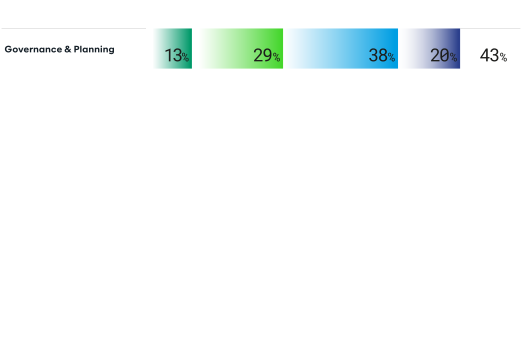
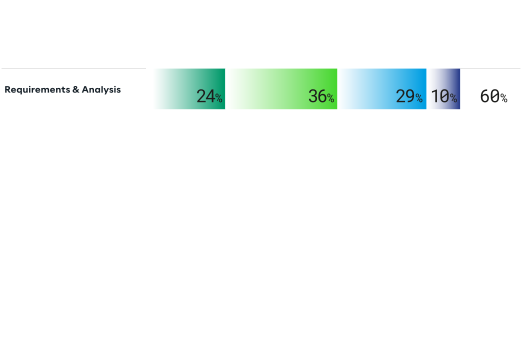
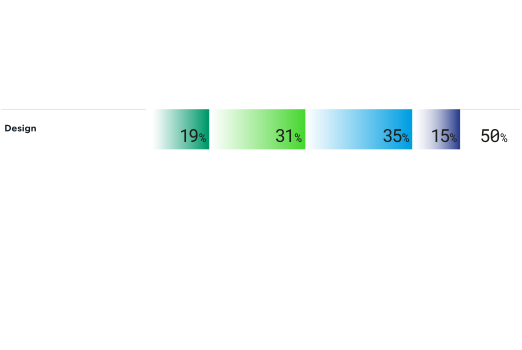
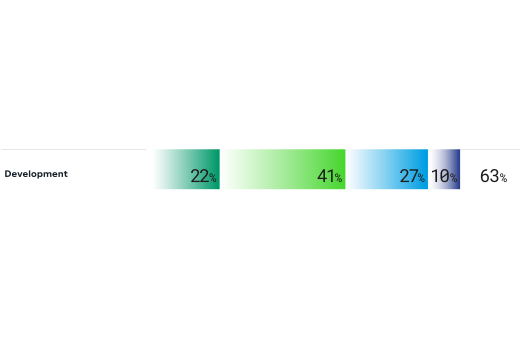
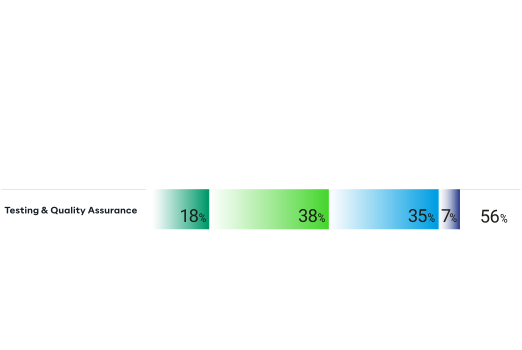
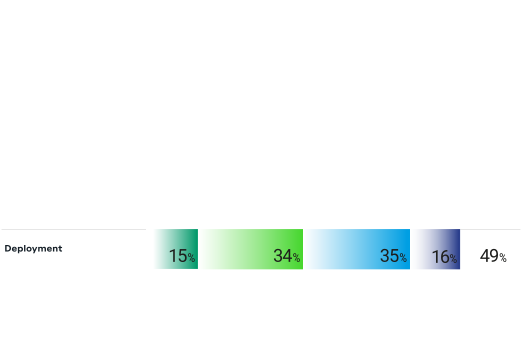
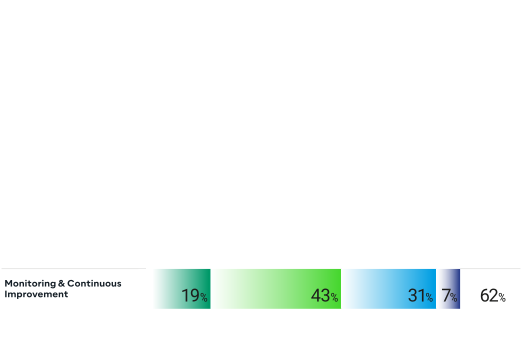
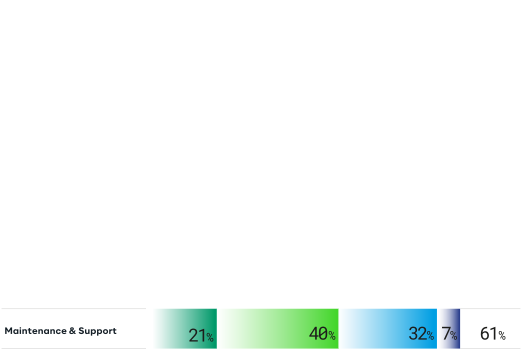
Base: 405 IT Executives whose organizations either fully or partially adopted Al across SDLC
Source: Studio Forrester for Reply “From Code To Control: AI’s Takeover Of Software Development Lifecycle”
02.4 Cloud & Infrastructure
Reply supports the evolution of infrastructures and the transformation of legacy applications towards cloud-native architectures, working with leading hyperscalers: AWS, Google, Microsoft, and Oracle. The approach focuses on creating hybrid and multi-cloud infrastructures, where data can flow between different providers, ensuring resource scalability. Strategic collaboration with leading SaaS vendors (SAP, Salesforce, Adobe) rounds out the offering, enabling companies to integrate mission-critical applications into innovative environments.
Reply is specialised in managing cloud and AI cost volatility through FinOps models adopted by companies operating across various sectors. Optimisation goes beyond spending monitoring to include resource right-sizing and transaction-level cost analysis, allowing companies to accurately understand the infrastructure’s impact on each operation and allocate costs precisely. Using GreenOps also allows companies to monitor and reduce the carbon footprint of cloud services by optimising computing cycles to reduce energy consumption, combining economic efficiency with environmental responsibility.
Reply’s experience highlights a growing interest in predictive infrastructure management. Through AIOps, systems constantly monitor logs and performance, identifying early signs of malfunction before operational disruptions occur. 2025 has seen increasing use of self-healing capabilities, capable of automatically restarting services or reallocating resources in the event of an error. AI has also been used to analyse infrastructure code to prevent misconfigurations or vulnerabilities, significantly reducing the risk of data breaches.
In 2025, Reply supported several companies in integrating edge AI and edge computing solutions, bringing computing power directly to where the data is used, such as warehouses, factories, or retail outlets. This computing architecture has proven essential for low-latency applications, such as robotic control, smart camera management, or real-time quality inspection. The central cloud maintains the coordination and analysis role, while the edge ensures the immediate execution of field operations, enabling resilient, scalable, and high-performance systems.
02.5 Security & AI Governance
The adoption of artificial intelligence represents a strategic pillar for cybersecurity, enabling the shift from a predominantly reactive defence to a proactive posture. Reply integrates advanced machine learning and analytics algorithms into digital infrastructures to identify vulnerabilities, anomalous behaviour, and attack patterns in real time. Thanks to this ability to process and correlate large volumes of data and network traffic, it is possible to detect complex threats and zero-day attacks that elude traditional security systems. This approach strengthens the protection of enterprise systems, significantly improving detection and response times to security incidents.
Alongside “AI for Security” as a defence tool, in 2025 Reply organically structured the “Security for AI” domain, focusing on governance, risk management, compliance, and protection of AI models, agents, and architectures. Reply experts are supporting client companies in adapting to new regulatory frameworks such as the European AI Act and in adopting frameworks and controls that ensure safe, reliable, transparent, and ethical AI systems throughout their lifecycle.
In this context, AI red teaming plays a central role in testing the robustness of algorithms against adversarial attacks, data manipulation, and model drift risks. These activities are conducted at all stages: design, development, testing, and production, to ensure that innovation does not introduce new attack surfaces. At the same time, Reply adopts a “security by design” approach, integrating security into software development processes through DevSecOps methodologies enhanced with intelligent agents. AI is also used to orchestrate automated penetration tests and large-scale static code analyses, accelerating compliance checks with security standards from the initial project stages.
In Reply’s experience, AI is also an enabling and cross-cutting element for the protection of industrial environments and connected products, helping to reduce threat detection and incident response times. Specifically, AI-based systems continuously monitor IoT and OT networks, ensuring operational continuity and preventing intrusions into critical production and logistics systems. This technological support is complemented by strategic analysis services, including geopolitical intelligence, used to assess the impact of highly volatile international scenarios on the supply chain and corporate operations.
02.6 Data & analytics
In 2025, Reply continued its commitment to supporting companies in their journey of unlocking the value of data and the adoption of artificial intelligence, accompanying them in an environment characterised by increasing technological, regulatory, and market complexity. Reply’s approach is based on integrating data into key company processes, with the aim of fostering greater awareness, decision-making reliability, and the ability to adapt over time. In this scenario, data remains a central element of digital transformation, while artificial intelligence is emerging as a structural factor in organisational and operational models.
The latest innovations in AI, including multimodal solutions, are expanding the possibilities for using corporate information and helping make business systems more flexible, intuitive, and decision-support-oriented. Over the course of 2025, Reply’s experts have progressively shifted their focus to approaches that enable responsible innovation, with a significant focus on security, information protection, and compliance.
One area of significant growth has been synthetic data, adopted by Reply to overcome limitations related to the scarcity of real data and confidentiality and compliance constraints. Synthetic data allows AI models to be trained in secure environments, simulating complex scenarios or rare events not present in historical datasets. This approach helps reduce algorithm bias, improves the fairness and representativeness of models, and avoids the exposure of sensitive information. The use of artificial datasets also allows companies to experiment with new features and assess risk scenarios with greater flexibility and speed, significantly reducing costs and data acquisition times.
Reply’s experience in data and analytics now represents a long-term strategic infrastructure, comparable to a core industrial technology, designed to support the evolution of business models and digital services. The ability to govern these elements consistently and reliably is an enabling factor for the competitiveness and resilience of client companies. Reply will continue to invest in developing skills, methodologies, and technological vision, supporting clients in building solid data foundations for the progressive and informed adoption of artificial intelligence.
02.7 Omnichannel experience
The evolution of user experience is moving beyond traditional web and mobile interfaces to increasingly focus on conversational systems that redefine the ways brands and users interact. Reply supports this evolution by combining service design, technology architectures and process consulting to build scalable infrastructures, capable of supporting dynamic business models. This strategy provides companies with the flexibility needed to respond to market fluctuations while ensuring rigorous service and brand consistency throughout the entire customer journey, from discovery to loyalty. Service personalisation is also enhanced by AI, which supports real-time data analysis to drive recommendation engines capable of instantly adapting promotions to the user’s context.
At the production level, generative AI is radically changing the content value chain, optimising marketing processes through the automation of creative production, with significant potential for scaling the production of increasingly personalised digital assets. The integration of advanced text-to-video and text-to-image models into structured workflows allows for the generation of high-resolution multimedia variants, drastically reducing the time-to-market of global campaigns and reducing production costs.
2025 also saw the rise of generative UI, which allows the entire user interface to be generated in real time: instead of forcing content into predefined interfaces, AI dynamically builds interactive elements, maps, simulations, and rich formatting in response to the user’s intent. This capability transforms the output of AI models and platforms into tailored visual experiences, offering a mode of interaction that is superior to standard formats in terms of immediacy and contextual relevance.
The convergence of physical and virtual contributes to the evolution of the omnichannel experience, leveraging spatial computing and immersive technologies. Reply develops innovative pipelines for the production of three-dimensional assets by combining full-body motion capture with applied generative models. One area of convergence between these three-dimensional capabilities and artificial intelligence is that of digital humans, widely used both as a conversational interface for accessing corporate knowledge and training, and in customer interaction during pre-sales and post-sales support.
Digital Experience: trends in 2026


PLATEAUING TRENDS
Trends that experienced rapid
growth throughout, but have now
reached a point where expert
interest has levelled off
ENDURING TRENDS
Trends with continued and
accelerated expert interest
throughout the last 12 months
DECLINING TRENDS
Trends with decreasing
expert interest throughout
the last 12 months
ACCELERATING TRENDS
Trends that are gaining traction
and showing signs of rapid
expert interest growth
throughout the last 6 months


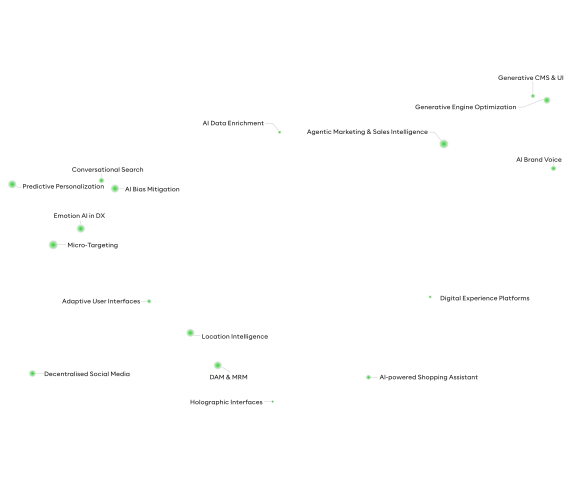

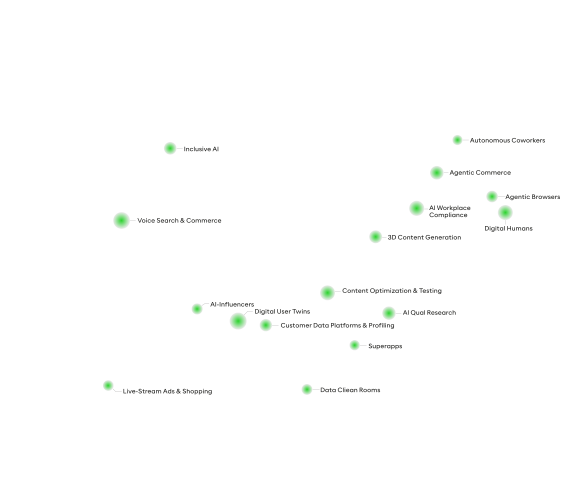

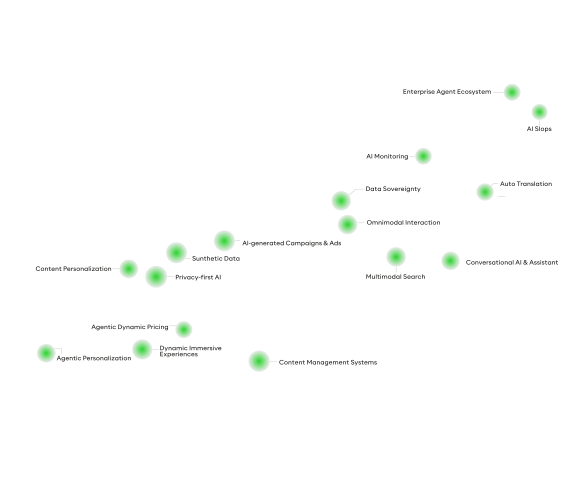
Source: Reply study “Digital Experience Trends 2026” - Reply analysis on Sonar Reply data
02.8 Physical AI
AI applied to the physical world is opening a new phase in the evolution of spatial intelligence, namely the ability of systems to understand and interact with the surrounding environment. In this context, “world models” represent the foundational architecture of intelligent physical devices, enabling them to learn the laws of physics and predict the outcomes of actions without relying on preconfigured static maps. At the core of these systems is computer vision, which transforms raw sensory inputs from high-resolution cameras, LiDAR and tactile sensors into a true spatial understanding. Advanced deep learning algorithms then enable real-time object recognition and scene interpretation, providing the perceptual foundation required for autonomous decision-making in complex and unstructured scenarios typical of urban and industrial environments.
In industrial and logistics contexts, Physical AI is being applied through the use of autonomous mobile robots (AMRs), inspection drones, and collaborative robots (cobots) designed to optimise production flows. These systems automate high-risk tasks such as monitoring critical infrastructure or operations in hostile environments, increasing operator safety and operational resilience. The integration of intelligent sensors and visual inspection systems also fuels predictive maintenance models that reduce downtime and optimise goods movement, ensuring high levels of reliability and business continuity through constant monitoring and rapid response to unexpected events.
AI also supports the adoption of digital twins and high-fidelity simulated environments where algorithms are trained to perform complex tasks before being deployed on physical hardware, including humanoid robotic systems. These simulations generate synthetic data that replicate real-world conditions, including rare or dangerous edge cases that cannot be physically captured, bridging the gap between simulation and reality. In the short term, teleoperation serves as a crucial bridge to full autonomy, allowing human operators to guide robotic systems through complex tasks and generating high-quality demonstration data for training.
Roboverse Reply received the XR Industry Activation Award (XRIAA) at nextReality.festival 2025 for its robotics and extended reality solutions
In 2025, the growing integration of AI has further expanded the offering of connected products and services. Reply has supported companies in developing AI-powered IoT ecosystems, ranging from smart homes to digital healthcare, to smart vehicles equipped with virtual assistants and predictive diagnostic capabilities. The integration of natural language processing technologies now enables interaction via intuitive voice interfaces, improving the user experience and contributing to energy efficiency optimisation. Connectivity enables advanced servitisation models, transforming physical products into services managed and monitored remotely throughout their lifecycle.
02.9 A look ahead to 2026
In 2026, Reply will continue to support client companies’ innovation by leveraging the rapid maturation of AI, thanks to international and multidisciplinary research and development groups. Significant attention will be paid to the transition from conversational systems operated directly by the user to agentic systems to which tasks can be delegated to be performed autonomously and subsequently evaluated by humans. 24/7 agentic loops will be a key factor in the era of agentic AI: Reply will continue to support the redesign of business processes around this shift, from linear workflows to “judgment cycles” (drafting, critique, verification, decision).
In parallel, Reply is developing its approach to Responsible AI through a developer-focused toolkit, including the creation of automated bias-checking systems, fairness assessment agents, and risk-rating bots, aligned with the European AI Act and OECD guidelines. Reply teams are addressing AI sovereignty as a critical architectural decision, developing reference architectures for sovereign clouds and local inference. This ensures that client companies can implement advanced AI capabilities while maintaining complete control over where their data resides, who manages the models, and what jurisdictions they are subject to.
In this context, Reply is exploring the use of small language models (SLMs), compact and highly efficient models. SLMs could become the key to democratising AI inference, enabling rapid real-time processing locally, without relying on the cloud. This approach is crucial for industries with strict data sovereignty requirements or connectivity constraints, such as healthcare, manufacturing, and defence. By processing sensitive data locally, this approach can reduce inference costs and privacy risks.
As classical computing approaches its physical limits for specific optimisation and simulation workloads, Reply is actively validating hybrid quantum-HPC architectures, focusing on use cases such as quantum machine learning applied to time series analysis for financial risk modelling and complex logistics optimisation. Reply is also helping companies prepare for post-quantum cryptography to protect corporate data and digital assets from potential decryption threats enabled by the combination of advanced AI and quantum technologies.

