Back
Back


Consolidated financial statements as at 31 December
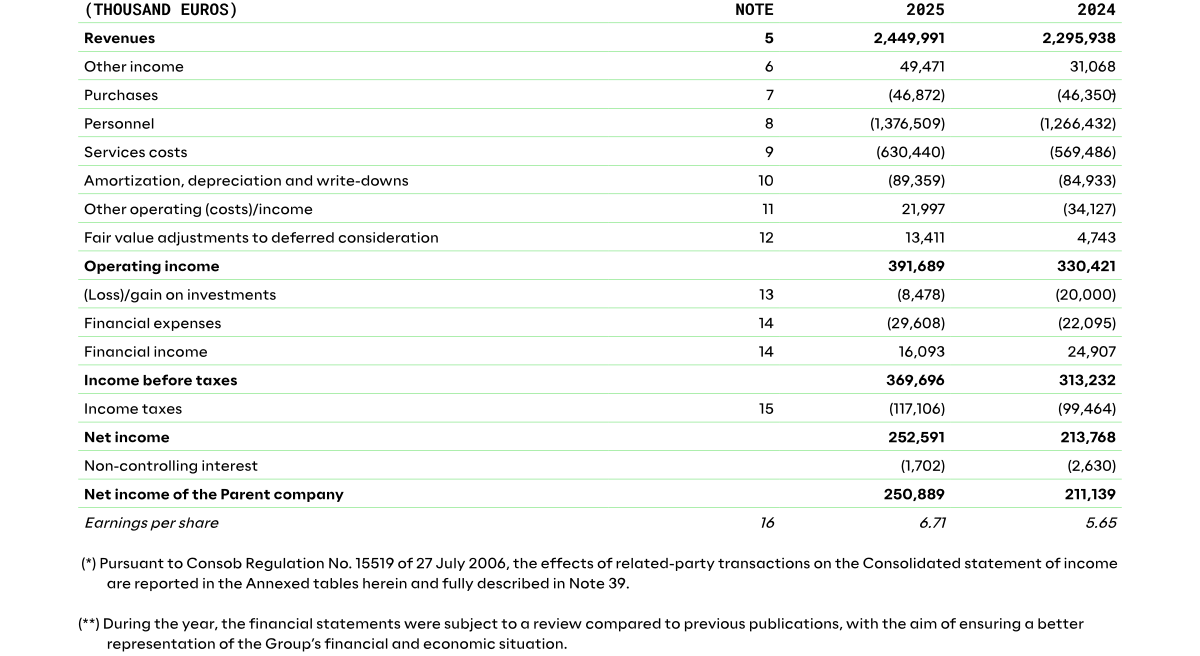
Consolidated income statement(*)(**)
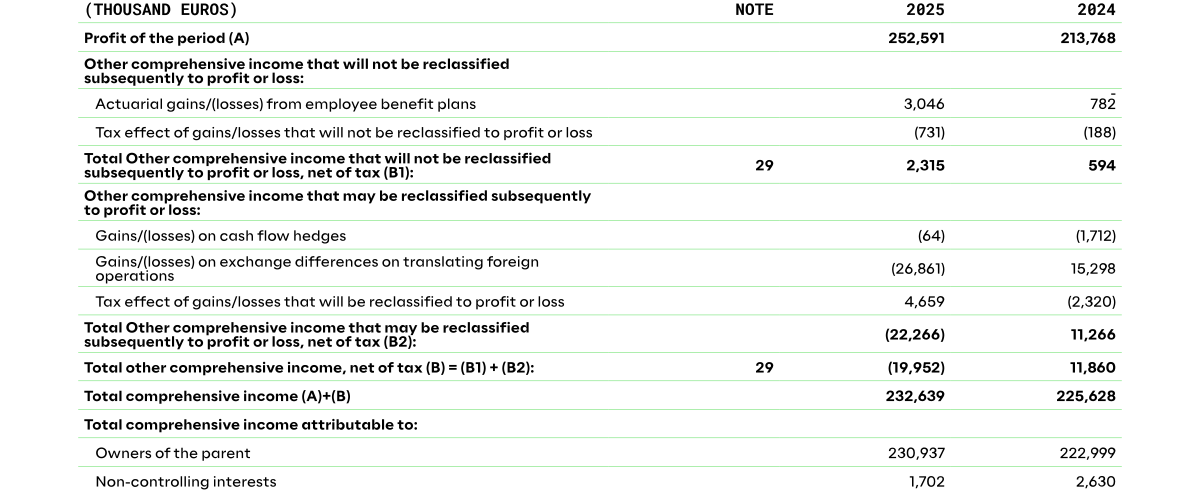
Consolidated statement of comprehensive income
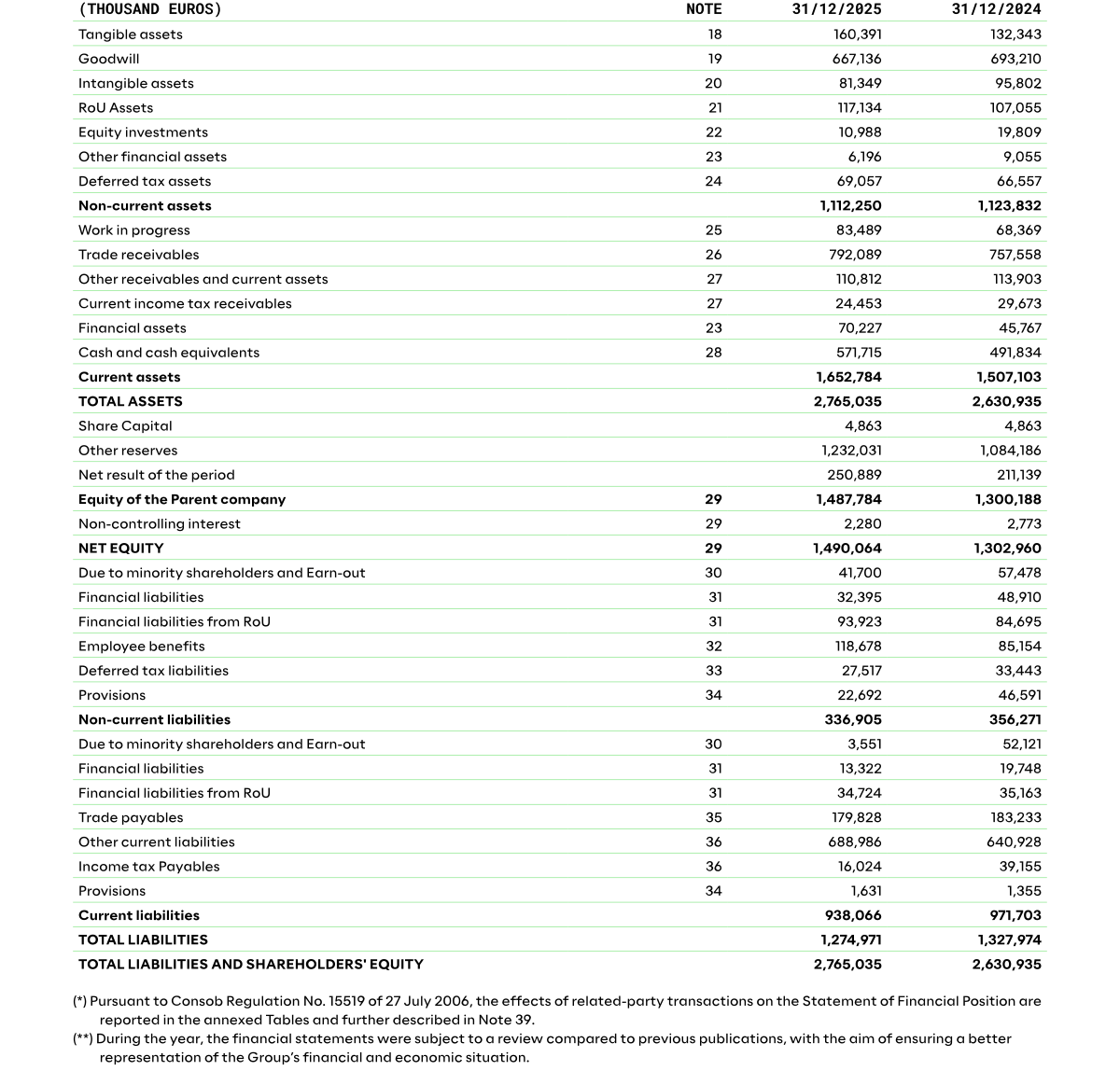
Consolidated statement of financial position(*)(**)
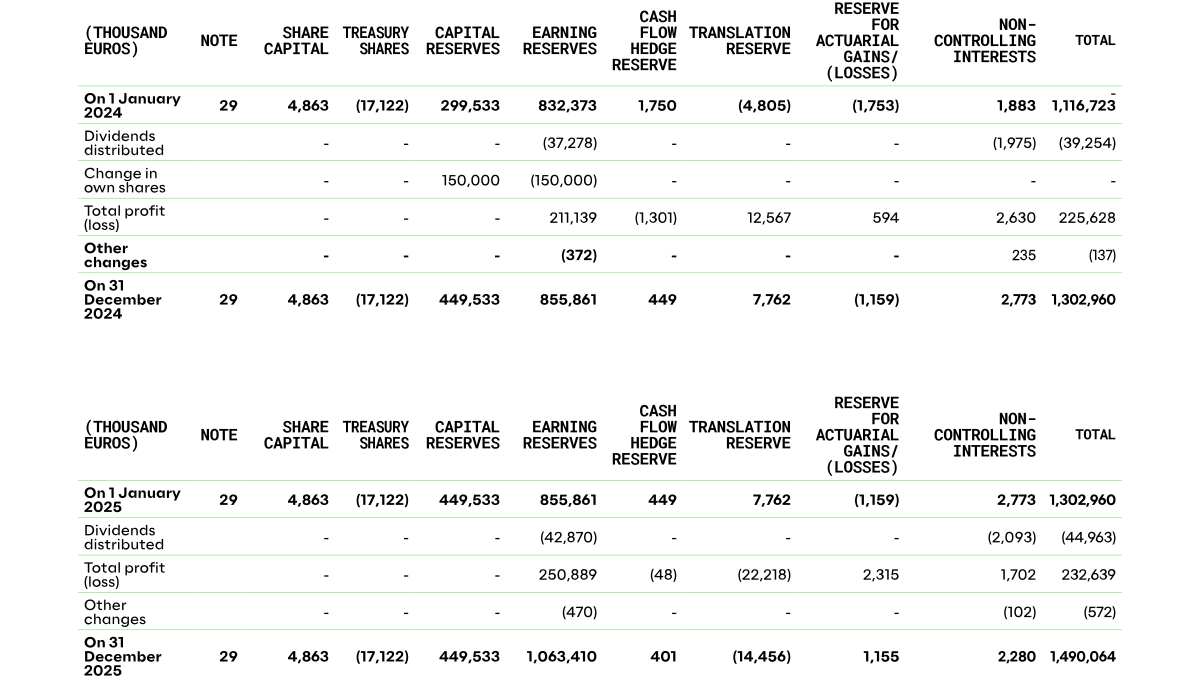
Consolidated statement of changes in equity
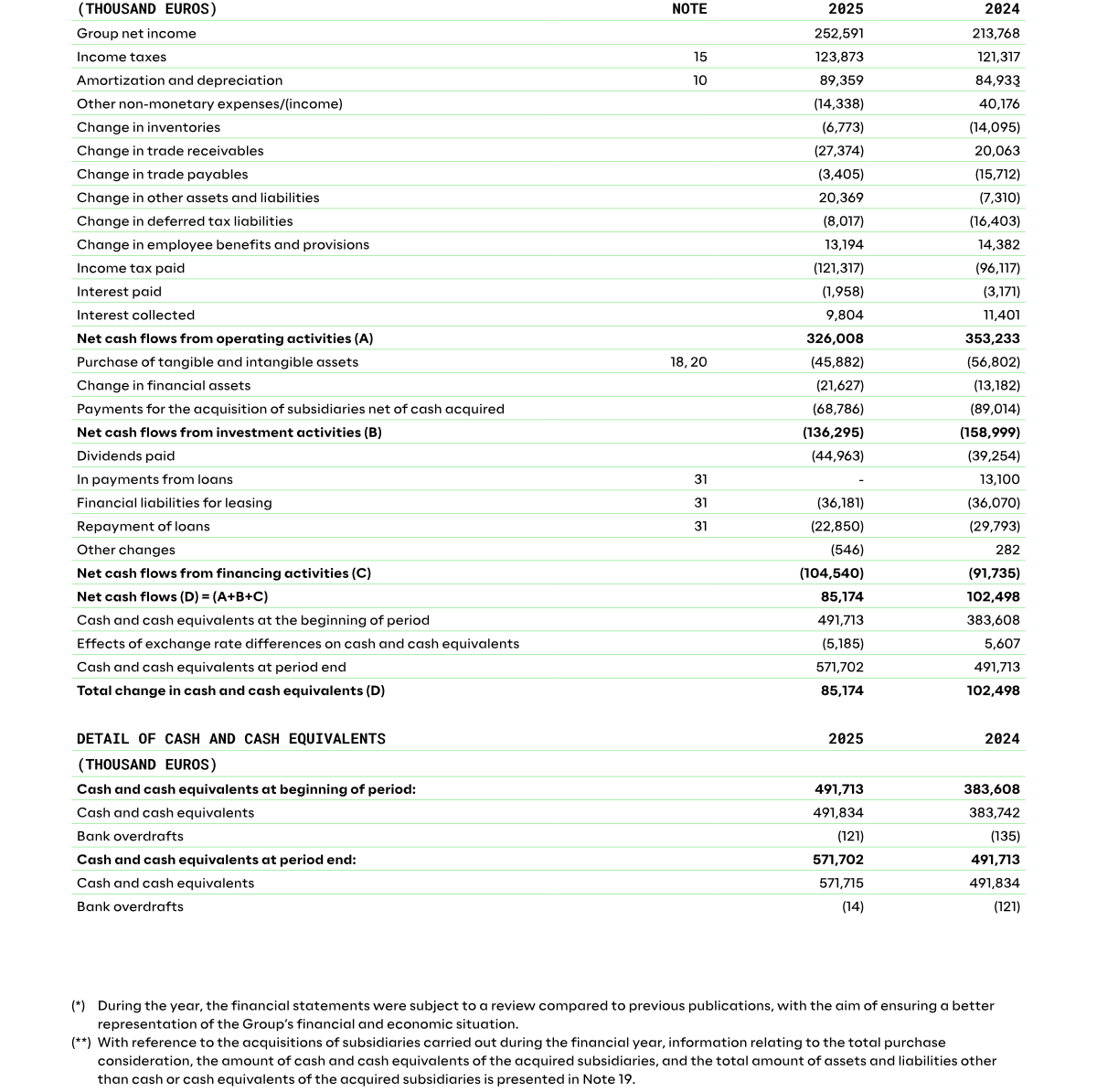
Consolidated statement of cash flows(*)(**)
Notes to the financial statements
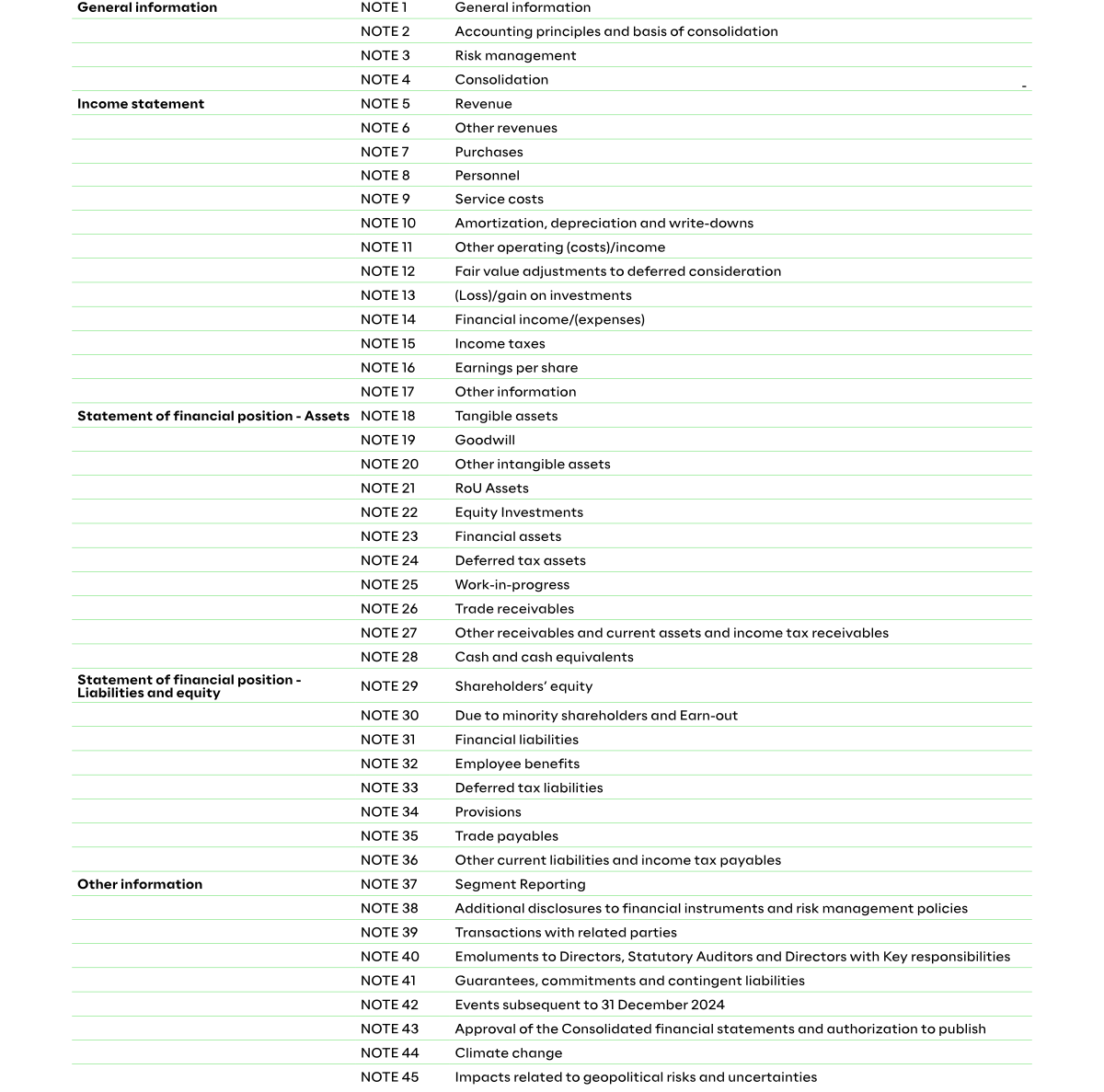
NOTE 1 - General information
Reply [EXM, STAR: REY] specialises in the design and implementation of solutions based on new communication channels and digital media. Reply is a network of highly specialised companies supporting key European industrial groups operating in the telecom and media, industry and services, banking, insurance and public administration sectors in the definition and development of business models enabled for the new paradigms of AI, cloud computing, digital media and the Internet of Things. Reply services include: Consulting, System Integration and Digital Services (www.reply.com).
NOTE 2 – Accounting principles and basis of consolidation
COMPLIANCE WITH INTERNATIONAL ACCOUNTING PRINCIPLES
The consolidated financial statements have been prepared in accordance with International Financial Reporting Standards (IFRS) issued by the International Accounting Standards Board and endorsed by the European Union. The designation “IFRS” also includes all valid International Accounting Standards (“IAS”), as well as all interpretations of the International Financial Reporting Interpretations Committee (“IFRIC”), formerly the Standing Interpretations Committee (“SIC”). Following the coming into force of European Regulation No. 1606 of July 2002, starting from 1 January, 2005, the Reply Group adopted International Financial Reporting Standards (IFRS).
The consolidated financial statements have been prepared in accordance with Consob regulations regarding the format of financial statements, in application of Art. 9 of Legislative Decree 38/2005 and other CONSOB regulations and instructions concerning financial statements.
GENERAL PRINCIPLES
The consolidated financial statement is prepared on the basis of the historic cost principle, modified as requested for the appraisal of some financial instruments for which the fair value criterion is adopted in accordance with IFRS 9. The preparation of the consolidated financial statements requires Group management to exercise judgment, making assessments and assumptions that affect the application of accounting principles and the reported amounts of assets, liabilities, expenses, and revenues. Among the key judgments made, in accordance with IAS 1.122, are those relating in particular to the assessment of the going concern assumption and the determination of the financial statement formats to be adopted in compliance with the provisions of IAS 1.
With regard to going concern, management has evaluated the relevant factors, taking into account the economic and financial environment. Despite a complex macroeconomic context, there are no material uncertainties (as defined in paragraph 25 of IAS 1) that would cast significant doubt on the Group’s ability to continue as a going concern in the foreseeable future. The financial statements have therefore been prepared on a going concern basis. These consolidated financial statements are expressed in thousands of Euros and are compared to the consolidated financial statements of the previous year prepared in accordance with the same principles. Further indication related to the format of the financial statements respect to IAS 1 is disclosed here within as well as information related to significant accounting principles and evaluation criteria used in the preparation of the following consolidated report.
FINANCIAL STATEMENTS
The consolidated financial statements include statement of income, statement of comprehensive income, statement of financial position, statement of changes in shareholders’ equity, statement of cash flows and the explanatory notes.
The income statement format adopted by the Group classifies costs according to their nature, which is deemed to properly represent the Group’s business. The Statement of financial position is prepared according to the distinction between current and non-current assets and liabilities. The statement of cash flows is presented using the indirect method. In the financial statements, the main categories of gross income and payments arising from investment and financing activities have been presented separately, and non-monetary transactions have not been indicated.
The most significant items are disclosed in a specific note in which details related to the composition and changes compared to the previous year are provided.
It should be noted that in order to comply with the indications contained in Consob Resolution no. 15519 of 27 July 2006 “as to the format of the financial statements”, additional statements: income statement and statement of financial position have been added showing the amounts of related party transactions.
It is also reported that in accordance with CONSOB communication no. 0031948, if there are non-recurring items in the statements, such components will be explicitly indicated under the relevant item. Operations or events that are not frequent in the normal course of business and have an impact on the financial and asset position, the economic result, and the financial flows of the group may be presented as ‘non-recurring’.
BASIS OF CONSOLIDATION
SUBSIDIARIES
The consolidated financial statements include the financial statements of the Parent Company and its subsidiaries that have closing date December 31st. An investor controls an investment entity when it is exposed to variable returns, or holds rights to such returns, deriving from its relationship with the entity itself and at the same time has the right to affect those returns by exercising its power over that entity. Please refer Note 4 relating to the scope of consolidation. All companies are consolidated on a line-by-line basis.
The economic results of the subsidiaries acquired or sold during the year are included in the consolidated income statement from the actual acquisition date until the actual date of sale.
If necessary, adjustments shall be made to the financial statements of the subsidiaries to align the accounting policies used with those adopted by the Group.
All significant intercompany transactions and balances between group companies are eliminated on consolidation.
Non-controlling interest is stated separately with respect to the Group’s net equity. Such Non-controlling interest is determined according to the percentage of the shares held of the fair values of the identifiable assets and liabilities of the company at the date of acquisition and post-acquisition adjustments. According to IFRS 10, overall loss (including the profit/(loss) for the year) is attributed to the owners of the Parent and minority interest also when net equity attributable to minority interests has a negative balance.
Difference arising from translation of equity at historical exchange rates and year-end exchange rates are recorded at an appropriate reserve of the consolidated shareholders’ equity.
TRANSACTIONS ELIMINATED ON CONSOLIDATION
All significant intercompany balances and transactions and any unrealized gains and losses arising from intercompany transactions are eliminated in preparing the consolidated financial statements. Unrealized gains and losses arising from transactions with associates and jointly controlled entities are eliminated to the extent of the company’s interest in those entities.
BUSINESS COMBINATIONS
Business combinations are accounted for by applying the acquisition method. The recognition of business combinations involves the recognition of assets and liabilities of the acquired entity at its fair value at the date of acquisition of control and the possible registration of goodwill.
The acquisition cost is determined by the sum of the current values, at the date of exchange, of the assets given, of the liabilities incurred or assumed and of the financial instruments issued by the group in exchange for control of the acquired company. Costs directly attributable to the combination are expensed when incurred.
The identifiable assets, liabilities and contingent liabilities of the acquired entity that meet the conditions for recognition in accordance with IFRS 3 are recorded at their fair value at the acquisition date, with the exception of non-current assets (or discontinued operations) which are classified as held for sale in accordance with IFRS 5, and are recorded and valued at fair value minus selling costs.
The positive difference between the purchase cost and the Group’s share in the fair values of these assets and liabilities are recognised as goodwill and are classified as intangible asset with an indefinite life. In accordance with IFRS 9, Earn-out liabilities are measured at fair value and discounted based on the expected payment date. At each reporting date, management review the estimates used to determine, on the basis of contractual terms, the value of the Earn-out liability. Such revisions may have significant impacts on the Group’s consolidated financial statements, both in terms of the remeasurement of the fair value of these liabilities and their discounting.
FOREIGN CURRENCY TRANSACTIONS
Transactions in foreign currencies are recorded at the foreign exchange rate prevailing at the date of the transaction. Monetary assets and liabilities denominated in foreign currencies at the balance sheet date are translated at the exchange rate prevailing at that date. Exchange differences arising on the settlement of monetary items or on reporting monetary items at rates different from those at which they were initially recorded during the period or in previous financial statements, are recognized in the income statement.
CONSOLIDATION OF FOREIGN ENTITIES
All assets and liabilities of foreign consolidated companies with a functional currency other than the Euro are translated using the exchange rates in effect at the balance sheet date. Income and expenses are translated at the average exchange rate for the period. Translation differences resulting from the application of this method are classified as equity until the disposal of the investment. Average rates of exchange are used to translate the cash flows of foreign subsidiaries in preparing the consolidated statement of cash flows. Goodwill and fair value adjustments arising on the acquisition of a foreign entity are recorded in the relevant functional currency of the foreign entity and are translated using the period end exchange rate. In the context of IFRS First-time Adoption, the cumulative translation difference arising from the consolidation of foreign operations was set at nil, as permitted by IFRS 1; gains or losses on subsequent disposal of any foreign operation only include accumulated translation differences arising after 1 January 2004.
The following table summarizes the exchange rates used in translating the 2025 and 2024 financial statements of the foreign companies included in consolidation:

TANGIBLE ASSETS
Tangible fixed assets are stated at cost, net of accumulated depreciation and impairment losses.
Tangible assets are recorded at purchase or production cost, including any possible charges and direct costs necessary to make the asset available for use.
Depreciation is charged so as to write off the cost or valuation of assets, over their estimated useful lives, using the straight-line method, on the following bases:

The recoverable value of such assets is determined through the principles set out in IAS 36 and outlined in the paragraph “Impairment” herein. Ordinary maintenance costs are fully expensed as incurred. Incremental maintenance costs are allocated to the asset to which they refer and depreciated over their residual useful lives. Improvement expenditures on rented property are allocated to the related assets and depreciated over the shorter between the duration of the rent contract or the residual useful lives of the relevant assets.
The gain or loss arising on the disposal or retirement of an asset is determined as the difference between the sales proceeds and the carrying amount of the asset and is recognized in income.
GOODWILL
Goodwill is an intangible asset with an indefinite useful life arising from business combinations accounted for using the acquisition method and represents the excess of the purchase consideration over the Group’s share of the fair value of the identifiable assets, liabilities, and contingent liabilities of the subsidiary at the acquisition date.
Goodwill cannot be identified as a single asset capable of independently generating cash flows; therefore, it is allocated to the CGUs that are expected to benefit from the synergies arising from the acquisition of the company. The Group identifies Cash Generating Units (CGUs) by applying a consistent and uniform approach from one financial year to the next. Any changes in the definition of CGUs or in the aggregation of the assets composing them are appropriately justified and disclosed, providing the information required by IAS 36 (including a description of the current and previous aggregation methodologies and the reasons for the change). Goodwill is not amortized but is (tested for impairment) annually or more frequently if events or changes in circumstances indicate that it might be impaired. After initial recognition, goodwill is measured at cost less any accumulated impairment losses.
Impairment losses are recognized immediately as expenses that cannot be recovered in the future.
On disposal of a subsidiary or associate, the attributable amount of unamortized goodwill is included in the determination of the profit or loss on disposal.
RIGHT OF USE ASSETS
According to IFRS 16, the accounting representation of leases (which do not establish the provision of services) takes place through the inclusion in the financial position of a financial liability, represented by the present value of future rents, against the inclusion in the assets of the ‘right of use of the leased asset’. Leases that were previously accounted for under IAS 17 as financial leases, have not changed compared to the current accounting representation, in full continuity with the past.
Contracts that are within the scope of IFRS 16 relate mainly to:
-
land and buildings for office use;
-
long term car-rental.
With reference to the options and exemptions provided by IFRS 16, the Group has made the following choices:
-
IFRS 16 is not generally applied to intangible assets, short-term contracts (i.e. less than 12 months) and low unit value;
-
rights of use and financial liabilities relating to leasing contracts are classified under specific items in the financial position;
-
any component relating to the services included in the leasing fees is generally excluded from IFRS 16.
OTHER INTANGIBLE ASSETS
Intangible fixed assets are those lacking an identifiable physical aspect, are controlled by the company and are capable of generating future economic benefits.
Other purchased and internally-generated intangible assets are recognized as assets in accordance with IAS 38 – Intangible Assets, where it is probable that the use of the asset will generate future economic benefits and where the costs of the asset can be determined reliably.
Such assets are measured at purchase or manufacturing cost and amortized on a straight-line basis over their estimated useful lives, if these assets have finite useful lives.
Other intangible assets acquired as part of an acquisition of a business are capitalized separately from goodwill if their fair value can be measured reliably.
In case of intangible fixed assets purchased for which availability for use and relevant payments are deferred beyond normal terms, the purchase value and the relevant liabilities are discounted by recording the implicit financial charges in their original price.
Expenditure on research activities is recognized as an expense in the period in which it is incurred.
Development costs can be capitalized on condition that they can be measured reliably and that evidence is provided that the asset will generate future economic benefits.
An internally-generated intangible asset arising from the Group’s e-business development (such as informatics solutions) is recognized only if all of the following conditions are met:
-
an asset is created that can be identified (such as software and new processes);
-
it is probable that the asset created will generate future economic benefits;
-
the development cost of the asset can be measured reliably.
These assets are amortized when launched or when available for use. Until then, and on condition that the above terms are respected, such assets are recognized as construction in progress. Amortization is determined on a straight-line basis over the relevant useful lives on the following basis:

When an internally-generated intangible asset cannot be recorded at balance sheet, development costs are recognized in the statement of income in the period in which they are incurred. If indicators of a potential impairment emerge, the Group first assesses whether the conditions for recognizing the intangible asset in accordance with IAS 38 (identifiability, control, and future economic benefits) still exist. If any of these conditions are no longer met, the asset no longer qualifies for recognition in the financial statements and the Group proceeds with the derecognition of the asset. When the indicators relate to a deterioration in expected performance, technological advancements, or changes in the asset’s usage model, the Company reassesses the remaining useful life of the intangible asset, prospectively adjusting the amortization schedule.
INTANGIBLE ASSETS WITH INDEFINITE USEFUL LIVES
Intangible assets with indefinite useful lives consist principally of acquired trademarks which have no legal, contractual, competitive, economic, or other factors that limit their useful lives. Intangible assets with indefinite useful lives are not amortized; in accordance with IAS 36 criteria, are tested for impairment annually or more frequently whenever there is an indication that the asset may be impaired. Any impairment losses are not subject to subsequent reversals.
IMPAIRMENT
At each balance sheet date, the Group reviews the carrying amounts of its tangible and intangible assets to determine whether there is any indication that those assets have suffered an impairment loss. If any such indication exists, the recoverable amount of the asset is estimated in order to determine the extent of the impairment loss (if any). Where it is not possible to estimate the recoverable amount of an individual asset, the Group estimates the recoverable amount of the cash-generating unit to which the asset belongs.
An intangible asset with an indefinite useful life is tested for impairment annually or more frequently, whenever there is an indication that the asset may be impaired.
The recoverable amount of an asset is the higher of fair value, less disposal costs and its value in use. In assessing its value in use, the pre-tax estimated future cash flows are discounted at their present value using a pre-tax discount rate that reflects current market assessments of the time value of money and the risks specific to the asset. Its value in use is determined net of tax in that this method produces values largely equivalent to those obtained by discounting cash flows net of tax at a pre-tax discount rate derived, through an iteration, from the result of the post-tax assessment. The assessment is carried out for the individual asset or for the smallest identifiable group of cash generating assets deriving from ongoing use, the so-called Cash generating unit.
If the recoverable amount of an asset (or cash-generating unit) is estimated to be less than its carrying amount, the carrying amount of the asset is reduced to its recoverable amount. Impairment losses are recognized as an expense immediately.
Where the value of the Cash generating unit, inclusive of goodwill, is higher than the recoverable value, the difference is subject to impairment and attributable firstly to goodwill; any exceeding difference is attributed on a pro-quota basis to the assets of the Cash generating unit. Where an impairment loss subsequently reverses, the carrying amount of the asset, (or cash-generating unit), with the exception of goodwill, is increased to the revised estimate of its recoverable amount, but so that the increased carrying amount that would have been determined had no impairment loss been recognized for the asset. A reversal of an impairment loss is recognized as income immediately, unless the relevant asset is carried at a revalued amount, in which case the reversal of the impairment loss is treated as a revaluation increase.
INVESTMENTS IN OTHER COMPANIES
Investments in other companies that are available-for-sale financial assets are measured at fair value, when this can be reliably determined. Gains or Losses arising from change in fair value are recognized in Other comprehensive income/(losses) until the assets are sold or are impaired, at that time, the cumulative Other comprehensive income/(losses) are recognized in the Income Statement. Investments in other companies for which fair value is not available are stated at cost less any impairment losses.
Dividends received are included in Other income/(expenses) from investments. In the event of write-down for impairment, the cost is recognized in the income statement; the original value is restored in subsequent years if the assumptions for the write-down no longer exist.
The risk resulting from possible losses beyond equity is entered in a specific provision for risks to the extent to which the Parent Company is committed to fulfil its legal or implicit obligations towards the associated company or to cover its losses.
CURRENT AND NON-CURRENT FINANCIAL ASSETS
Financial assets are classified, on the basis of both contractual cash flow characteristics and the entity’s business model for managing them, in the following categories:
(i) financial assets measured at amortized cost;
(ii) financial assets measured at fair value through other comprehensive income (hereinafter also OCI);
(iii) financial assets measured at fair value through profit or loss.
At initial recognition, a financial asset is measured at its fair value; at initial recognition, trade receivables that do not have a significant financing component are measured at their transaction price. After initial recognition, financial assets whose contractual terms give rise to cash flows that are solely payments of principal and interest on the principal amount outstanding are measured at amortized cost if they are held within a business model whose objective is to hold financial assets in order to collect contractual cash flows (the so-called hold to collect business model). For financial assets measured at amortized cost, interest income determined using the effective interest rate, foreign exchange differences and any impairment losses (see the accounting policy for “Impairment of financial assets”) are recognized in the profit and loss account.
DConversely, financial assets that are debt instruments are measured at fair value through OCI (hereinafter also FVTOCI) if they are held within a business model whose objective is achieved by both collecting contractual cash flows and selling financial assets (the so-called hold to collect and sell business model).
In these cases:
(i) interest income determined using the effective interest rate, foreign exchange differences and any impairment losses (see the accounting policy for “Impairment of financial assets”) are recognized in the profit and loss account;
(ii) changes in fair value of the instruments are recognized in equity, within other comprehensive income.
The accumulated changes in fair value, recognized in the equity reserve related to other comprehensive income, is reclassified to the profit and loss account when the financial asset is derecognized. A financial asset represented by a debt instrument that is neither measured at amortized cost nor at FVTOCI, is measured at fair value through profit or loss (hereinafter FVTPL); financial assets held for trading fall into this category. Interest income on assets held for trading contributes to the fair value measurement of the instrument and is recognized in “Finance income (expense)”, within “Net finance income (expense) from financial assets held for trading”. When the purchase or sale of a financial asset is under a contract whose terms require delivery of the asset within the time frame established generally by regulation or convention in the marketplace concerned, the transaction is accounted for on the settlement date. The Group recognises expected losses related to financial assets measured at amortized cost, contract assets, and debt securities measured at fair value through profit or loss as impairment adjustments. Expected losses are determined over the entire life of the receivable.
TRANSFER OF FINANCIAL ASSETS
The Group removes financial assets from its balance sheet when, and only when, the contractual rights to the cash flows from the assets expire or the Group transfers the financial asset. In the case of transfer of the financial asset:
-
if the entity substantially transfers all the risks and rewards of ownership of the financial asset, the Group removes the asset from the balance sheet and recognizes separately as assets or liabilities any rights and obligations created or retained with the transfer;
-
if the Group substantially retains all the risks and rewards of ownership of financial assets, it continues to recognize the financial asset;
-
if the Group neither transfers nor substantially retains all the risks and rewards of ownership of the financial asset, it determines whether or not it has retained control of the financial asset. In this case:
-
if the Group has not retained control, it removes the asset from its balance sheet and separately recognizes as assets or liabilities any rights and obligations created or retained in the transfer;
-
if the Group has retained control, it continues to recognize the financial asset to the extent of its residual involvement in the financial asset.
At the time of removal of financial assets from the balance sheet, the difference between the carrying value of assets and the fees received or receivable for the transfer of the assets is recognized in the income statement.
WORK IN PROGRESS
Contract work in progress is recognized in accordance with IFRS 15. When the result of a specific order can be reliably estimated, proceeds and costs referable to the related order are indicated as proceeds and costs respectively in relation to the state of progress of activities on the date of closure of the financial statement, based on the relationship between costs sustained for activities taking place up to the date of the financial statement and total costs estimated from the order, except for that which is not considered as representative of the state of progress of the order.
Variations in contract work, claims and incentive payments are included to the extent that they have been agreed with the customer.
Where the outcome of a construction contract cannot be estimated reliably, contract revenue is recognized to the extent of contract costs that it is probable will be recoverable. Contract costs are recognized as expenses in the period in which they are incurred.
When it is probable that the total contract costs will exceed total contract revenue, the expected loss is recognized as an expense immediately. Any advance payments are subtracted from the value of work in progress within the limits of the contract revenues accrued; the exceeding amounts are accounted as liabilities.
Product inventories are stated at the lower of cost and net realizable value. Cost comprises direct material and, where applicable, direct labour costs and those overheads that have been incurred in bringing the inventories to their present location and condition. Cost is calculated using the weighted average method.
In line with the provisions of IFRS 15, the Group has applied the method for measuring progress that is considered most representative of the transfer of control to the customer, taking into account the nature of the business and the way in which performance obligations are satisfied. This approach allows for a more faithful representation of the economic substance of work in progress and the relationship between costs incurred, value generated, and revenue recognized.
TRADE PAYABLES AND RECEIVABLES AND OTHER CURRENT ASSETS AND LIABILITIES
Trade receivables are held within a business model whose objective is achieved by both collecting contractual cash flows and selling financial assets. Consequently, they are initially recognised at fair value, adjusted for directly attributable transaction costs, and subsequently measured at amortised cost using the effective interest rate method (i.e. the rate that equals, at the time of initial recognition, the present value of expected cash flows and the book value), appropriately adjusted to take into account any write-downs, through the recognition of a provision for doubtful accounts.
At each reporting date, all financial assets, with the exception of those measured at fair value with a contra-entry in the income statement, are analysed to verify the existence of indicators of a possible impairment. IFRS 9 requires the application of a model based on expected credit losses. The Group applies the simplified approach to estimating expected lifetime credit losses and takes into account historical experience of credit losses, adjusted to reflect current conditions and estimates of future economic conditions. The expected credit losses model requires the immediate recognition of expected losses over the life of the credit itself, as the occurrence of a trigger event is not necessary for the recognition of losses. For trade receivables accounted at amortised cost, when an impairment loss has been identified, its value is measured as the difference between the carrying amount of the asset and the present value of expected future cash flows, discounted on the basis of the original effective interest rate. This value is recognised in the income statement.
For short-term liabilities, such as trade payables, the amortised cost is the same as the nominal value.
Receivables and payables denominated in non-EMU currencies are stated at year-end exchange rate provided by the European Central Bank.
CASH
The item cash and cash equivalents include cash, banks, reimbursable deposits on demand and other short term financial investments readily convertible in cash and are not subject to significant risks in terms of change in value.
TREASURY SHARES
Treasury shares are presented as a deduction from equity. The original cost of treasury shares and proceeds of any subsequent sale are presented as movements in equity.
FINANCIAL LIABILITIES AND EQUITY INVESTMENTS
Financial liabilities and equity instruments issued by the Group are presented according to their substance arising from their contractual obligations and in accordance with the definitions of financial liabilities and equity instruments. The latter are defined as those contractual obligations that give the right to benefit in the residual interests of the Group’s assets after having deducted its liabilities. Financial liabilities, other than derivative instruments, are presented initially at fair value of the sums collected, corrected to any transaction costs directly attributable, and subsequently valued at amortized cost using the effective interest criterion. For short-term liabilities, such as commercial debts, the amortized cost actually coincides with the nominal value.
The accounting standards adopted for specific financial liabilities or equity instruments are outlined below:
-
Bank borrowings
Interest-bearing bank loans and overdrafts are recorded at the proceeds received, net of direct issue costs and subsequently stated at its amortized cost, using the prevailing market interest rate method.
-
Equity instruments
Equity instruments issued by the Group are stated at the proceeds received, net of direct issuance costs.
-
Non-current financial liabilities.
Liabilities are stated according to the amortization cost.
DERIVATIVE FINANCIAL INSTRUMENTS AND OTHER HEDGING TRANSACTIONS
In accordance with IFRS 9, derivative financial instruments qualify for hedge accounting only when at the inception of the hedge there is formal designation and sufficient documentation that the hedge is highly effective and that its effectiveness can be reliably measured. The hedge must be highly effective throughout the different financial reporting periods for which it was designated.
All derivative financial instruments are measured in accordance with IFRS 9 at fair value.
Changes in the fair value of derivative financial instruments that are designated and effective as hedges of future cash flows relating to the Group’s contractual commitments and forecast transactions are recognized directly in Shareholders’ equity, while any ineffective portion is recognized immediately in the Income Statement.
If the hedged company commitment or forecasted transaction results in the recognition of an asset or liability, then, at the time the asset or liability is recognized, associated gains or losses on the derivative that had previously been recognized in equity are included in the initial measurement of the asset or liability.
For hedges that do not result in the recognition of an asset or a liability, amounts deferred in equity are recognized in the income statement in the same period in which the hedge commitment or forecasted transaction affects net profit or loss, for example, when the future sale actually occurs.
For effective hedging against a change in fair value, the hedged item is adjusted by the changes in fair value attributable to the risk hedged with a balancing entry in the Income Statement. Gains and losses arising from the measurement of the derivative are also recognized at the income statement.
Changes in the fair value of derivative financial instruments that no longer qualify as hedge accounting are recognized in the Income Statement of the period in which they arise.
Hedge accounting is discontinued when the hedging instrument expires or is sold, terminated, or exercised or no longer qualifies for hedge accounting. At that time, any cumulative gain or loss on the hedging instrument recognized in equity is retained in equity until the forecasted transaction is no longer expected to occur; the net cumulative gain or loss recognized in equity is transferred to the net profit or loss for the period.
Implicit derivatives included in other financial instruments or in other contractual obligations are treated as separate derivatives, when their risks and characteristics are not strictly related to the underlying contractual obligation and the latter are not stated at fair value with recognition of gains and losses in the Income Statement.
EMPLOYEE BENEFITS
The scheme underlying the employee severance indemnity of the Italian Group companies (the TFR) was classified as a defined benefit plan up until 31 December 2006. The legislation regarding this scheme was amended by Law No. 296 of 27 December 2006 (the “2007 Finance Law”) and subsequent decrees and regulations issued in the first part of 2007. In view of these changes, and with specific reference to those regarding companies with at least 50 employees, this scheme only continues to be classified as a defined benefit plan in the Consolidated financial statements for those benefits accruing up to 31 December 2006 (and not yet settled by the balance sheet date), while after that date the scheme is classified as a defined contribution plan.
For Italian companies with less than 50 employees, severance pay (“TFR”) remains a “post-employment benefit”, of the “defined benefit plan” type, who’s already matured amount must be planned to estimate the amount to settle at the time of annulment of working relations and subsequently updated, using the “Projected unit credit method”. Such actuarial methodology is based on an assumption of demographic and financial nature in order to carry out a reasonable estimate of the amount of benefits that each employee had already matured based on his employment performances. Through actuarial valuation, current service costs are recognized as “personnel expenses” in the Income Statement and represent the amount of rights matured by employees at the reporting date, and the interest cost is recognized as “Financial gains or losses” and represents the figurative expenditure the Company would bear by securing a market loan for an amount corresponding to the Employee Termination Indemnities (“TFR”). Actuarial income and losses that reflect the effects resulting from changes in the actuarial assumptions used are directly recognized in Shareholders’ equity without being ever included in the consolidated income statement.
PENSION PLANS
According to local conditions and practices, some employees of the Group benefit from pension plans of defined benefits and/or a defined contribution, in accordance with IAS 19.
In the presence of defined contribution plans, the annual cost is recorded at the income statement when the service cost is executed. The Group’s obligation to fund defined benefit pension plans and the annual cost recognized in the Income Statement is determined on an actuarial basis using the “ongoing single premiums” method. The portion of net cumulative actuarial gains and losses which exceeds the greater of 10% of the present value of the defined benefit obligation and 10% of the fair value of plan assets at the end of the previous year is amortized over the average remaining service lives of the employees. The post-employment benefit obligation recognized in the Balance Sheet represents the present value of the defined benefit obligation as adjusted for unrecognized actuarial gains and losses, arising from the application of the corridor method and past service costs to be recognized in future years, reduced by the fair value of plan assets.
SHARE-BASED PAYMENT PLANS
The Group has applied the standard set out by IFRS 2 “Share-based payment”. Share-based payments are measured at fair value at granting date. Such amount is recognized in the Income Statement, with a balancing entry in Shareholders’ equity, on a straight-line basis over the “vesting period”. The fair value of the option, measured at the granting date, is measured through actuarial calculations, taking into account the terms and conditions of the options granted. Following the exercise of the options assigned in previous years, the Group has no more stock option plans. For cash-settled share-based payment transactions, the Group measures the goods and services acquired and the liability incurred at the fair value of the liability. Until the liability is settled, the Group is required to remeasure the fair value of the liability at each reporting date and at the date of settlement, with the changes in value recognized in profit or loss for the period.
Bonuses settled through the recognition of shares in the company (equity settlement) are recorded at their initial fair value and measured on a straight-line basis over the vesting period.
Incentive Plans (LTI)
Incentive plans linked to specific parameters (economic, financial, ESG and TSR) are recorded, in accordance to IAS 19, on the basis of their initial fair value and reviewed at each reporting date to adjust based on the probability of achieving the objectives and the permanence of the assignees (vesting condition).
Due to minority shareholders and Earn-out
Earn-out payables represent contingent liabilities arising from acquisition transactions. According to IFRS 3 – Business Combinations, earn-outs must be accounted for as part of the purchase consideration recognised at fair value at the acquisition date as part of the purchase price. Subsequently, the value of earn-outs is subject to periodic measurement in accordance with IFRS 9 – Financial instruments and changes in fair value are accounted for in the income statement, reflecting any updates based on the achievement of contractual objectives and the evolution of future estimates.
Valuations are carried out on the basis of methodologies consistent with international accounting standards, considering market parameters, performance expectations and risk factors.
This methodology ensures that the liability is represented according to the fair value measurement method, ensuring transparency and adherence to the applicable accounting standards.
PROVISIONS AND RESERVES FOR RISKS
Provisions for risks and liabilities are costs and liabilities having an established nature and the existence of which is certain or probable that at the reporting date the amount cannot be determined or the occurrence of which is uncertain. Such provisions are recognized when a commitment actually exists arising from past events of legal or contractual nature or arising from statements or company conduct that determine valid expectations from the persons involved (implicit obligations).
Provisions are recognized when the Group has a present commitment arising from a past event and it is probable that it will be required to fulfil the commitment. Provisions are accrued at the best estimate of the expenditure required to settle the liability at the balance sheet date, and are discounted when the effect is significant.
Where disclosure of information relating to provisions could significantly prejudice the Group’s position in a dispute with third parties, only a general description of the nature of the dispute is provided.
REVENUE RECOGNITION
Revenues represent the gross flows of economic benefits for the year deriving from the performance of the ordinary business. Revenue from contracts with customers is recognized on the basis of the following steps pursuant to IFRS 15:
-
identifying the contract with the customer: this happens when the parties approve the contract and identify their respective rights and obligations. In other words, the contract must be legally binding, the rights to receive goods and/or services and the terms of payment can be clearly identified and the company considers probably to receive the payment;
-
identifying the performance obligations: the main performance obligation identified, or transfer goods and/or services to a customer;
-
determining the transaction price: is the total amount established with the customer, related to the entire contract period;
-
allocating the transaction price to each performance obligation;
-
recognizing revenue when (or as) a performance obligation is satisfied.
Revenue is measured at the fair value of the consideration to which the Group expects to be entitled in exchange for transferring promised goods and/or services to a customer, excluding amounts collected on behalf of third parties. Therefore, revenue is recognized when control over the goods or services is transferred to the customer either a) “over time” or b) “at a point in time”. The Group’s revenues mainly derive from the provision of consulting, design, development and integration services of technological solutions, delivered to domestic and international clients under contracts that govern the nature, consideration and delivery terms of the services. The main contractual models adopted by the Group are as follows:
These contracts involve the delivery of projects or complete solutions for a predetermined total consideration. The contractual services are generally considered a single performance obligation, as they are highly integrated and interdependent. Revenue is recognized over time, based on the stage of completion of the activities, primarily determined by the ratio of costs incurred to total estimated costs or, where appropriate, upon the achievement of specific contractual milestones.
Under Time & Material contracts, consideration is determined based on the actual services rendered, measured in terms of time worked and rates agreed with the client. Revenue is recognized over time, as the customer simultaneously receives and consumes the benefits of the services, and is measured based on the activities performed during the period.
Fee-based contracts provide for a predetermined fee for ongoing services or for the achievement of specific contractual objectives. Fixed periodic fees are recognized on a straight-line basis over the contract term, while variable fees or those linked to the achievement of results (success fees) are recognized only when the achievement of the objectives is highly probable and not subject to significant subsequent reversal.
Following are the major types of services and products that the Group provides.
Turnkey projects: The Group fulfils its obligations and recognizes revenue “over time”, based on the percentage of the accrued costs or the progress of the services provided. The unconditional right to payment by the customer emerges as a result of the accrual of the costs or the underlying progress of each contract.
Other services: The Group fulfils its obligations and recognizes revenue “at a point in time” based on the underlying events of the supply of products and services. The unconditional right to receive payment from the customer emerges as a result of these events occurring.
In addition, for the recognition of revenue, the need to assess the probability of obtaining/collecting the economic benefits linked to the income is emphasized; for activities deriving from contracts with customers (i.e. contractual activities), the requirement is introduced to proceed with the recognition of revenues also taking into account any discounting effect deriving from deferred collections over time, as explained in the dedicated paragraph. Interest is recognised at the effective rate on an accrual basis.
FINANCIAL INCOME/EXPENSES
Financial income and expenses are recognised in the income statement on an accrual basis.
GOVERNMENT GRANTS
Government grants, in accordance with IAS 20, are recognized in the financial statements when there is reasonable assurance that the company concerned will comply with the conditions for receiving such grants and that the grants themselves will be received. Government grants are recognized as income over the periods necessary to match them with the related costs which they are intended to compensate.
TAXATION
Income tax represents the sum of the tax currently payable and deferred tax.
The tax currently payable is based on taxable profit for the year. Taxable profit defers from the profit as reported in the income statement because it excludes items of income or expense that are taxable or deductible in other years and it further excludes items that are never taxable or deductible. Current income tax is entered for each individual company based on an estimate of taxable income in compliance with existing legislation and tax rates or as substantially approved at the period closing date in each country, considering applicable exemptions and tax credit.
Deferred tax is the tax expected to be payable or recoverable on differences between the carrying amount of assets and liabilities in the financial statements and the corresponding tax basis used in the computation of taxable profit, and is accounted for using the balance sheet liability method. Deferred tax liabilities are generally recognized for all taxable temporary differences and tax assets are recognized to the extent that it is probable that taxable profits will be available against which deductible temporary differences can be utilized. Such assets and liabilities are not recognized if the temporary difference arises from goodwill or from the initial recognition (other than in a business combination) of other assets and liabilities in a transaction that affects neither the tax profit nor the accounting profit. Deferred tax liabilities are recognized for taxable temporary differences arising on investments in subsidiaries and associates and interests arising in joint ventures, except where the Group is able to control the reversal of the temporary difference and it is probable that the temporary difference will not reverse in the foreseeable future. The carrying amount of deferred tax assets is reviewed at each balance sheet date and reduced to the extent that it is no longer probable that sufficient taxable profit will be available to allow all or part of the asset to be recovered. Deferred tax is calculated at the tax rates that are expected to apply to the period when the liability is settled or the asset realized. Deferred tax is charged or credited in the income statement, except when it relates to items charged or credited directly to equity, in which case the deferred tax is also dealt with in equity. Deferred tax assets and liabilities are offset when they relate to income taxes levied by the same taxation authority and the Group intends to settle its current tax assets and liabilities on a net basis. In the event of changes to the accounting value of deferred tax assets and liabilities deriving from a change in the applicable tax rates and relevant legislation, the resulting deferred tax amount is entered in income statement, unless it refers to debited or credited amounts previously recognized to Shareholders’ equity.
The International Accounting Standards Board (IASB) issued amendments to the international accounting standard “IAS 12 - Income Taxes” on May 23, 2023. The amendments concern the methods for accounting for deferred taxes deriving from the international tax reform (the so-called Pillar Two Model Rules) of the Organisation for Economic Co-operation and Development (OECD): they introduced a temporary exemption from the accounting of deferred taxes and specific disclosure requirements that allow for the understanding of exposure to income taxes deriving from the reform. The Group has adopted these amendments, providing the required information, starting from the 2023 financial year. For more details, please refer to Note 15.
DIVIDENDS
Dividends are entered in the accounting period in which distribution is approved.
EARNINGS PER SHARE
Basic earnings per share is calculated with reference to the profit for the period of the Group and the weighted average number of shares outstanding during the year. Treasury shares are excluded from this calculation. Diluted earnings per share is determined by adjusting the basic earnings per share to take account of the theoretical conversion of all potential shares, being all financial instruments that are potentially convertible into ordinary shares, with diluting effect.
CHANGES IN ACCOUNTING POLICIES
The accounting standards newly adopted by the Group and their effects are described in the following paragraph “Newly issued accounting standards”. There have been no further changes further to those described in the above paragraph.
ESTIMATIONS CHANGES AND ADJUSTMENTSe
During the financial year 2025, the Group carried out a systematic review of the useful lives and the related depreciation and amortization rates applied to property, plant and equipment and intangible assets, based on updated technical assessments and expected patterns of use of the assets, also considering the evolution of operational and technological processes.
The review resulted in an extension of the estimated useful lives of certain asset categories and the consequent prospective revision of the related depreciation and amortization charges.
In accordance with IAS 8 – Accounting Policies, Changes in Accounting Estimates and Errors, this intervention qualifies as a change in accounting estimate and has been applied prospectively from 1 January 2025, with no retrospective effects on prior periods.
The effect of the change in 2025 resulted in:
a reduction in depreciation and amortization recognized in the income statement of approximately Euro 1 million;
a corresponding increase in operating profit for the year;
an impact of approximately 0.9% of total depreciation and amortization recognized in the year.
The revision of useful lives will also have effects on subsequent financial years, in line with the new depreciation and amortization profile of the assets concerned. The impact of the change is included in the line item “Depreciation, amortization and impairment” in the consolidated income statement and is reflected in the movements of property, plant and equipment and intangible assets presented in these Notes. Furthermore, in order to ensure better comparability and consistency of presentation, the Group has made certain reclassifications to the comparative figures of the previous year. These reclassifications affected only the presentation of certain financial statement line items and had no impact on profit for the year, equity or previously reported cash flows.
USE OF ESTIMATIONS
The preparation of the Financial Statements and relative notes under IFRS requires that management makes estimates and assumptions based also on subjective judgments, past experiences and assumptions considered reasonable and realistic in relation to the information at the time of estimation. These estimates shall affect items reported in the consolidated financial balance sheet and income statement and the disclosure of contingent assets and liabilities. The results of the financial statements may differ, even significantly, from these estimates as a result of possible changes in the factors considered in the determination of these estimates. Estimates are periodically reviewed.
The estimates are mainly referred to:
Goodwill
Checking for the reduction in the value of goodwill is carried out by comparing the book value of the cash flow generating units and their recoverable value; the latter is represented by the greater of the fair value, minus the selling costs, and the value in use of the same unit. This complex valuation process involves, among other things, the use of methods such as discounted cash flow with the related assumptions on the estimation of cash flows and the determination of market multiples. The recoverable value depends on the discount rate used in the discounted cash flow model as well as the expected cash flows in the future and the growth rate used for extrapolation purposes. The key assumptions used to determine the recoverable value for the different cash flow generating units, including a sensitivity analysis, are detailed in the Goodwill Note.
Equity investments
The fair value of investments in other non-controlling companies is, in line with the provisions of the International Private Equity and Venture Capital valuation guideline (IPEV), determined both by valuation models that also take into account subjective valuations such as, for example, those estimates of cash flows, and on the basis of external information such as multiples and quotes provided by new investment rounds.
Business combinations and due to minority shareholders and earn-out
The recognition of business combinations entails the recognition of the assets and liabilities of the acquired company at their fair value on the date of acquisition of control as well as the possible recognition of goodwill. The determination of these values is carried out through a complex estimation process. Due to minority shareholders and earn-out represents the valuation of the obligations assumed by the Reply Group as part of the acquisitions made. These liabilities are linked either to the commitments to purchase shares from minority shareholders or to the deferred component of the consideration to be paid to the sellers – Earn-out. These liabilities are remeasured at fair value at each balance sheet date and adjusted through the income statement. The fair value of the liabilities is determined on the basis of evaluation models based on the acquisition contracts and on the economic and financial parameters derived from the budgets of the acquired companies. These are therefore also based on subjective assessments such as, for example, estimates of future cash flows.
Trade receivables
The reduction in value of trade receivables is carried out through the simplified approach, which provides for the estimation of the expected loss over the entire life of the credit at the time of initial recognition and in subsequent evaluations. For each customer segment, the estimate is made mainly through the determination of the expected default, based on historical-statistical indicators, possibly adjusted using prospective elements. For some categories of loans characterized by specific risk elements, detailed assessments are carried out on the individual credit positions.
Deferred Tax Assets
Deferred tax assets are recognized to the extent that it is probable that sufficient future taxable profits will be available against which the temporary differences or any tax losses can be utilized.
Work in progress
Work in progress is evaluated on the basis of the state of progress, determined according to the percentage of completion method, which requires the use of reasonable and reliable estimates of the costs incurred, the expected revenues and the possible profitability margin of the project. The estimates are subject to periodic review and may be subject to adjustments if significant changes emerge in the operating conditions or in the initial assumptions of the order.
Lease liabilities and right of use assets
The determination of the value of the lease liability and the corresponding right of use asset is carried out by calculating the present value of the lease payments, also considering the estimate on the reasonable certainty of the renewal of the lease contracts.
Provisions, contingent liabilities and employee provisions
The provisions related to litigation are the result of a complex estimation process that is also based on the probability of failure. The provisions related to personnel provisions, and in particular to the employee severance indemnity, are determined on the basis of actuarial assumptions; changes in these assumptions could have significant effects on those provisions.
Derivative instruments and equity instruments
The fair value of derivatives and equity instruments is determined through valuation models that also take into account subjective valuations such as, for example, cash flow estimates, expected price volatility, etc., and/or through market values or quotes provided by financial counterparties.
Pursuant to IAS 8 (Accounting Standards, changes in accounting estimates and errors) paragraph 10, in the absence of a principle or interpretation applicable specifically to a certain transaction, Management defines, through subjective assessments, the accounting methodologies to be adopted in order to provide a financial statements that faithfully represent the financial position, the economic result and the financial flows of the Group, reflects the economic substance of the operations, is neutral, drafted on a prudential basis and comprehensive in all relevant aspects.
Recently issued accounting standards
Accounting standards, amendments and interpretations applicable from January 1, 2025
Amendments to IAS 21 – Lack of Exchangeability
During the 2025 financial year, the Group applied for the first time the amendments to IAS 21 – The Effects of Changes in Foreign Exchange Rates, relating to cases where a currency is not exchangeable. The amendments:
introduce criteria to determine whether a currency is exchangeable;
define how to determine the exchange rate when a currency is not exchangeable;
require specific disclosures.
The application of these amendments did not have a significant impact on the Group’s financial position or results of operations.
Accounting standards, amendments and interpretations endorsed but not yet effective as at December 31, 2025
Pursuant to IAS 8, paragraphs 30–31, the Company sets out below the accounting standards and amendments that have been issued but are not yet mandatory as at the reporting date of these financial statements and have not been early adopted.
Amendments to IFRS 9 and IFRS 7 – Classification and Measurement of Financial Instruments
(Effective for financial years beginning on or after January 1, 2026)
The amendments relate to:
clarifications on the classification of financial assets;
aspects of derecognition;
new disclosure requirements related to financial instruments
The Group is currently assessing the impacts of the application of these amendments.
As of today, no significant effects are expected.
Annual Improvements to IFRS Standards – Volume 11
(Effective from January 1, 2026)
The improvements introduce targeted amendments to:
IFRS 1 – First-time Adoption of IFRS;
IFRS 7 – Financial Instruments: Disclosures;
IFRS 9 – Financial Instruments;
IAS 7 – Statement of Cash Flows.
These amendments are mainly clarificatory in nature.
The Group does not expect any significant impacts.
Accounting standards not yet endorsed
IFRS 18 – Presentation and Disclosure in Financial Statements
(Effective from January 1, 2027)
IFRS 18 will replace IAS 1 and will introduce:
new mandatory categories in the income statement (operating, investing, financing);
specific requirements for alternative performance measures (MPMs);
enhanced requirements for the aggregation and disaggregation of information.
The Group has started a preliminary assessment of the impacts, which are expected to mainly affect the presentation of the income statement and disclosures, with no effects on the determination of net profit. Changes are expected in this area, particularly following the reclassification of foreign exchange gains and losses within operating activities, as well as the reclassification of income from investments in associates within a new subtotal under the new “investments” category. In addition, the new aggregation and disaggregation requirements will result in changes to the presentation, with the aim of providing a more useful and structured summary.
IFRS 19 – Subsidiaries without Public Accountability: Disclosures
(Effective from 1 January 2027 – optional application)
The standard allows subsidiaries without public accountability to apply IFRS with a simplified disclosure regime.
The Group is assessing the potential applicability of the standard to its subsidiaries.
NOTE 3 - Risk management
The Group operates at a world-wide level and for this reason its activities are exposed to various types of financial risks: market risk (broken down in exchange risk, interest rate risk on financial flows and on “fair value”, price risk), credit risk and liquidity risk. The probability of default at the time of the initial recognition of an asset and whether there was a significant increase in credit risk on an ongoing basis for each reporting period was considered. Forward-looking information, where available, was also considered. In particular, indicators such as credit ratings or significant negative changes could be considered. Macroeconomic information (such as market interest rates or growth rates), as well as information on climate change, are considered for assessment purposes.
CREDIT RISK
For business purposes, specific policies are adopted to assure its clients’ solvency. With regards to financial counterparty risk, the Group does not present significant risk in credit-worthiness or solvency.
LIQUIDITY RISK
The group is exposed to funding risk if there is difficulty in obtaining finance for operations at any given point in time.
The cash flows, funding requirements and liquidity of the Group companies are monitored and centrally managed under the control of the Group Treasury. The aim is to guarantee the efficiency and effectiveness of the management of current and perspective capital resources (maintaining an adequate level of reserves of liquidity and availability of funds via a suitable amount of committed credit lines).
The difficult economic situation of the markets and of financial markets necessitates special attention being given to the management of the liquidity risk, and in that sense particular emphasis is being placed on measures taken to generate financial resources through operations and maintaining an adequate level of liquid assets. The Group therefore plans to meet its requirements to settle financial liabilities as they fall due and to cover expected capital expenditures by using cash flows from operations and available liquidity, renewing or refinancing bank loans.
EXCHANGE RATE AND INTEREST RATE RISK
The Group entered into most of its financial instruments in Euros, which is its functional and presentation currency. Although it operates in an international environment, it has a limited exposure to fluctuations in the exchange rates.
The exposure to interest rate risk arises from the need to fund operating activities and M&A investments, as well as the necessity to deploy available liquidity. Changes in market interest rates may have the effect of either increasing or decreasing the Group’s net profit/(loss), thereby indirectly affecting the costs and returns of financing and investing transactions.
The interest rate risk to which the Group is exposed derives from bank loans; to mitigate such risks, the Group, when necessary, has used derivative financial instruments designated as “cash flow hedges”.
The use of such instruments is disciplined by written procedures in line with the Group’s risk management strategies that do not contemplate derivative financial instruments for trading purposes.
NOTE 4 - Consolidation
Companies included in consolidation are consolidated on a line-by-line basis.
The mainly changes in consolidation compared to 31 December 2024 are related to:
Red Scientific Reply Limited, a company acquired in the month of August 2025 under English law, in the Defence and Public Administration sector in UK, carrying out engineering consulting activities in technical and scientific fields, of which Reply Ltd. Holds 100% of the share capital.
Root16 LLC, a company acquired in the month of August 2025 under American law, specialized in technology consulting services for professional services using Microsoft Dynamics, focusing on the mid-market segment, of which Reply Inc. holds 100% of the share capital;
Change in the consolidation as at December 31, 2025 affected Group’s revenues by 0.2% and profits before tax by 0.2%. It should also be noted that, if the acquisition of Root16 LLC and Red Scientific Ltd. had been completed on 1 January 2025, the Reply Group’s consolidated financial statements as at 31 December 2025 would have recorded higher revenues of approximately 0.7%. Furthermore, the list of the Reply Group companies, compared to 31 December 2024, presented as an annex herein include the start-up companies Avantage Reply Roma S.r.l., Atena Reply S.r.l., Canvas Reply Ltd, Cognita Reply S.r.l., Comwrap Reply LLC, Concept Quality Reply Ltd, OBI Smart Technologies Poland Sp. z o.o., Reply AI Studios S.r.l., Storm Reply Ltd, Valorem Reply Ltd while the company Avantage Reply (Netherland) BV. exited.
NOTE 5 - Revenue
Revenues from sales and services, including changes in work in progress on contracts, amounted to 2,449,991 thousand Euros (2,295,938 thousand Euros in 2024). This item includes consulting services, fixed price projects, assistance and maintenance services and other minor revenues.
The table below presents the percentage distribution of revenues by geographic area. This breakdown reflects how the Group’s Management oversees the business, and the allocation closely aligns with where the services are delivered.

Disclosure required by IFRS 8 (“Operating segment”) and breakdown of revenues by type are provided in Note 37 herein.
NOTE 6 - Other revenues
During the financial year 2025, total income amounted to 49,471 thousand Euros, compared to 31,068 thousand Euros in 2024, with an increase of 18,403 thousand Euros. The breakdown is as follows:

Grants on funded projects, amounting to 33,638 thousand Euros (4,581 thousand Euros in 2024), include contributions related to activities carried out on funded projects. These grants are recognized in accordance with IAS 20, based on the stage of completion of the related activities and in line with the costs incurred during the year. The increase is mainly attributable to the awarding of a tender within European Union programs, which led to the initiation and reporting of new project activities during the year, with a consequent increase in grants recognized in the income statement. Other grants and contributions, amounting to 4,468 thousand Euros (8,437 thousand Euros in 2024), mainly relate to contributions for research and development activities. In the previous year, this item also included contributions for training activities. Other income, amounting to 7,338 thousand Euros (6,160 thousand Euros in 2024), mainly relates to recharges to Group employees for fringe benefits associated with the use of company cars assigned to them. Non-recurring income, amounting to 2,436 thousand Euros (10,974 thousand Euros in 2024), includes positive income components not attributable to other income categories.
NOTE 7 - Purchases
Detail is as follows:

Purchases of Software licenses and Hardware licenses for resale are recognized at purchase cost. The item Other includes the purchase of fuel for 4,505 thousand Euros, the purchase of tangible assets for 1,278 thousand Euros and the purchase of office stationery for 438 thousand Euros.
NOTE 8 - Personnel
Detail is as follows:

The increase in the cost of employees, amounting to 110,076 thousand Euros, is mainly attributable to the increase in the number of employees due to an overall increase in the Group’s business.
Detail of personnel by category at year end is provided below:

The average number of employees in 2025 was 16,202 marking an increase with respect to 15,244 of the previous year, the detail by category is provided below:

Employees of the group are mainly electronic engineers, economic, computer science, and business graduates from the best Universities.
NOTE 9 - Service costs
Service costs comprised the following:

Change in Services and other costs, amounting to 60,953 Euros, is mainly attributable to an overall increase in the Group’s business.
The item Other service costs mainly include marketing services, software license fees, administrative and legal services, telephone, meal vouchers and software license fees.
Office expenses include services rendered by related parties referred to service contracts for the use of premises, domiciliation and secretarial services for 3,065 thousand Euros and also includes rent charged by third parties for 3,486 thousand Euros, utility costs for 6,278 thousand Euros, cleaning expenses for 2,690 thousand Euros and maintenance expenses for 2,660 thousand Euros.
The item Lease and rentals refers to low-value and/or short-term leases accounted for in accordance with paragraph 6 of IFRS 16.
The item Other includes subscriptions and membership fees for 3,215 thousand Euros, deductible and non-deductible taxes and duties for 2,998 thousand Euros, gifts for 1,292 thousand Euros and extraordinary expenses for 591 thousand Euros.
NOTE 10 - Amortization, depreciation and write downs
Depreciation of tangible assets, calculated on the basis of economic-technical rates determined in relation to the residual useful lives of the assets, resulted in an overall charge as at 31 December 2025 of 15,804 thousand Euros. Details of depreciation are provided in the notes to tangible assets.
Amortization of intangible assets for the year ended 2025 amounted to an overall loss of 15,911 thousand Euros. Details of depreciation are provided in the notes to tangible assets.
Amortization related to right of use assets arising from the adoption of IFRS 16 amounted to 36,241 thousand Euros.
It should also be noted that, as at 31 December 2025, no further indications of impairment emerged compared to the write-down recognised following the impairment test as of 30 June 2025 amounting to 19,000 thousand Euros.
In addition, capitalized development costs from previous financial years amounting to 2,572 thousand Euros were written off.
NOTE 11 - Other operating (costs)/income
The item Other operating income/expenses, amounting to positive 21,997 thousand Euros, includes economic components that, although related to the ordinary course of business, do not directly fall under the main categories of cost and revenue, such as provisions for risk and charges and to the fair value adjustments to earn-out liabilities.
As at 31 December, the item is composed as follows:
Professional liability provision: positive for 24,000 thousand Euros;
Preventive seizure provision: positive for 5,039 thousand Euros;
Allowance for doubtful accounts: positive for 1,839 thousand Euros;
Contra-asset provision: negative for 3,194 thousand Euros;
Provisions for contractual risks and other risks: negative for 5,687 thousand Euros.
Professional liability
It should be noted that during 2025, the dispute relating to a professional liability claim was settled. The total outflow incurred to settle the case amounted to Euro 15 million. This amount was fully covered by the professional liability insurance policy, despite an initial denial of the claim by the insurance company (net of a contractual deductible of Euro 0.3 million). Due to this uncertainty, as at 31 December 2024 a provision for risks had been recognized for the entire estimated potential liability, amounting to Euro 24 million. Following the favourable resolution of the dispute and the recognition of the insurance coverage, the provision originally recognized was fully released.
Preventive seizure
With regard to the preventive seizure involving the Parent Company Reply S.p.A., which led to the recognition of a provision totaling 8 million Euro as of December 31, 2024, it should be noted that, following the partial release of the seizure ordered by the Public Prosecutor after the close of the financial year, the provision has been reduced to 2.9 million Euro.
This event was considered an adjusting event pursuant to IAS 10, as it provides evidence of conditions that already existed at the reporting date.
According to the decree, the alleged offense is that referred to in Article 640-ter, paragraphs 1 and 3 of the Italian Criminal Code, relating to the period 2017–2019, and no liability is alleged under Legislative Decree 231/2001. The criminal proceedings are still in the preliminary investigation phase.
Write-down of assets
During the year, receivables relating to invoices to be issued from previous years and grants on funded projects were written off as they were deemed no longer recoverable based on the assessments performed, with the related impact recognized in the income statement.
Provision for contractual risks and other risks
This item mainly includes a provision to cover expected losses on ongoing contracts and the related execution costs, determined based on the best estimates at the reporting date, amounting to Euro 5.0 million.
NOTE 12 - Fair value adjustments to deferred consideration
Adjustments to earn-out liabilities, amounting to a positive 13,411 thousand Euros (positive 4,743 thousand Euros as of 31 December 2024), arise from the fair value adjustments of the liability related to the variable consideration for the acquisition of shares in subsidiaries (Business combination).
NOTE 13 - (Loss)/gain on investments
This item amounting to negative 8,478 thousand Euros (negative 20,000 thousand Euros in 2024) is related to the fair value adjustments to equity investments in start-up companies originally held by the investment company Breed Investments Ltd and subsequently transferred to the Parent Company Reply S.p.A. as part of the corporate reorganization carried out during the year.
NOTE 14 - Financial income/(expenses)
Detail is as follows:

Financial income mainly includes interest on bank deposits amounting to 9,804 thousand Euros, positive interest on financial investments amounting to 1,006 thousand Euros and positive interest on convertible loans amounting to 43 thousand Euros. Interest expenses mainly include expenses related to loans for M&A operations.
The item Other includes:
-
interest expenses arising from IFRS 16 for 4,903 thousand Euros (3,866 thousand Euros at 31 December 2024);
-
changes in fair value of financial liabilities pursuant to IFRS 9 for negative 456 thousand Euros (negative 4,961 thousand Euros at 31 December 2024);
-
net exchange differences arising from the translation of balance sheet items denominated in currencies other than the Euro, amounting to negative 14,102 thousand Euros (positive 3,628 thousand Euros as at 31 December 2024);
-
net changes in fair value of Convertible Loans for negative 457 thousand Euros (negative 552 thousand Euros at 31 December 2024);
financial gains related to the fair value adjustments of the investments mainly held by Reply amounting to 364 thousand Euros (768 thousand Euros at 31 December 2024).
NOTE 15 - Income taxes
Income taxes for the financial year ended 2025 amounted to 117,106 thousand Euros and is detailed as follows:
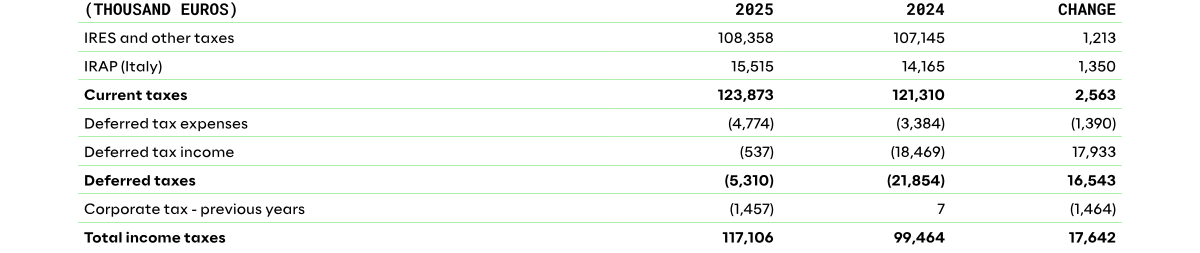
The tax rate was equivalent to 31.7% (compared to 31.8% of 2024). The reconciliation between the tax charges recorded in the consolidated financial statements and the theoretical tax charge, calculated on the basis of the theoretical tax rate in effect in Italy, is the following:

In order to render the reconciliation between income taxes recognized in the financial statements and theoretical income taxes more meaningful, IRAP tax is not taken into consideration since it has a taxable basis that is different from the result before tax of continuing operations. Theoretical income taxes are therefore calculated by applying only the tax rate in effect in Italy (“IRES”), equal to 24.0%, on the result before tax of continuing operations.
In light of the new regulations, the Group (which falls within the scope of the Global Minimum Tax) is currently engaged in implementing the internal procedures necessary to manage the compliance requirements imposed by the Pillar Two rules in the most effective and efficient way, both for its Italian and foreign activities. In this context, thorough analyses have been conducted to estimate the likelihood that, in the jurisdictions where the Group operates, the requirements for applying the simplified transitional regime known as ‘Safe Harbour’ (regulated in our legal system by the Ministerial Decree of May 20, 2024) will be met. If these requirements are satisfied, they would allow the Group to avoid applying the more complex regulatory framework provided under the permanent system. Furthermore, analyses have been carried out to estimate whether, in some of these jurisdictions, a GMT would be due based on the results achieved in the tax period ending December 31, 2025.
From these checks, it has emerged that in 2025, the requirements for applying the simplified transitional regime are met in all jurisdictions where the Group operates, and therefore, no Global Minimum Tax would be due in these jurisdictions.
NOTE 16 - Earnings per share
The basic and diluted earnings per share as at 31 December 2025 was calculated on the basis of the Group’s net result amounting to 250,889 thousand Euros (211,139 thousand Euros as at 31 December 2024) divided by the weighted average number of shares, net of treasury shares, as at 31 December 2024 which amounted to 37,278,236 (37,380,368 as at 31 December 2024).

The basic earnings per share and diluted earnings per share are the same as there are no financial instruments potentially convertible in shares (stock options).
NOTE 17 - Other information
Italian Law 124/2017 requires that information on subsidies, contributions, paid assignments and economic benefits of any kind received from Italian public administrations be provided. In this regard, the following tables show the amounts collected by the Group in 2025:
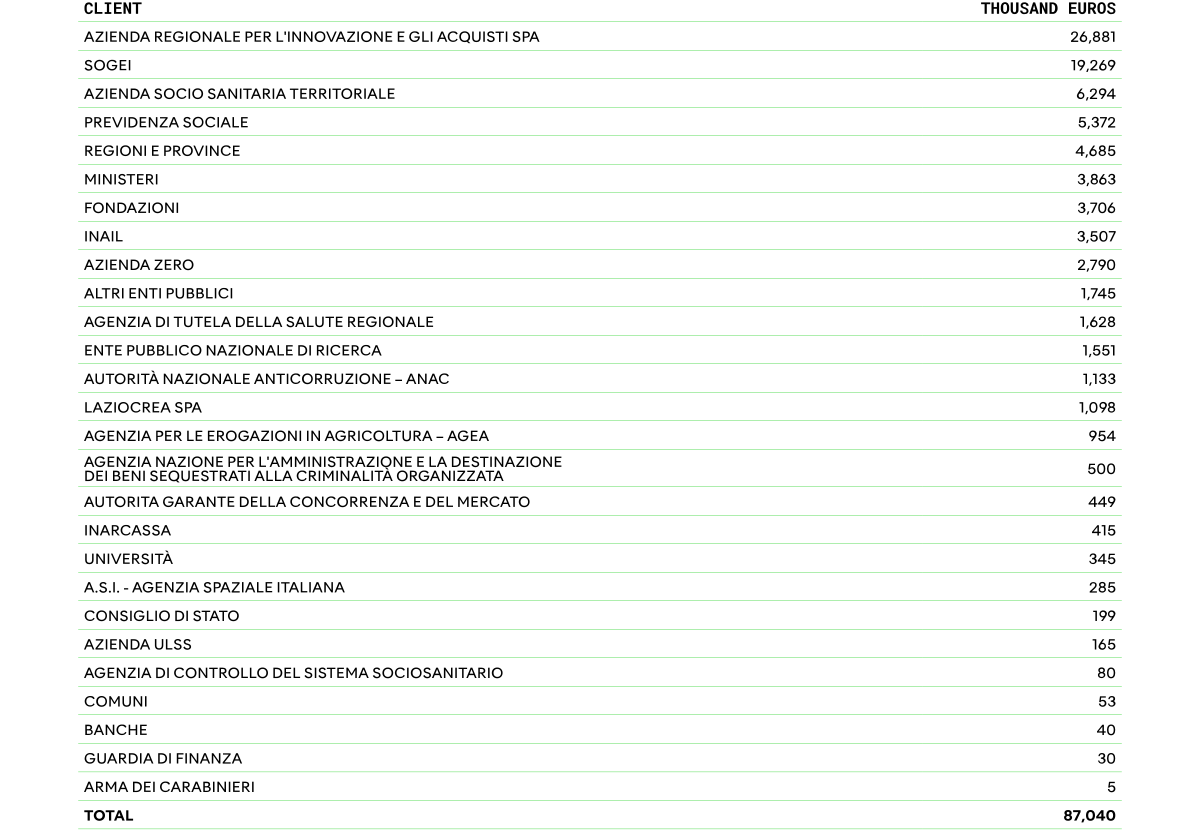
The beneficiary companies are: Reply S.p.A., Business Reply S.r.l., Business Reply Public Sector S.r.l., Cluster Reply S.r.l., Cluster Reply Roma S.r.l., Consorzio Reply Public Sector, Discovery Reply S.r.l., e*finance consulting Reply S.r.l., Eos Reply S.r.l., Forge Reply S.r.l., Hermes Reply S.r.l., Like Reply S.r.l., Reply Consulting S.r.l., Santer Reply S.r.l., Security Reply S.r.l., Sensor Reply S.r.l., Storm Reply S.r.l., Sytel Reply Roma S.r.l., Technology Reply Roma S.r.l., Xenia Reply S.r.l., Xister Reply S.r.l. e Whitehall Reply S.r.l. For further details, please refer to the individual company’s 2025 annual report. In accordance to the above-mentioned regulation, the following table shows the public grants received by some group companies.
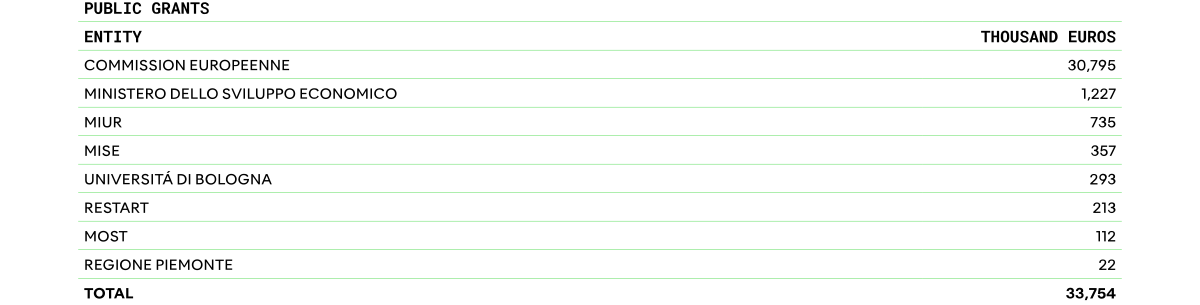
NOTE 18 - Tangible assets
Tangible assets as at 31 December 2025 amounted to 160,391 thousand Euros and are detailed as follows:

Change in tangible assets during 2025 is summarized below:
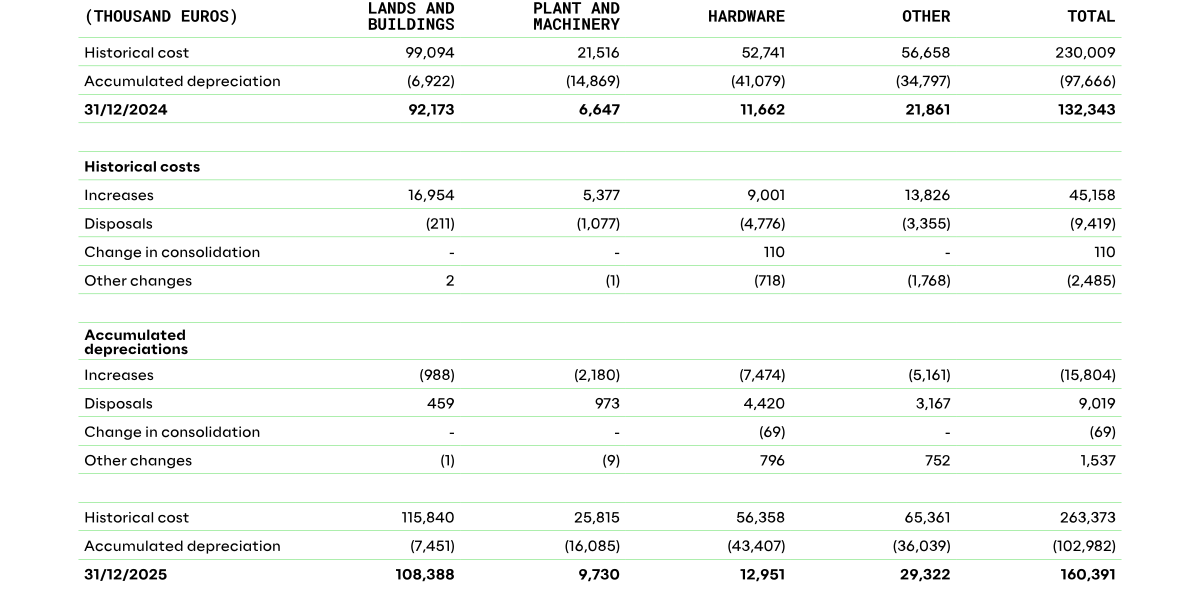
During the financial year the Group carried out total investments for 45,158 thousand Euros (40,056 thousand Euros at 31 December 2024).
The item Lands and Buildings mainly includes:
the value of the land on which the real estate complexes located in Turin stand, amounting to €11,205 thousand Euros, as determined on the basis of an expert appraisal;
the net value of a building owned by the group amounting to 3,926 thousand Euros located in Guetersloh, Germany.
the real estate complex located in Turin and called "ex Caserma De Sonnaz" in the amount of 71,451 thousand Euros, that after proper renovation will be used to host the offices of the Group.
the real estate complex located in Turin – Via Nizza 250 – in the amount of 21,409 thousand Euros that hosts the offices of the Group.
Increases in the item Lands and Buildings refers to the restructuring costs of the buildings. Increase in the item Plant and machinery mainly refers to purchases of general devices and to plant systems for the offices in which the Group operates.
Change in the item Hardware is due to investments made by companies included in Region 1 for 4,343 thousand Euros, 2,775 thousand Euros for purchases made by the companies included in Region 2 and 1,883 thousand Euros for purchases made by the companies included in R
The item Other as at 31 December 2025 mainly includes office furniture and leasehold improvements. The increase of 13,826 thousand Euros mainly refers to the purchase of office furniture for 1,021 thousand Euros, leasehold improvements for 10,664 thousand Euros and the purchase of other for 2,141 thousand Euros. The item Other is mainly related to mobile phones.
Other changes mainly refer to translation differences.
Considering that, as at 31 December 2025 tangible assets were depreciated by 39.1% of their value (42.5% at 31 December 2024) the remaining net book value of 60.9% indicates, on average, a still significant useful life.
NOTE 19 - Goodwill
This item includes goodwill arising from consolidation of subsidiaries purchased against payment made by some Group companies. Goodwill in 2025 developed for the exchange rate differences as follows:

Increase in goodwill compared to 31 December 2024 owes to:
the acquisition, in August 2025, by the American subsidiary Reply Inc of Root16 LLC, specialized in technology consulting services for professional services using Microsoft Dynamics.
the acquisition, in August 2025, by the UK subsidiary Reply Ltd of Red Scientific Reply Limited, operating in the Defence and Public Administration sector and providing engineering consulting activities.
The following table summarizes the calculation of goodwill and the aggregate book value of the companies as at the acquisition date.
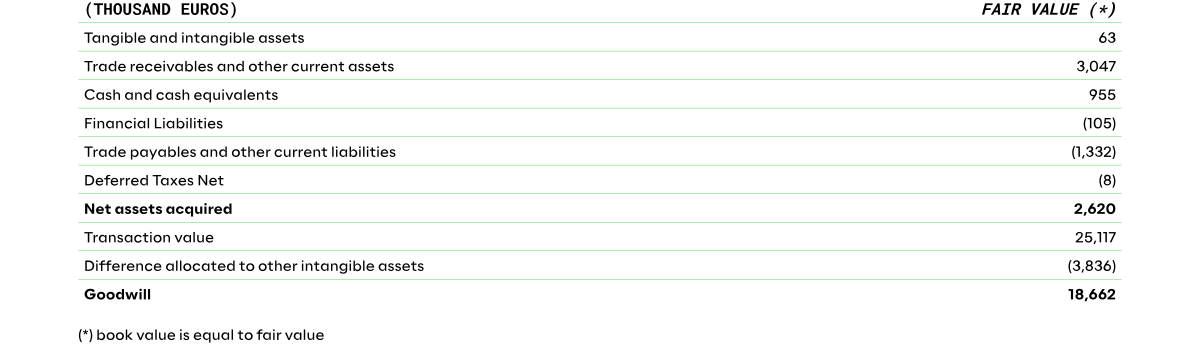
Goodwill is allocated to Cash Generating Units (“CGUs”), identified for the purposes of IAS 36 as economic units consistent with the Group’s management model and prevailing governance. The CGUs identified reflect the combination of:
commercial governance and economic responsibility (clients, contracts, pricing);
integration of the delivery model (multi-country projects, offshoring/nearshoring, centres of competence);
shared assets and services and resource planning/allocation methods;
consistent management reporting and KPIs at perimeter level;
absence of a separate market capable of generating largely independent cash inflows.
As of the reporting date, Reply has identified five CGUs, representing the Group’s economic-geographical operating areas.
For the sake of clarity, it should be noted that in the financial statements as at 31 December 2025 the CGUs have been renamed compared to 31 December 2024, with no changes in either their number or their reference economic perimeters.
The following table shows the movements in goodwill for the CGUs identified according to the above criteria:

The suffix “-led” indicates the prevailing governance perimeter to which primary responsibility for leading the CGU is assigned. For the purposes of segment reporting (IFRS 8), the Group presents its operating segments on a regional basis (Region 1, Region 2 and Region 3); the CGUs identified, in accordance with IAS 36, do not exceed an operating segment and therefore represent a more granular view. The recoverable amount of the CGU, to which the individual goodwill amounts are allocated, is determined as the higher of fair value less costs of disposal and the present value of the estimated future cash flows expected to be derived from the continuing use of the asset (value in use). If the recoverable amount exceeds the carrying amount of the CGU, no impairment is recognised; otherwise, the calculation model identifies the difference between the carrying amount and the recoverable amount as an impairment loss. For the determination of value in use, the Group has adopted the prospective cash flow methodology identified as the discounted cash flow (DCF) analysis. In applying this model, cash flows are derived from the three-year forecast plan for each CGU, approved by the Board of Directors prior to performing the impairment test. The estimated future cash flows, net of taxes, are discounted to their present value using a post-tax discount rate that reflects current market assessments of the time value of money and the specific risks of the asset. The key assumptions reflect management’s best estimates regarding the evolution of revenues, operating margins, investments and net working capital for the specific cash-generating units (“CGUs”). The assumptions considered most sensitive for the determination of the recoverable amount include:
revenue growth rate;
expected operating margin;
long-term growth rate (g-rate);
discount rate (WACC).
The approach adopted in determining the main assumptions reflects both the Group’s historical experience and, where appropriate, information from independent external sources, such as industry reports, market analyses and macroeconomic forecasts published by leading research institutions. Where an assumed value differs from historical performance or market data, such difference arises from:
expected operational improvements resulting from management initiatives already underway;
changes in expected market conditions in future periods; or
specific growth strategies defined by management.
Such differences are considered reasonable and supported by internal evidence available as at the reporting date. Fair value less costs of disposal is estimated using the market multiples method. Reply has identified the EBIT multiple, calculated based on a panel of comparable companies, as the most representative indicator.
The following assumptions, determined also with the support of third-party experts, were used in calculating the recoverable value of the Cash Generating Units:

It should be noted that, as at 31 December 2025 no further indications of impairment emerged for the CGUs subject to impairment testing compared to the write-down recognised as at 30 June 2025. In particular, for the CGU P5-FR-led (Francophone perimeter), the recoverable amount, determined on the basis of value in use, had indicated a permanent impairment; accordingly, an impairment loss of 19,000 thousand Euros was recognised during the period.
On 31 December 2025 the ratio of the estimated headroom to the book value of the net invested capital including the goodwill initially recognized is

It should also be noted that Reply has performed a sensitivity analysis of the estimated recoverable amount. The Group considers revenue growth rates and the discount rate to be key parameters in estimating the recoverable amount and has therefore carried out this sensitivity analysis through:
-
a reduction of up to 30% in revenue growth rates;
-
an increase of 100 basis points in the discount rate.
Based on this analysis, no excess of the carrying amount of the CGUs over their recoverable amount would emerge, which remains higher for all CGUs, with the exception of CGU P5-FR, for which an impairment loss would arise under both sensitivity scenarios.
It should be noted that the headroom of CGU P5-FR would be fully eroded should the following changes occur in the key assumptions used in the impairment test:
a reduction of up to 6.4% in revenue growth rates;
an increase of 50 basis points in the post-tax discount rate applied..
Finally, it should be noted that the estimates and plan data to which the above parameters are applied are determined by the Group’s management on the basis of past experience and expectations regarding the development of the markets in which the Group operates. Taking into account CONSOB and ESMA recommendations, particular attention has been paid to the potential impacts arising from the current geopolitical situation, as well as to possible environmental impacts and to the sensitivity analysis of the recoverable amount.
Furthermore, the estimation of the recoverable amount of Cash Generating Units requires the use of judgement and estimates by management. The Group cannot guarantee that no impairment of goodwill will occur in future periods. Circumstances and events that could give rise to further impairment testing will be continuously monitored by Reply’s management.
NOTE 20 - Other intangible assets
Net intangible assets as at 31 December 2025 amounted to 81,349 thousand Euros (95,802 thousand Euros on 31 December 2024).
Other intangible assets are detailed as follows:

Change in intangible assets during 2025 is summarized in the table below:
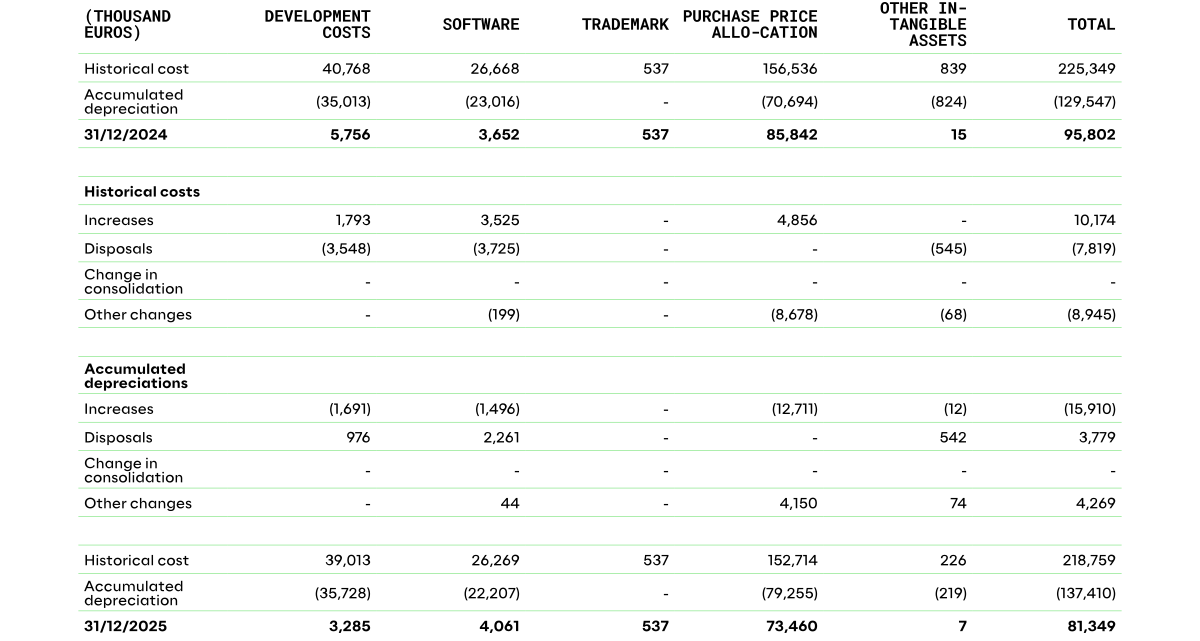
Development costs refer to the development of software products and are accounted for in accordance with provisions of IAS 38. The decrease of the period is due to the write-off of an asset previously capitalised, following an update of the estimates regarding its recoverability..
The item Software mainly refers to software licenses purchased and used internally by the Group companies. This item includes 2,855 thousand Euros related to software development for internal use in 2025.
The item Trademark mainly refers to the value of the “Reply” trademark granted on 9 June 2000 to the Parent Company Reply S.p.A. (at the time Reply Europe Sàrl), in connection with the share capital increase that was resolved and subscribed to by the Parent Company. Such amount is not subject to systematic amortization and the expected future cash flows are deemed adequate.
Customer lists, identified as part of the Purchase Price Allocation process (IFRS 3) using the Excess Earnings Method, are recognised as a separate intangible asset, representing relationships with customers existing at the acquisition date and capable of generating independent cash flows. Customer lists are depreciated systematically each year, starting from the year of initial recognition, on a straight-line basis over a useful life estimated by Reply at approximately 10 years. The increase recorded during the year is mainly due to the recognition of customer lists arising from the acquisition of Root16 LLC. Other changes relate to exchange rate differences.
Considering that, as at 31 December 2025 intangible assets were depreciated by 62.8% of their value (57.5% at 31 December 2024), the remaining net book value of 37.2% indicates an average remaining useful life shorter than that already elapsed.
NOTE 21 – Right of use assets
Change in Right-of-use assets during 2025 is summarized in the table below:
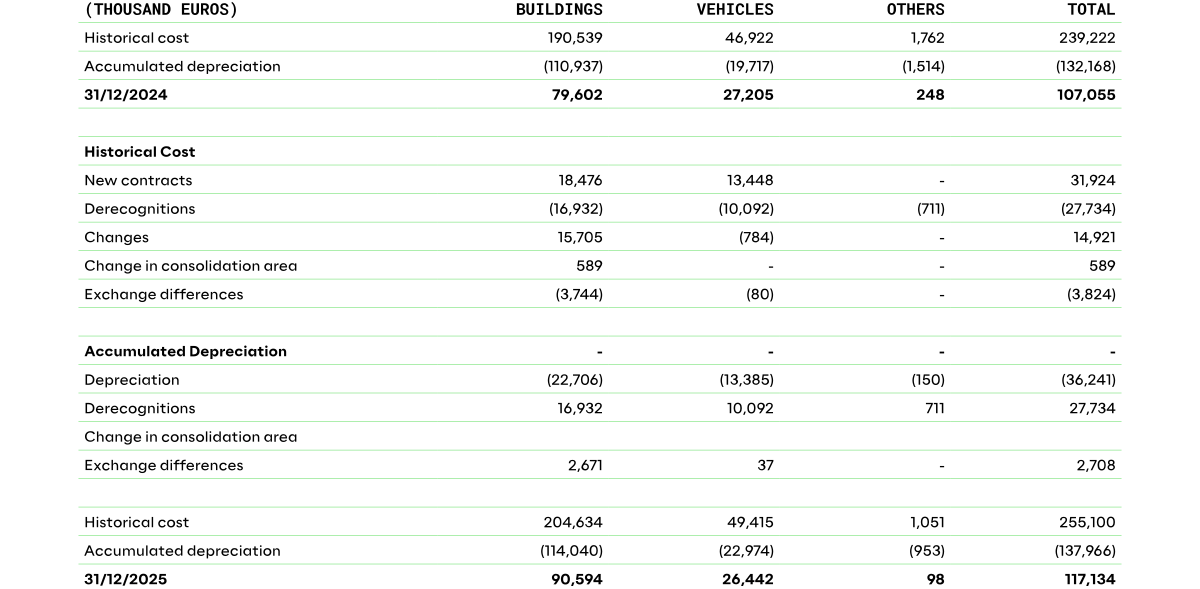
The Group has entered into lease agreements for various assets, including buildings, motor vehicles, and furniture and fittings. The average useful life of the related right-of-use assets is approximately 6, 3, and 4 years, respectively. The right-of-use asset is systematically depreciated over the lease term, taking into account also the likelihood of exercising renewal options where such options are enforceable.
It should be noted that lease contracts relating to buildings include extension options, which are carefully assessed by management for the purposes of proper measurement and presentation in the financial statements.
The contracts in place do not include variable lease payments, restrictions or covenants, and there have been no sale and leaseback transactions.
The discount rate has been determined based on the incremental borrowing rate, defined as the rate that the lessee would have to pay to borrow, over a similar term and with similar security, the funds necessary to obtain an asset of a similar value to the right-of-use asset in a similar economic environment.
Additions relating to Buildings, amounting to approximately 34,181 thousand Euros, arise from new lease agreements and/or renewals entered into during the year. The decrease, amounting to 16,932 thousand Euros, is mainly attributable to the termination of lease agreements during the year.
The Group uses motor vehicles assigned to employees mainly through operating lease agreements. Lease contracts for motor vehicles generally do not include significant purchase options or extension clauses that would materially affect the lease term considered for accounting purposes. Variable payments linked to usage (e.g. excess mileage or ancillary costs) are recognized in profit or loss in the period in which they are incurred.
Other assets mainly relate to furniture and fittings used in the Group’s operating offices.
NOTE 22 - Equity investments
The item Equity investments amounts to 10,988 thousand Euros and includes mainly investments in start-up companies principally in the IoT field originally made by the Investment company Breed Reply Investments Ltd.
During the year, as part of a corporate reorganization, the investments were transferred to the parent company Reply S.p.A., and Breed Reply Investments Ltd. will be placed into liquidation in 2026. At the transfer date, the equity investments were recognized at fair value, which represents the reference value for subsequent accounting in the Group’s financial statements.
Detail is as follows:

NET FAIR VALUE ADJUSTMENTS
The net fair value adjustment amounting to negative 8,478 thousand Euros reflects the market values of the last rounds that took place in 2025 on investments already in portfolio. All fair value assessments, in accordance with IFRS 13, shall be part of the hierarchy level 3.
NOTE 23 - Financial assets
Current and non-current financial assets amounted to 76,423 thousand Euros compared to 54,822 thousand Euros as at 31 December 2024.
Detail is as follows:
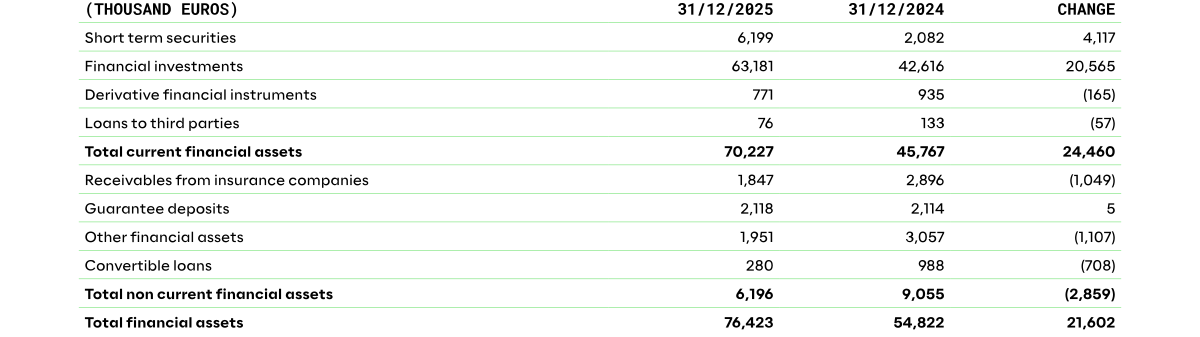
Short term securities, measured at FVTPL, mainly refer to Time Deposit investments. The item Financial investments refers to bonds held by the parent company Reply S.p.A.. The valuation of short-term investments, based on fair value at 31 December 2025, showed a positive difference amounting to 364 thousand Euros compared to the purchase cost of the same. These investments are measured at FVTPL.
Derivative instruments refer to the fair value of derivative contracts signed with Unicredit in order to cover fluctuations in floating interest rates on loans and/or mortgages whose underlying notional value amounts to 22,000 thousand euros. The effective component of the hedges and the related movements during the financial year are reported in the changes in net equity. The item Receivables from insurance companies mainly refers to the insurance premiums paid against pension plans of some German companies and to directors’ severance indemnities. These receivables are measured at amortized cost.
The item Other financial assets mainly referred to long-term financial receivables for deferred collections amounting to 1,387 thousand Euros. Convertible loans relate to the option to convert into shares of start-up companies in the field of IoT. It should be noted that the convertible loans, originally held by Breed Reply Investments Ltd., were transferred to the parent company Reply S.p.A.
Detail is as follows:

Note that the items Receivables from insurance companies, Convertible loans, Guarantee deposits and Other financial assets are not shown in the Net financial position.
NOTE 24 - Deferred tax assets
Deferred tax assets, amounting to 69,057 thousand Euros as at 31 December 2025 (66,557 thousand Euros as at 31 December 2024), include the fiscal charge corresponding to the temporary differences originating among the anti-tax result and taxable income relating to entries with deferred deductibility.
Detail of Deferred tax assets is provided at the table below:
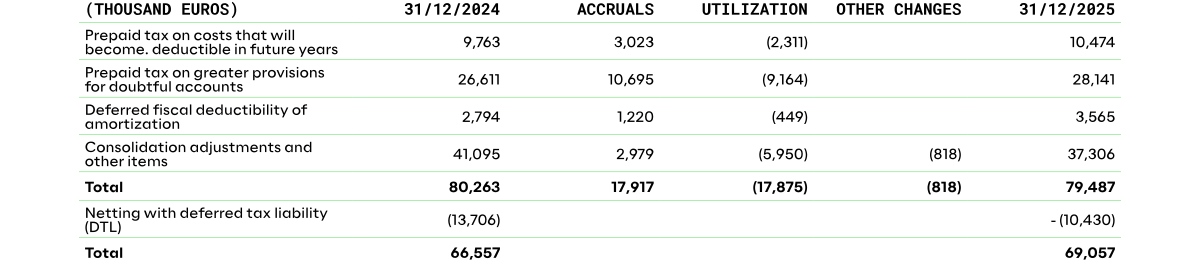
The decision to recognize deferred tax assets is taken by assessing critically whether the conditions exist for the future recoverability of such assets on the basis of expected future results. Where the assumptions exist, deferred tax assets and liabilities have been presented in the financial statements taking into account the offsets per legal entity.
NOTE 25 - Work in progress
Contract work in progress, amounting to 83,489 thousand Euros, are presented in accordance with IFRS 15 and therefore take into account the requirements of paragraph 9, in particular with regard to the need for minimum contractual evidence for the recognition of revenues/contract assets, and are detailed as follows:

Any advance payments from customers are deducted from the value of the inventories, within the limits of the accrued consideration, representing the assets deriving from the contracts; the exceeding amounts, as well as the advance payments related to work in progress not yet started, are accounted as liabilities.
NOTE 26 - Trade receivables
Trade receivables as at 31 December 2025 amounted to 792,089 thousand Euros with a net increase of 34,531 thousand Euros.

Trade receivables are shown net of allowances for doubtful accounts, calculated by using the expected credit loss approach pursuant to IFRS 9, amounting to 6,732 thousand Euros on 31 December 2025 (8,713 thousand Euros at 31 December 2024).
The Allowance for doubtful accounts in 2025 developed as follows:

It should also be noted that the item includes write-downs for losses on working capital amounts. Over-due trade receivables and the corresponding allowance for doubtful accounts, compared to 2024, are summarized in the tables below:
Aging at 31/12/2025

Aging at 31/12/2024

The carrying amount of trade receivables, that at initial recognition is equal to its fair value adjusted for attributable transaction costs, is subsequently valued at the amortised cost appropriately adjusted to take into account any write-downs. Trade receivables are all collectible within one year.
NOTE 27 - Other receivables and current assets and income tax receivables
Detail is as follows:

Current income tax receivables are recorded net of the accrued tax liability.
The item Tax receivables mainly includes:
-
VAT receivables amounting to 27,232 thousand Euros (31,706 thousand Euros at 31 December 2024);
-
receivables for withholding tax amounting to 8,962 thousand Euros (5,524 thousand Euros at 31 December 2024).
The item Other receivables mainly includes contributions receivables in relation to funded projects for 9,626 thousand Euros (7,715 thousand Euros at 31 December 2024) and other social security receivables for 6,033 thousand Euros (1,443 thousand Euros at 31 December 2024).
NOTE 28 - Cash and cash equivalents
The balance of 571,715 thousand Euros, with an increase of 79,882 thousand Euros compared with 31 December 2024, represents cash and cash equivalents as at the end of the year. Changes in cash and cash equivalents are fully detailed in the Consolidated statement of cash flow. Cash and cash equivalents at 31 December 2025 are detailed as follows:

It should be noted that the cash and cash equivalents held but not freely available by the group amount to 7.9 million Euros in relation to the preventive seizure described in Note 34.
NOTE 29 - Shareholders’ equity
SHARE CAPITAL
On 31 December 2025 the share capital of Reply S.p.A, wholly undersigned and paid up, amounted to 4,863,486 Euros and is composed of n. 37,411,428 ordinary shares with nominal value of 0.13 Euros each. The number of shares in circulation as at 31 December 2025 totalled 37,278,236, unchanged since 31 December 2024.
TREASURY SHARES
The value of the Treasury shares, amounting to 17,123 thousand Euros, refers to the shares of Reply S.p.A. held by the parent company, that at 31 December 2025 were equal to n. 133,192, same as at 31 December 2024.
CAPITAL RESERVES
On 31 December 2025 Capital reserves, amounting to 449,533 thousand Euros, were mainly comprised as follows:
-
Treasury share reserve amounting to 17,123 thousand Euros, relating to the shares of Reply S.p.A held by the Parent Company;
-
Reserve for the purchase of treasury shares amounting to 432,878 thousand Euros, formed via initial withdrawal from the share premium reserve. By means of a resolution of the Shareholders’ Meeting of 23 April 2025 Reply S.p.A. re-authorized it, in accordance with and for the purposes of Article 2357 of the Italian Civil Code, the purchase of a maximum of 550 million Euros of ordinary shares, corresponding to 10% of the share capital, in a lump sum solution or in several solutions within 18 months of the resolution.
EARNING RESERVES
Earnings reserves amounted to 1,063,410 thousand Euros and were comprised as follows:
-
Reply S.p.A.’s Legal reserve amounted to 973 thousand Euros;
-
Retained earnings amounted to 811,548 thousand Euros (retained earnings amounted to 643,749 thousand Euros as at 31 December 2024);
-
Profits attributable to shareholders of the Parent Company amounted to 250,889 thousand Euros (211,139 thousand Euros as at 31 December 2024).
OTHER COMPREHENSIVE INCOME
Other comprehensive income can be analysed as follows:
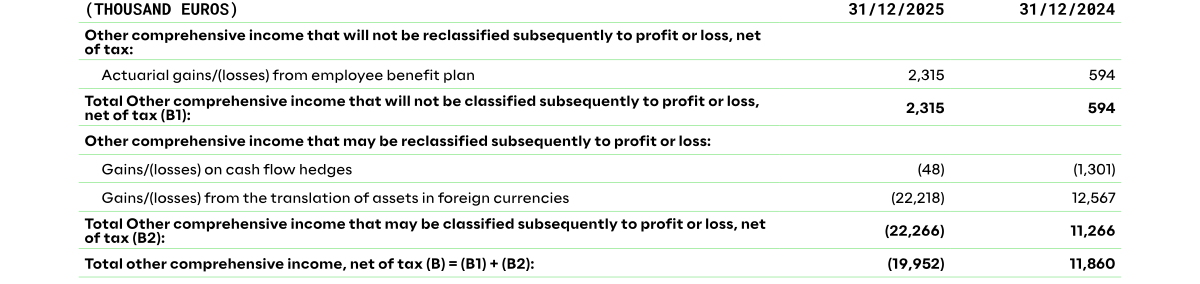
Minority interests
Minority interests consist of the participation of non-controlling shareholders in the capital of the companies included in the consolidation area and at 31 December 2025 amounted to 2,280 thousand euros (2,773 thousand euros at 31 December 2024).
NOTE 30 - Due to minority shareholders and earn-out
Due to minority shareholders and Earn-out as at 31 December 2025 amounted to 45,251 thousand Euros (109,600 thousand Euros on 31 December 2024), of which 3,551 thousand Euros were current. The item relates to contingent consideration (earn-out) arrangements provided for in the context of business combinations, determined on the basis of the achievement of specific financial targets by the acquired companies. In accordance with IFRS 3, such contingent consideration is classified as a financial liability, initially recognised at fair value at the acquisition date and subsequently measured at fair value with changes recognised in profit or loss. The distinction between Payables to minority shareholders and Earn-out payables reflects solely the different nature of the beneficiaries of the contingent consideration, depending on whether or not there are legal minority interests associated with the original transaction, and does not entail different accounting measurement criteria.
Detail is as follows:

The increase in the item amounting to 8,511 thousand Euros reflects the best estimate of future considerations for earn-outs in relation to the original contracts signed, in particular the acquisition by the subsidiary Reply INC of Root 16 LLC, an American consulting company specialized in technology consulting services for professional services using Microsoft Dynamics, focusing on the mid-market segment.
The item Fair value adjustments in 2025 amounted to 13,992 thousand Euros, net of accrued interest of Euro 825 thousand, with a balancing entry in Profit and loss, reflects the best estimate in relation to the deferred consideration originally recognized at the time of acquisition. The fair value of deferred consideration is determined using valuation models based on the discounting of expected cash flows, which take into account the probability of achieving the contractually agreed targets and an appropriate discount rate. The valuations performed fall within Level 3 of the fair value hierarchy under IFRS 13. The determination of the fair value of deferred consideration requires the use of estimates and assumptions that may differ significantly from actual future results and could therefore have an impact on the income statement of future periods. A reasonably possible change of ±1 percentage point in the discount rate, with all other parameters held constant, would have resulted in a decrease/increase in fair value of approximately 280 thousand Euros. The sensitivity analysis was prepared assuming an isolated change in the discount rate and does not take into account any correlated effects on other valuation inputs. Total payments amounted to 53,111 thousand Euros and refer to the consideration paid in relation to the original contracts signed at the time of acquisition. Due to minority shareholders and Earn-out are included in the invested capital for management purposes and in the net financial indebtedness for ESMA purposes.
NOTE 31 - Financial liabilities
Detail is as follows:

The following illustrates the distribution of financial liabilities by due date:
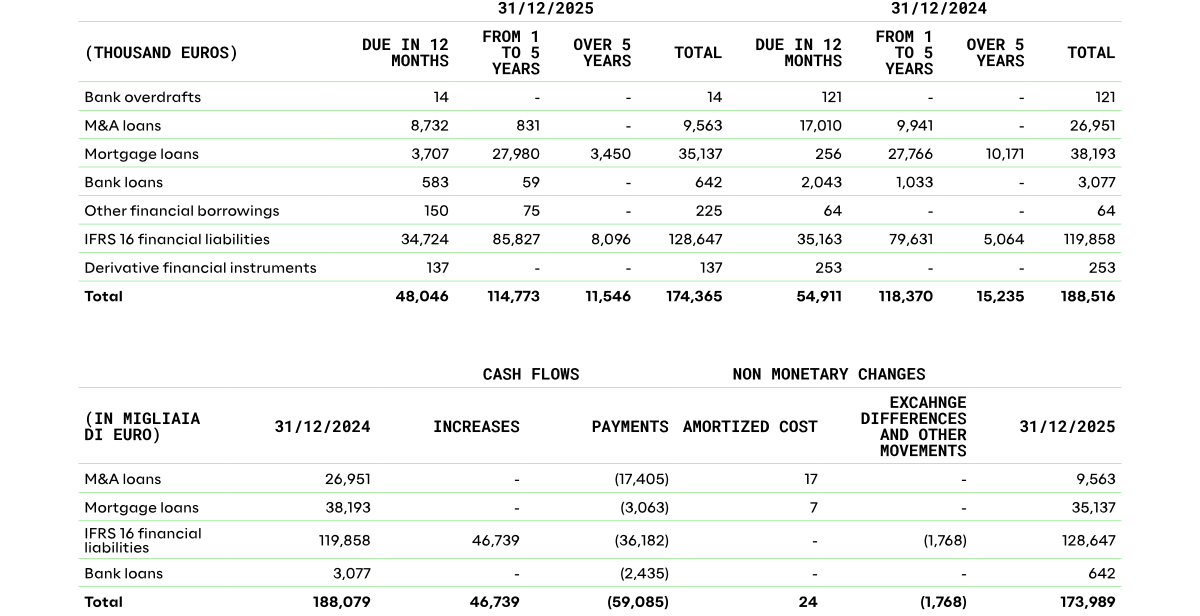
M&A financing refers to credit lines to be used for acquisition operations carried directly by Reply S.p.A. or via companies controlled directly or indirectly by the same.
-
On 8 November 2021 Reply S.p.A. entered into a line of credit with Intesa Sanpaolo S.p.A. for a total amount of 75,000 thousand Euros. As at 31 December 2025 the outstanding amount was 8,571 thousand Euros and expires on 30 September 2026.
-
On 20 February 2023 Reply S.p.A. entered into a line of credit with Banco BPM S.p.A. for a total amount of 50,000 thousand Euros. As at 31 December 2025 following the early repayment made on December 22, 2025, there is no outstanding balance.
On 16 April 2024 Reply S.p.A. entered into a line of credit with Intesa Sanpaolo S.p.A. for a total amount of 75,000 thousand Euros to be used by 30 September 2026. The loan will be reimbursed on 7 half year basis deferred to commence on 31 March 2027 and expires on 30 March 2029.
On 19 April 2024 Reply S.p.A. entered into a line of credit with Unicredit S.p.A. for a total amount of 50,000 thousand Euros to be used by 24 months. As at 31 December 2025 the outstanding amount was 1,000 thousand Euros and expires on 30 April 2029.
Interest rates are also applied according to certain predetermined ratios (Covenants) of economic and financial nature calculated on the consolidated financial statements as at 31 December of each year and/or the consolidated interim report.
Summarized below are the existing contracts entered into for such a purpose:
As contractually defined, such ratios are as follows:
-
Net financial indebtedness/Equity
-
Net financial indebtedness/EBITDA
At 31 December 2025 the Covenants under the various contracts were satisfied.
The item Mortgages refers to a financing granted to Tool Reply GmbH by Commerzbank for a total of 2,500 thousand Euros to be used by 30 June 2028. The loan is reimbursed on a quarter-year basis (at 0.99%). As at 31 December 2025 the outstanding amount is 659 thousand Euros.
It should also be noted that on 24 May 2018 Reply S.p.A. undersigned with Unicredit S.p.A. a mortgage loan secured by guarantee for the purchase and renovation of the property De Sonnaz for a total amount of 40,000 thousand Euros. The mortgage is disbursed in relation to the progress of the work. The outstanding amount is 34,500 thousand Euros at 31 December 2025 and expires on 31 May 2031.
The item IFRS 16 financial liabilities is related to the financial lease liabilities at 31 December 2025 related to the adoption of the Accounting Standard IFRS 16.
The item Derivative financial instruments refers to several loans established with Unicredit S.p.A. to hedge changes in floating interest rates on loans and/or mortgages; the total underlying value is 9,562 thousand Euros. The effective component of the instrument is stated in the Statement of changes in net equity. There was no need to recognize the ineffective portion in the income statement, as the derivatives ensure full hedging coverage. The carrying amount of Financial liabilities is deemed to be in line with its fair value.
For further details related to the risk management policies please see Note 38.
NET FINANCIAL INDEBTEDNESS
The net financial indebtedness reported below was prepared according to CONSOB communication no. DEM/6064293 of July 28, 2006, updated with the provisions of ESMA guideline 32-382-1138 of March 4, 2021 as implemented by the CONSOB warning no. 5/21 of 29 April 2021.
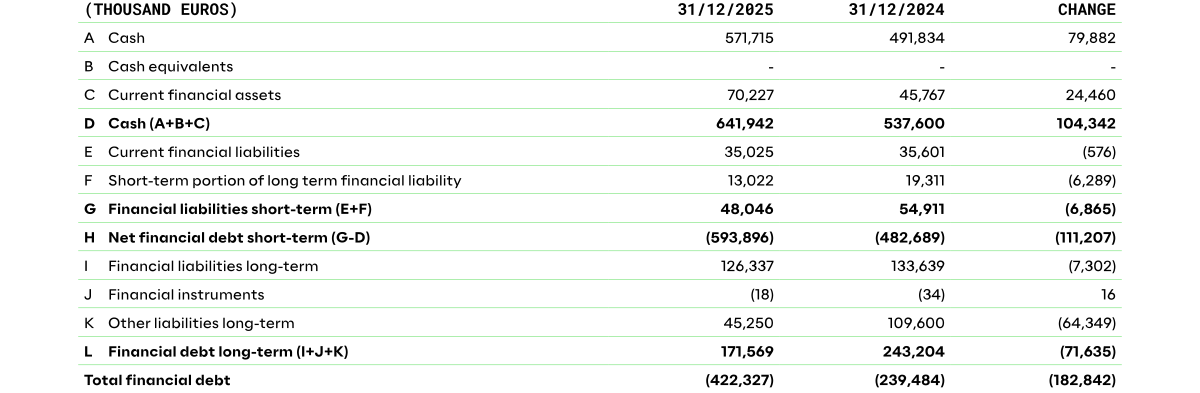
Net financial indebtedness includes IFRS 16 financial liabilities amounting to 128,647 thousand Euros, of which 93,923 thousand Euros were non-current and 34,724 thousand Euros were current. The item Commercial and other non-current liabilities is related to liabilities due to minority shareholders and Earn-out components assimilated to unpaid debts with a significant implicit financial component. For further details with regards to the above table see Note 28 as well as Note 31. Pursuant to the aforementioned recommendations long term financial assets are not included in the net financial indebtedness. As previous mentioned in Note 30, Due to minority shareholders and Earn-out are included in the invested capital and are not included in the net financial managerial position.
NOTE 32 - Employee benefits

Employee severance indemnities
The Employee severance indemnity represents the obligation to employees under Italian law (amended by Law 296/06) that has accrued up to 31 December 2006 and that will be settled when the employee leaves the company. In certain circumstances, a portion of the accrued liability may be given to an employee during his working life as an advance. This is an unfunded defined benefit plan, under which the benefits are almost fully accrued, with the sole exception of future revaluations.
The procedure for the determination of the Company’s obligation with respect to employees was carried out by an independent actuary according to the following stages:
-
Projection of the Employee severance indemnity already accrued at the assessment date and of the portions that will be accrued until when the work relationship is terminated or when the accrued amounts are partially paid as an advance on the Employee severance indemnities;
-
Discounting, at the valuation date, of the expected cash flows that the company will pay in the future to its own employees;
-
Re-proportioning of the discounted performances based on the seniority accrued at the valuation date with respect to the expected seniority at the time the company must fulfil its obligations. In order to allow for the changes introduced by Law 296/06, the re-proportioning was only carried out for employees of companies with fewer than 50 employees that do not pay Employee severance indemnities into supplementary pension schemes.
Reassessment of Employee severance indemnities in accordance with IAS 19 was carried out “ad personam” and on the existing employees, that is analytical calculations were made on each employee in force in the company at the assessment date without considering future work force. The actuarial valuation model is based on the so-called technical bases which represent the demographic, economic and financial assumptions underlying the parameters included in the calculation.
The assumptions adopted can be summarized as follows:
DEMOGRAPHIC ASSUMPTIONS

ECONOMIC AND FINANCIAL ASSUMPTIONS

From a sensitivity analysis concerning the hypotheses related to the parameters involved in the calculation a:
change in turnover rate by 1%;
change in the annual rate of inflation by 1.25%;
change in the annual discount rate by 1.25%.
would not have determined a significant effect on the calculation of the liability.
In accordance with IAS 19, Employment severance indemnities at 31 December 2025 are summarized in the table below:

Employee pension funds
The Pension fund item mainly relates to liability as regards the defined benefit pensions of some German companies and is detailed as follows:

The assumptions adopted were as follows:

Directors severance indemnities
This amount is related to Directors severance indemnities paid during the year. Change amounting to 861 thousand Euros refers to the resolution made by the Shareholders Meeting of several subsidiary companies to pay an additional indemnity to some Members of the Board in 2025 and to a partial payment of the indemnity.
Long-term incentive plans
The Group grants long-term incentive plans (“Long-Term Bonus” or “LTIP”) aimed at fostering the retention of key personnel and aligning management interests with medium- to long-term value creation objectives.
LTIP provide for the payment of cash-settled monetary benefits, subject to the achievement of specific service and performance conditions defined by the relevant corporate bodies.
As cash-based plans, Long-Term Bonuses are accounted for as long-term employee benefits and recognized as liabilities in the financial statements.
The liability is initially and subsequently measured based on the present value of the expected benefit, estimated by taking into account:
the probability of achieving the performance conditions;
the probability of Partners remaining with the Group during the vesting period;
the discount factor, determined using a rate consistent with the duration of the plan and the Group's risk profile.
The total cost of the plan is recognized in the income statement over the vesting period, based on the best estimate of the bonus that will actually vest. At each reporting date, the liability is remeasured to reflect updated estimates and the effect of discounting, with the related impacts recognized in the income statement. A reasonably possible change of ±1 percentage point in the discount rate, with all other parameters held constant, would have resulted in a decrease/increase in fair value of approximately 260 thousand Euros. The sensitivity analysis was prepared assuming an isolated change in the discount rate and does not take into account any correlated effects on other valuation inputs.
Fidelity provision for employees
The fidelity provision for employees, classified among provisions as at December 31, 2024, has been reclassified under employee benefits and mainly includes accruals for probable liabilities toward employees of certain German companies upon reaching a specified length of service. This liability is determined through actuarial calculations applying a 5.5% discount rate.
NOTE 33 - Deferred tax liabilities
Deferred tax liabilities at 31 December 2025 amounted to 27,517 thousand Euros and are referred mainly to the fiscal effects arising from temporary differences deriving from statutory income and taxable income related to deferred deductibility.

The item Other mainly includes the measurement of contract work in progress, employee benefits, capitalization of development costs and reversal of amortization of intangible assets. Deferred tax liabilities have not been recognized on retained earnings of the subsidiary companies as the Group is able to control the timing of distribution of said earnings and in the near future does not seem likely.
NOTE 34 - Provisions
Provisions amounted to 24,323 thousand Euros (of which 22,692 thousand Euros are non-current).
Change in 2025 is summarized in the table below:

Professional liability
It should be noted that during 2025, the dispute relating to a professional liability claim was settled. The total outflow incurred to settle the case amounted to Euro 15 million. This amount was fully covered by the professional liability insurance policy, despite an initial denial of the claim by the insurance company (net of a contractual deductible of Euro 0.3 million). Due to this uncertainty, as at 31 December 2024 a provision for risks had been recognized for the entire estimated potential liability, amounting to Euro 24 million. Following the favourable resolution of the dispute and the recognition of the insurance coverage, the provision originally recognized was fully released.
Preventive seizure
With regard to the preventive seizure involving the Parent Company Reply S.p.A., which led to the recognition of a provision totaling 8 million Euro as of December 31, 2024, it should be noted that, following the partial release of the seizure ordered by the Public Prosecutor after the close of the financial year, the provision has been reduced to 2.9 million Euro.
This event was considered an adjusting event pursuant to IAS 10, as it provides evidence of conditions that already existed at the reporting date.
According to the decree, the alleged offense is that referred to in Article 640-ter, paragraphs 1 and 3 of the Italian Criminal Code, relating to the period 2017–2019, and no liability is alleged under Legislative Decree 231/2001. The criminal proceedings are still in the preliminary investigation phase.
Contractual liability
The item “Contractual liability” includes provisions made for potential liabilities arising from breaches, disputes, or other obligations undertaken under contracts in place with clients and partners. In particular, the provision covers risks related to possible claims for damages, application of penalties, additional execution costs, or other probable outflows, estimated based on the best information available at the reporting date.
Other risks
The item “Other risks” includes provisions made for additional potential liabilities not attributable to the categories indicated above. These accruals relate to risk situations considered probable and measurable at the reporting date and are determined based on the best available information. It should be noted that the fidelity provision for employees, previously classified under this caption, has been reclassified under employee benefits and mainly includes accruals for probable liabilities toward employees of certain German companies upon reaching a specified length of service.
NOTE 35 - Trade payables
Trade payables at 31 December 2025 amounted to 179,828 thousand Euros and are detailed as follows:

Trade payables are initially recognised at fair value, adjusted for any transaction costs directly attributable to and are subsequently valued at amortised cost. The amortised cost of current trade payables corresponds to the nominal value.
NOTE 36 - Other current liabilities and income tax payables
Other current liabilities and income tax payables at 31 December 2025 amounted to 705,010 thousand Euros with an increase of 24,927 thousand Euros with respect to the previous financial year.
Detail is as follows:
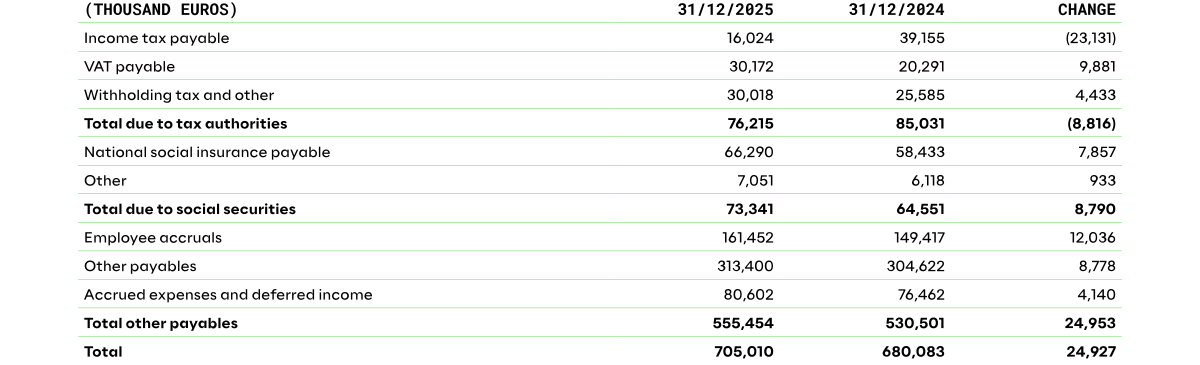
Due to tax authorities amounting to 76,215 thousand Euros, mainly refers to income tax payables, payables to tax authorities for withholding tax on employees and professionals’ compensation.
Due to social security authorities amounting to 73,341 thousand Euros, is related to both Company and employee’s contribution payables.
Other payables at 31 December 2025 amount to 555,454 thousand Euros and mainly include:
amounts due to employees that at the balance sheet date had not yet been paid;
remuneration of directors recognised as participation in the profits of the subsidiary companies;
advances received from customers exceeding the value of the work in progress amounting to 226,620 thousand Euros (222,511 thousand Euros as at 31 December 2024).
Accrued Expenses and Deferred Income, that increase in 2025 by 4,140 thousand Euros, mainly relate to advance invoicing in relation to T&M consultancy activities to be delivered in the subsequent financial year.
Other current payables and liabilities are initially recognised at fair value, adjusted for any transaction costs directly attributable to and are subsequently valued at amortised cost. The amortised cost of these liabilities corresponds to the nominal value.
NOTE 37 - Segment reporting
The management representation of the Group’s business is structured by Region and, for the purpose of analysing the offering portfolio, also by business line (Applications, Technologies, and Processes). For IFRS 8 purposes, operating segments have been identified in line with the management approach, i.e., with reference to business components for which separate financial information is available and regularly reviewed by the Chief Operating Decision Maker (CODM) for performance assessment and resource allocation purposes. In the case of the Group, the CODM is identified as the Board of Directors of Reply S.p.A., in particular the executive directors, who jointly monitor the Group’s performance and make resource allocation decisions. In this context, the CODM has identified the Regions in which the Group operates as operating segments, as the management reporting used is prepared and monitored on a monthly basis and represents the primary basis for performance analysis and resource allocation decisions. The main measures used in management reporting for each segment are Revenues and EBT (Earnings Before Taxes), in line with internal performance metrics. In particular:
Region 1 mainly includes companies operating in Italy, the United States, and Brazil;
Region 2 mainly includes companies operating in Germany and Poland;
Region 3 mainly includes companies operating in the United Kingdom, France, and the Benelux area.
Conversely, the representation by business line primarily serves the purpose of analysing the offering and project portfolio and, in its current configuration, does not represent a consistent and stable level of segment reporting under IFRS 8, also in consideration of the following elements:
the same legal entity may provide services attributable to multiple business lines depending on specific projects/contracts, making performance attribution non-unique;
the "business line" dimension does not align with geographic boundaries and managerial responsibilities by Region;
certain balance sheet items are not "natively" determined by business line without the use of allocation assumptions (e.g., goodwill, working capital, and capex);
changes in the mix of offerring and projects may affect the comparability of data across periods.
Within segment reporting, the Group had separately disclosed the Internet of Things Incubator (IoT), which referred to a company dedicated to a specific investment initiative involving the acquisition and holding of minority stakes in start-ups operating in the IoT sector. During 2025, the investments related to the IoT initiative were transferred to Reply S.p.A. due to the progressively reduced materiality of the scope and the loss of the original growth prospects and strategic relevance. The Group has consequently reclassified the information relating to the IoT Incubator within Region 1. This reclassification reflects the evolution of the organizational structure and the management reporting model and aims to ensure a representation more consistent with how the activities are currently managed and monitored. The following table provides a breakdown of economic situation by Region:
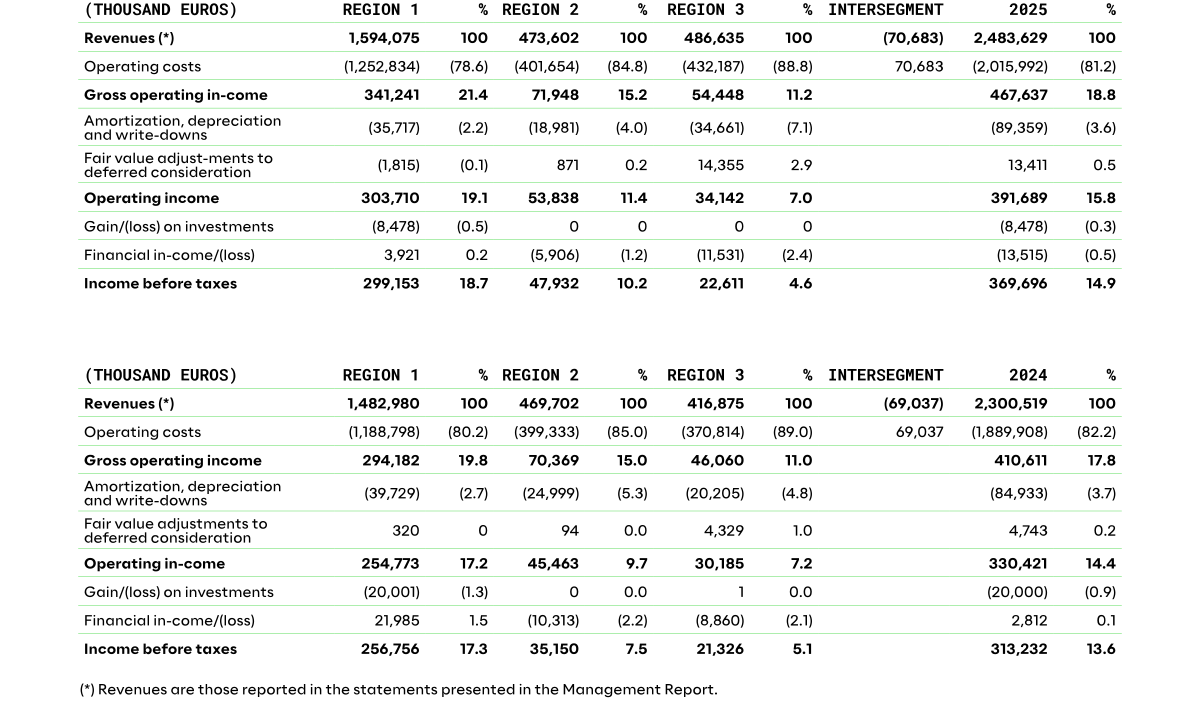
Revenues from third-party customers in Region 1 amount to Euro 1,571.0 million (Euro 1,457.2 million as at December 31, 2024), those in Region 2 amount to Euro 445.6 million (Euro 446.3 million as at December 31, 2024), and those in Region 3 amount to Euro 467.0 million (Euro 397.0 million as at December 31, 2024).
In the 2025 financial year, there were no customers generating revenues exceeding 10% of the Group’s consolidated revenues.
Information is also provided on revenues from third-party customers allocated to geographical areas based on the location of the customers:
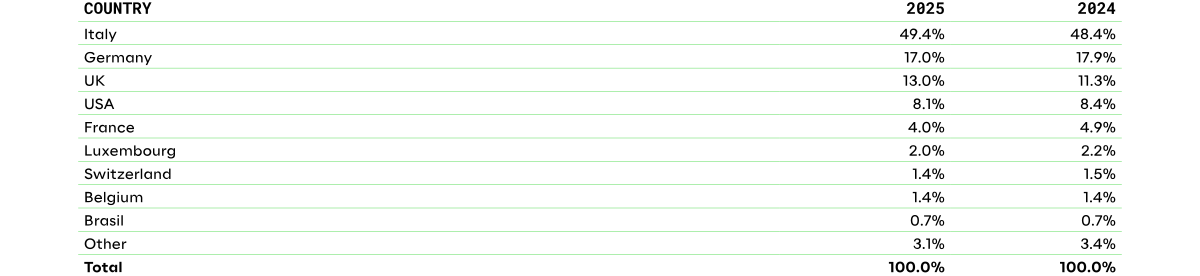
Breakdown of revenues by type is as follows:

The following table provides a breakdown of net invested capital by Region:
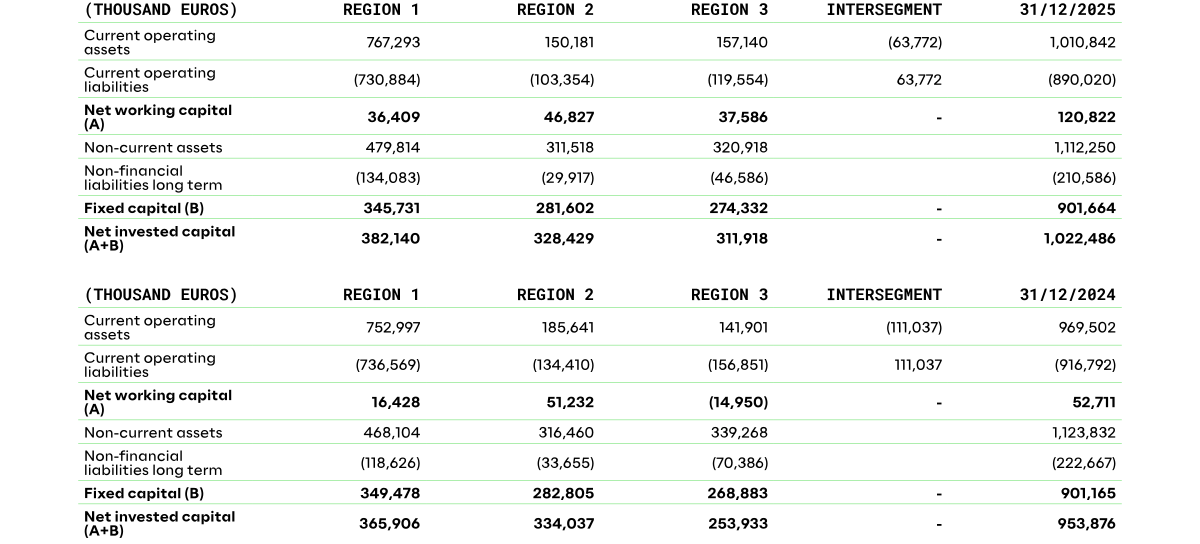
Breakdown of employees by Region is as follows:

NOTE 38 - Additional disclosures to financial instruments and risk management policies
Types of financial risks and corresponding hedging activities
Reply S.p.A. has determined the guide lines in managing financial risks. In order to maximize costs and the resources Reply S.p.A. has centralized all of the groups risk management. Reply S.p.A. has the task of gathering all information concerning possible risk situations and define the corresponding hedge.
As described in the section “Risk management”, Reply S.p.A. constantly monitors the financial risks to which it is exposed, in order to detect those risks in advance and take the necessary action to mitigate them. The following section provides qualitative and quantitative disclosures on the effect that these risks may have upon the company. The quantitative data reported in the following do not have any value of a prospective nature, in particular the sensitivity analysis on market risks, is unable to reflect the complexity of the market and its related reaction which may result from every change which may occur.
Credit risk
The maximum credit risk to which the company is theoretically exposed at 31 December 2024 is represented by the carrying amounts stated for financial assets in the balance sheet.
Balances which are objectively uncollectible either in part or for the whole amount are written down on a specific basis if they are individually significant. The amount of the write-down takes into account an estimate of the recoverable cash flows and the date of receipt, the costs of recovery and the fair value of any guarantees received. General provisions are made for receivables which are not written down on a specific basis, determined on the basis of historical experience. Refer to the note on trade receivables for a quantitate analysis.
Liquidity risk
Reply S.p.A. is exposed to funding risk if there is difficulty in obtaining finance for operations at any given point in time.
The two main factors that determine the company’s liquidity situation are on one side the funds generated by or used in operating and investing activities and on the other the debt lending period and its renewal features or the liquidity of the funds employed and market terms and conditions.
As described in the Risk management section, Reply S.p.A has adopted a series of policies and procedures whose purpose is to optimize the management of funds and to reduce the liquidity risk, as follows:
-
centralizing the management of receipts and payments, where it may be economical in the context of the local civil, currency and fiscal regulations of the countries in which the company is present;
-
maintaining an adequate level of available liquidity;
-
monitoring future liquidity on the basis of business planning.
Management believes that the funds and credit lines currently available, in addition to those funds that will be generated from operating and funding activities, will enable the Group to satisfy its requirements resulting from its investing activities and its working capital needs and to fulfil its obligations to repay its debts at their natural due date.
Currency risk
Exposure to exchange rate fluctuations arises from the Group’s business activities, which are also conducted in currencies other than the Euro. Revenues and costs denominated in foreign currencies may be affected by exchange rate movements, impacting operating margins (economic risk), while trade and financial payables and receivables denominated in foreign currencies may be affected by the conversion rates applied, with an effect on profit or loss (transaction risk). Finally, exchange rate fluctuations are also reflected in the Group’s results and equity. The main exchange rates to which the Company is exposed are:
Euro/USD, in relation to transactions carried out in US dollars;
Euro/GBP, in relation to transactions carried out in pounds sterling.
The Group does not adopt specific hedging policies against exchange rate fluctuations, as management does not consider this risk likely to have a significant adverse impact on the Company’s results, given that foreign currency inflows and outflows are not only limited in amount but also fairly balanced in terms of volumes and timing. A hypothetical increase or decrease of 100 basis points in the exchange rates of the currencies in which the Group operates would not have a significant impact on net profit and shareholders’ equity for the periods under review.
Interest rate risk
Reply S.p.A. makes use of external funds obtained in the form of financing and invest in monetary and financial market instruments. Changes in market interest rates can affect the cost of the various forms of financing, including the sale of receivables, or the return on investments, and the employment of funds, causing an impact on the level of net financial expenses incurred by the company. To mitigate such risks, the Group, when necessary, has used derivative financial instruments designated as “cash flow hedges”.
Sensitivity analysis
In assessing the potential impact of changes in interest rates, the company separates fixed rate financial instruments (for which the impact is assessed in terms of fair value) from floating rate financial instruments (for which the impact is assessed in terms of cash flows). Floating rate financial instruments include principally cash and cash equivalents and part of debt.
A hypothetical, unfavourable and instantaneous change of 50 basis points in short-term interest rates at 31 December 2024 applied to floating rate financial assets and liabilities, operations for the sale of receivables and derivatives financial instruments, would have caused increased net expenses before taxes, on an annual basis, of approximately 274 thousand Euros.
This analysis is based on the assumption that there is a general and instantaneous change of 50 basis points in interest rates across homogeneous categories. A homogeneous category is defined on the basis of the currency in which the financial assets and liabilities are denominated.
Fair value assessment hierarchy levels
The IFRS 13 establishes a fair value hierarchy which classifies the input of evaluation techniques on three levels adopted for the measurement of fair value. Fair value hierarchy attributes maximum priority to prices quoted (not rectified) in active markets for identical assets and liabilities (Level 1 data) and the non-observable minimum input priority (Level 3 data). In some cases, the data used to assess the fair value of assets or liabilities could be classified on three different levels of the fair value hierarchy. In such cases, the evaluation of fair value is wholly classified on the same level of the hierarchy in which input on the lowest level is classified, taking account its importance for the assessment.
The levels used in the hierarchy are:
Level 1 inputs are prices quoted (not rectified) in markets active for identical assets and liabilities which the entity can access on the date of assessment;
Level 2 inputs are variable and different from the prices quoted included in Level 1 observable directly or indirectly for assets or liabilities;
Level 3 inputs are variable and not observable for assets or liabilities.
The following table presents the assets and liabilities which were assessed at fair value on 31 December 2025, according to the fair value hierarchical assessment level.
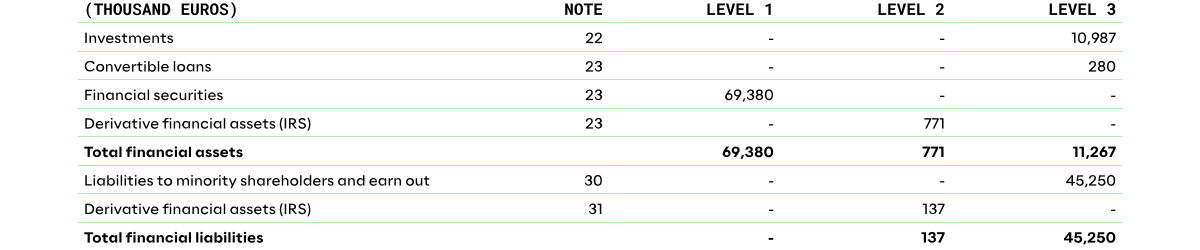
The valuation of investments in start-up within the Internet of Things (IoT) business, through the acquisition of equity investments and through the issuance of convertible loans, is based on data not directly observable on active stock markets, and therefore falls under the fair value hierarchical Level 3.
The item Financial securities is related to securities listed on the active stock markets and therefore falls under the fair value hierarchical level 1.
To determine the effect of interest rate derivate financial instruments Reply refers to evaluation deriving from third parties (banks and financial institutes). The latter, in the calculation of their estimates made use of data observed on the market directly (interest rates) or indirectly (interest rate interpolation curves observed directly): consequently, for the purposes of IFRS 7 the fair value used by the Group for the exploitation of hedging derivatives contracts in existence as at 31 December 2025 re-enters under the hierarchy profile in level 2.
The fair value of Liabilities to minority shareholders and earn out was determined by Group management on the basis of the sales purchase agreements for the acquisition of the company’s shares and on economic parameters based on budgets and plans of the purchased company. As the parameters are not observable on stock markets (directly or indirectly) these liabilities fall under the hierarchy profile in level 3. Considering the uncertainty related to the evolution of these variables, simulations were conducted to generate a range of possible scenarios. Based on these analyses, the expected value of the financial liability was determined, reflecting the different possible outcomes of the scenario under consideration. As at 31 December 2025, there have not been any transfers within the hierarchy levels.
NOTE 39 - Transactions with related parties
In accordance with IAS 24 Related parties are Group companies and persons that are able to exercise control, joint control or have significant influence on the Group and on its subsidiaries. Transactions carried out by the group companies with related parties that as of the reporting date are considered ordinary business and are carried out at normal market conditions.
The main economic and financial transactions with related parties is summarized below.
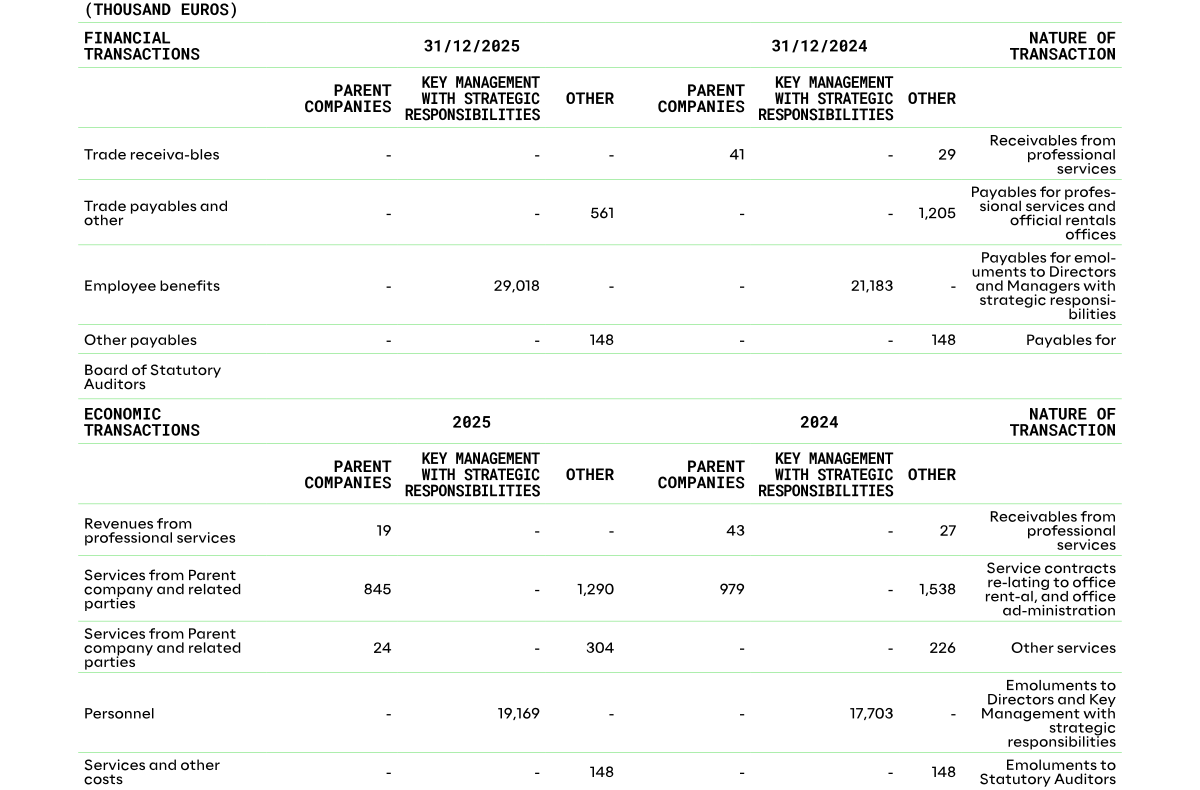
With reference to the Cash flows statement, the above-mentioned transactions impact the change in working capital by 7,262 thousand Euros.
Reply group main economic and financial transactions
In accordance with IAS 24, emoluments to Directors, Statutory Auditors and Key Management are also included in transactions with related parties (please see the Annual Report on remuneration).
In accordance with Consob Resolution no. 15519 of 27 July 2006 and Consob communication no. DEM/6064293 of 28 July 2006 the financial statements present the Consolidated Income statement and Balance Sheet showing transactions with related parties separately, together with the percentage incidence with respect to each account caption.
Pursuant to Art. 150, paragraph 1 of the Italian Legislative Decree n. 58 of 24 February 1998, no transactions have been carried out by the members of the Board of Directors that might be in potential conflict of interests with the Company.
NOTE 40 - Emoluments to directors, statutory auditors and key management
The fees of the Directors and statutory Auditors of Reply S.p.A. for carrying out their respective function, including those in other subsidiary companies, are as follows:

Emoluments to Key management amounted to approximately 8,472 thousand Euros (6,933 thousand Euros at 31 December 2024).
NOTE 41 - Guarantees, commitments and contingent liabilities
Guarantees
Guarantees and commitments where existing, have been disclosed at the item to which they refer.
Contingent liabilities
As an international company, the Group is exposed to numerous legal risks, particularly in the area of product liability, environmental risks and tax matters. The outcome of any current or future proceedings cannot be predicted with certainty. It is therefore possible that legal judgments could give rise to expenses that are not covered, or not fully covered, by insurers’ compensation payments and could affect the Group financial position and results. Instead, when it is probable that an overflow of resources embodying economic benefits will be required to settle obligations and this amount can be reliably estimated, the Group recognises specific provision for this purpose.
NOTE 42 - Events subsequent to 31 december 2025
No significant events were reported after 31 December 2025.
NOTE 43 - Approval of the consolidated financial statements and authorization to publish
The Consolidated financial statements at 31 December 2025 were approved by the Board of Directors on March 12, 2026 which authorized the publication within the terms of law.
NOTE 44 – Climate change
Climate change represents a global challenge that also affects business activities, influencing employee well-being, the management of operational sites, and energy efficiency. Reply is aware of the importance of adopting measures to reduce its environmental footprint and ensure operational continuity in a context of increasing attention to sustainability. Throughout the year, the Group has implemented initiatives aimed at optimizing energy consumption at its locations, promoting the adoption of renewable energy sources and energy efficiency systems. Additionally, it has promoted sustainable mobility policies for employees, offering remote working options and encouraging the use of low environmental impact vehicles. To date, the analysis conducted has not highlighted any significant impacts of climate change on the 2025 financial statements, either in terms of operating costs or revenues. In preparing the financial statements, the Group also assessed the potential effects of climate change on the main accounting estimates, in line with ESMA recommendations. Following this analysis, the Group has determined the following:
Valuation of tangible assets: The Group does not hold assets that are subject to significant risks of obsolescence or impairment due to climate factors. Therefore, no significant impacts have been identified on the recoverable value of assets or on the determination of their useful life;
Impairment losses (IAS 36): No impairment indicators related to climate factors have emerged that would require impairments on business assets. It is specified that, as previously described in note 18, any environmental impacts have been considered in the preparation of the budget;
Provisions for risks and charges (IAS 37): No current obligations or potential liabilities have been identified arising from environmental regulations or other factors related to the ecological transition;
Going concern assessment: The Group has considered climate risks in its going concern analysis and has not identified any factors that could impair its ability to operate in the foreseeable future.
Despite the absence of significant impacts on current accounting estimates, the Group will continue to monitor regulatory developments and market conditions to promptly adjust its assessments.
NOTE 45 – Impacts related to geopolitical risks and uncertainties
The international macroeconomic environment continues to be characterized by geopolitical tensions and a framework of uncertainty linked to regional conflicts, trade dynamics among major economic areas, political instability in certain parts of the world, and volatility in energy and financial markets. The Group does not operate directly in areas currently affected by armed conflicts or significant geopolitical instability and does not hold production assets or operational facilities in countries subject to material international sanctions. Therefore, no significant direct impacts on business continuity or the ability to generate revenues have been identified. However, the Group maintains a corporate presence in the United States, a market that represents a strategic area for development. In this context, any developments in trade, fiscal, or regulatory policies, as well as potential geopolitical tensions between the United States and other economic areas, could result in indirect effects on the relevant macroeconomic environment, exchange rates, and customer investment decisions. The Group continuously monitors these dynamics, adopting a prudent approach in financial planning and foreign exchange risk management. In general, the main indirect risks associated with the geopolitical scenario relate to possible slowdowns in demand, inflationary pressures, financial market volatility, and disruptions in technology supply chains. As of the date of preparation of these financial statements, no effects have been identified that would significantly impact the Group’s economic, financial, or equity position. Management continues to closely monitor developments in the international environment, maintaining adequate organizational and financial safeguards aimed at ensuring operational flexibility and financial soundness. The Group has also assessed the potential effects of geopolitical risks and uncertainties on the main accounting estimates, in line with ESMA recommendations. Following this analysis, the Group has determined that:
Property, plant and equipment valuation: no significant impacts arising from geopolitical factors have been identified on the determination of the recoverable amount of assets or on the estimation of their useful lives;
Impairment (IAS 36): no impairment indicators directly attributable to geopolitical risks have emerged. Any macroeconomic effects have been considered in the forward-looking cash flows used for recoverability testing;
Financial instruments (IFRS 9): the Group has assessed the potential effects of geopolitical tensions on credit risk and expected credit losses (ECL) relating to trade receivables and other financial assets. As of the reporting date, no significant increases in credit risk have been identified that would require material adjustments to impairment allowances;
Revenue from contracts with customers (IFRS 15): no significant effects arising from geopolitical uncertainties have been identified on revenue recognition, including customers' ability to meet contractual obligations or the estimation of any variable consideration;
Provisions (IAS 37): no present obligations or contingent liabilities arising from geopolitical events have been identified that would require the recognition of provisions;
Going concern assessment: the Group has also considered geopolitical risks in its going concern assessment, without identifying any factors that could compromise its ability to operate in the foreseeable future.
Despite the absence of significant impacts on accounting estimates as of the reporting date, the Group will continue to monitor the evolution of the geopolitical and macroeconomic environment in order to promptly adjust its assessments.
Annexed tables
Consolidated income statement prepared pursuant to Consob resolution no. 15519 of 27 july 2006
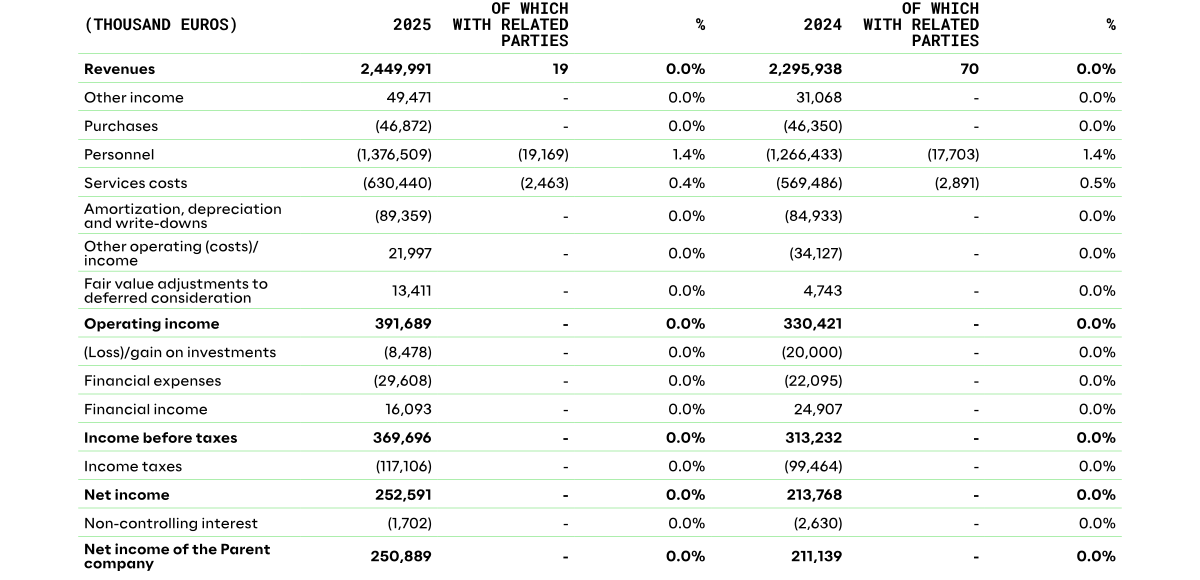
Consolidated statement of financial position prepared pursuant to consob resolution no. 15519 of 27 july 2006
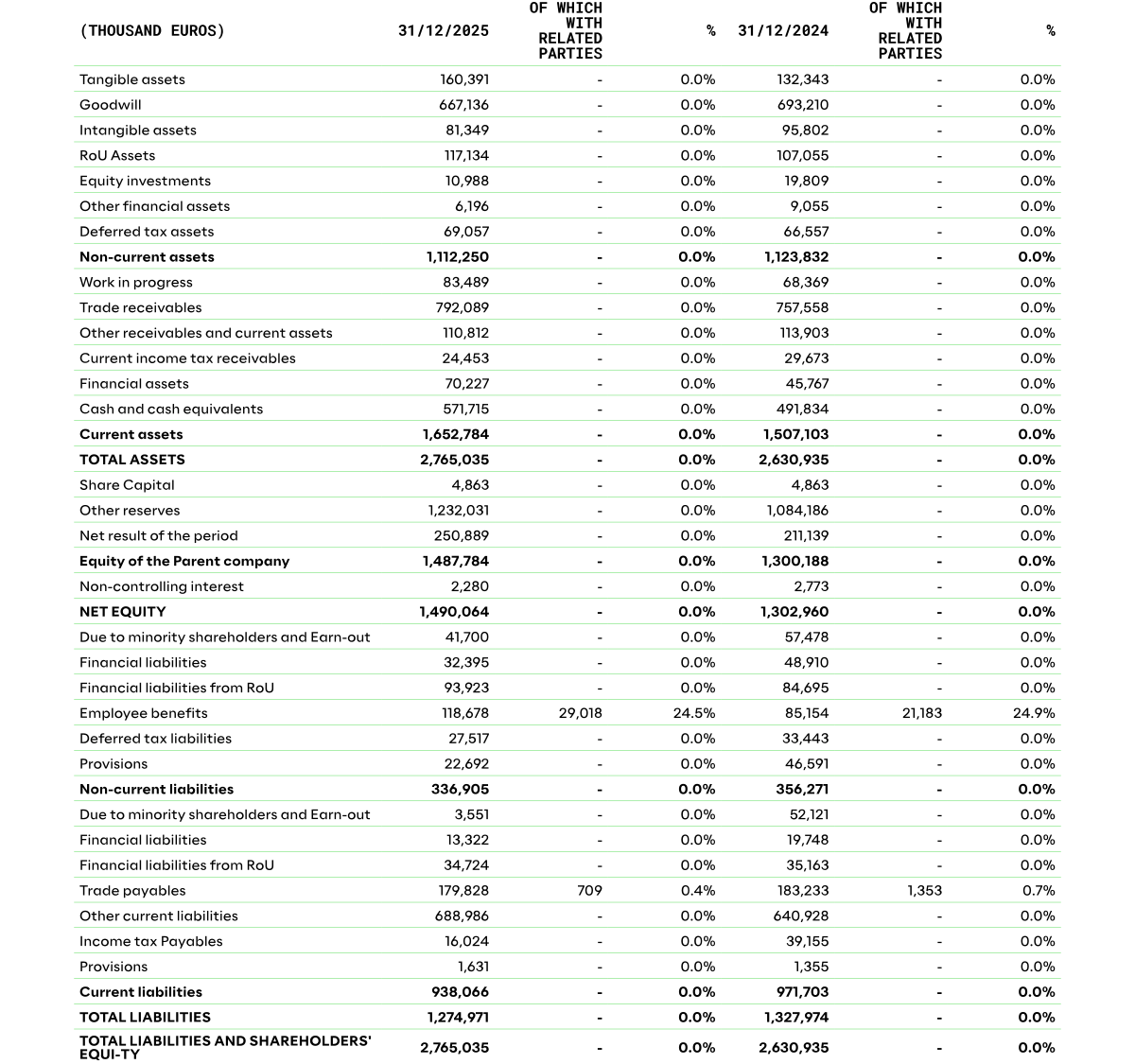
Consolidated statement of cash flow prepared pursuant to consob resolution no. 15519 of 27 july 2006
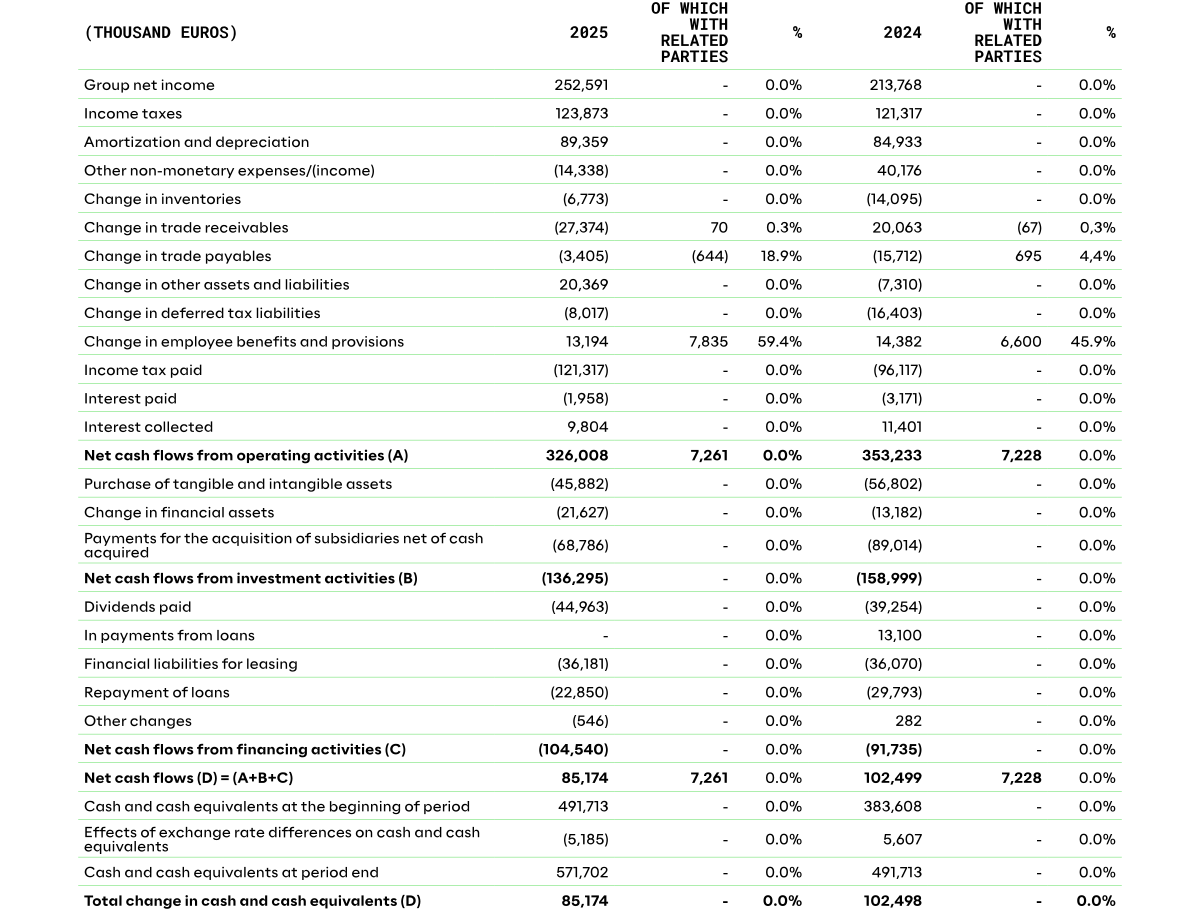
List of companies at 31 December 2025
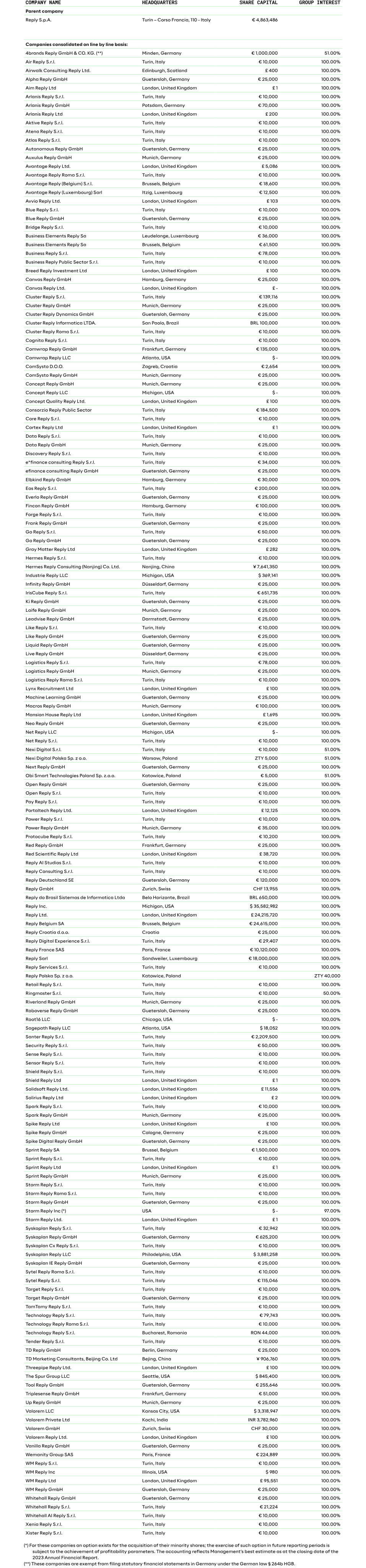
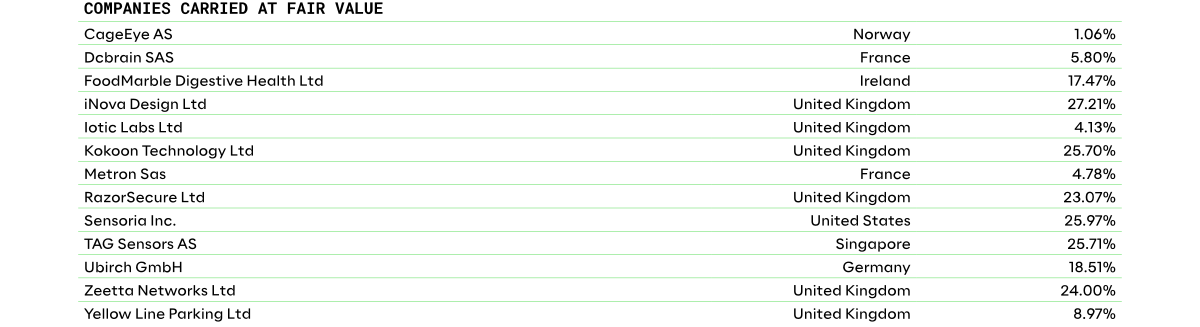
Information in accordance with article 149-duodecies issued by Consob
The following table, prepared in accordance with Art. 149-duodeciesof Consob’s Regulations for Issuers reports the amount of fees charged in 2025 for the audit and audit related services provided by the Independent Auditors and by entities that are part of the Independent Auditors’ network.
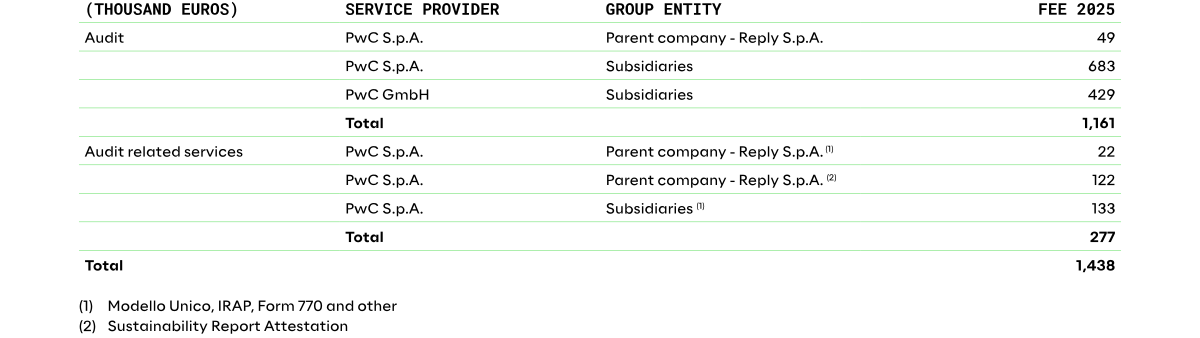
Attestation of the consolidated financial statements in accordance with article 81-ter of Consob regulation no. 11971 of 14 may 1999 and subsequent amendments and additions
The undersigned, Mario Rizzante, in his capacity as Chairman and Chief Executive Officer, and Giuseppe Veneziano, Director in charge of financial reporting, hereby attest, pursuant to the provisions of Article 154-bis, paragraphs 5, of Legislative Decree no. 58 of 24 February 1998:
-
suitability with respect to the Company’s structure and
-
the effective application of the administration and accounting procedures applied in the preparation of the Consolidated financial statements for the year ended 2025.
The assessment of the adequacy of administrative and accounting procedures used for the preparation of the consolidated financial statements at 31 December 2025 was carried out on the basis of regulations and methodologies defined by Reply prevalently coherent with the Internal Control – Integrated Framework model issued by the Committee of Sponsoring Organisations of the Treadway Commission, an internationally-accepted reference framework.
The undersigned also certify that:
1 the Consolidated Financial Statement
-
have been prepared in accordance with International Financial Reporting Standards, as endorsed by the European Union pursuant to Regulation (EC) No. 1606/2002 of the European Parliament and Council, dated 19 July 2002;
-
correspond to the amounts shown in the Company’s accounts, books and records;
-
provide a fair and correct representation of the financial conditions, results of operations and cash flows of the Company and its consolidated subsidiaries.
2 The Report on Operations includes a reliable analysis of the performance and results of the management, as well as the situation of the issuer and the group of companies included in the consolidation, along with a description of the main risks and uncertainties to which they are exposed.
Turin, 12 March 2026
/f/ Giuseppe Veneziano
Director in charge of financial reporting
Giuseppe Veneziano
/f/ Mario Rizzante
Chairman and Chief Executive Officer
Mario Rizzante
Attestation of the sustainability report in accordance with article 81-ter, paragraph 1, of Consob regulation no. 11971 of 14 may 1999 and subsequent amendments and additions
The undersigned, Mario Rizzante, in his capacity as Chairman and Chief Executive Officer, and Giuseppe Veneziano, Director responsible for drawing up Reply S.p.A.’s financial statements, hereby attest, pursuant to the provisions of Article 154-bis, paragraph 5-ter, of Legislative Decree no. 58 of 24 February 1998, that the Sustainability Report included in the Report on operations was prepared:
a) in accordance with the reporting standards applied pursuant to Directive 2013/34/EU of the European Parliament and of the Council of 26 June 2013 and Legislative Decree No. 125 of 6 September 2024;
b) with the specifications adopted pursuant to Article 8, paragraph 4, of Regulation (EU) 2020/852 of the European Parliament and of the Council of 18 June 2020.
Turin, 12 March 2026
/f/ Giuseppe Veneziano
Director in charge of financial reporting
Giuseppe Veneziano
/f/ Mario Rizzante
Chairman and Chief Executive Officer
Mario Rizzante