 Back
Back


Financial statements as at 31 December 2025
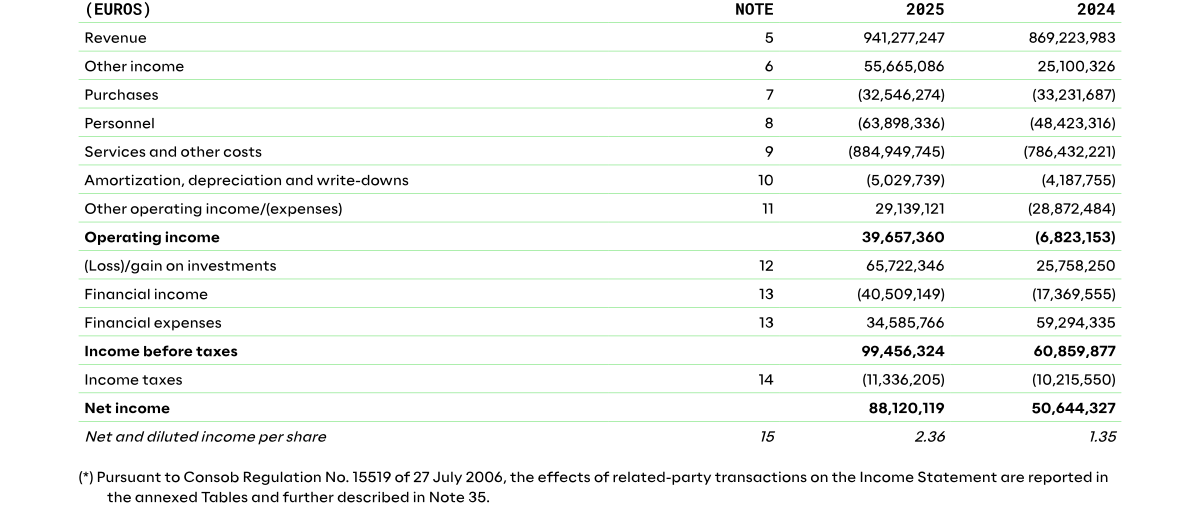
Income statement(*)
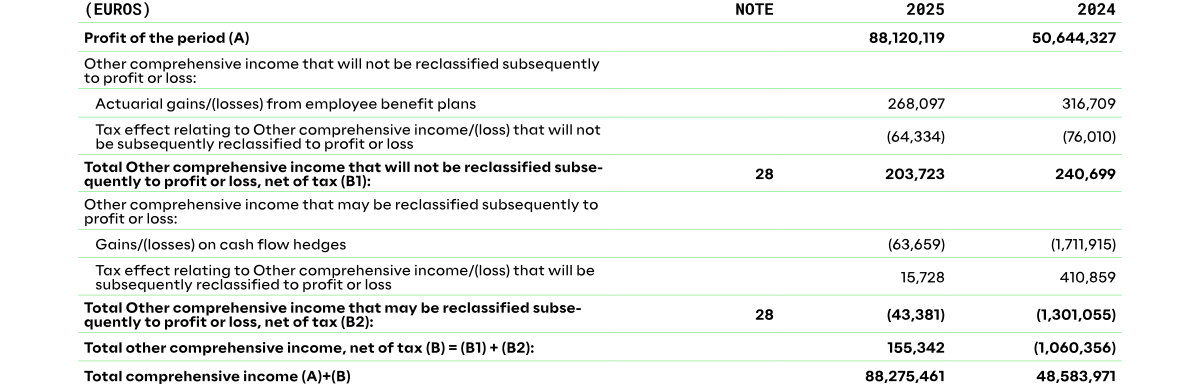
Statement of comprehensive income
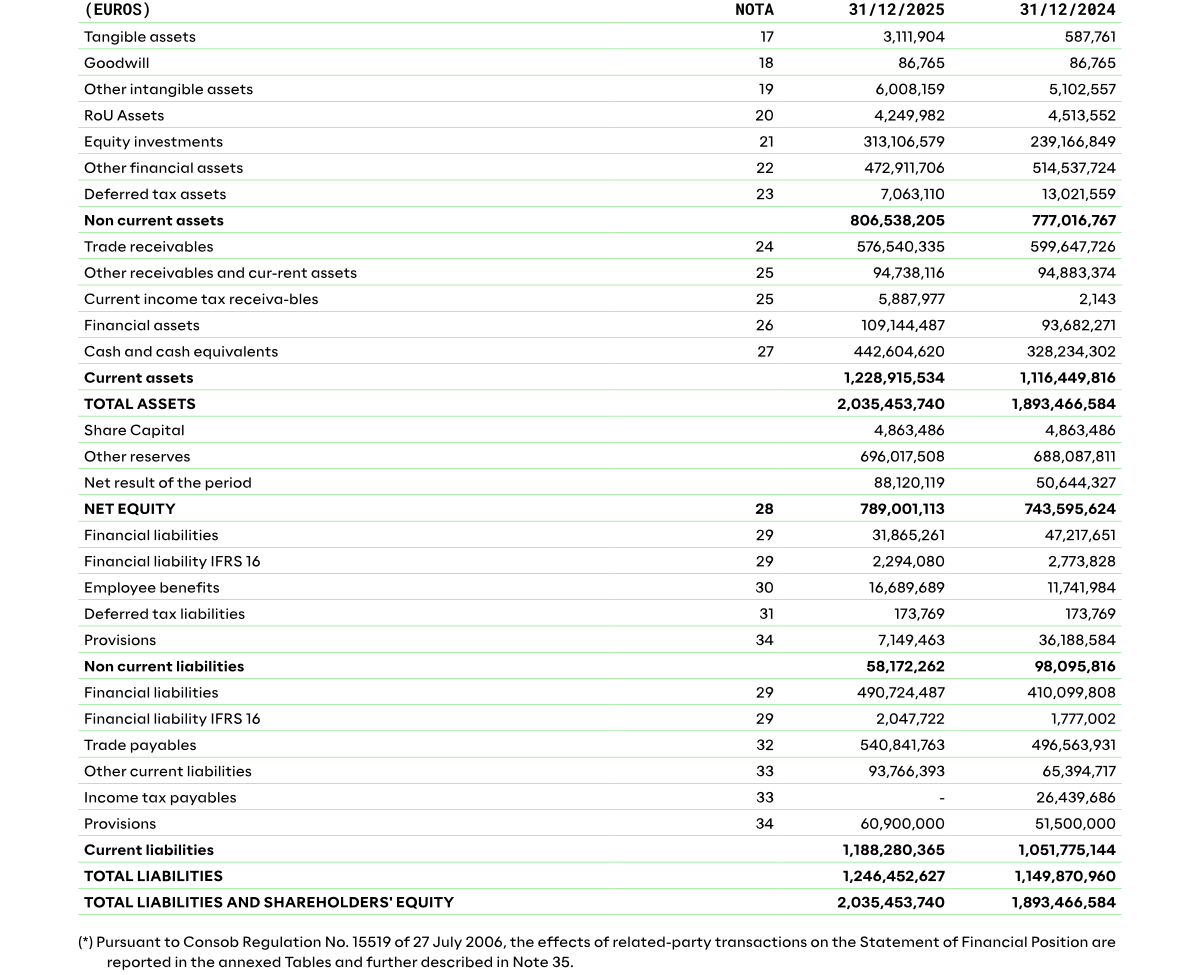
Statement of financial position(*)
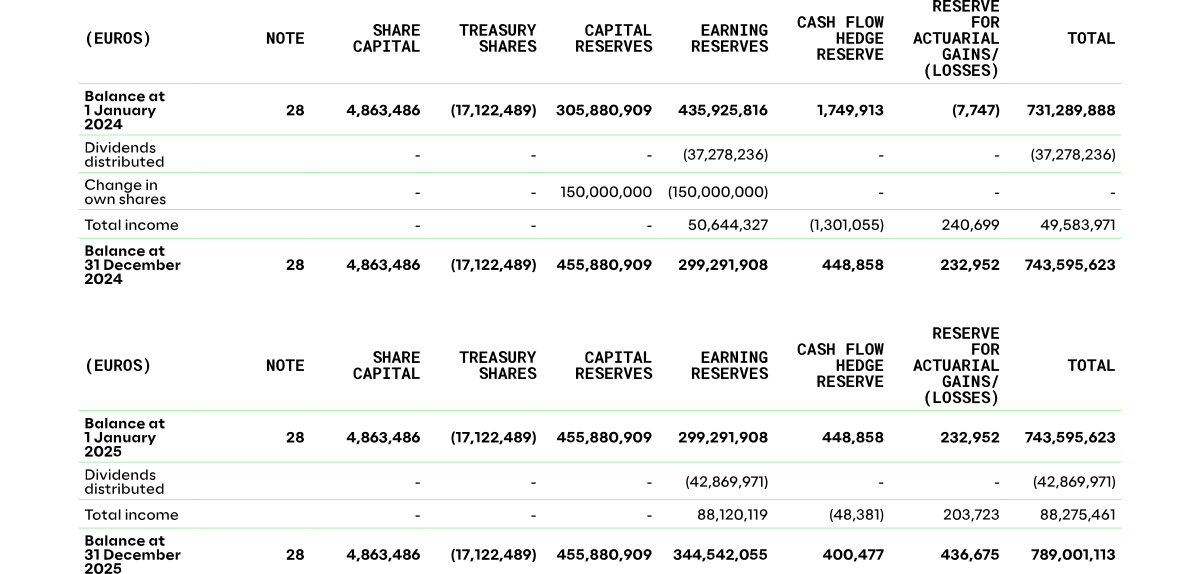
Statement of changes in equity
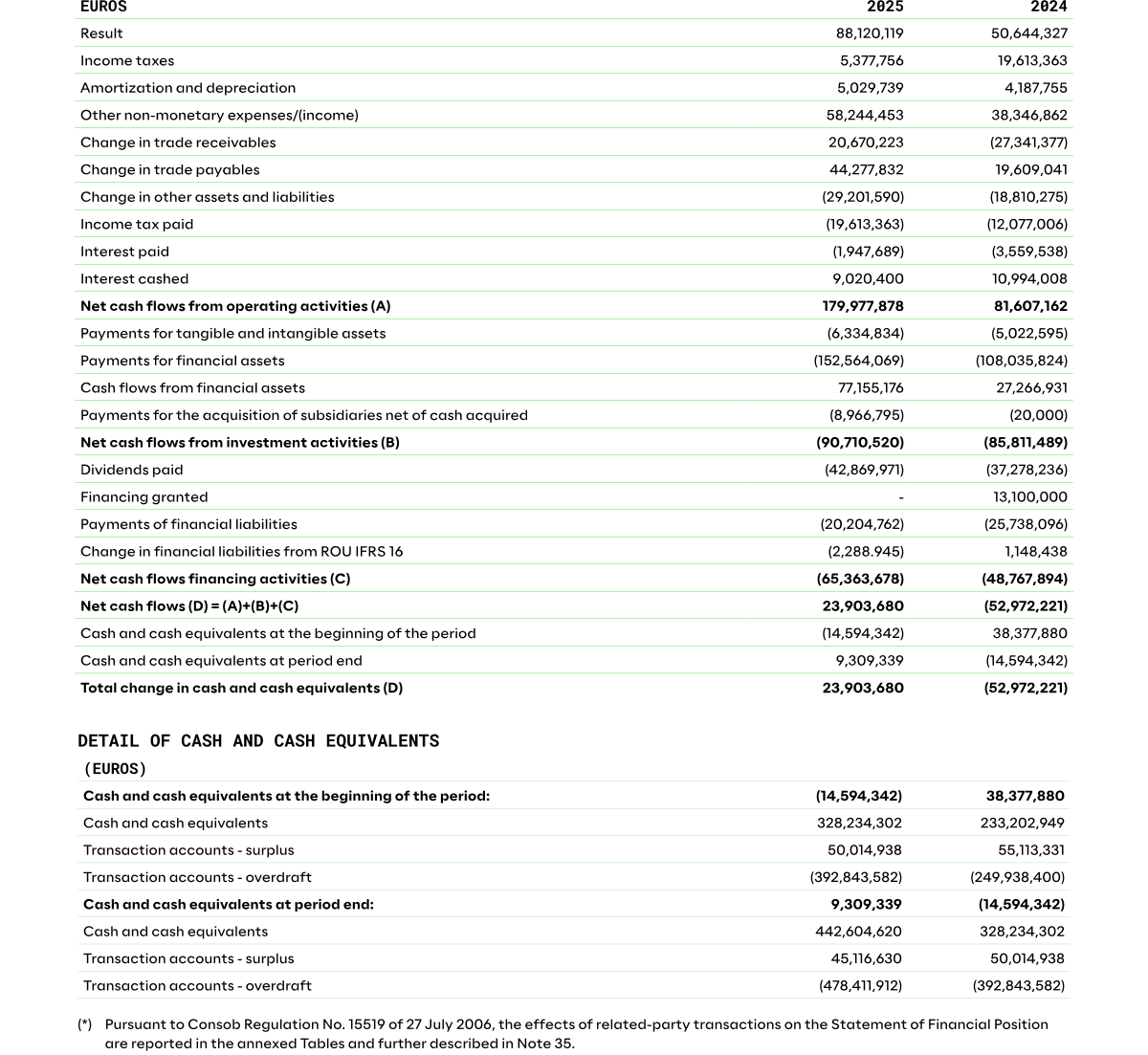
Statement of cash flows(*)
Notes to the financial statements
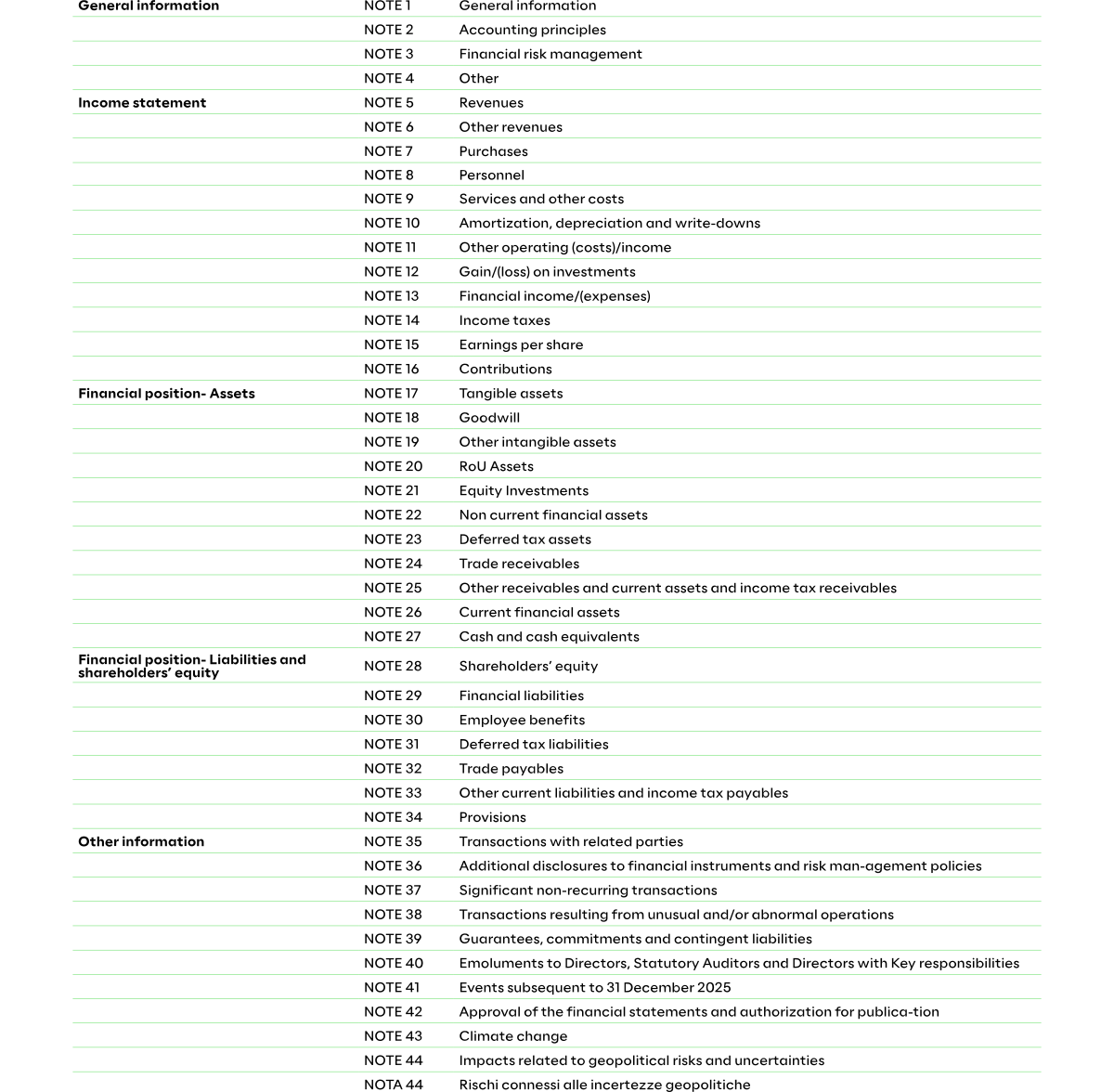
NOTE 1 – General information
Reply is specialized in the implementation of solutions based on new communication and digital media. Reply, consisting of a network of specialized companies, assists important European industries belonging to Telco & Media, Manufacturing & Retail, Bank & Insurances and Public Administration sectors, in defining and developing new business models utilizing Big Data, Cloud Computing, CRM, Mobile, Social Media and Internet of Things paradigms. Reply’s services include: consulting, system integration, application management and Business Process Outsourcing. (www.reply.com)
The company mainly carries out the operational coordination and technical management of the group and also the administration, financial assistance and some purchase and marketing activities. Reply also manages business relations for some of its main clients
NOTE 2 - Accounting principles
COMPLIANCE WITH INTERNATIONAL ACCOUNTING PRINCIPLES
The 2025 Financial Statements have been prepared in accordance with International Financial Reporting Standards (“IFRS”) issued by the International Accounting Standards Board (“IASB”) and endorsed by the European Union, and with the provisions implementing Article 9 of Legislative Decree No. 38/2005. The designation “IFRS” also includes all valid International Accounting Standards (“IAS”), as well as all interpretations of the International Financial Reporting Interpretations Committee (“IFRIC”), formerly the Standing Interpretations Committee (“SIC”).
In compliance with European Regulation No. 1606 of 19 July 2002, beginning in 2005, the Reply Group adopted the International Financial Reporting Standards (“IFRS”) for the preparation of its Consolidated Financial Statements. On the basis of national legislation implementing the aforementioned Regulation, those accounting standards were also used to prepare the separate Financial Statements of the Parent Company, Reply S.p.A., for the first time from 1st January 2006. It is hereby specified that the accounting standards applied conform to those adopted for the preparation of the initial Statement of Assets and Liabilities as at 1 January 2005 according to the IFRS, as well as for the 2005 Income Statement and the Statement of Assets and Liabilities as at 31 December 2005, as re-presented according to the IFRS and published in the special section of these Financial Statements.
General principles
The Financial Statements were prepared under the historical cost convention, modified as required for the measurement of certain financial instruments. The criterion of fair value was adopted as defined by IFRS 9.
The Financial Statements have been prepared on the going concern assumption. In this respect, despite operating in a difficult economic and financial environment, the Company’s assessment is that no material uncertainties (as defined in paragraph 25 of IAS 1) exist relative to its ability to continue as a going concern. These Financial Statements are expressed in Euros and are compared to the Financial Statements of the previous year prepared in accordance with the same principles. These Financial Statements have been drawn up under the general principles of continuity, accrual-based accounting, coherent presentation, relevancy and aggregation, prohibition of compensation and comparability of information. The fiscal year consists of a twelve (12) month period and closes on the 31 December each year.
Financial statements
The Financial Statements include statement of income, statement of comprehensive income, statement of financial position, statement of changes in shareholders’ equity, statement of cash flows and the explanatory notes.
The income statement format adopted by the company classifies costs according to their nature, which is deemed to properly represent the company’s business. The Statement of financial position is prepared according to the distinction between current and non-current assets and liabilities. The statement of cash flows is presented using the indirect method. The most significant items are disclosed in a specific note in which details related to the composition and changes compared to the previous year are provided. It is further noted that, to comply with the indications provided by Consob Resolution No. 15519 of 27 July 2006 “Provisions as to the format of Financial Statements”, in addition to mandatory tables, specific supplementary Income Statement and Balance Sheet formats have been added that report significant amounts of positions or transactions with related parties indicated separately from their respective items of reference. It is also reported that in accordance with CONSOB communication no. 0031948, if there are non-recurring items in the statements, such components will be explicitly indicated under the relevant item. Operations or events that are not frequent in the normal course of business and have an impact on the financial and asset position, the economic result, and the financial flows of the entity may be presented as ‘non-recurring’.
Tangible assets
Tangible fixed assets are stated at cost, net of accumulated depreciation and impairment losses. Goods made up of components, of significant value, that have different useful lives are considered separately when determining depreciation. In compliance with IAS 36 – Impairment of assets, the carrying value is immediately remeasured to the recoverable value, if lower.
Depreciation is charged so as to write off the cost or valuation of assets, over their estimated useful lives, using the straight-line method, on the following bases:

Ordinary maintenance costs are fully expensed as incurred. Incremental maintenance costs are allocated to the asset to which they refer and depreciated over their residual useful lives. Improvement expenditures on rented property are allocated to the related assets and depreciated over the shorter between the duration of the rent contract or the residual useful lives of the relevant assets.
The gain or loss arising on the disposal or retirement of an asset is determined as the difference between the sales proceeds and the carrying amount of the asset and is recognized in income.
Goodwill
Goodwill is an intangible asset with an indefinite life, deriving from business combinations recognized using the purchase method, and is recorded to reflect the positive difference between purchase cost and the Company’s interest at the time of acquisition of the fair value of the assets, liabilities and identifiable contingent liabilities attributable to the subsidiary.
Goodwill is not amortized, but is tested for impairment annually or more frequently if specific events or changes in circumstances indicate that it might be impaired. After initial recognition, goodwill is measured at cost less any accumulated impairment losses.
Impairment losses are recognized immediately as expenses that cannot be recovered in the future.
Goodwill deriving from acquisitions made prior to the transition date to IFRS are maintained at amounts recognized under Italian GAAP at the time of application of such standards and are subject to impairment tests at such date.
Other intangible assets
Intangible fixed assets are those lacking an identifiable physical aspect, are controlled by the company and are capable of generating future economic benefits.
Other purchased and internally-generated intangible assets are recognized as assets in accordance with IAS 38 – Intangible Assets, where it is probable that the use of the asset will generate future economic benefits and where the costs of the asset can be determined reliably.
Such assets are measured at purchase or manufacturing cost and amortized on a straight-line basis over their estimated useful lives, if these assets have finite useful lives.
Other intangible assets acquired as part of an acquisition of a business are capitalized separately from goodwill if their fair value can be measured reliably.
In case of intangible fixed assets purchased for which availability for use and relevant payments are deferred beyond normal terms, the purchase value and the relevant liabilities are discounted by recording the implicit financial charges in their original price.
Expenditure on research activities is recognized as an expense in the period in which it is incurred.
Development costs can be capitalized on condition that they can be measured reliably and that evidence is provided that the asset will generate future economic benefits.
An internally-generated intangible asset arising from the company’s e-business development (such as informatics solutions) is recognized only if all of the following conditions are met:
An asset is created that can be identified (such as software and new processes);
It is probable that the asset created will generate future economic benefits;
The development cost of the asset can be measured reliably.
These assets are amortized when launched or when available for use. Until then, and on condition that the above terms are respected, such assets are recognized as construction in progress. Amortization is determined on a straight-line basis over the relevant useful lives, on the following basis:

When an internally-generated intangible asset cannot be recorded at balance sheet, development costs are recognized to the statement of income in the period in which they are incurred.
Right of use Assets
According to IFRS 16, the accounting representation of leases (which do not establish the provision of services) takes place through the inclusion in the financial position of a financial liability, represented by the present value of future rents, against the inclusion in the assets of the ‘right of use of the leased asset’. Leases that were previously accounted for under IAS 17 as financial leases, have not changed compared to the current accounting representation, in full continuity with the past.
Contracts that are within the scope of IFRS 16 relate mainly to long term car-rental.
With reference to the options and exemptions provided by IFRS 16, the Company has made the following choices:
IFRS 16 is not generally applied to intangible assets, short-term contracts (i.e. less than 12 months) and low unit value;
rights of use and financial liabilities relating to leasing contracts are classified under specific items in the financial position;
any component relating to the services included in the leasing fees is generally excluded from IFRS 16.
Intangible assets with indefinite useful life
Intangible assets with indefinite useful lives consist principally of acquired trademarks which have no legal, contractual, competitive, economic, or other factors that limit their useful lives. Intangible assets with indefinite useful lives are not amortized, as provided by IAS 36, but are tested for impairment annually or more frequently whenever there is an indication that the asset may be impaired. Any impairment losses are not subject to subsequent reversals.
Impairment
At each balance sheet date, the Company reviews the carrying amounts of its tangible and intangible assets to determine whether there is any indication that those assets have suffered an impairment loss. If any such indication exists, the recoverable amount of the asset is estimated in order to determine the extent of the impairment loss (if any). Where it is not possible to estimate the recoverable amount of an individual asset, the Company estimates the recoverable amount of the cash-generating unit to which the asset belongs.
An intangible asset with an indefinite useful life is tested for impairment annually or more frequently, whenever there is an indication that the asset may be impaired. The recoverable amount of an asset is the higher of fair value less disposal costs and its value in use. In assessing its value in use, the pre-tax estimated future cash flows are discounted to their present value using a pre-tax discount rate that reflects current market assessments of the time value of money and the risks specific to the asset. Its value in use is determined net of tax in that this method produces values largely equivalent to those obtained by discounting cash flows net of tax at a pre-tax discount rate derived, through an iteration, from the result of the post-tax assessment. The assessment is carried out for the individual asset or for the smallest identifiable group of cash generating assets deriving from ongoing use, (the so-called Cash generating unit). With reference to goodwill, Management assesses return on investment with reference to the smallest cash generating unit including goodwill. If the recoverable amount of an asset (or cash-generating unit) is estimated to be less than its carrying amount, the carrying amount of the asset is reduced to its recoverable amount. Impairment losses are recognized as an expense immediately. When the recognition value of the Cash generating unit, inclusive of goodwill, is higher than the recoverable value, the difference is subject to impairment and attributable firstly to goodwill; any exceeding difference is attributed on a pro-quota basis to the assets of the Cash generating unit.
Where an impairment loss subsequently reverses, the carrying amount of the asset, (or cash-generating unit), with the exception of goodwill, is increased to the revised estimate of its recoverable amount, but so that the increased carrying amount that would have been determined had no impairment loss been recognized for the asset. A reversal of an impairment loss is recognized as income immediately, unless the relevant asset is carried at a revalued amount, in which case the reversal of the impairment loss is treated as a revaluation increase.
Equity investments
Investments in subsidiaries and associated companies are valued using the cost method. As implementation of such method, they are subject to an impairment test if there is any objective evidence that these investments have been impaired, due to one or more events that occurred after the initial measurement if such events have had an impact on future cash flows, thus inhibiting the distribution of dividends. Such evidence exists when the subsidiary’s and associate’s operating margins are repetitively and significantly negative. If such is the case, impairment is recognized as the difference between the carrying value and the recoverable value, normally determined on the basis of fair value less disposal costs, normally determined through the application of the market multiples to prospective EBIT or to the value in use.
At each reporting period, the Company assesses whether there is objective evidence that a write-down due to impairment of an equity investment recognized in previous periods may be reduced or derecognized. Such evidence exists when the subsidiary’s and associate’s operating margins are repetitively and significantly positive. In this case, the recoverable value is re-measured and eventually the investment is restated at initial cost.
Equity investments in other companies, comprising non-current financial assets not held for trading, are measured at fair value, if it can be determined. Any subsequent gains and losses resulting from changes
in fair value are recognized directly in Shareholders’ equity until the investment is sold or impaired; the total recognized in equity up to that date are recognized in the Income Statement for the period.
Minor investments in other companies for which fair value is not available are measured at cost, and adjusted for any impairment losses.
Dividends are recognized as financial income from investments when the right to collect them is established, which generally coincides with the shareholders’ resolution. If such dividends arise from the distribution of reserves prior to the acquisition, these dividends reduce the initial acquisition cost.
Current and non-current financial assets
Financial assets are classified, on the basis of both contractual cash flow characteristics and the entity’s business model for managing them, in the following categories:
I. financial assets measured at amortized cost;
II. financial assets measured at fair value through other comprehensive income (hereinafter also OCI);
III. financial assets measured at fair value through profit or loss.
At initial recognition, a financial asset is measured at its fair value; at initial recognition, trade receivables that do not have a significant financing component are measured at their transaction price. After initial recognition, financial assets whose contractual terms give rise to cash flows that are solely payments of principal and interest on the principal amount outstanding are measured at amortized cost if they are held within a business model whose objective is to hold financial assets in order to collect contractual cash flows (the so-called hold to collect business model). For financial assets measured at amortized cost, interest income determined using the effective interest rate, foreign exchange differences and any impairment losses (see the accounting policy for “Impairment of financial assets”) are recognized in the profit and loss account. Conversely, financial assets that are debt instruments are measured at fair value through OCI (hereinafter also FVTOCI) if they are held within a business model whose objective is achieved by both collecting contractual cash flows and selling financial assets (the so-called hold to collect and sell business model).
In these cases:
I. interest income determined using the effective interest rate, foreign exchange differences and any impairment losses (see the accounting policy for “Impairment of financial assets”) are recognized in the profit and loss account
II. changes in fair value of the instruments are recognized in equity, within other comprehensive income. The accumulated changes in fair value, recognized in the equity reserve related to other comprehensive income, is reclassified to the profit and loss account when the financial asset is derecognized. A financial asset represented by a debt instrument that is neither measured at amortized cost nor at FVTOCI, is measured at fair value through profit or loss (hereinafter FVTPL); financial assets held for trading fall into this category.
Interest income on assets held for trading contributes to the fair value measurement of the instrument and is recognized in “Finance income (expense)”, within “Net finance income (expense) from financial assets held for trading”. When the purchase or sale of a financial asset is under a contract whose terms require delivery of the asset within the time frame established generally by regulation or convention in the marketplace concerned, the transaction is accounted for on the settlement date.
Transfer of financial assets
The Company derecognizes financial assets from its Financial Statements when, and only when, the contractual rights to the cash flows deriving from the assets expire or the Company transfers the financial asset. In the case of transfer of the financial asset:
-
If the entity substantially transfers all of the risks and benefits of ownership associated with the financial asset, the Company derecognizes the financial asset from the Financial Statements and recognizes separately as assets or liabilities any rights or obligations originated or maintained through the transfer;
-
If the Company maintains substantially all of the risks and benefits of ownership associated with the financial assets, it continues to recognize it;
-
If the Company does not transfer or maintain substantially all of the risks and benefits of ownership associated with the financial asset, it determines whether or not it has maintained control of the financial asset. In this case:
-
If the Company has not maintained control, it derecognizes the financial asset from its Financial Statements and recognizes separately as assets or liabilities any rights or obligations originated or maintained through the transfer;
-
If the Company has maintained control, it continues to recognize the financial asset to the extent of its residual involvement with such financial asset.
At the time of removal of financial assets from the balance sheet, the difference between the carrying value of assets and the fees received or receivable for the transfer of the asset is recognized in the income statement.
Trade payables and receivables and other current assets and liabilities
Trade receivables are held within a business model whose objective is achieved by both collecting contractual cash flows and selling financial assets. At initial recognition they are measured at fair value adjusted for transaction costs and subsequently measured at amortized cost determined using the effective interest rate, to account for foreign exchange differences and any impairment losses.
At each reporting date, all financial assets, with the exception of those measured at fair value through profit and loss, are analysed for any impairment indicators. Under IFRS 9, an entity calculates the allowance for credit losses by considering on a discounted basis the cash shortfalls it would incur in various default scenarios for prescribed future periods and multiplying the shortfalls by the probability of each scenario occurring. The expected credit losses model requires the immediate recognition of expected losses over the life of the credit itself, as the occurrence of a trigger event is not necessary for the recognition of losses. For trade receivables accounted for at amortised cost, when an impairment loss has been identified, its value is measured as the difference between the carrying amount of the asset and the present value of expected future cash flows, discounted on the basis of the original effective interest rate. This value is recognised in the income statement. For short-term liabilities, such as trade payables, the amortised cost is in fact the same as the nominal value. Receivables and payables denominated in non-EMU currencies are stated at the exchange rate at period end provided by the European Central Bank.
Cash and cash equivalents
The item cash and cash equivalents includes cash, banks and reimbursable deposits on demand and other short term financial investments readily convertible in cash and are not subject to significant risks in terms of change in value.
Treasury shares
Treasury shares are presented as a deduction from equity. All gains and losses from the sale of treasury shares are recorded in a special Shareholders’ equity reserve.
Financial liabilities and equity investments
Financial liabilities and equity instruments issued by the Company are presented according to their substance arising from their contractual obligations and in accordance with the definitions of financial liabilities and equity instruments. The latter are defined as those contractual obligations that give the right to benefit in the residual interests of the Company’s assets after having deducted its liabilities. The accounting standards adopted for specific financial liabilities or equity instruments are outlined below:/p>
-
Bank borrowings:
Interest-bearing bank loans and overdrafts are recorded at the proceeds received, net of direct issue costs and subsequently stated at its amortized cost, using the prevailing market interest rate method.
-
Equity instruments
Equity instruments issued by the Company are stated at the proceeds received, net of direct issuance costs.
-
Non-current financial liabilities
Liabilities are stated according to the amortization cost.
Derivative financial instruments and other hedging transactions
The Company’s activities are primarily subject to financial risks associated with fluctuations in interest rates. Such interest rate risks arise from bank borrowings; In order to hedge such risks the Company’s policy consists of converting fluctuating rate liabilities in constant rate liabilities and treating them as cash flow hedges. The use of such instruments is disciplined by written procedures in line with the Company risk strategies that do not contemplate derivative financial instruments for trading purposes.
In accordance with IFRS 9, derivative financial instruments qualify for hedge accounting only when at the inception of the hedge there is formal designation and sufficient documentation that the hedge is highly effective and that its effectiveness can be reliably measured. The hedge must be highly effective throughout the different financial reporting periods for which it was designated.
All derivative financial instruments are measured in accordance with IFRS 9 at fair value. Changes in the fair value of derivative financial instruments that are designated and effective as hedges of future cash flows relating to Company commitments and forecasted transactions are recognized directly in Shareholder’s equity, while the ineffective portion is immediately recorded in the Income Statement. If the hedged company commitment or forecasted transaction results in the recognition of an asset or liability, then, at the time the asset or liability is recognized, associated gains or losses on the derivative that had previously been recognized in equity are included in the initial measurement of the asset or liability.
For hedges that do not result in the recognition of an asset or a liability, amounts deferred in equity are recognized in the income statement in the same period in which the hedge commitment or forecasted transaction affects net profit or loss, for example, when the future sale actually occurs. For effective hedging against a change in fair value, the hedged item is adjusted by the changes in fair value attributable to the risk hedged with a balancing entry in the Income Statement. Gains and losses arising from the measurement of the derivative are also recognized at the income statement. Changes in the fair value of derivative financial instruments that no longer qualify as hedge accounting are recognized in the Income Statement of the period in which they arise.
The hedge accounting method is abandoned when the hedging instrument matures, is sold, terminates, is exercised, or is no longer qualified as a hedging. At that time, the accumulated gains or losses of the hedging instrument recognised directly in equity are retained in equity until the anticipated transaction actually occurs. If the hedged transaction is not expected to occur, the accumulated gains or losses recognised directly in equity are immediately transferred to the income statement.
Embedded derivatives included in other financial instruments or in other contractual obligations are treated as separate derivatives, when their risks and characteristics are not closely related to those of the financial instrument that houses them and the latter are not measured at fair value with recognition of the relative gains and losses in the Income Statement.
Employee benefits
The scheme underlying the employee severance indemnity of the Italian Group companies (the TFR) was classified as a defined benefit plan up until 31 December 2006. The legislation regarding this scheme was amended by Law No. 296 of 27 December 2006 (the “2007 Finance Law”) and subsequent decrees and regulations issued in the first part of 2007. In view of these changes, and with specific reference to those regarding companies with at least 50 employees, this scheme only continues to be classified as a defined benefit plan in the Financial Statements for those benefits accruing up to 31 December 2006 (and not yet settled by the balance sheet date), while after that date the scheme is classified as a defined contribution plan.
Employee termination indemnities (“TFR”) are classified as a “post-employment benefit”, falling under the category of a “defined benefit plan”; the amount already accrued must be projected in order to estimate the payable amount at the time of employee termination and subsequently be discounted through the “projected unit credit method”, an actuarial method based on demographic and finance data that allows the reasonable estimate of the extent of benefits that each employee has matured in relation to the time worked. Through actuarial measurement, interest cost is recognized as financial gains or losses and represents the figurative expenditure that the Company would bear by securing a market loan for an amount corresponding to the Employee Termination Indemnities (“TFR”). Actuarial income and losses that reflect the effects resulting from changes in the actuarial assumptions used are directly recognized in Shareholders’ equity.
Share-based payment plans
The Company has applied the standard set out by IFRS 2 “Share-based payment”.
Share-based payments are measured at fair value at granting date. Such amount is recognized in the Income Statement, with a balancing entry in Shareholders’ equity, on a straight-line basis and over the (vesting period). The fair value of the option, measured at the granting date, is assessed through actuarial calculations, taking into account the terms and conditions of the options granted.
The stock options resolved in the previous financial years have been exercised and therefore the Company does not have existing stock option plans.
Bonuses settled through the recognition of shares in the company (equity settlement) are recorded at their initial fair value and measured on a straight-line basis over the vesting period.
Incentive Plans (LTI)
Incentive plans linked to specific parameters (economic, financial, ESG and TSR) are recorded, in accordance to IAS 19, on the basis of their initial fair value and reviewed at each reporting date to adjust based on the probability of achieving the objectives and the permanence of the assignees (vesting condition).
Provisions and reserves for risks
Provisions for risks and liabilities are costs and liabilities having an established nature and the existence of which is certain or probable that at the reporting date the amount cannot be determined or the occurrence of which is uncertain. Such provisions are recognized when a commitment actually exists arising from past events of legal or contractual nature or arising from statements or company conduct that determine valid expectations from the persons involved (implicit obligations). Provisions are recognized when the Company has a present commitment arising from a past event and it is probable that it will be required to fulfil the commitment. Provisions are accrued at the best estimate of the expenditure required to settle the liability at the balance sheet date, and are discounted when the effect is significant.
Revenue recognition
Revenues represent the gross flows of economic benefits for the year deriving from the performance of ordinary activities. The process underlying the recognition of revenues follows the steps set out in IFRS 15:
-
Identification of the contract: this occurs when the parties approve the contract and identify their respective rights and obligations. in other words, the contract must be legally binding, the rights to receive goods and/or services and the terms of payment can be clearly identified and the Company considers it probable that the consideration will be received;
-
identification of performance obligations: the main performance obligations identified, i.e. promises to transfer goods and services;
-
determination of the transaction price: it is the total amount contracted with the counterparty, taking into account the entire duration of the contract;
-
allocation of transaction price to performance obligations;
-
recognition of revenues at the time of satisfaction of the performance obligation.
Therefore, the amount that the Company recognises as revenue must reflect the consideration to which it is entitled in exchange for the goods transferred to the customer and/or the services rendered, to be recognised at the time when the underlying contractual obligations have been fulfilled, or when the Company has transferred control of the good or service to the customer, in the following ways: a) over time; b) at a certain point in time.
In addition, for the recognition of revenue, the need to assess the probability of obtaining/collecting the economic benefits linked to the income is emphasized; for activities deriving from contracts with customers (i.e. contractual activities), the requirement is introduced to proceed with the recognition of revenues also taking into account any discounting effect deriving from deferred collections over time, as explained in the dedicated paragraph. Interest is recognised at the effective rate on an accrual basis. Revenues from services include the activities undertaken directly by the Company towards certain primary customers in relation to the commercial activity carried out. These activities are also provided for services rendered by Group companies and the costs of such services are classified under Services and other costs.
Interest income is recognised on an accrual basis, on the basis of the amount financed and the applicable effective interest rate, which represents the rate that discounts the estimated future receipts over the expected life of the financial asset and is reflected in the carrying amount of the asset itself.
Dividends from investments in subsidiaries are recognised when the right of shareholders to receive payment is established.
Financial income and expenses
Financial income and expenses are recognized and measured in the income statement on an accrual basis.
Government grants
Government grants, in accordance to IAS 20, are recognized in the financial statements when there is reasonable assurance that the company concerned will comply with the conditions for receiving such grants and that the grants themselves will be received. Government grants are recognized as income over the periods necessary to match them with the related costs which they are intended to compensate.
Taxation
Income tax represents the sum of the tax currently payable and deferred tax. The tax currently payable is based on taxable profit for the year. Taxable profit defers from the profit as reported in the income statement because it excludes items of income or expense that are taxable or deductible in other years and it further excludes items that are never taxable or deductible.
Current income tax is entered for each individual company based on an estimate of taxable income in compliance with existing legislation and tax rates or as substantially approved at the period closing date in each country, considering applicable exemptions and tax credit.
Deferred tax is the tax expected to be payable or recoverable on differences between the carrying amount of assets and liabilities in the Financial Statements and the corresponding tax basis used in the computation of taxable profit, and is accounted for using the balance sheet liability method. Deferred tax liabilities are generally recognized for all taxable temporary differences and tax assets are recognized to the extent that it is probable that taxable profits will be available against which deductible temporary differences can be utilized. Such assets and liabilities are not recognized if the temporary difference arises from goodwill or from the initial recognition (other than in a business combination) of other assets and liabilities in a transaction that affects neither the tax profit nor the accounting profit.
Deferred tax liabilities are recognized for taxable temporary differences arising on investments in subsidiaries and associates and interests arising in joint ventures, except where the Company is able to control the reversal of the temporary difference and it is probable that the temporary difference will not reverse in the foreseeable future. The carrying amount of deferred tax assets is reviewed at each balance sheet date and reduced to the extent that it is no longer probable that sufficient taxable profit will be available to allow all or part of the asset to be recovered. Deferred tax is calculated at the tax rates that are expected to apply to the period when the liability is settled or the asset realized. Deferred tax is charged or credited in the income statement, except when it relates to items charged or credited directly to equity, in which case the deferred tax is also dealt with in equity. Deferred tax assets and liabilities are offset when they relate to income taxes levied by the same taxation authority and the Company intends to settle its current tax assets and liabilities on a net basis.
In the event of changes to the accounting value of deferred tax assets and liabilities deriving from a change in the applicable tax rates and relevant legislation, the resulting deferred tax amount is entered in income statement, unless it refers to debited or credited amounts previously recognized to Shareholders’ equity.
The International Accounting Standards Board (IASB) issued amendments to the international accounting standard “IAS 12 - Income Taxes” on 23 May 2023. The amendments concern the methods for accounting for deferred taxes deriving from the international tax reform (the so-called Pillar Two Model Rules) of the Organisation for Economic Co-operation and Development (OECD): they introduced a temporary exemption from the accounting of deferred taxes and specific disclosure requirements that allow for the understanding of exposure to income taxes deriving from the reform. The Company has adopted these amendments, providing the required information, starting from the 2023 financial year. For more details, please refer to Note 14.
Earnings per share
Basic earnings per share is calculated with reference to the profit for the period of the Company and the weighted average number of shares outstanding during the year. Treasury shares are excluded from this calculation. Diluted earnings per share is determined by adjusting the basic earnings per share to take account of the theoretical conversion of all potential shares, being all financial instruments that are potentially convertible into ordinary shares, with diluting effect.
Use of estimations
The preparation of the Financial Statements and relative notes under IFRS requires that management makes estimates and assumptions based also on subjective judgments, past experiences and assumptions considered reasonable and realistic in relation to the information at the time of estimation. These estimates shall affect items reported in the consolidated financial balance sheet and income statement and the disclosure of contingent assets and liabilities. The results of the financial statements may differ, even significantly, from these estimates as a result of possible changes in the factors considered in the determination of these estimates. Estimates are periodically reviewed. The estimates are mainly referred to:
Equity investments
At each balance sheet date, the company verifies whether there are indications that the investments may have suffered a reduction in value. For this purpose, both internal and external sources of information are considered. The identification of value reduction indicators, the estimation of future cash flows and the determination of the fair value of each investment requires Management to make significant estimates and assumptions about the determination of the discount rate to be applied, the useful life and the residual value of the assets. These estimates can have a significant impact on the value of assets and the amount of any write-downs.
Trade receivables
The reduction in value of trade receivables is carried out through the simplified approach, which provides for the estimation of the expected loss over the entire life of the credit at the time of initial recognition and in subsequent evaluations. For each customer segment, the estimate is made mainly through the determination of the expected default, based on historical-statistical indicators, possibly adjusted using prospective elements. For some categories of loans characterized by specific risk elements, detailed assessments are carried out on the individual credit positions.
Leasing liabilities and right of use assets
The determination of the value of the lease liability and the corresponding right of use asset is carried out by calculating the present value of the lease payments, also considering the estimate on the reasonable certainty of the renewal of the lease contracts.
Provisions, contingent liabilities and employee provisions
The provisions related to litigation are the result of a complex estimation process that is also based on the probability of failure. The provisions related to personnel provisions, and in particular to the employee severance indemnity, are determined on the basis of actuarial assumptions; changes in these assumptions could have significant effects on those provisions.
Derivative instruments and equity instruments
The fair value of derivatives and equity instruments is determined through valuation models that also take into account subjective valuations such as, for example, cash flow estimates, expected price volatility, etc., and/or through market values or quotes provided by financial counterparties.
Pursuant to IAS 8 (Accounting Standards, changes in accounting estimates and errors) paragraph 10, in the absence of a principle or interpretation applicable specifically to a certain transaction, Management defines, through subjective assessments, the accounting methodologies to be adopted in order to provide a financial statements that faithfully represent the financial position, the economic result and the financial flows of the Company, reflects the economic substance of the operations, is neutral, drafted on a prudential basis and comprehensive in all relevant aspects.
Estimations changes and reclassifications
During the financial year 2025, the Company carried out a systematic review of the useful lives and the related depreciation and amortization rates applied to property, plant and equipment and intangible assets, based on updated technical assessments and expected patterns of use of the assets, also considering the evolution of operational and technological processes.
The review resulted in an extension of the estimated useful lives of certain asset categories and the consequent prospective revision of the related depreciation and amortization charges.
In accordance with IAS 8 – Accounting Policies, Changes in Accounting Estimates and Errors, this intervention qualifies as a change in accounting estimate and has been applied prospectively from 1 January 2025, with no retrospective effects on prior periods.
The effect of the change in 2025 resulted in:
a reduction in depreciation and amortization recognized in the income statement of approximately Euro 164 thousand Euros;
a corresponding increase in operating profit for the year;
an impact of approximately 3% of total depreciation and amortization recognized in the year.
The revision of useful lives will also have effects on subsequent financial years, in line with the new depreciation and amortization profile of the assets concerned. The impact of the change is included in the line item “Depreciation, amortization and impairment” in the income statement and is reflected in the movements of property, plant and equipment and intangible assets presented in these Notes. The Company has not made any reclassifications to the comparative figures of the previous year
Accounting standards, amendments and interpretations applicable from January 1, 2025
Amendments to IAS 21 – Lack of Exchangeability
During the 2025 financial year, the Company applied for the first time the amendments to IAS 21 – The Effects of Changes in Foreign Exchange Rates, relating to cases where a currency is not exchangeable.
The amendments:
introduce criteria to determine whether a currency is exchangeable;
define how to determine the exchange rate when a currency is not exchangeable;
require specific disclosures.
The application of these amendments did not have a significant impact on the Company’s financial position or results of operations.
Accounting standards, amendments and interpretations endorsed but not yet effective as at December 31, 2025
Pursuant to IAS 8, paragraphs 30–31, the Company sets out below the accounting standards and amendments that have been issued but are not yet mandatory as at the reporting date of these financial statements and have not been early adopted.
Amendments to IFRS 9 and IFRS 7 – Classification and Measurement of Financial Instruments
(Effective for financial years beginning on or after January 1, 2026)
The amendments relate to:
clarifications on the classification of financial assets;
aspects of derecognition;
new disclosure requirements related to financial instruments.
The Company is currently assessing the impacts of the application of these amendments. As of today, no significant effects are expected.
Annual Improvements to IFRS Standards – Volume 11
(Effective from January 1, 2026)
The improvements introduce targeted amendments to:
IFRS 1 – First-time Adoption of IFRS;
IFRS 7 – Financial Instruments: Disclosures;
IFRS 9 – Financial Instruments;
IAS 7 – Statement of Cash Flows.
These amendments are mainly clarificatory in nature. The Company does not expect any significant impacts.
Accounting standards not yet endorsed
IFRS 18 – Presentation and Disclosure in Financial Statements
(Effective from January 1, 2027)
IFRS 18 will replace IAS 1 and will introduce:
new mandatory categories in the income statement (operating, investing, financing);
specific requirements for alternative performance measures (MPMs);
enhanced requirements for the aggregation and disaggregation of information.
The Company has started a preliminary assessment of the impacts, which are expected to mainly affect the presentation of the income statement and disclosures, with no effects on the determination of net profit.
NOTE 3 – Risk management
Reply S.p.A. operates at a world-wide level and for this reason its activities are exposed to various types of financial risks: market risk (broken down in exchange risk, interest rate risk on financial flows and on “fair value”, price risk), credit risk and liquidity risk. To minimize risks Reply utilizes derivative financial instruments. At a central level it manages the hedging of principle operations. Reply S.p.A. does not detain derivate financial instruments for negotiating purposes.
Credit risk
For business purposes, specific policies are adopted in order to guarantee that clients honour payments. With regards to financial counterparty risk, the company does not present significant risk in credit-worthiness or solvency. For newly acquired clients, the Company accurately verifies their capability in terms of facing financial commitments. Transactions of a financial nature are undersigned only with primary financial institutions. The probability of default was considered at the initial recognition of an asset and whether there has been a significant increase in credit risk on a continuous basis for each reporting period. Forward-looking information, if available, was also taken into account. In particular, indicators such as credit ratings or significant negative changes could be considered. Macroeconomic information (such as market interest rates or growth rates), in addition to information related to climate change, is considered for the purpose of the evaluation.
Liquidity risk
The Company is exposed to funding risk if there is difficulty in obtaining finance for operations at any given point in time.
The cash flows, funding requirements and liquidity of companies are monitored and managed on a centralized basis through the Group Treasury. The aim of this centralized system is to optimize the efficiency and effectiveness of the management of the Group's current and future capital resources (maintaining an adequate level of cash and cash equivalents and the availability of reserves of liquidity that are readily convertible to cash and committed credit).
The difficulties both in the markets and in the financial markets require special attention to the management of liquidity risk, and in that sense particular emphasis is being placed on measures taken to generate financial resources through operations and on maintaining an adequate level of available liquidity. The Company therefore plans to meet its requirements to settle financial liabilities as they fall due and to cover expected capital expenditures by using cash flows from operations and available liquidity, renewing or refinancing bank loans.
Risks associated with fluctuations in currency and interest rates
As the company operates mainly in a "Euros area" the exposure to currency risks is limited.
The exposure to interest rate risk arises from the need to fund operating activities and M&A investments, as well as the necessity to deploy available liquidity. Changes in market interest rates may have the effect of either increasing or decreasing the Company's net profit/(loss), thereby indirectly affecting the costs and returns of financing and investing transactions.
The interest rate risk to which the Company is exposed derives from bank loans; to mitigate such risks, Reply S.p.A., when useful, uses derivative financial instruments designated as "cash flow hedges". The use of such instruments is disciplined by written procedures in line with the Company's risk management strategies that do not contemplate derivative financial instruments for trading purposes.
NOTE 4 – Other information
Exception allowed under paragraph 4 of article 2423 of the Italian civil code
No exceptions allowed under Article 2423, paragraph 4, of the Italian Civil Code were used in drawing up the annexed Financial Statements.
Fiscal consolidation
The Company has decided to enter into the National Fiscal Consolidation pursuant to articles 117/129 of the TUIR.
Reply S.p.A., Parent Company, acts as the consolidating company and determines just one taxable income for the Group companies that adhere to the Fiscal Consolidation and will benefit from the possibility of compensating taxable income having fiscal losses in just one tax return.
Each company adhering to the Fiscal Consolidation transfers to Reply S.p.A. its entire taxable income, recognizing a liability with respect to the Company corresponding to the payable IRES; The companies that transfer fiscal losses can register a receivable with Reply, corresponding to IRES on the part of the loss off-set at a Group level and remunerated according to the terms established in the consolidation agreement stipulated among the Group companies.
Branch Offices
The Company operates in Italy through 16 branch offices.
Disclosure pursuant to Article 2427, paragraph 1, no. 22, Civil Code
Reply S.p.A. is included in the largest consolidated financial statements prepared by Iceberg S.r.l., based in Turin, Italy. The consolidated financial statements of Iceberg are available at the company’s registered office.
The smallest group of companies that includes Reply S.p.A. and for which a consolidated financial statement is prepared is represented by the Reply Group, which prepares its own consolidated financial statement. This document is available on the website www.reply.com.
NOTE 5 – Revenue
Revenues amounted to 941,277,247 Euros and are detailed as follows:

Reply manages business relationships on behalf of some of its major clients. Such activities were recorded in the item Revenues from services to third parties which increased by 49,744,543 Euros.
Revenues from Royalties on the “Reply” trademark refer to charges to subsidiaries, corresponding to 3% of the subsidiaries’ turnover with respect to third parties.
Revenues from Intercompany services and Other intercompany revenues refer to activities that Reply S.p.A. carries out for the subsidiaries, and more specifically:
-
operational, co-ordination, technical and quality management;
-
administration, personnel and marketing activities;
-
strategic management services.
NOTE 6 – Other income
Other revenues that as at 31 December 2025 amounted to 55,665,086 Euros (25,100,326 Euros at 31 December 2024) mainly refer to:
to public grants amounting to 27,887,374 Euros. Such grants are recognized by the Company in accordance with IAS 20 and recorded under other operating income in correlation with the costs incurred for carrying out project activities. The related operating activities are performed by subsidiaries, which charge the costs to the Parent Company. The grants are therefore recognized in the income statement in line with the accrual of the costs received from subsidiaries, in accordance with the matching principle between costs and revenues.
to expenses incurred by Reply S.p.A. and recharged to Group companies, amounting to 24,657,596 Euros (21,443,530 Euros as at 31 December 2024), including expenses for corporate events, telephony, and training courses.
NOTE 7 – Purchases
Detail is as follows:

The items software and hardware licenses for resale refer to the costs incurred for software licenses for resale to third parties carried out for the Group companies. The item Other mainly includes the purchase of fuel and recharge of electric vehicles (805,829 Euros) and purchase of e-commerce material, consumables, stationary, printed materials and advertising (382,136 Euros).
NOTE 8 – Personnel expenses
Personnel expenses amounted to 63,898,336 Euros, with an increase of 15,475,020 Euros and are detailed in the following table:

Detail of personnel by category is provided below:

The average number of employees in 2025 was 281, increasing compared to 231 of the previous year. The breakdown by category is shown below:

NOTE 9 – Services and other costs
Services and other costs comprised the following:
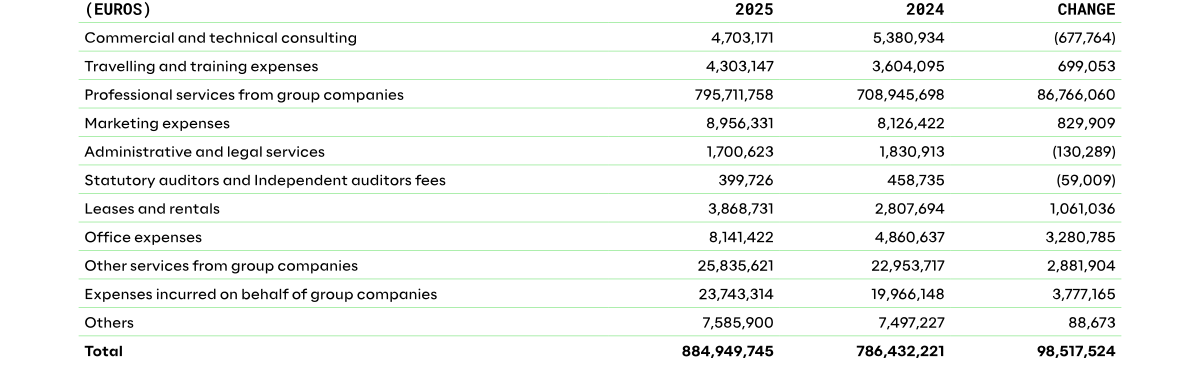
Professional Services from Group companies, which increased during the year by 86,766,060 Euros, are mainly related to revenues from services to third parties. Reply S.p.A. carries out commercial fronting activities for some of its major clients, whereas delivery is carried out by the operational companies. Office expenses include services rendered by related parties in connection with service contracts for the use of premises, legal domicile and secretarial services, as well as utility costs.
NOTE 10 – Amortization, depreciation and write-downs
Depreciation of tangible assets was calculated on the basis of technical-economic rates determined in relation to the residual useful lives of the assets, and which amounted in 2025 to an overall cost of 767,921 Euros. Details of depreciation are provided at the notes to tangible assets.
Amortization of intangible assets amounted in 2025 to an overall cost of 2,137,168 Euros. Details of depreciation are provided at the notes to intangible assets.
Amortization related to right of use assets amounted to 2,124,650 Euros.
NOTE 11 – Other operating (costs)/income
The item Other operating (costs)/income, amounting to positive 29,139,121 Euros, includes economic components that, although related to the ordinary business management, do not directly fall under the main categories of cost and revenue, such as provisions for risk and charges. As at 31 December, it is composed as follows:
Professional liability provision amounting to 23,700 thousand Euros;
Preventive seizure provision amounting to 5,039 thousand Euros;
Other provisions amounting to 400 thousand Euros.
Professional liability
With regard to the preventive seizure involving Reply S.p.A., which led to the recognition of a provision totaling 8 million Euro as of December 31, 2024, it should be noted that, following the partial release of the seizure ordered by the Public Prosecutor after the close of the financial year, the provision has been reduced to 2.9 million Euro.
This event was considered an adjusting event pursuant to IAS 10, as it provides evidence of conditions that already existed at the reporting date.
According to the decree, the alleged offense is that referred to in Article 640-ter, paragraphs 1 and 3 of the Italian Criminal Code, relating to the period 2017–2019, and no liability is alleged under Legislative Decree 231/2001. The criminal proceedings are still in the preliminary investigation phase.
Preventive seizure
With regard to the preventive seizure involving Reply S.p.A., which led to the recognition of a provision totaling 8 million Euro as of December 31, 2024, it should be noted that, following the partial release of the seizure ordered by the Public Prosecutor after the close of the financial year, the provision has been reduced to 2.9 million Euro.
This event was considered an adjusting event pursuant to IAS 10, as it provides evidence of conditions that already existed at the reporting date.
According to the decree, the alleged offense is that referred to in Article 640-ter, paragraphs 1 and 3 of the Italian Criminal Code, relating to the period 2017–2019, and no liability is alleged under Legislative Decree 231/2001. The criminal proceedings are still in the preliminary investigation phase.
NOTE 12 – Gain/(losses) on investments
Detail is as follows:

Impairment of investments
Investments in subsidiaries are tested for recoverability in accordance with IAS 36 through a structured procedure applied to all subsidiaries.
The process involves identifying any impairment indicators; among these, if the carrying amount of the investment exceeds the subsidiary’s attributable equity, the related recoverable amount is determined.
The recoverable amount of the investments is determined as the higher of:
fair value, estimated using the EBIT multiple method based on a panel of comparable companies (main method);
value in use, determined by applying the Discounted Cash Flow (DCF) methodology (additional method, applied in the presence of specific indicators).
The application of the multiples method allows the determination of the investee’s Enterprise Value, subsequently adjusted for the net financial position (NFP) in order to determine the equity value attributable to the investment. During the 2025 financial year, the EBIT market multiple used for estimating fair value was 10.5 (11.7 the previous year), determined on the basis of a sample of comparable companies operating in the IT services and technology consulting sector. If the carrying amount of the investment exceeds the higher of fair value and value in use, an impairment loss is recognized.
During the 2025 financial year, it became necessary to recognize an impairment loss on the investment in Reply France SAS, operating in the IT consulting and system integration services sector, amounting to 24,000,000, Euros following the emergence of impairment indicators related to worsening economic performance and lower growth prospects compared to previous expectations. The recoverable amount was determined based on value in use, calculated using the DCF methodology, applying a three-year business plan approved by management, a WACC of 7.31% (7.23% the previous year), and a terminal growth rate (g) of 2%. The terminal value was estimated using a perpetual growth model consistent with the g rate. The cash flows used derive from the business plan and reflect assumptions consistent with:
the historical performance of the investee (revenue and margin trends) and available operational evidence (pipeline, contracts acquired, and delivery capacity);
growth and profitability assumptions benchmarked against industry indicators and market comparables. In particular, for the IT business in France, projected profitability has been set on a prudent basis and, in any case, below the levels of the main comparable operators, supporting the reasonableness of the estimates;
a terminal growth rate (g) defined on a prudent basis and consistent with a long-term development profile typical of a mature market.
The assumptions used in determining prospective cash flows were developed based on the best information available at the reporting date and are consistent with management expectations and available market evidence.
During the year, impairment losses were also recognized on additional investments totalling 3,140,000 Euros, relating to Forge S.r.l. and Services S.r.l., following the recoverability test carried out in accordance with IAS 36. For these investments, the recoverable amount was determined based on fair value less costs of disposal, estimated using the EBIT market multiples method applied to a panel of comparable companies operating in the IT services sector. The Company deemed it unnecessary to determine the value in use, as, based on the available information, it would not have affected the outcome of the impairment test.
The fair value measurement for these investments is classified within Level 3 of the fair value hierarchy under IFRS 13, as it is based on unobservable inputs, such as the profitability prospects of the investees and the applied market multiples.
Provision for covering losses on investments in subsidiaries
During the year, a provision was also recognized for covering losses on investments relating to the subsidiary Breed Investments Ltd, amounting to 9,800,000 Euros.
This provision was deemed necessary in light of the losses incurred by the investee and its financial position, which may require financial support from the Parent Company.
The amount provided therefore reflects the best estimate of the losses that the Company may be required to bear, taking into account the financial position and the liquidation prospects of the investee as at the reporting date.
NOTE 13 – Financial income/(expenses)
Detail is as follows:

Interest income from subsidiaries refers to the interest yielding cash pooling accounts of the Group companies included in the centralized pooling system.
Financial income include interest in bank accounts amounting to 9,020,400 Euros.
Interest expenses refer to the interest expenses on the use of credit facilities with Intesa Sanpaolo and Unicredit.
The item Other mainly includes:
-
negative 27,827,043 Euros related to the loss on exchange rate differences arising from the translation of balance sheet items denominated in currencies other than the euro (positive 16,493,976 Euros at 31 December 2024);
-
the financial gains related to the fair value adjustments of the investments held by Reply amounting to positive 364,082 Euros (financial gains amounting to 768,061 Euros at 31 December 2024);
-
917,808 Euros related to interest income in relation to financial investments (1,038,331 Euros at 31 December 2024).
NOTE 14 – Income taxes
The details are provided below:
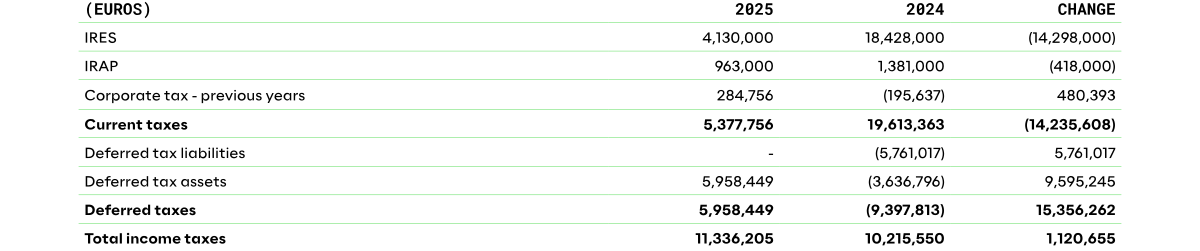
IRES THEORETICAL RATE
The following table provides the reconciliation between the IRES theoretical rate and the fiscal theoretical rate:

Temporary differences, net refer to:
-
deductible differences amounting to 48,894 thousand Euros arising mainly from write-down/losses of equity investments (36,940 thousand Euros), Directors’ fees to be paid (7,381 thousand Euros), public grants collected but not recognized in the income statement (2,113 thousand Euros) and non-deductible car expenses (1,439 thousand Euros).
-
non-deductible differences amounting to 131,368 thousand Euros owing mainly to the non-taxable share of the dividends received in the financial year (97,529 thousand Euros), the income from provision taxed in previous years (29,439 thousand Euros) and Directors’ fees to be paid (3,400 thousand Euros).
CALCULATION OF TAXABLE IRAP

Temporary differences, net refer to:
-
non-deductible differences amounting to 13,313 thousand Euros mainly due to emoluments to Directors and long term bonus (11,594 thousand Euros), and to bank fees (594 thousand Euros);
-
deductible differences amounting to 29,443 thousand Euros mainly due to the use of provisions (15,000 thousand Euros) and the release of provisions (14,439 thousand Euros).
NOTE 15 – Earnings per share
Basic earnings and diluted earnings per share as at 31 December 2025 is calculated with reference to the net profit which amounted to 88,120,119 Euros (50,644,327 Euros at 31 December 2024) divided by the weighted average number of shares outstanding as at 31 December 2025, net of treasury shares, which amounted to 37,278,236 (37,380,368 at 31 December 2024).

Reply does not have any financial instruments potentially convertible in shares (stock options) therefore the basic earnings per share corresponds to the diluted earnings per share.
NOTE 16 – Contributions
Disclosure on the transparency of public disbursements required by Article 1, paragraph 125 of Law 124/2017
Italian Law 124/2017 requires that information on subsidies, contributions, paid assignments and economic benefits of any kind received from Italian public administrations be provided. In this regard, the following tables show the amounts collected by the Company in 2025:
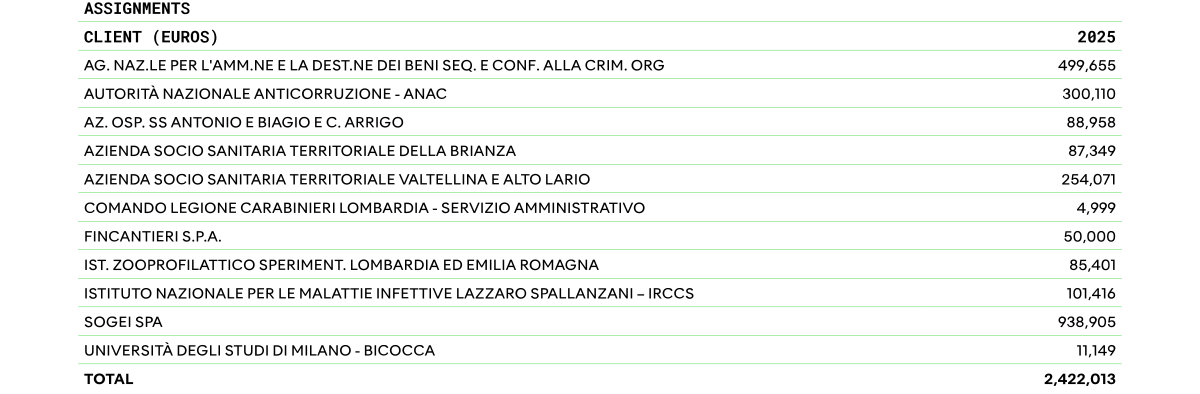
Pursuant to the above-mentioned regulation, the public grants received by the Company are set out below:

NOTE 17 - Tangible assets
Tangible assets as at 31 December 2025 amounted to 3,111,904 Euros are detailed as follows:

The item Other mainly includes vehicles, mobile phones and furniture and fittings.
Change in Tangible assets during 2025 is summarized below:
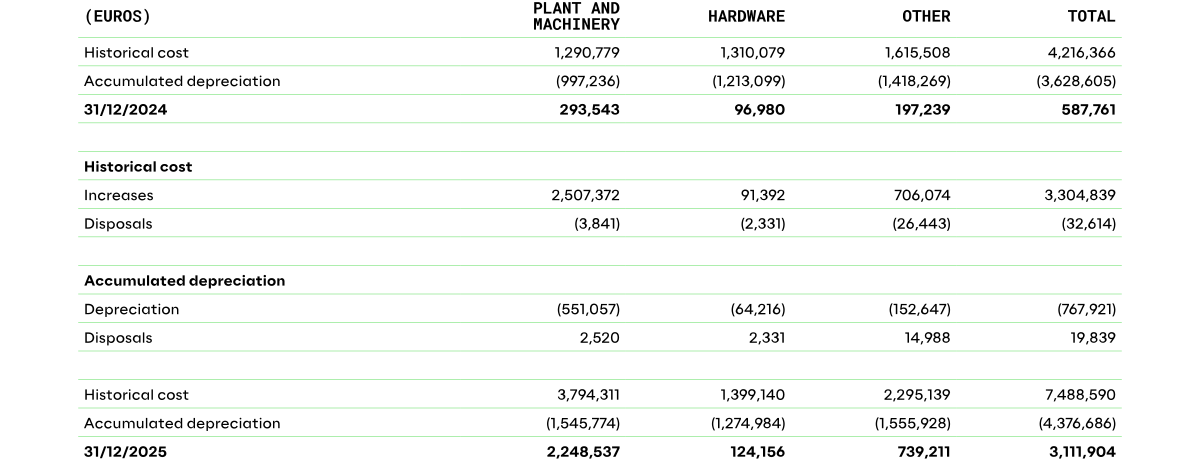
During the year under review the Company made investments amounting to 3,304,839 Euros, which mainly refer to specific devices, vehicles and hardware. As at 31 December 2025, 58.4% of tangible assets were depreciated, compared to 86.1% at the end of 2024.
NOTE 18 – Goodwill
Goodwill, recognized in the financial statements of Reply S.p.A. and amounting to 86,765 Euros, originates from a corporate transaction dated 10 July 2000, prior to the listing, carried out with a shareholder (then named Alika) with the aim of concentrating in Reply S.p.A. the provision of Information Technology consulting services, as well as group administrative services. As the transaction took place before the IFRS transition date, the goodwill recognized in financial statements (amounting to 87 thousand Euros) reflects the values determined under the Italian accounting principles applicable at the original date, which were retained upon first-time adoption of IFRS in accordance with the relevant transition provisions. For the purposes of IAS 36, the Company nevertheless performed a qualitative assessment regarding the existence of any indicators of impairment related to goodwill and did not identify any factors requiring the recognition of an impairment loss. Given the immateriality of the amount relative to the total assets of Reply S.p.A., it was not considered necessary to develop a detailed quantitative estimate of the recoverable amount; in any case, any adjustment up to a full write-down would not be material for the financial statements.
NOTE 19 - Other intangible assets
Intangible assets as at 31 December 2025 amounted to 6,008,159 Euros (5,102,557 Euros at 31 December 2024) and are detailed as follows:

Change in intangible assets in 2025 is summarized in the table below:
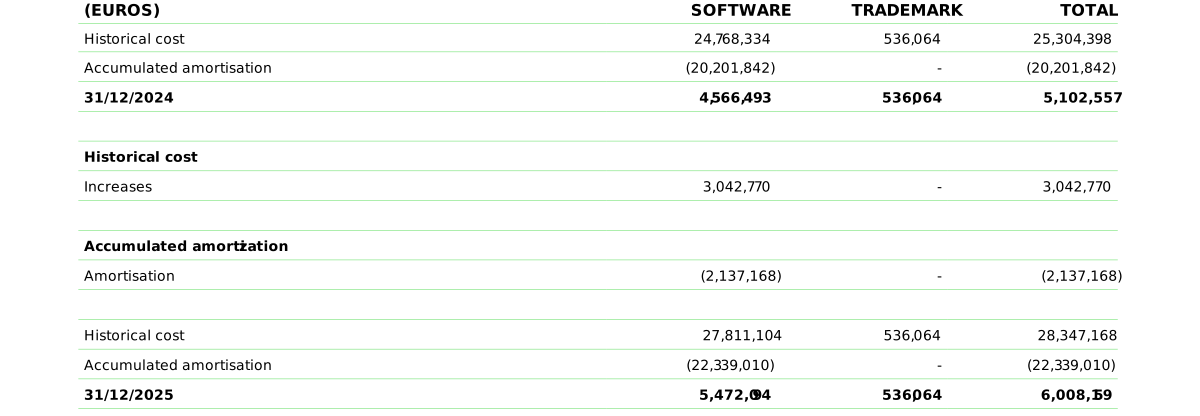
The item Software and increase in software is related mainly to software licenses purchased and used internally by the company.
The item Trademark expresses the value of the “Reply” trademark granted to the Parent Company Reply S.p.A., (before Reply Europe Sàrl) on 9 June, 2000, in connection to the Company’s share capital increase that was resolved and undersigned by the Parent Company Alister Holding SA, Such amount is not subject to systematic amortisation, and the expected future cash flows are deemed adequate. As at 31 December 2025 intangible assets were depreciated by 78.8% of their value, compared to 79.8% at the end of 2024.
NOTE 20 – Right of use assets
Right-of-use assets showed the following movement:
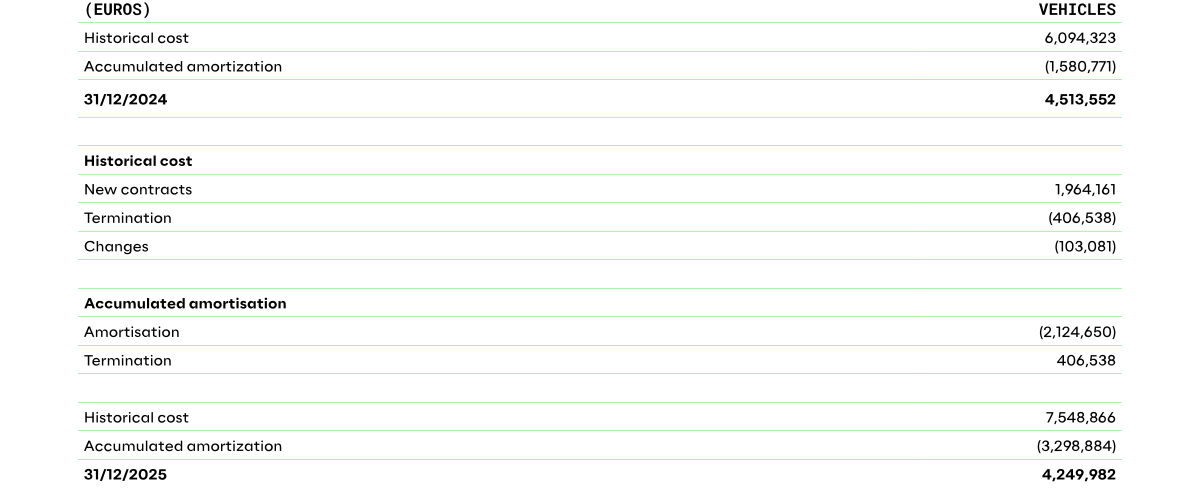
The Company uses cars assigned to employees mainly through operating lease agreements. These contracts generally do not include significant purchase options or extension clauses that would materially affect the lease term considered for accounting purposes. Variable lease payments linked to usage (e.g. excess mileage or ancillary costs) are recognized in the income statement in the period in which they are incurred. The discount rate has been determined based on the incremental borrowing rate, with a similar term and similar guarantees, required to obtain an asset of similar value to the right-of-use asset in a similar economic environment. The average useful life of the related right-of-use assets is 3 years.
NOTE 21 - Equity investments
The item Equity investments at 31 December 2025 amounted to 313,106,579 Euros compared to 239,166,849 Euros as at December 31, 2024.
The value of investments in subsidiaries as at 31 December 2025 amounts to 302,293,643 Euros, representing a net increase of 63,136,794 Euros compared to 31 December 2024.
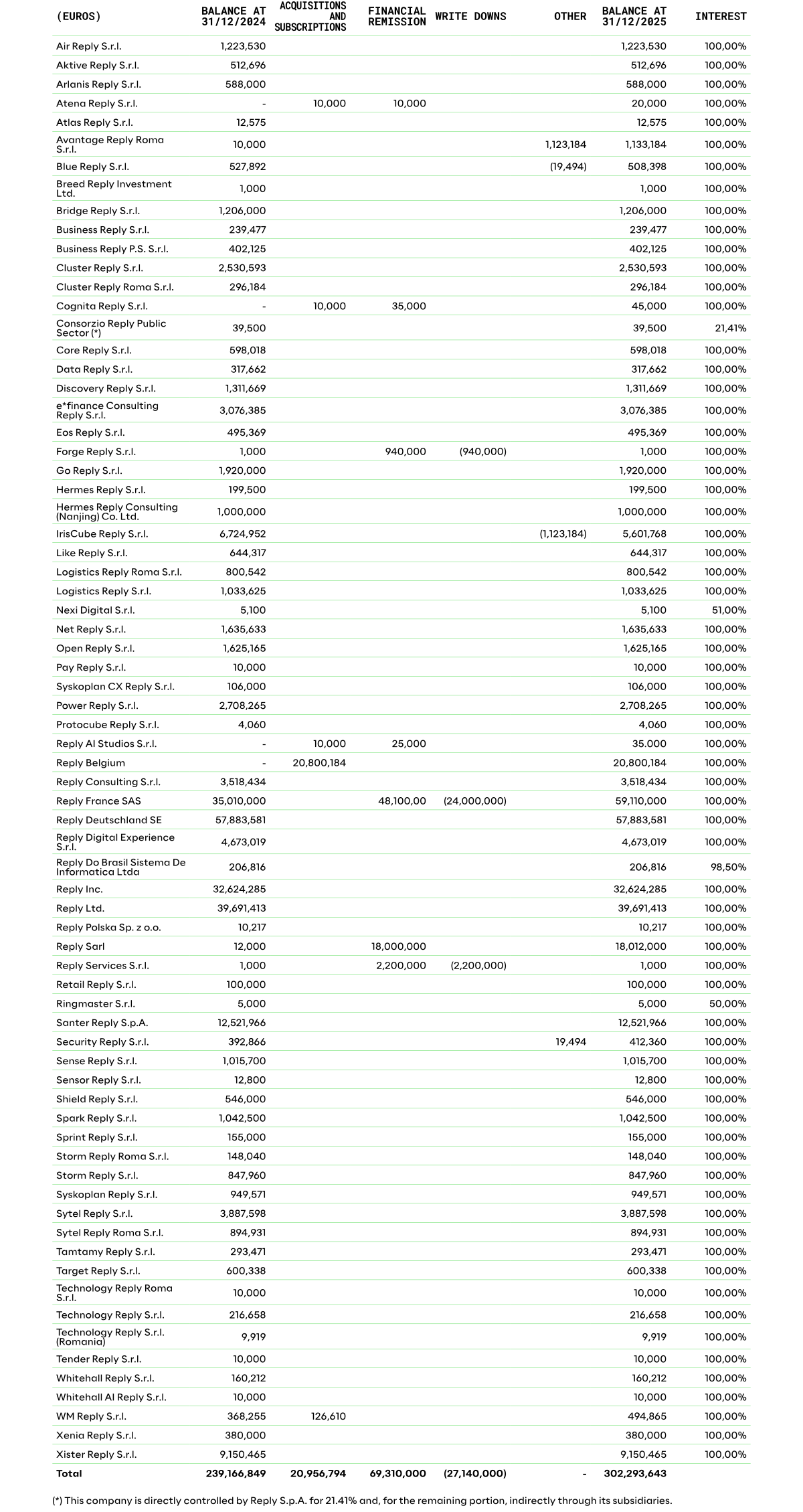
ACQUISITIONS AND SUBSCRIPTIONS
Reply AI Studios S.r.l.
In the month of March 2025 Reply AI Studios S.r.l. was constituted, a company in which Reply S.p.A. holds 100% of the share capital.
Reply Belgium SA
In the month of June 2025, as part of the corporate reorganization of the French-speaking area, Reply Belgium SA was acquired by the Group company Reply Sarl, a company in which Reply S.p.A. holds 100% of the share capital.
Cognita Reply S.r.l.
In the month of October 2025 Cognita Reply S.r.l. was constituted, a company in which Reply S.p.A. holds 100% of the share capital.
Atena Reply S.r.l.
In the month of November 2025 Atena Reply S.r.l. was constituted, a company in which Reply S.p.A. holds 100% of the share capital.
WM Reply S.r.l.
The change relates to the acquisition of additional shares in the company's share capital.
FINANCIAL LOAN REMISSION
The amounts are referred to the waiver of financial loan receivables from some subsidiaries in order to increase their equity position.
WRITE-DOWNS
Please refer to note 12 for further information.
The list of equity investments in accordance with Consob communication no, 6064293 of 28 July 2006 is included in the attachments.
The negative differences arising between the carrying value of the investments and the corresponding portion of their shareholders’ equity are not related to permanent impairment of value, as the carrying value is supported by positive economic and financial forecasts that guarantee the recoverable amount of the investment.
The item also includes 10,812,935 Euros relating to investments in start-ups mainly operating in the Internet of Things (IoT) sector, originally held by the subsidiary Breed Investment Ltd., qualified as an investment entity.
During the year, as part of a corporate reorganization, these investments were acquired by Reply S.p.A., and Breed Reply Investments Ltd. will be placed into liquidation. At the acquisition date, the investments were recognized at fair value, which represents the reference value for subsequent accounting in the Company’s financial statements.
The movements in start-up investments for the period are shown below:

NOTE 22 – Non-current financial assets
Detail is as follows:

The item Guarantee deposits amounted to 438,760 Euros as at 31 December 2025 (448,713 as at 31 December 2024) consists of security deposits paid as guarantees for ongoing relationships, with maturities beyond the financial year.
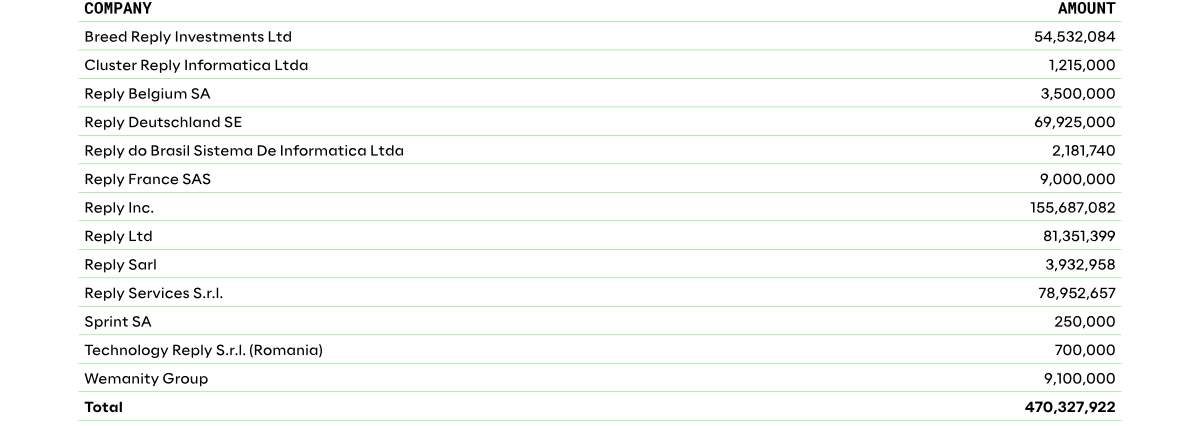
The item Other financial assets referred to long-term financial receivables form deferred collections arising from the acquisition of the financial assets originally held by Breed Reply Investments Ltd. Convertible loans relate to the option to convert into shares of start-up companies in the field of IoT and arise from the acquisition of the financial assets originally held by Breed Reply Investments Ltd.
Detail is as follow:

NOTE 23 - Deferred tax assets
This item amounted to 7,063,110 Euros at 31 December 2025 (13,021,560 Euros at 31 December 2024), and included the fiscal charge corresponding to the temporary differences on statutory income and taxable income related to deferred deductible items.
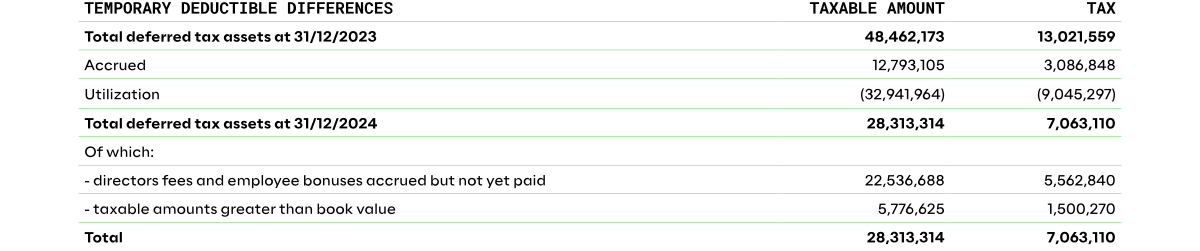
The decision to recognize deferred tax assets is taken by assessing critically whether the conditions exist for the future recoverability of such assets on the basis of expected future results. There are no deferred tax assets on losses carried forward.
NOTE 24 - Trade receivables
Trade receivables at 31 December 2025 amounted to 576,540,335 Euros and are all collectible within 12 months.
Detail is as follows:
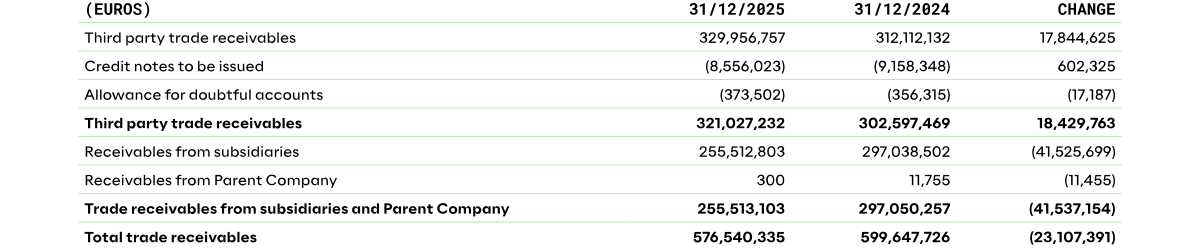
Reply manages business relationships on behalf of some of its major clients. This activity is reflected in the item Third party trade receivables which increased by 18,429,763 Euros.
Receivables from subsidiaries are related to services that the Parent Company Reply S.p.A. carries out in favour of the subsidiary companies at normal market conditions. Trade receivables are all due within 12 months and do not include significant overdue balances.
In 2025, following a specific risk analysis of all the trade receivables, the provision for doubtful accounts was of 373,502 Euros and calculated by using the expected credit loss approach pursuant to IFRS 9; detail is as follows:

The carrying amount of trade receivables, that at initial recognition is equal to its fair value adjusted for attributable transaction costs, is subsequently valued at the amortised cost appropriately adjusted to take into account any write-downs.
NOTE 25 - Other receivables and current assets and income tax receivables
Detail is as follows:

Current income tax receivables are recorder net of the accrued debt and mainly include IRES receivables amounting to 5,473,716 Euros and IRAP receivables amounting to 414,261 Euros.
The item Tax receivables mainly includes IRES receivables and advances for withholding taxes suffered amounting to 6,407,272 (2,677,788 Euros at 31 December 2024), and receivables from the tax authorities for withholding taxes on interest income amounting to 2,258,984 Euros (2,528,139 Euros at 31 December 2024).
Other receivables from subsidiary companies mainly refer to IRES receivables which are calculated on taxable income, and transferred by the Italian subsidiaries under national fiscal consolidation.
Accrued income and prepaid expenses refer to prepaid expenses arising from the execution of services, lease contracts, insurance contracts and other utility expenses, which are accounted for on an accrual basis.
The carrying amount of other receivables, that at initial recognition is equal to its fair value adjusted for attributable transaction costs, is subsequently valued at the amortised cost appropriately adjusted to take into account any write-downs.
NOTE 26 - Current financial assets
This item amounted to 109,144,487 Euros (93,682,271 Euros at 31 December 2024) and mainly refers to:
interest yielding cash pooling accounts of subsidiaries included in the centralized pooling system of the Parent Company Reply S.p.A. for 45,116,630 Euros (50,014,938 at 31 December 2024); the interest yield on these accounts is in line with current market conditions.
the investments held by Reply for 63,181,010 Euros. The valuation of short-term investments, based on market valuations at 31 December 2025, showed a positive difference of 364,082 Euros compared to the purchase cost of the same.
the fair value of the IRS contracts signed with Unicredit in order to hedge fluctuations in the floating interest rate on loans and/or mortgages for 770,589 Euros.
NOTE 27 - Cash and cash equivalents
This item amounted to 442,604,620 Euros, with an increase of 114,370,318 Euros compared to 31 December 2024, is referred to cash at banks and on hand at year-end. It is to be noted that the cash and cash equivalents held but not freely available by the Company amount to 7.9 million euros, related to the preventive seizure referred to in Note 34.
NOTE 28 – Shareholders’ equity
Share capital
As at 31 December 2025 the fully subscribed paid-in share capital of Reply S.p.A., amounted to 4,863,486 Euros and is made up of no. 37,411,428 ordinary shares having a nominal value of euro 0.13 each. The number of shares in circulation as at 31 December 2025 totalled 37,278,236, unchanged compared to 31 December 2024.
Treasury shares
The value of the Treasury shares, amounting to 17,122,489 Euros, refers to the shares of Reply S.p.A. that at 31 December 2025 were equal to no. 133,192, unchanged compared to 31 December 2024.
Capital reserves
At 31 December 2025 amounted to 455,880,909 Euros, and included the following:
-
Treasury share reserve amounting to 17,122,489 Euros, relating to the shares of Reply S.p.A. which at 31 December 2025 were equal to no. 133,192.
-
Reserve for the purchase of treasury shares amounting to 432,877,511 Euros, formed via initial withdrawal from the share premium reserve. By means of a resolution of the Shareholders' Meeting of 23 April 2025 Reply S.p.A. re-authorized it, in accordance with and for the purposes of Article 2357 of the Italian Civil Code, the purchase of a maximum of 550 million Euros of ordinary shares, corresponding to 10% of the share capital, in a lump sum solution or in several solutions within 18 months of the resolution.
-
Reserves arising from the merger operation of Reply Deutschland SE in Reply S.p.A, and include:
-
Share swap surplus reserve amounting to 3,445,485 Euros;
-
Surplus annulment reserve amounting to 2,902,479 Euros.
Earnings Reserve
Earning reserves amounted to 344,542,055 Euros and were comprised as follows:
-
The Legal reserve amounting to 972,697 Euros (972,697 Euros at 31 December 2024);
-
Extraordinary reserve amounting to 252,626,538 Euros (244,852,182 Euros at 31 December 2024);
-
Retained earnings amounting to 2,822,701 Euros (2,822,701 Euros at 31 December 2024);
-
Net result amounting to 88,120,119 Euros (50,644,327 Euros at 31 December 2024).
Other comprehensive income
Other comprehensive income can be analysed as follows:
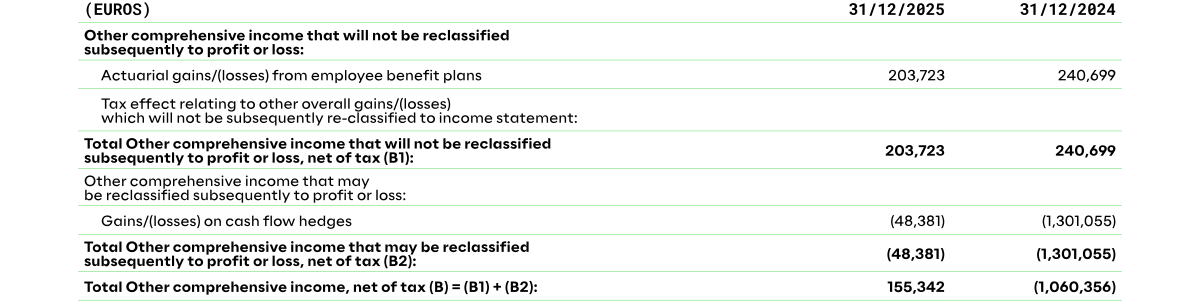
NOTE 29 – Financial liabilities
Detail is as follows:

The future out payments of the financial liabilities are detailed as follow:
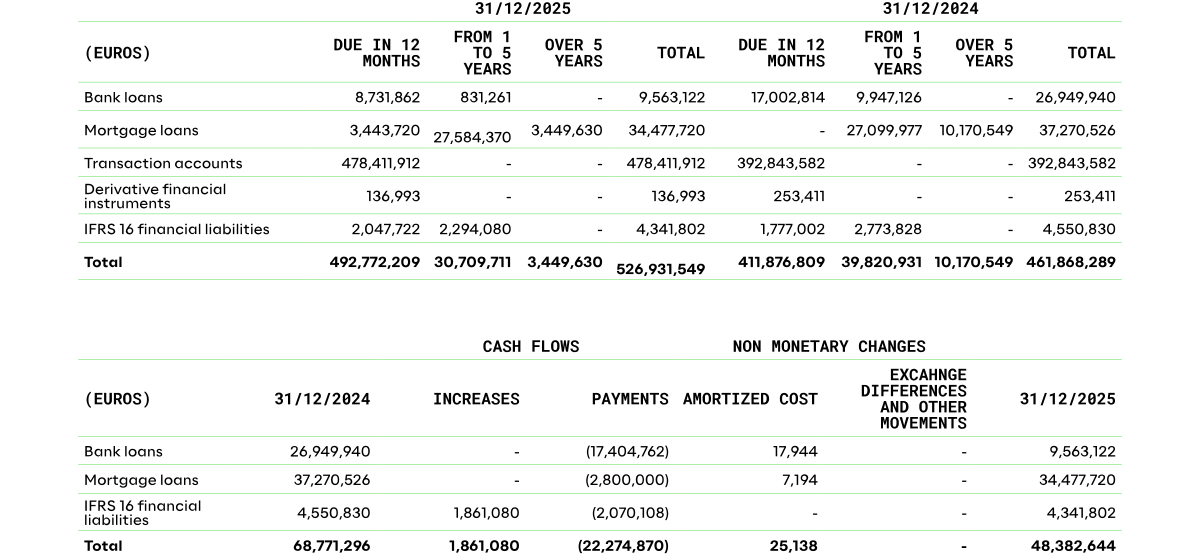
M&A loans refers to credit lines to be used for acquisition operations carried directly by Reply S.p.A. or via companies controlled directly or indirectly by the same.
Summarized below are the existing contracts entered into for such a purpose:
On 8 November 2021 Reply S.p.A. entered into a line of credit with Intesa Sanpaolo S.p.A. for a total amount of 75,000 thousand Euros. As at 31 December 2025 the outstanding amount was 8,571 thousand Euros and expires on 30 September 2026.
On 20 February 2023 Reply S.p.A. entered into a line of credit with Banco BPM S.p.A. for a total amount of 50,000 thousand Euros to be used by 1 April 2025. As at 31 December 2025 following the early repayment made on December 22, 2025, there is no outstanding balance.
On 16 April 2024 Reply S.p.A. entered into a line of credit with Intesa Sanpaolo S.p.A. for a total amount of 75,000 thousand Euros to be used by 30 September 2026. The loan will be reimbursed on 7 half year basis deferred to commence on 31 March 2027 and expires on 30 March 2029.
On 19 April 2024 Reply S.p.A. entered into a line of credit with Unicredit S.p.A. for a total amount of 50,000 thousand Euros to be used by 24 months. As at 31 December 2025 the outstanding amount was 1,000 thousand Euros and expires on 30 April 2029.
Interest rates are also applied according to certain predetermined ratios (Covenants) of economic and financial nature calculated on the consolidated financial statements as at 31 December of each year and/or the consolidated interim report.
As contractually defined, such ratios are as follows:
Net financial indebtedness/Equity
Net financial indebtedness/EBITDA
At the balance sheet date, Reply fulfilled the Covenants under the various contracts.
It should also be noted that on 24 May 2018 Reply S.p.A. undersigned with Unicredit S.p.A. a mortgage loan secured by guarantee for the purchase and renovation of the property De Sonnaz for a total amount of 40,000 thousand Euros. The mortgage is disbursed in relation to the progress of the work. The outstanding amount is 34,500 thousand Euros at 31 December 2025 and expires on 31 May 2031.
The item IFRS 16 financial liabilities is related to the financial lease liabilities at 31 December 2025 related to the adoption of IFRS 16.
The item Derivative financial instruments refer to several loans established with Unicredit S.p.A. to hedge changes in floating interest rates on loans and/or mortgages; the total underlying notional amounts to 9,562 thousand Euros. The effective component of the instrument is stated in the Statement of changes in net equity. There was no need to recognize the ineffective portion in the income statement, as the derivatives ensure full hedging coverage.
The carrying amount of the Financial Liabilities estimates the value determined through the application of the amortised cost method.
Net financial indebtedness
The net financial indebtedness reported below was prepared according to CONSOB communication no. DEM / 6064293 of July 28, 2006, updated with the provisions of ESMA guideline 32-382-1138 of March 4, 2021 as implemented by the CONSOB warning no. 5/21 of 29 April 2021. Below is the presentation of Reply S.p.A., in light of the current guidance and available interpretations.
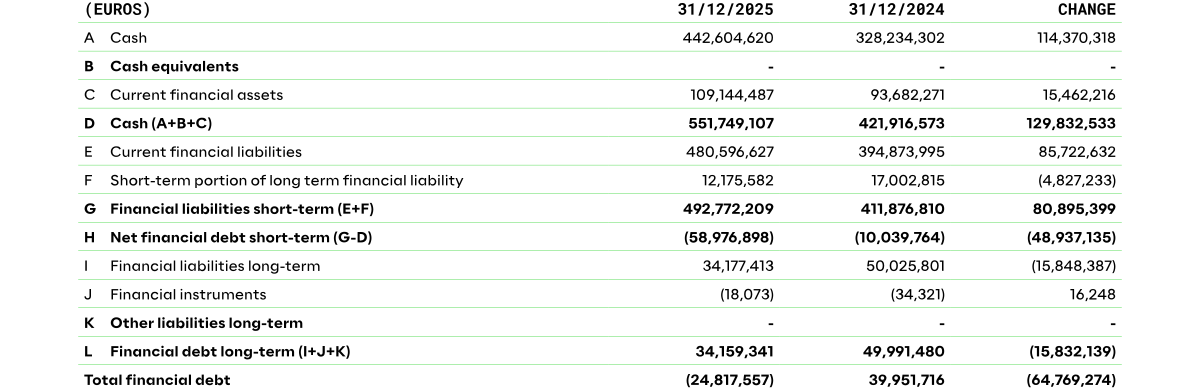
Net financial debt includes IFRS 16 financial liabilities amounting to 4,341,802 Euros, of which 2,294,080 Euros were non-current and 2,047,722 Euros were current.
Pursuant to the aforementioned recommendations long term financial assets are not included in the net financial position. For further details with regards to the above table see Notes 26 and 27 as well as Note 29.
NOTE 30 – Employee benefits

EMPLOYEE SEVERANCE INDEMNITIES
The Employee severance indemnity represents the obligation to employees under Italian law (amended by Law no. 296/06) accrued by employees up to 31 December 2006 which will be paid when the employee leaves the company. In certain circumstances, a portion of the accrued liability may be given to an employee during his working life as an advance. This is an unfunded defined benefit plan, under which the benefits are almost fully accrued, with the sole exception of future revaluations. The procedure for the determination of the Company’s obligation with respect to employees was carried out by an independent actuary according to the following stages:
-
Projection of the Employee severance indemnity already accrued at the assessment date and of the portions that will be accrued until when the work relationship is terminated or when the accrued amounts are partially paid as an advance on the Employee severance indemnities;
-
Discounting, at the valuation date, of the expected cash flows that the company will pay in the future to its own employees;
-
Re-proportioning of the discounted performances based on the seniority accrued at the valuation date with respect to the expected seniority at the time the company must fulfil its obligations.
Reassessment of Employee severance indemnities in accordance with IAS 19 was carried out “ad personam” and on the existing employees, that is analytical calculations were made on each employee in force in the company at the assessment date without considering future work force.
The actuarial valuation model is based on the so-called technical bases which represent the demographic, economic and financial assumptions underlying the parameters included in the calculation.
The assumptions adopted can be summarized as follows:

In accordance with IAS 19, Employment severance indemnities at 31 December 2025 is summarized in the table below:

LONG-TERM INCENTIVE PLANS
Reply recognizes long-term incentive plans (“Long-Term Bonus” or “LTB”), aimed at fostering the retention of key personnel and aligning management’s interests with medium- to long-term value creation objectives.
LTI plans provide for the payment of cash-settled monetary benefits, subject to the achievement of specific service and performance conditions defined by the competent corporate bodies.
As cash-based plans, Long-Term Bonuses are accounted for as long-term employee benefits and recognized as liabilities in the financial statements.
The liability is initially and subsequently measured based on the present value of the expected benefit, estimated taking into account:
the probability of achieving the performance conditions;
the probability of Partners remaining in service during the vesting period;
the discount factor, determined using a rate consistent with the duration of the plan and the Group's risk profile.
The total cost of the plan is recognized in the income statement over the vesting period, based on the best estimate of the bonus that will ultimately vest. At each reporting date, the liability is remeasured to reflect updated estimates and the effect of discounting, with the related impacts recognized in the income statement.
NOTE 31 – Deferred tax liabilities
Deferred tax liabilities at 31 December 2025 amounted to 173,769 Euros and are referred mainly to the fiscal effects arising from temporary differences between the statutory income and taxable income.

NOTE 32 – Trade payables
Trade payables at 31 December 2025 amounted to 540,841,763 Euros with an increase of 44,277,832 Euros.
Detail is as follows:

Due to suppliers mainly refers to services from domestic suppliers. Due to subsidiaries recorded a change of 43,894,024 Euros, and refers to professional services in connection to third party agreements with Reply S.p.A., in fact carries out commercial fronting activities for some of its major clients, whereas delivery is carried out by the operational companies.
Advance payments from customers include amounts invoiced to customers for contracts subcontracted to subsidiary companies, which at the balance sheet date were not yet completed.
Trade payables are initially recognised at fair value, adjusted for any transaction costs directly attributable to and are subsequently valued at amortised cost. The amortised cost of current trade payables corresponds to the nominal value.
NOTE 33 – Other current liabilities and income tax payables
Detail is as follows:
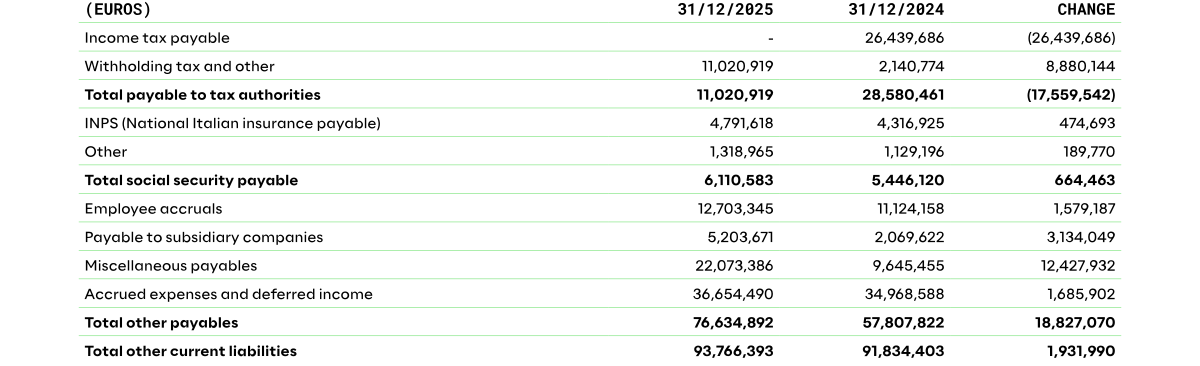
Due to tax authorities mainly refers to payables due for withholding tax on employees and free lancers’ compensation. Due to social security authorities is related to both Company and employees contribution payables. Employee accruals mainly include payables to employees for remunerations due but not yet paid at year-end. Due to subsidiary companies represents the liability on tax losses recorded by subsidiaries under national tax consolidation for 2025 and for the tax credits that subsidiaries transferred to Reply S.p.A. as part of the tax consolidation. Miscellaneous payables mainly refer to remuneration and bonus of directors recognized as participation in the profits of the company. Accrued expenses and deferred income are mainly related to advance invoicing in relation to fronting activities carried out for subsidiaries. Other current payables and liabilities are initially recognised at fair value, adjusted for any transaction costs directly attributable to and are subsequently valued at amortised cost. The amortised cost of these liabilities corresponds to the nominal value.
NOTE 34 – Provisions
The item Provisions amounting to 68,049,463 Euros is summarized as follows:

The item Provision for risks reflects the best estimate of contingent liabilities deriving from ongoing legal litigations. The nature of the risk covered by the provision is as follows:
Professional liability provision accrued in 2024 and entirely reversed for 24 million Euros;
Preventive seizure provision amounting to 2,9 million Euros;
Other provisions amounting to 4 million Euros.
Professional liability
It is reported that during 2025, the dispute regarding a professional liability lawsuit was resolved. The total expenditure incurred for settling the dispute was 15 million Euros. This amount was fully covered by the professional liability insurance policy, despite an initial denial of the claim by the insurance company (net of the contractual deductible of 0.3 million Euros). Due to this uncertainty, as of December 31, 2024, a risk provision equivalent to the entire estimated potential liability, amounting to 24 million Euros, had been allocated. Following the positive resolution of the dispute and the recognition of insurance coverage, it was possible to fully release the risk provision that had originally been posted.
Preventive seizure
With regard to the preventive seizure involving Reply S.p.A., which led to the recognition of a provision totaling 8 million Euro as of December 31, 2024, it should be noted that, following the partial release of the seizure ordered by the Public Prosecutor after the close of the financial year, the provision has been reduced to 2.9 million Euro. This event was considered an adjusting event pursuant to IAS 10, as it provides evidence of conditions that already existed at the reporting date. According to the decree, the alleged offense is that referred to in Article 640-ter, paragraphs 1 and 3 of the Italian Criminal Code, relating to the period 2017–2019, and no liability is alleged under Legislative Decree 231/2001. The criminal proceedings are still in the preliminary investigation phase.
Provision for losses on equity investments
The provision for losses on investments increases from 51,100,000 Euros to 60,900,000 Euros as a result of a provision of 9,800,000 Euros. The provision was deemed necessary in light of the losses incurred by the investee and its financial position, characterized by negative equity, as well as the prospect of the company being placed into liquidation, which may require financial support from the Parent Company. The amount recognized therefore reflects the best estimate of the losses that the Parent Company may be required to bear, taking into account the investee's financial position and liquidation prospects as at the reporting date, in accordance with the principles set out in IAS 37.
NOTE 35 - Transactions with related parties
With reference to CONSOB communications no. DAC/RM 97001574 of 20 February 1997 and no. DAC/RM 98015375 of 27 February 1998 concerning relations with related parties, the economic and financial effects on Reply S.p.A.’s year ended 2024 Financial Statements related to such transactions are summarised below. Transactions carried out by Reply S.p.A. with related parties are considered ordinary business and are carried out at normal market conditions. Financial and business transactions among the Parent Company Reply S.p.A. and its subsidiaries and associate companies are carried out at normal market conditions.
Reply S.p.A. main economic and financial transactions
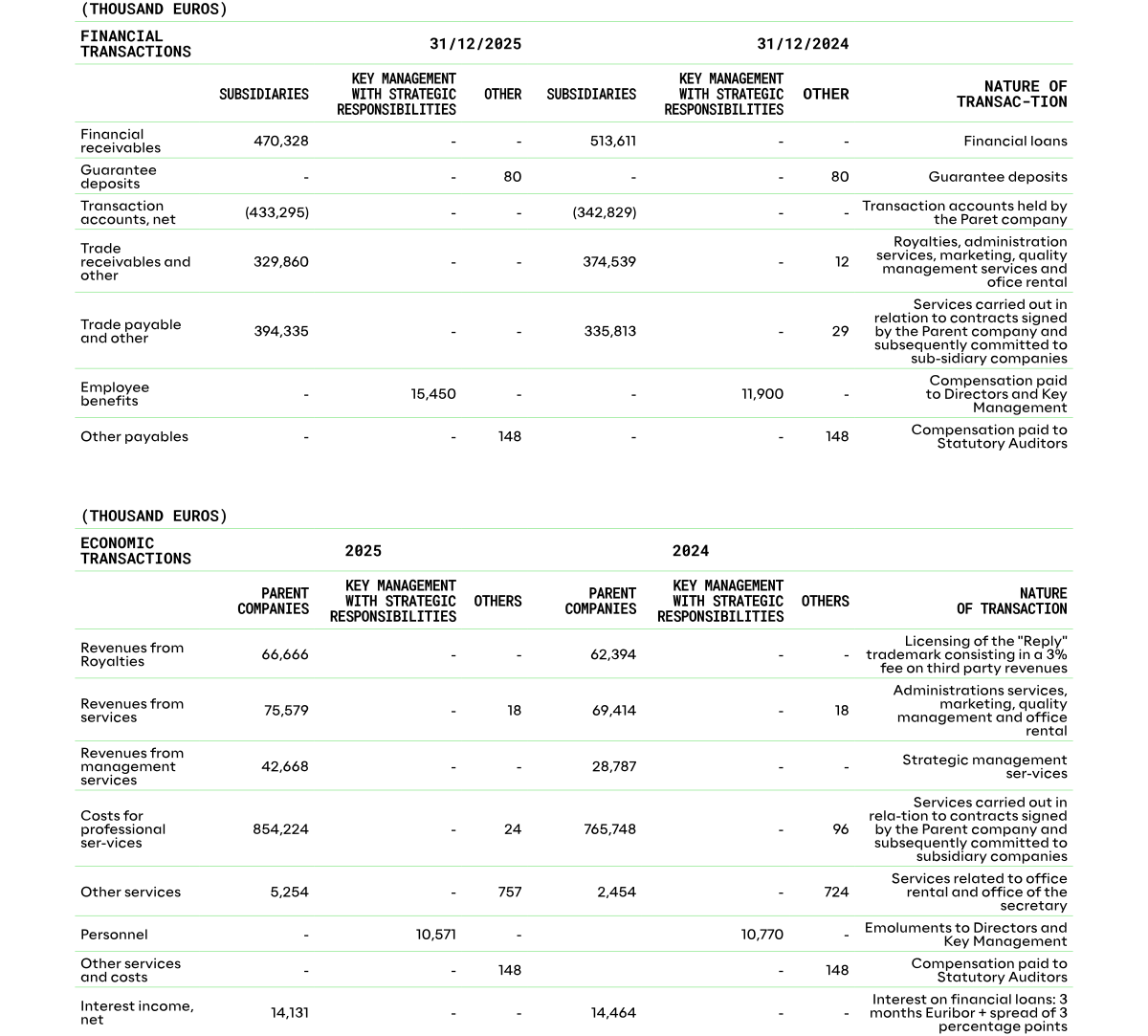
With reference to the Cash flows statement, the above mentioned transactions impact the change in working capital by 106,722 thousand Euros. In accordance with Consob Resolution no. 15519 of 27 July 2006 and Consob communication no. DEM/6064293 of 28 July 2006, in the annexed tables herein, the Statement of income and the Statement of financial position reporting transactions with related parties separately, together with the percentage incidence with respect to each account caption has been provided. Pursuant to art. 150, paragraph 1 of the Italian Legislative Decree n. 58 of 24 February 1998, no transactions have been carried out by the members of the Board of Directors that might be in potential conflict of interests with the Company.
NOTE 36 – Additional disclosure to financial instruments and risk management policies
Types of financial risks and corresponding hedging activities
Reply S.p.A. has determined the guide lines in managing financial risks. In order to maximize costs and the resources Reply S.p.A. has centralized all of the groups risk management. Reply S.p.A. has the task of gathering all information concerning possible risk situations and define the corresponding hedge.
As described in the section “Risk management”, Reply S.p.A. constantly monitors the financial risks to which it is exposed, in order to detect those risks in advance and take the necessary action to mitigate them.
The following section provides qualitative and quantitative disclosures on the effect that these risks may have upon the company.
The quantitative data reported in the following do not have any value of a prospective nature, in particular the sensitivity analysis on market risks, is unable to reflect the complexity of the market and its related reaction which may result from every change which may occur.
Credit risk
The maximum credit risk to which the company is theoretically exposed at 31 December 2024 is represented by the carrying amounts stated for financial assets in the balance sheet.
Balances which are objectively uncollectible either in part or for the whole amount are written down on a specific basis if they are individually significant. The amount of the write-down takes into account an estimate of the recoverable cash flows and the date of receipt, the costs of recovery and the fair value of any guarantees received. General provisions are made for receivables which are not written down on a specific basis, determined on the basis of historical experience.
Refer to the note on trade receivables for a quantitate analysis.
Liquidity risk
Reply S.p.A. is exposed to funding risk if there is difficulty in obtaining finance for operations at any given point in time.
The two main factors that determine the company’s liquidity situation are on one side the funds generated by or used in operating and investing activities and on the other the debt lending period and its renewal features or the liquidity of the funds employed and market terms and conditions.
As described in the Risk management section, Reply S.p.A has adopted a series of policies and procedures whose purpose is to optimize the management of funds and to reduce the liquidity risk, as follows: /p>
Centralizing the management of receipts and payments, where it may be economical in the context of the local civil, currency and fiscal regulations of the countries in which the company is present;
Maintaining an adequate level of available liquidity;
Monitoring future liquidity on the basis of business planning;
Management believes that the funds and credit lines currently available, in addition to those funds that will be generated from operating and funding activities, will enable the Group to satisfy its requirements resulting from its investing activities and its working capital needs and to fulfil its obligations to repay its debts at their natural due date.
Currency risk
Reply S.p.A. has a limited exposure to exchange rate risk; therefore, the company does not deem necessary hedging exchange rates.
Interest rate risk
Reply S.p.A. makes use of external funds obtained in the form of financing and invest in monetary and financial market instruments. Changes in market interest rates can affect the cost of the various forms of financing, including the sale of receivables, or the return on investments, and the employment of funds, causing an impact on the level of net financial expenses incurred by the company.
In order to manage these risks, the Reply S.p.A uses interest rate derivative financial instruments, mainly interest rate swaps, with the object of mitigating, under economically acceptable conditions, the potential variability of interest rates on the net result.
Sensitivity analysis
In assessing the potential impact of changes in interest rates, the company separates fixed rate financial instruments (for which the impact is assessed in terms of fair value) from floating rate financial instruments (for which the impact is assessed in terms of cash flows).
Financial instruments with variable interest rates typically include cash and cash equivalents, financial receivables, and receivables/payables relating to intercompany current accounts (cash pooling) with subsidiaries, as well as a portion of financial liabilities.
A hypothetical, instantaneous and adverse change of 50 basis points in short-term interest rates applicable to variable-rate financial assets and liabilities, receivables factoring transactions, and outstanding interest rate derivatives as at 31 December 2025 would, on an annual basis, result in an increase in pre-tax financial expenses related to financial liabilities of Euro 2,624 thousand and an increase in pre-tax financial income related to financial assets of Euro 2,856 thousand.
This analysis is based on the assumption that there is a general and instantaneous change of 50 basis points in interest rates across homogeneous categories. A homogeneous category is defined on the basis of the currency in which the financial assets and liabilities are denominated.
Fair value hierarchy levels
IFRS 13 establishes a fair value hierarchy that classifies the inputs of the measurement techniques used to measure fair value into three levels. Fair value hierarchy attributes maximum priority to prices quoted (not rectified) in active markets for identical assets and liabilities (Level 1 data) and the non-observable minimum input priority (Level 3 data). In some cases, the data used to assess the fair value of assets or liabilities could be classified on three different levels of the fair value hierarchy. In such cases, the evaluation of fair value is wholly classified on the same level of the hierarchy in which input on the lowest level is classified, taking account its importance for the assessment.
The levels used in the hierarchy are:
-
Level 1 inputs are prices quoted (not rectified) in markets active for identical assets and liabilities which the entity can access on the date of assessment;
-
Level 2 inputs are variable and different from the prices quoted included in Level 1 observable directly or indirectly for assets or liabilities;
-
Level 3 inputs are variable and not observable for assets or liabilities.
The following table presents the assets and liabilities which were assessed at fair value on 31 December 2025, according to the fair value hierarchical assessment level.

The item Financial securities is related to securities listed on the active stock market and therefore falls under the fair value hierarchical level 1. To determine the effect of interest rate derivate financial instruments Reply refers to evaluation deriving from third parties (banks and financial institutes). The latter, in the calculation of their estimates made use of data observed on the market directly (interest rates) or indirectly (interest rate interpolation curves observed directly): consequently, for the purposes of IFRS7 the fair value used by Reply for the exploitation of hedging derivatives contracts in existence as at 31 December 2025 re-enters under the hierarchy profile in level 2.
As at 31 December 2025, there have not been any transfers within the hierarchy levels.
NOTE 37 - Significant non-recurring transactions
Pursuant to Consob communication no. 6064293 of 28 July 2006, there were no significant non-recurring transaction during 2025.
NOTE 38 - Transactions resulting from unusual and/or abnormal operations
Pursuant to Consob communication no. 6064293 of 28 July 2006, in 2024 Reply S.p.A. has not taken part in any unusual and/or abnormal operations as defined in that Communication, under which unusual and abnormal transactions are those which because of their significance or importance, the nature of the parties involved, the object of the transaction, the means of determining the transfer price or of the timing of the event (close of the year end) may give rise to doubts regarding the accuracy/completeness of the information in the Financial Statements, conflicts of interest, the safeguarding of the entity’s assets or the protection of minority interests.
NOTE 39 - Guarantees, commitments and contingent liabilities
Guarantees
Guarantees and commitments where existing, have been disclosed at the item to which they refer.
Contingent liabilities
As an international company, Reply is exposed to numerous legal risks, particularly in the area of product liability, environmental risks and tax matters. The outcome of any current or future proceedings cannot be predicted with certainty. It is therefore possible that legal judgments could give rise to expenses that are not covered, or not fully covered, by insurers’ compensation payments and could affect the Company financial position and results. Instead, when it is probable that an overflow of resources embodying economic benefits will be required to settle obligations and this amount can be reliably estimated, the Company recognises specific provision for this purpose.
NOTE 40 - Emoluments to directors, statutory auditors and key management
The fees of the Directors and Statutory Auditors of Reply S.p.A. for carrying out their respective functions, including those in other consolidated companies, are fully explained in the Annual Report on Remuneration annexed herein in the related table.
NOTE 41 - Events subsequent to 31 december 2025
No significant events were reported after 31 December 2025.
NOTE 42 - Approval of the financial statements and authorization to publish
The financial statements for the year-ended 31 December 2025 were approved by the Board of Directors on March 12, 2026 which approved their publication.
NOTE 43 – Climate change
Climate change represents a global challenge that also affects business activities, influencing employee well-being, the management of operational sites, and energy efficiency. Reply is aware of the importance of adopting measures to reduce its environmental footprint and ensure operational continuity in a context of increasing attention to sustainability. Throughout the year, Reply has implemented initiatives aimed at optimizing energy consumption at its locations, promoting the adoption of renewable energy sources and energy efficiency systems. Additionally, it has promoted sustainable mobility policies for employees, offering remote working options and encouraging the use of low environmental impact vehicles. To date, the analysis conducted has not highlighted any significant impacts of climate change on the 2025 financial statements, either in terms of operating costs or revenues. In preparing the financial statements, Reply also assessed the potential effects of climate change on the main accounting estimates, in line with the recommendations of ESMA. Following this analysis, Reply has determined the following:
Valuation of tangible assets: The company does not hold assets that are subject to significant risks of obsolescence or impairment due to climate factors. Therefore, no significant impacts have been identified on the recoverable value of assets or on the determination of their useful life;
Impairment losses (IAS 36): No impairment indicators related to climate factors have emerged that would require impairments on business assets;
Provisions for risks and charges (IAS 37): No current obligations or potential liabilities have been identified arising from environmental regulations or other factors related to the ecological transition;
Going concern assessment: The company has considered climate risks in its going concern analysis and has not identified any factors that could impair its ability to operate in the foreseeable future.
Despite the absence of significant impacts on current accounting estimates, Reply will continue to monitor regulatory developments and market conditions to promptly adjust its assessments.
NOTE 44 – Impacts related to geopolitical risks and uncertainties
The international macroeconomic environment continues to be characterized by geopolitical tensions and a context of uncertainty linked to regional conflicts, trade dynamics between major economic areas, political instability in certain parts of the world, and volatility in energy and financial markets. Reply does not operate directly in areas currently affected by armed conflicts or significant geopolitical instability and does not hold production assets or operational structures in countries subject to material international sanctions. Therefore, no significant direct impacts on business continuity or on the ability to generate revenues have been identified. In general, the main indirect risks related to the geopolitical environment concern potential slowdowns in demand, inflationary pressures, volatility in financial markets, and disruptions in technology supply chains. As at the date of preparation of these financial statements, no effects have been identified that would significantly impact the Company’s economic, equity, or financial position. Management continues to closely monitor developments in the international environment, maintaining appropriate organizational and financial safeguards aimed at ensuring operational flexibility and financial soundness.
The Company has also assessed the potential effects of geopolitical risks and uncertainties on its key accounting estimates, in line with ESMA recommendations. Following this analysis, the Company noted that:
Property, plant and equipment valuation: no significant impacts arising from geopolitical factors were identified on the determination of the recoverable amount of assets, nor on the estimation of their useful lives;
Impairment (IAS 36): no impairment indicators directly attributable to geopolitical risks were identified. Any macroeconomic effects have been considered in the forward-looking cash flows used for impairment testing;
Financial instruments (IFRS 9): the Company assessed the possible effects of geopolitical tensions on credit risk and expected credit losses (ECL) related to trade receivables and other financial assets. As at the reporting date, no significant increases in credit risk were identified that would require material adjustments to value allowances;
Revenue from contracts with customers (IFRS 15): no significant effects arising from geopolitical uncertainties were identified on revenue recognition, including customers' ability to meet their contractual obligations or the estimation of any variable consideration;
Provisions (IAS 37): no present obligations or contingent liabilities arising from geopolitical events were identified that would require the recognition of provisions;
Going concern assessment: the Company also considered geopolitical risks in its going concern assessment and did not identify any factors that would compromise its ability to operate in the foreseeable future.
Despite the absence of significant impacts on accounting estimates as at the reporting date, the Company will continue to monitor developments in the geopolitical and macroeconomic environment in order to promptly update its assessments.
Annexed tables
Reply S.p.A.
Statement of income pursuant to Consob resolution no. 15519 of 27 july 2006
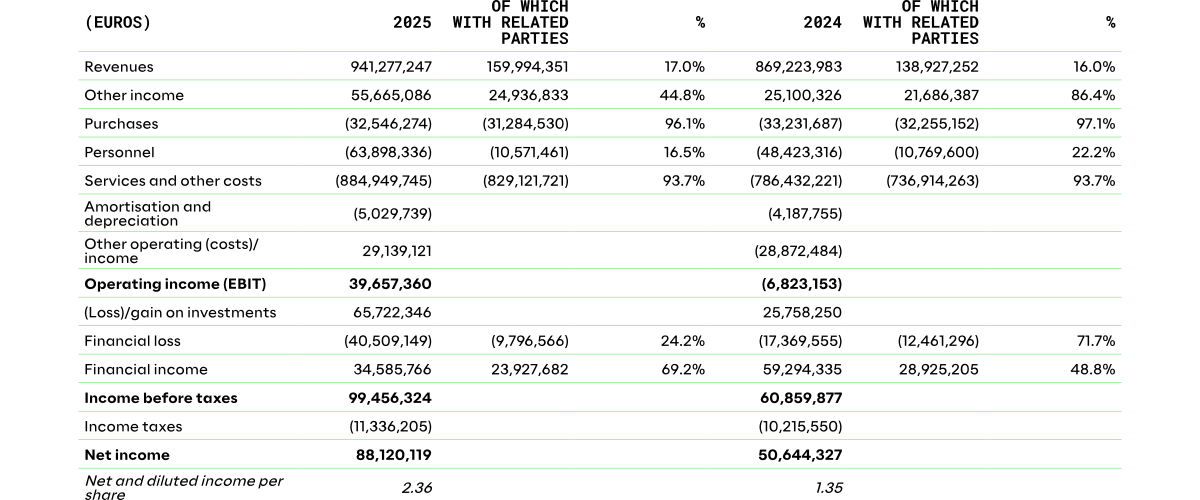
REPLY S.p.A.
Statement of financial position pursuant to consob resolution no. 15519 of 27 july 2006
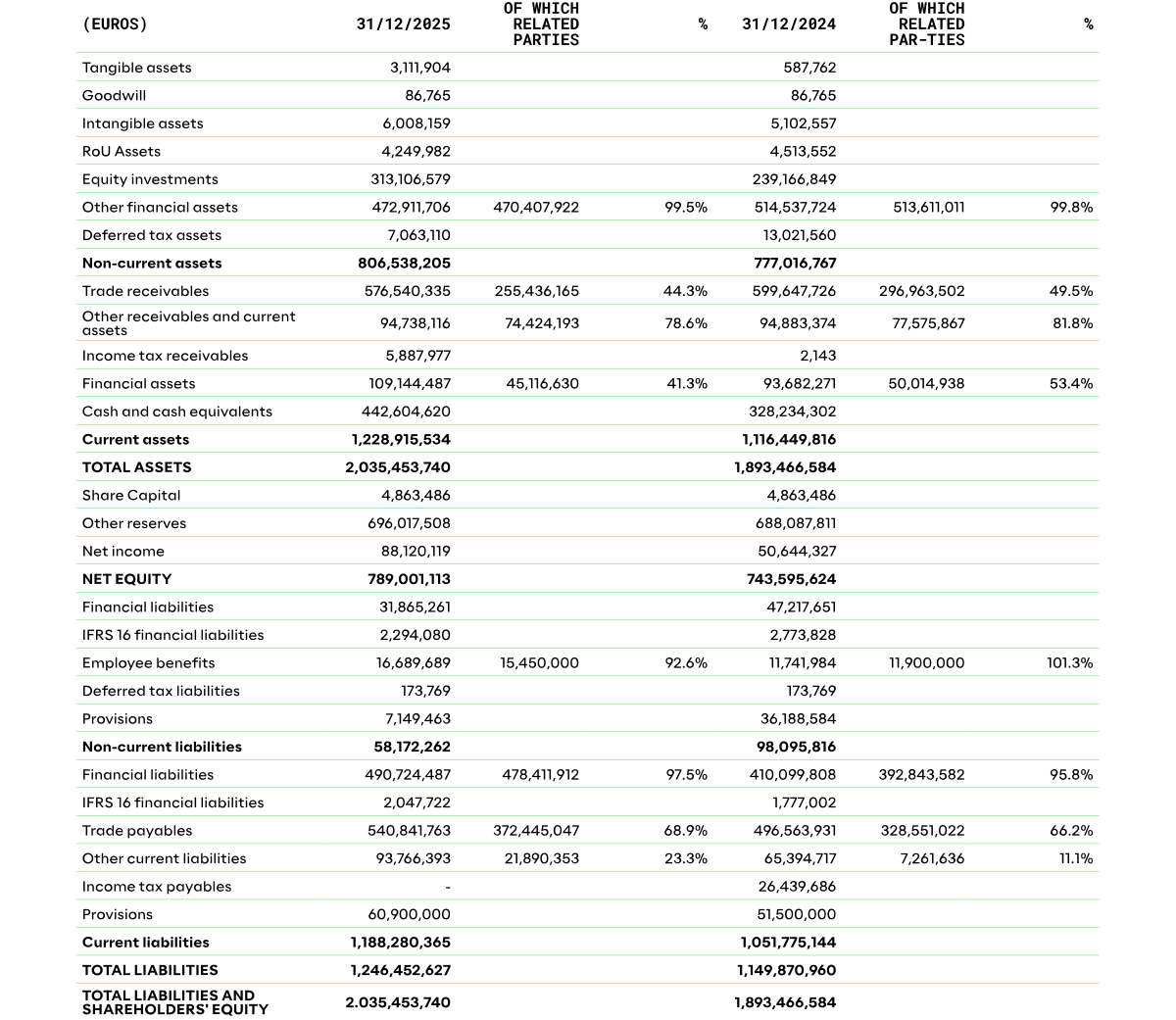
REPLY S.p.A.
Statement of cash flows pursuant to Consob resolution no. 15519 of 27 july 2006
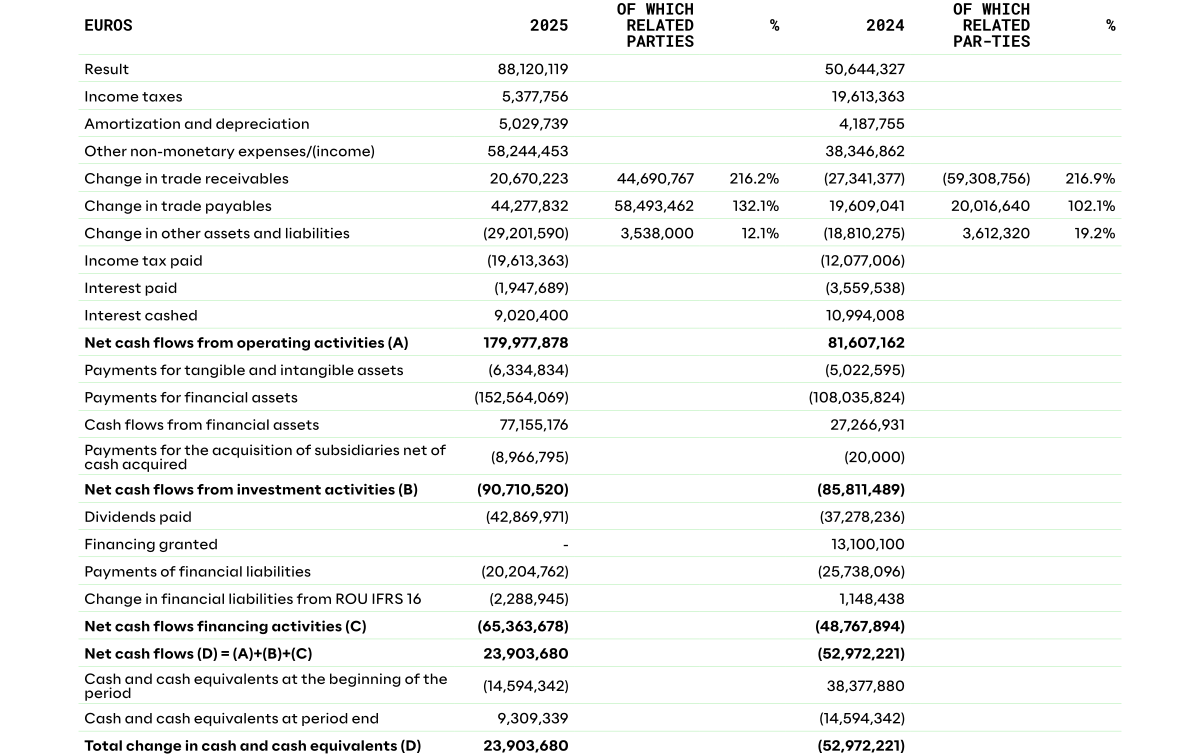
REPLY S.P.A.
Equity investments in subsidiaries with additional information required by Consob (communication no. 6064293 of 28 july 2006)
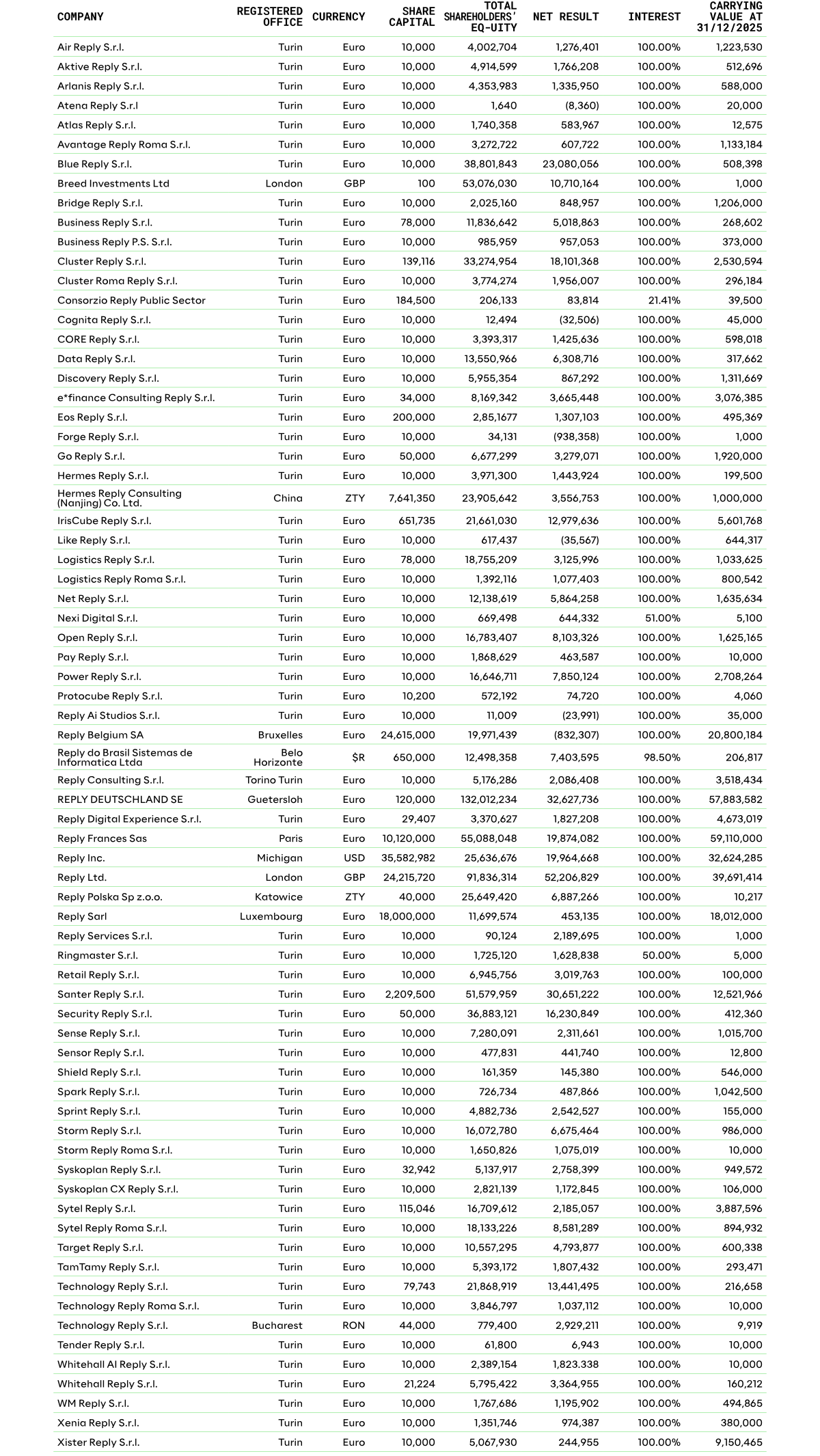
Details of shareholders’ equity stated according to origin, possibility of utilization, possibility of distribution, availability and the utilization in the previous three fiscal years
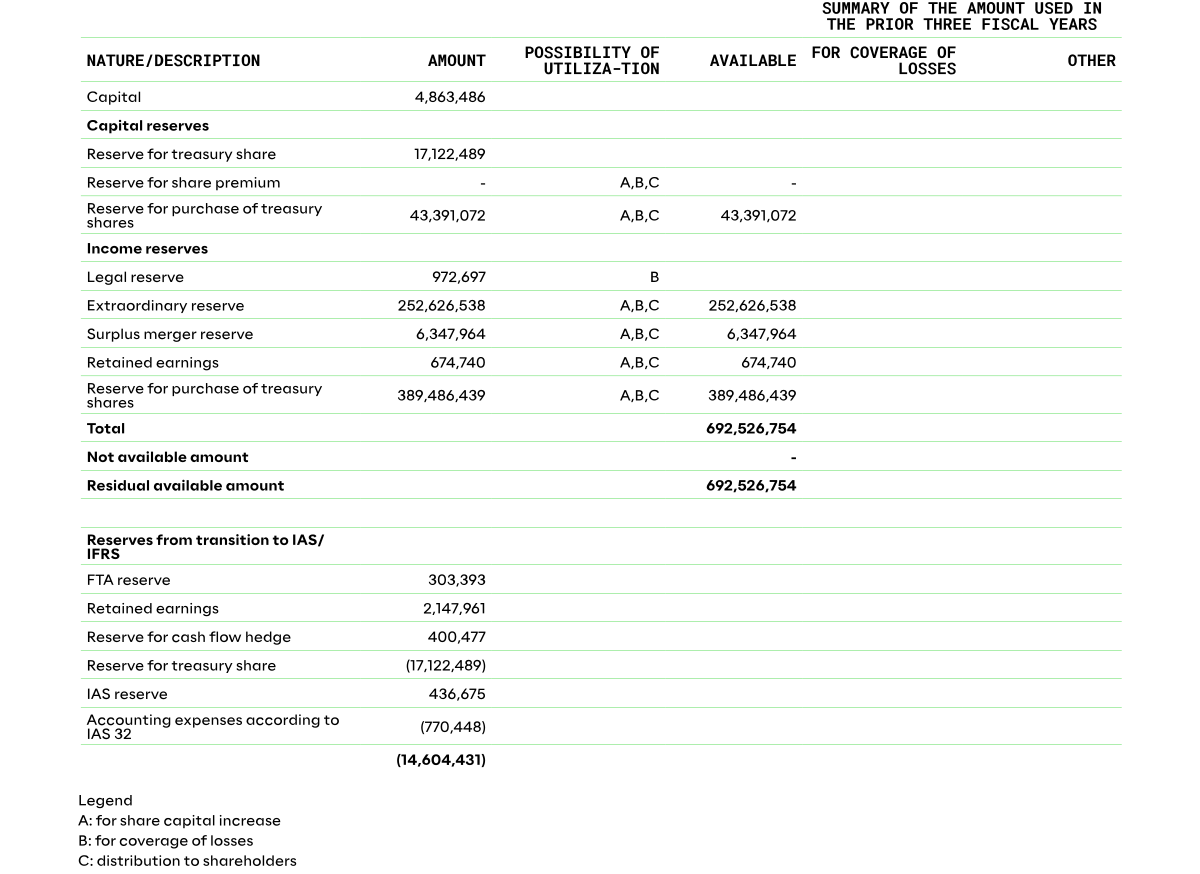
Disclosures pursuant to article 149-duodecies by consob
The following table, prepared in accordance with Art. 149-duodecies of the Regolamento Emittenti issued by Consob, reports the amount of fees charged in 2025 for the audit and audit related services provided by the Audit Firm and by entities that are part of the Audit Firm network. There were no services provided by entities belonging to its network.

Report of the Board of Statutory Auditors to the Shareholders’ meeting
Pursuant to Art. 153 Of legislative decree no. 58/1998 and Art. 2429, Co. Paragraph 2 of the italian civil code regarding the separate financial statements and the consolidated financial statements as of December 31, 2025
Dear Shareholders,
Pursuant to Article 153 of Legislative Decree No. 58/1998, and in compliance with the applicable regulations, the Board of Statutory Auditors is required to report to the Shareholders’ Meeting on the supervisory activities carried out during the year, on any omissions and censurable facts identified, and may make observations and proposals regarding the financial statements, their approval, and matters within its remit.
During the financial year, the Board of Statutory Auditors carried out its supervisory duties in accordance with the Italian Civil Code, Legislative Decree No. 58/1998 (the “Consolidated Law on Finance – “TUF”), Legislative Decree No. 39/2010, the Company’s bylaws, and the regulations issued by the relevant supervisory and regulatory authorities, also taking into account the principles of conduct recommended by the Italian National Council of Chartered Accountants and Accounting Experts.
In particular, the Board of Statutory Auditors monitored: (i) compliance with the law and the articles of association, (ii) adherence to the principles of sound management, (iii) the adequacy of the Company’s organizational structure, internal control and risk management system, and administrative- and accounting system, as well as the reliability of the latter in correctly representing the underlying transactions and events, (iv) the manner in which the corporate governance rules adopted by the Company to comply with the Corporate Governance Code for Listed Companies have been implemented, (v) the adequacy of the instructions given to subsidiaries pursuant to Article 114, paragraph 2 of the Consolidated Law on Finance (TUF), and (vi) the obligations relating to sustainability reporting under Legislative Decree No. 125/2024. For certain aspects (financial reporting process, internal control system, independent audit of the financial statements and auditor independence), reference is made to what is described in greater detail in the section dedicated to the functions of the Board of Statutory Auditors as the Internal Control and Audit Committee.
In carrying out its supervisory activities, the Board of Statutory Auditors referred to the Rules of Conduct for the Board of Statutory Auditors of Listed Companies, in particular adopting a risk-based approach that enabled it to focus its activities on the most significant aspects of the Company’s management.
Supervisory activities pursuant to Legislative Decree No. 39/2010, implementing Directive 2006/43/EC on the statutory audits of annual and consolidated financial statements.
The Board of Statutory Auditors, in its capacity as the Internal Control and Audit Committee, monitored the financial reporting process, the effectiveness of the internal control, internal audit and risk management systems, the statutory audit of the financial statements and the independence of the audit firm, in line with Article 19 of Legislative Decree No. 39/2010.
The independent auditors, who met periodically with the Board of Statutory Auditors in compliance with Article 150, paragraph 3, of the TUF for the purpose of exchanging relevant information, did not report any acts or facts deemed censurable, nor any irregularities requiring specific notifications pursuant to Article 155, paragraph 2, of the TUF.
During these meetings, particular attention was focused on the application of impairment testing to equity investments and goodwill arising from corporate acquisitions. The Board of Statutory Auditors notes that the Company’s Board of Directors approved, during its meeting of February 12, 2026, an update to the impairment procedure.
The Control and Risk Committee reviewed the results of the impairment test as at December 31, 2025, prepared in accordance with the aforementioned procedure. The Board of Directors had previously approved the 2026 to 2028 financial projections specifically prepared for the purpose of performing the test and, in a subsequent meeting, approved the results of the application of the impairment procedure.
The Board of Statutory Auditors also held a meeting with the Quality Review Partner of PricewaterhouseCoopers S.p.A., responsible for the relevant activities concerning the Reply Group. During the meeting, all activities carried out in relation to the quality control of the audit process for the Reply Group were presented to the Independent Auditors.
The Board of Statutory Auditors also acknowledged the 2025 Transparency Report prepared by the audit firm, published on its website pursuant to Article 13 of EU Regulation No. 537/2014.
The Board of Statutory Auditors confirms that it has carried out its duties regarding the assignment to the audit firm of services other than the audit services of the financial statements, which were, following careful analysis, previously authorized by the Board itself.
Supervisory activities on the sustainability reporting process.
The Board of Statutory Auditors monitored compliance with the provisions set out in Legislative Decree No. 125 of 6 September 6, 2024, in particular with regard both to the process of preparing the sustainability report and to the limited assurance activities carried out by PricewaterhouseCoopers S.p.A. This activity was conducted through meetings with the relevant corporate functions and through discussions with the firm appointed to carry out the statutory audit of the financial statements.
The sustainability report as at December 31, 2025 was prepared in accordance with Legislative Decree No. 125/2024 and the applicable reporting standards; it was subject to limited assurance procedures performed by the audit firm, which issued an attestation of compliance with the applicable regulations.
In this context, the Board of Statutory Auditors notes that, at present, environmental aspects have a limited impact on the Group, given the predominantly service-based nature of its activities, and refers, with regard to the governance framework, to the considerations set out in Chapter 13 of this Report. With reference to social aspects, the Board of Statutory Auditors observes that Reply’s core activity, as described in its institutional communications, is focused on developing and providing clients with high-valued professional digital expertise and solutions. From this perspective, the Group’s core business—by nature strongly knowledge-based and human capital intensive—, translates not only into a structural contribution to the creation of skilled employment and the development of distinctive competencies, but also into support for clients’ growth and innovation, with positive effects throughout the broader economic and social value ecosystem in the contexts in which the Company operates.
Self-assessment of the Board of Statutory Auditors.
During the first months of 2026, the Board of Statutory Auditors carried out the annual self-assessment process, the results of which are to be submitted to the Board of Directors so that it may include the relevant conclusions in the Report on Corporate Governance and Ownership Structure. To this end, the Board of Statutory Auditors requested and obtained information from its individual members, collected individual statements, and prepared a questionnaire with reference to the document “Self-assessment of the Board of Statutory Auditors – Rules of conduct for the Board of Statutory Auditors of Listed Companies – Rule Q.1.1”, issued by the Italian National Council of Chartered Accountants and Accounting Experts, as referred to in Rule Q.1.7 of the new Rules of Conduct for the Board of Statutory Auditors of Listed Companies of December 2024. During the self-assessment activities, the Board of Statutory Auditors verified and confirmed that all its members continue to meet:
the independence requirements set out both by law (Article 148, paragraph 3, TUF) and by the Corporate Governance Code (Article 2, recommendation No. 7). The Board of Statutory Auditors has adopted its own Code of Conduct aimed at identifying appropriate corrective measures to adequately address any circumstances that may compromise the independence of its members. During the financial year, no circumstances arose that required the activation of the measures provided for in the aforementioned Code of Conduct;
the requirements of professionalism, integrity, competence and experience pursuant to Articles 1 and 2 of Ministerial Decree No. 162 of March 30, 2000 issued by the Ministry of Justice;
the requirements set out in the Company’s bylaws.
It was also verified that each member of the Board of Statutory Auditors continues to comply with the applicable regulations concerning limits on the number of offices held. In light of the information available, the Board of Statutory Auditors has therefore assessed its composition as adequate, with reference to the requirements of professionalism, diversity, competence, integrity and independence set out by the applicable regulations.
* * *
In light of the above, the information required under the provisions set out in Consob Communication No. DEM 1025564 of April 6, 2001, as subsequently amended, is provided below.
1. 1. Significant economic, financial and business transactions
We have obtained timely and adequate information from the Executive Directors regarding the most significant economic, financial and business transactions carried out by the Company and/or its subsidiaries during the financial year or after the close of the financial year. These transactions, on which the Board of Statutory Auditors has no observations, are not manifestly imprudent or risky, do not give rise to potential conflicts of interest, are not in contrast with resolutions adopted by the Shareholders’ Meeting, and are not such as to compromise the integrity of the Company’s assets.
2. Any atypical and/or unusual transactions, including intra-group and related-party transactions
The documents submitted for your approval, the information received during meetings of the Board of Directors, and that received from the Chairman and the Chief Executive Officer, from management, from the Boards of Statutory Auditors (where present) of companies directly controlled by Reply S.p.A., and from the statutory independent auditors, did not reveal the existence of atypical and/or unusual transactions, including intra-group or related-party transactions, carried out during the 2025 financial year or after the close of the financial year.
With reference to intra-group transactions, it is noted that during the 2025 financial year Reply S.p.A.:
purchased professional services from Group companies related to revenues from contracts entered into with third-party customers;
provided guarantees in favour of subsidiaries;
granted subsidiaries loans not earmarked for a specific purpose to support their activities;
provided subsidiaries with strategic management direction, administrative services, marketing and quality management services, and general management services;
centrally managed the Group treasury of Italian companies through intercompany current accounts held in the name of individual subsidiaries;
granted Group companies the right to use the "REPLY" trademark owned by it;
purchased "office facility services" (provision of equipped office space and secretarial services) from subsidiaries.
Transactions with other related parties during 2025 mainly concern remuneration of directors, statutory auditors, and key management personnel, as well as “office services” relating to the use of the Turin headquarters building at Corso Francia 110, provided by Alika S.r.l. For these transactions, the Procedure for Related Party Transactions was not applied, as they qualify as exempt transactions under Articles 4.1 and 4.4 of the Procedure.
3. Information provided in the management report on atypical and/or unusual transactions, including intra-group and related-party transactions
The information provided by the Directors in the Report on Operations to the financial statements as at December 31, 2025, in the explanatory notes and in the schedules attached to the consolidated financial statements of the Reply Group and to the separate financial statements of Reply S.p.A. as at December 31, 2025, regarding transactions of significant economic, financial and business relevance, as well as the receivables and payables with subsidiaries, associates and related parties, is adequate.
The Report on Operations, the information received during meetings of the Board of Directors, and the information provided by the Chairman and the Chief Executive Officers, by management, by the control bodies, where present, of the subsidiaries, and by the statutory independent auditors, did not reveal the existence of any atypical and/or unusual transactions, including intra-group transactions or those with related parties, carried out during the financial year or after the close of the financial year.
4. Observations and proposals regarding the remarks and disclosures contained in the statutory independent auditors’ report
The Board of Statutory Auditors examined the following reports prepared by the statutory independent auditors PricewaterhouseCoopers S.p.A.:
the reports on the audit of the separate financial statements and on the audit of the consolidated financial statements issued on the date hereof pursuant to Article 14 of Legislative Decree No. 39/2010 and Article 10 of Regulation (EU) No. 537/2014;
the report on the compliance of the consolidated sustainability reporting issued on the date hereof pursuant to Article 14-bis of Legislative Decree No. 39/2010;
the additional report issued on the date hereof pursuant to Article 11 of the aforementioned Regulation to the Board of Statutory Auditors in its capacity as Internal Control and Audit Committee.
The above reports state that:
the separate and consolidated financial statements of the Reply Group have been prepared in accordance with International Financial Reporting Standards (IFRS) issued by the International Accounting Standards Board and adopted by the European Union, in force as December 31, 2025, as well as in compliance with the provisions issued pursuant to Article 9 of Legislative Decree No. 38/2005 and subsequent amendments and additions;
the separate and consolidated financial statements of the Reply Group give a true and fair view of the financial position, results of operations and cash flows for the financial year ended December 31, 2025;
the separate and consolidated financial statements have been prepared in XHTML format in accordance with Commission Delegated Regulation (EU) 2019/815 concerning regulatory technical standards on the specification of a single electronic reporting format (ESEF – European Single Electronic Format);
no matters have come to the attention of the audit firm that would lead it to believe that:
the consolidated sustainability reporting of the Reply Group for the year ended December 31, 2025 has not been prepared, in all material respects, in accordance with the reporting standards adopted by the European Commission pursuant to Directive (EU) 2013/34/EU (European Sustainability Reporting Standards, “ESRS”);
the information contained in the paragraph “Information pursuant to Article 8 of Regulation (EU) 2020/852 (Taxonomy Regulation)” of the consolidated sustainability report has not been prepared, in all material respects, in accordance with Article 8 of Regulation (EU) No. 852 of 18 June 18, 2020 (“Taxonomy Regulation”).
Furthermore, in the opinion of the statutory independent auditors, the Report on Operations and the information required by Article 123-bis, paragraph 4, of the TUF included in the Report on Corporate Governance and Ownership Structure are consistent with the financial statements. With regard to the possible identification of material misstatements in the Report on Operations (Article 14, paragraph 2, letter e) of Legislative Decree No. 39/2010), the independent auditors stated that there is nothing to report.
With reference to the additional report issued pursuant to Article 19 of Legislative Decree No. 39/2010, the Board of Statutory Auditors verified that it includes:
the main aspects of the audit;
the materiality levels for the consolidated and separate financial statements;
the audit plan;
the scope and method of consolidation;
the audit methodology and valuation methods applied in the consolidated and separate financial statements;
the areas of focus relating to the consolidated and separate financial statements;
the activities carried out by the audit team.
In the same document, the statutory independent auditors also stated that no significant audit differences were identified in the consolidated and separate financial statements, nor were any significant deficiencies identified in the internal control system in relation to the financial reporting process; they listed the mandatory communications made to the corporate bodies and confirmed that, from the checks on the proper maintenance of accounting records and the correct recording of management events in the accounting books, no significant matters emerged to be reported.
The Board of Statutory Auditors examined the declaration of independence of the statutory independent auditors, pursuant to Article 17 of Legislative Decree No. 39/2010, issued on the date hereof, which does not indicate any circumstances that may have compromised their independence or any causes of incompatibility pursuant to Articles 10 and 17 of the same decree and the related implementing provisions.
5. Complaints pursuant to Article 2408 of the Italian Civil Code
The Board of Statutory Auditors did not receive any communications and/or complaints, including those qualifying under Article 2408 of the Italian Civil Code, during the financial year or after the close of the financial year.
6. Submission of complaints
The Company’s Directors did not report any complaints addressed to them during the financial year or after the close of the financial year.
Any assignment of additional engagements to the statutory audit firm and related costs
During 2025, in addition to the statutory audit of the financial statements as of December 31, 2025, the following assurance engagements were assigned to PricewaterhouseCoopers S.p.A.:
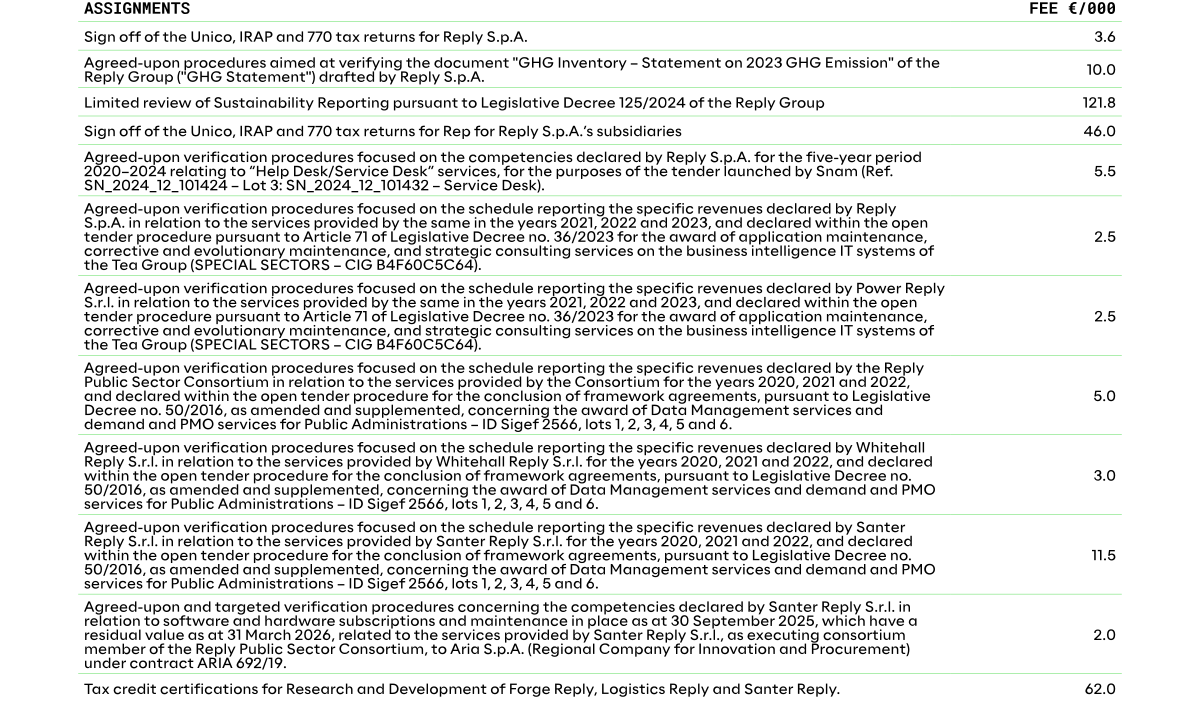
8. Any assignment of engagements to entities which are part of the network of the statutory independent audit firm and related costs
During the financial year, no engagements were assigned to entities which are part of the network of PricewaterhouseCoopers S.p.A. through ongoing relationships and/or to entities belonging to its network.
9. Indication of opinions issued pursuant to law during the financial year
During the financial year, the opinions requested from the Board of Statutory Auditors as required by law were issued.
10. Indication of the frequency and number of meetings of the Board of Directors and the Board of Statutory Auditors
During the 2025 financial year, the Board of Directors held 5 meetings and the Board of Statutory Auditors held 16 meetings.
The Control and Risk Committee of the Board of Directors met 4 times, the Remuneration Committee met 2 times, the Sustainability Committee met 2 times, the AI Ethics Committee met 3 times, and the Related Party Transactions Committee met once. The Board of Statutory Auditors attended the meetings of the Board of Directors and, through its Chairman, the meetings of the Control and Risk Committee and the Remuneration Committee.
11. Observations on compliance with principles of sound management
The Board of Statutory Auditors, having attended the meetings of the Board of Directors and based on the information obtained therein, confirms—without prejudice to any assessment of the merits or convenience of the decisions taken—that the transactions carried out and to be carried out by the Company, as resolved by the Board of Directors, were conducted in accordance with principles of sound management, comply with the law and the Company’s bylaws, are not in conflict with shareholders’ resolutions, do not jeopardize the integrity of the Company’s assets, and were adequately supported by processes of information, analysis and verification.
The Board of Statutory Auditors notes that the technology and digital services sector is subject to discontinuity factors, particularly related to the increasing spread of artificial intelligence solutions capable of affecting service delivery models, the composition of human capital employed, pricing logic for more replicable activities, and, more generally, the competitive dynamics of the sector. At present, it is not possible to predict whether these aspects, although set within a context of significant development opportunities described in the Report on Operations, may also impact, over time, the Company’s operating models and activities.
12. Observations on the adequacy of the organizational structure
The Board of Statutory Auditors assessed the timeliness of updates and the completeness of the organizational structure, as well as its alignment with business and governance needs in terms of both professional expertise and the ability to achieve strategic and operational objectives, also taking into account the adequacy of the delegation system and the principles of appropriate “separation of duties.”
In this regard, the Board of Statutory Auditors monitored the adequacy of the composition, size and functioning of the Board of Directors and its internal committees, attending meetings and analysing the documentation produced by these bodies; in its collective view, it has no observations to make. Following requests made within the Board of Directors for enhanced reporting on management activities, management, after internal assessment, decided to provide such information when deemed necessary in relation to specific events or contingencies or upon specific request from Directors. Periodic reporting therefore continued to focus, in addition to interim financial results approved quarterly by the Board of Directors, primarily on the most significant economic, financial and business transactions carried out within the Group, particularly internal Group reorganizations. The Board of Statutory Auditors also held specific meetings with the top management of the parent company and the Regions.
The Board of Statutory Auditors further notes that:
the Chairman of the Company holds executive powers substantially similar to those of the Chief Executive Officer;
the broad scope of these powers gives their holders substantial autonomy in executive management capacity without Board of Directors resolutions for transactions not considered “price sensitive” under applicable law; during the financial year, none of the transactions carried out by Executive Directors were classified as price sensitive and therefore submitted for Board of Directors approval;
such executive autonomy, in the absence of an industrial strategic plan approved by the Board of Directors, results in strategic direction being effectively set by management.
The above, in the Board of Statutory Auditors’ opinion, overall limits the Board of Directors’ ability to exercise its guiding role in setting strategic direction, as also recommended by the Corporate Governance Code—, particularly in defining the Company’s and Group’s strategies and monitoring their implementation. In this context, while recognizing the essential role played by Executive Directors in driving the Company’s and Group’s success, the Board of Statutory Auditors looks forward to the approval of a strategic plan resulting from Board of Directors discussion and contribution, which will enable the Board of Directors to fully exercise its strategic guidance role, as recommended by the Corporate Governance Code, and to better assess the results delivered under the extensive powers granted to the Chairman and the Chief Executive Officer.
In this regard, the Board of Statutory Auditors positively assesses the evolution of the Company’s Enterprise Risk Management (ERM) model, which is undergoing continuous improvement and refinement. This evolution represents a significant first step toward greater involvement of the Board of Directors in the strategic process, enabling it not only to exercise more effective oversight of management decisions but also to take on a more active role in defining corporate strategies.
In this context, the Board of Statutory Auditors expresses the wish that this evolutionary path will lead to a transition from an annual project-based exercise to a continuous process characterized by the progressive integration of the risk management process with managerial decision-making and with the guiding role of the Board of Directors, thereby strengthening its contribution to defining medium- to long-term strategic directions and assessing the effectiveness of the strategies adopted. From this perspective, it would be appropriate to reassign responsibility for the internal control system—currently held by the CFO, to the Chief Executive Officer or the Chairman, as provided for by the Corporate Governance Code.
In accordance with recommendation No. 13 of the Corporate Governance Code, the Board of Directors has appointed a Lead Independent Director since 2021.
The Board of Statutory Auditors also reviewed the documentation relating to the other components of Reply S.p.A.’s overall organizational structure and has noted over time the existence of:
an organizational chart and related corporate documentation outlining the organizational structures;
a system of delegated powers exercised consistently with the roles and authorities assigned to each of the functions/committees involved;
established corporate practices for the exercise of governance by Reply S.p.A. within its functions of direction, coordination and control over its subsidiaries, primarily carried out through: (i) centralized functions overseeing the main activities deemed sensitive for the Group (Human Resources, Communication, Management Control, Innovation), (ii) continuous business monitoring by top management, and (iii) the presence of top management on the Boards of Directors of the subsidiaries;
internal regulations governing the activities of each managerial function, largely based on the ISO 9000 procedural model.
Overall, based on the above analysis, these additional components of the organizational structure appear to be based on structured and effective management practices.
13. Observations on the adequacy of the internal control system
The Board of Statutory Auditors, having taken note of the resolutions adopted by the Board of Directors and reported in the Report on Corporate Governance and Ownership Structure regarding the adequacy and effective functioning of the internal control system, examined the 2025 reports of the Internal Audit function.
In particular, the Board of Statutory Auditors notes that:
during the financial year, the necessary functional and information link was maintained among the Head of Internal Audit, the Control and Risk Committee and the Supervisory Body regarding the performance of their respective assessment, oversight and control duties, within their areas of competence, concerning the adequacy, effectiveness and proper functioning of the internal control and risk management system, as well as the results of the audit activities carried out by the Internal Audit function in accordance with the audit plan approved by the Board of Directors and the risk assessment performed by the Company with the support of a specialized Reply Group company;
the Company described in the Report on Corporate Governance and Ownership Structure the main characteristics of the internal control and risk management system and the coordination mechanisms among the parties involved, indicating the relevant national and international models and best practices;
the annual risk assessment was carried out, involving the relevant corporate functions and leading to the identification of the main business risks;
the Head of Internal Audit periodically updated the Board of Statutory Auditors on the activities performed and the main findings of the controls carried out, without identifying any corrective actions.
The documents presented during the periodic information exchanges with the Board of Statutory Auditors summarized the results of the audits. The Board of Statutory Auditors noted that the Internal Audit analysis of the overall Internal Control and Risk Management System, for the purpose of assessing its adequacy, had been carried out and that the report of the Head of the function did not highlight any unresolved critical issues as of the date of this report.
Starting from the 2025 financial year, the Reply Group falls within the scope of the new European regulations on the security of network and information systems (NIS2) and, as a third-party ICT provider, is indirectly involved in regulations concerning digital operational resilience in the financial sector (DORA). In addition, Reply falls within the scope of the regulation on artificial intelligence (AI Act). The Company has launched specific projects to comply with these requirements, with particular focus on strengthening organizational, procedural and internal control safeguards, and continues to progressively align with the applicable regulatory frameworks. The Board of Statutory Auditors monitored the implementation status of these projects through periodic meetings with the relevant managers.
With particular regard to the AI Act, implementation activities are ongoing, taking into account the phased timelines set by the regulation and possible developments arising from related European regulatory measures.
Within the ERM project, the Board of Directors assessed the residual risk level remaining after the implementation of these measures and considered it, at present, consistent with the overall risk profile of the Group. It is understood that such assessment, in line with the inherent limitations of any risk mitigation system, cannot entirely exclude the possibility of specific events that may not be detected by the adopted measures, also considering the complexity and continuous evolution of the regulatory framework. The Board of Statutory Auditors has verified and received assurance from management that the Company remains committed to monitoring these developments and strengthening its compliance safeguards where necessary, in a continuous improvement perspective.
As part of its supervisory activities, the Board of Statutory Auditors also assessed the current effectiveness of the Group’s quality, environmental, health and safety as well as energy management systems currently in place within the Reply Group.
No particular critical issues emerged from these reviews, and the integrated quality, environmental and safety management system is considered by the competent parent company function to be effective in its actual operation and adequate.
The Board of Statutory Auditors also found that the Company has implemented, within its internal processes, the measures required by the Data Protection Authority and operates in substantial compliance with Regulation (EU) No. 679 of April 27, 2016 (GDPR), Legislative Decree No. 196 of 30 June 30, 2003, as amended by Legislative Decree No. 101 of August 10, 2018, and other applicable regulations on personal data protection..
During the financial year, the Board of Statutory Auditors carried out specific supervisory activities on the adequacy and functioning of the organizational, management and control model pursuant to Legislative Decree 231/2001, through periodic meetings, as previously indicated, with the Chairman of the Supervisory Body and by examining the results of the checks performed by Internal Audit.
Following the extension of the catalogue of predicate underlying offences, which now includes, among others, market abuse offences, the Company has initiated a gradual update of the model, coordinated with ongoing AI Act projects: the analysis conducted for AI Act purposes focuses on the protection of individual rights and the ethical use of artificial intelligence solutions, while a specific mapping of AI processes and applications is still underway. Although these present a limited risk profile under the AI Act, they require a dedicated assessment from the perspective of potential impacts related to market abuse. The outcomes of this activity will form the basis for the possible introduction of specific protocols and safeguards within the Model 231.
The Board of Statutory Auditors received information on reports submitted through the Whistleblowing channel and obtained assurance from the Supervisory Body that, following its preliminary assessments, the Company promptly implemented the necessary corrective actions.
Overall, while sharing and appreciating the initiatives undertaken by management in the areas of Risk Management and Internal Control System, the Board of Statutory Auditors recommends the timely completion of their implementation with a view to progressively increasing their level of maturity. In particular, with reference to the Internal Audit plan, the Board of Statutory Auditors notes that it is still predominantly focused on compliance issues, while acknowledging the increasing attention paid to operational matters, as recommended by the external quality review (EQR) conducted in 2021 regarding compliance with the International Standards for the Professional Practice of Internal Auditing.
In this regard, the Board of Statutory Auditors encourages the Internal Audit Function to complete the multi-year process aimed at full alignment with international standards and greater compliance with the specific recommendations of the Corporate Governance Code to which the Company adheres. This is particularly relevant with respect to the integration of the risk assessment upstream of the audit plan with the Enterprise Risk Management (ERM) process, ensuring a consistent approach in the selection of areas of intervention.
14. Observations on the administrative and accounting system
The Board of Statutory Auditors reviewed the internal regulations relating to the internal control system over financial reporting, that is, the set of activities for identifying risks/ and controls and the procedures adopted to ensure, with reasonable assurance, the achievement of the objectives of accuracy, reliability, fairness and timeliness of financial reporting. This system constitutes the basis that enables the executive responsible for preparing the company’s financial reports, together with the Chairman, to issue the certifications required under Article 154-bis of the Consolidated Law on Finance (TUF).
The Board of Statutory Auditors periodically met with the executive and the independent audit firm to exchange information, covering, among other topics, the Reply Group’s management and control model pursuant to Law no. 262/2005.
During these meetings, no significant deficiencies were reported in the operational and control processes that could undermine the assessment of the adequacy and effective application of the administrative and accounting procedures, aimed at ensuring a true and fair view of the financial position, results of operations and cash flows in accordance with international accounting standards.
During the periodic meetings for information exchange, as well as in the additional report prepared pursuant to Article 19 of Legislative Decree No. 39/2010, the statutory independent auditors likewise did not report any significant deficiencies in the internal control system relating to the financial reporting process.
The Chairman and the executive responsible for preparing the company’s financial reports issued, pursuant to Article 81-ter of Consob Regulation No. 11971/1999, as subsequently amended and supplemented, the certification required under Article 154-bis, paragraph 5, of Legislative Decree No. 58/1998, which was reviewed by the Board of Statutory Auditors as evidence of the effectiveness of the administrative and accounting processes.
15. Instructions to subsidiaries pursuant to Article 114, paragraph 2, of Legislative Decree No. 58/1998
The instructions issued by Reply S.p.A. to its subsidiaries pursuant to Article 114, paragraph 2, of Legislative Decree No. 58/1998 appear to be adequate; likewise, the subsidiaries have provided the parent company with the information necessary for the timely awareness of corporate events.
In this regard, we inform you that, in order to ensure the timeliness of the communication of the required information, the Chief Financial Officer of Reply S.p.A., except for cases justified by governance arrangements with other partners of the company, holds the position of Chairman and/or Chief Executive Officer of all Italian subsidiaries, as well as Director or equivalent positions in numerous foreign subsidiaries.
The dissemination of information to subsidiaries is also carried out through processes established and operating within Reply’s Finance function, according to the so-called Service Hubs model, that is, centralized operational centers that provide financial, administrative and support services to one or more entities within a given country.
16. Relevant matters arising from meetings with the statutory independent auditors
During the meetings and discussions held with representatives of the statutory audit firm, no acts or facts emerged that were considered reportable or, in the opinion of the Board of Statutory Auditors, significant and worthy of mention and/or specific reporting pursuant to Article 155, paragraph 2, of Legislative Decree No. 58/1998.
17. Adherence to the Corporate Governance Code
The Company has adhered to the Corporate Governance Code (formerly the Self-Regulatory Code) since the 2000 financial year; the Code was most recently revised in January 2020 and has been effective since the 2021 financial year.
On March 12, 2026, the Board of Directors approved the annual report on Corporate Governance and Ownership Structure prepared pursuant to Article 123-bis of Legislative Decree No. 58/1998.
The Board of Statutory Auditors acknowledged the report on the remuneration policy and compensation paid (Remuneration Report), prepared pursuant to Article 123-ter of Legislative Decree No. 58/1998, Article 84-quater of the Issuers’ Regulation and the related Annex 3A, schedules No. 7-bis and 7-ter. This report was approved by the Board of Directors upon proposal of the Remuneration Committee. As recommended by the Corporate Governance Code, in defining the remuneration of executive directors, the Board of Directors took into account the Group’s partnership-oriented business model and the remuneration practices prevailing in the relevant sector.
With regard to the supervision carried out on the implementation of the Corporate Governance Code, the Board of Statutory Auditors, in addition to what is indicated in the previous paragraphs, has no observations to report.
18. Proposals to the Shareholders’ Meeting pursuant to Article 153 of Legislative Decree No. 58/1998
With reference both to the provisions of Article 153, paragraph 2, of Legislative Decree No. 58/1998, to the general supervisory duty set out in Article 149, letter (a), of the same decree, and to the agenda of the Shareholders’ Meeting which includes the discussion of the financial statements, the Board of Statutory Auditors confirms that it has supervised compliance with the procedural and legal rules governing their preparation.
We note that the Directors have stated that:
the financial statements as at December 31, 2025 were prepared, in compliance with European Regulation No. 1606/2002 of July 192002, in accordance with International Financial Reporting Standards (IFRS);
the consolidated annual financial report as at December 31, 2025 was prepared in electronic format in accordance with the provisions of European Regulation 815/2018 (the so-called “ESEF”);
the sustainability report as at 31 December 2025 was prepared in accordance with the reporting standards applied pursuant to Directive 2013/34/EU of the European Parliament and of the Council of June 26, 2013, and Legislative Decree No. 125 ofSeptember 6, 2024, as well as with the specifications adopted pursuant to Article 8(4) of Regulation (EU) 2020/852 of the European Parliament and of the Council of June 18, 2020.
With regard to the item on the agenda concerning the resolution to be adopted on the purchase and disposal of treasury shares, having considered the information provided by the Directors, the Board of Statutory Auditors confirms that the proposed resolution complies with the provisions of Articles 2357 and 2357-ter of the Italian Civil Code, Article 132 of Legislative Decree No. 58/1998, and Article 144-bis of the Consob Regulation adopted by Resolution No. 11971 of May 14, 1999.
19. Final assessments
The supervisory activities carried out by the Board of Statutory Auditors, in addition to the above, were conducted through:
the collection of information during meetings with members of the Boards of Statutory Auditors, where existing, of subsidiary and parent companies, in order to exchange information on the Group's activities and to coordinate control and supervisory activities;
the gathering of further information in meetings with the Appointed Director under the Procedure for Related Party Transactions and with the person responsible for the implementation of the Internal Dealing Code of Conduct;
the analysis of any new legal provisions or Consob communications of relevance to the Company.
The Board of Statutory Auditors has verified the existence of the organizational prerequisites necessary to ensure compliance with statutory, legal and regulatory provisions governing the relevant matters, within a framework of continuous development and improvement.
In particular, shareholders are informed that:
we have monitored the compliance with the law of the Procedure for Related Party Transactions, initially approved by the Board of Directors of Reply S.p.A. on November 11, 2010 and subsequently amended on May 14, 2015, August 2, 2018 and June 21, 2021, as well as its proper application;
we have verified the correct application of the criteria adopted by the Board of Directors in assessing the independence requirements of "independent directors";
we have supervised, where required, the compliance of services other than the statutory audit of the separate and consolidated financial statements provided by the audit firm to Reply S.p.A. and its subsidiaries with the limitations set by law;
we have monitored compliance with Article 17, paragraph 4, of Legislative Decree No. 39/2010 and, in this regard, we inform you that the engagement partner for Reply S.p.A.'s financial statements is Miss Monica Maggio;
we have verified and monitored the independence of the statutory audit firm PricewaterhouseCoopers S.p.A. in accordance with Articles 10, 10-bis, 10-ter, 10-quater and 17 of Legislative Decree No. 39/2010 and Article 6 of Regulation (EU) No. 537/2014;
we have verified the fulfilment of obligations related to "Market Abuse" and "Savings Protection" regulations concerning corporate disclosure and Internal Dealing, based on the information received from the Company.
With regard to the Board of Directors’ supervision of any reportable facts or irregularities, the Board of Statutory Auditors considers it important to note that, in general, the assessment of whether an event or circumstance constitutes an irregularity or a reportable matter may depend on aspects subject to differing interpretations, sometimes clarified only following the ascertainment of facts at the conclusion of legal proceedings that may last several years.
Based on the supervisory activities carried out during the financial year, and having also taken note of the report pursuant to Article 14 of Legislative Decree No. 39/2010, which expresses an unqualified opinion, the Board of Statutory Auditors considers that it has no observations or proposals regarding the financial statements, the Report on Operations and the proposals contained therein, which it therefore deems, within its remit, fit for your approval.
Likewise, with specific reference to Article 153, paragraph 2, of Legislative Decree No. 58/1998, the Board of Statutory Auditors considers that it has no proposals to make on other matters within its competence.
Rome-Turin, March 31, 2026
THE STATUTORY AUDITORS
Chairman (Ciro Di Carluccio)
Board of Statutory Auditors member (Donatella Busso)
Board of Statutory Auditors member (Piergiorgio Re)
Corporate information
HEADQUARTERS
Reply S.p.A.
Corso Francia, 110
10143 TURIN – ITALY
Tel. +39-011-7711594
Fax +39-011-7495416
www.reply.com
CORPORATE DATA
Share capital: Euro 4.863.485,64 i.v.
Fiscal code and Company register of Turin no. 97579210010
VAT no. 08013390011
REA of Turin 938289
MARKETING AND COMMUNICATION
E-mail: marketing@reply.com
Tel. +39-011-7711594
Fax +39-011-7495416
INVESTOR RELATIONS
E-mail: investor@reply.com
Tel. +39-02-535761
Fax +39-02-53576444

